
Easy Vegan Chickpea Meatballs: Hearty, Flavorful, and Made with Pantry Staples
If you’re a fan of Italian comfort food but following a vegan lifestyle, finding a meatball alternative that truly satisfies can be a challenge. Enter these easy vegan chickpea meatballs: they’re packed with flavor, hold their shape in sauce without falling apart, and best of all, they’re made from ingredients you likely already have in your pantry.
No need for store-bought vegan meats or complicated processes—this recipe is straightforward and beginner-friendly, unlike some other juicy vegan meatballs that rely on pre-made substitutes. As a registered dietitian specializing in plant-based nutrition, I love recipes like this because they make healthy eating accessible and delicious.
Chickpeas provide plant-based protein and fiber, while simple seasonings infuse every bite with Italian flair. Whether you’re meal-prepping for the week or whipping up a quick family dinner, these meatballs are versatile and freezer-friendly.
Let’s dive into why this recipe works so well and how to make it your new go-to.
Why This Chickpea Meatball Recipe Works

This recipe stands out because it balances simplicity with impressive results. First, chickpeas are the star ingredient—they’re affordable, nutrient-dense, and mimic the texture of ground meat when processed just right.
Unlike recipes relying on tofu or seitan, which can be finicky or require special shopping, chickpeas are a pantry staple that most households keep on hand, perfect for this recipe or our quick creamy white bean soup. The flaxseed ‘egg’ acts as a natural binder, helping the meatballs maintain their structure during baking and saucing.
Baking instead of frying keeps them lighter and healthier, reducing added fats while achieving a crispy exterior. Studies from the Journal of Food Science highlight how legumes like chickpeas improve satiety and blood sugar control, making this a smart choice for balanced meals.
Flavor-wise, nutritional yeast adds a cheesy, umami depth without dairy, and the blend of garlic, onion powder, and Italian seasoning ensures each meatball bursts with taste—even before hitting the sauce. This reliability builds confidence for home cooks new to plant-based cooking.
In short, this recipe works because it’s forgiving, nutritious, and scalable. Double the batch for meal prep, and you’ve got protein-packed lunches ready in minutes.
For more on the benefits of plant-based proteins, check out this review from the American Journal of Clinical Nutrition.
Key Ingredients and Their Roles
Let’s break down the ingredients so you understand exactly what each one contributes. This knowledge not only helps with substitutions but also empowers you to tweak the recipe confidently.
- Chickpeas (3 cups drained and rinsed): The base that provides protein (about 15g per serving) and fiber for heartiness. Opt for canned for convenience, but ensure they’re low-sodium to control flavors. Research from the USDA shows chickpeas support gut health due to their prebiotic fibers.
- Ground Flaxseeds (3 tablespoons) + Water (1/2 cup): This creates a ‘flax egg’ binder, mimicking eggs for structure. Flax is rich in omega-3s, promoting heart health as per a study published in Nutrients.
- Breadcrumbs (1/2 cup): Adds bulk and helps absorb moisture for firmness. Use gluten-free if needed, or rolled oats for a whole-grain twist.
- Nutritional Yeast (1/4 cup): Delivers a nutty, cheesy flavor and B vitamins. It’s a vegan staple for umami without cheese.
- Seasonings (Garlic Powder, Onion Powder, Italian Seasoning, Salt): These build the savory profile. Italian seasoning includes oregano and basil for authentic taste; adjust salt to preference.
- For serving: Spaghetti (8 oz) and marinara sauce (25 oz jar). Choose whole-grain pasta for extra nutrition.
All told, this lineup keeps things simple while packing nutritional punch—each serving offers balanced macros without excess calories.
Step-by-Step Guide to Making Vegan Meatballs
Making these meatballs is a breeze—total hands-on time is just 10 minutes. Follow these steps for foolproof results.
- Prepare the Flax Egg. In a small bowl, mix 3 tablespoons ground flax with 1/2 cup water. Let it sit for 5 minutes to thicken into a gel-like consistency. This step is crucial for binding.
- Process the Chickpeas. Drain and rinse two 15-oz cans of chickpeas (about 3 cups). In a food processor, pulse until flaky but not pureed—aim for a texture like coarse ground meat. No processor? Mash with a potato masher or fork, leaving some chunks for better texture.
- Mix the Dough. In a large bowl, combine the processed chickpeas, flax egg, 1/2 cup breadcrumbs, 1/4 cup nutritional yeast, 2 tsp each garlic and onion powder, 1 tsp Italian seasoning, and 1/2 tsp salt. Stir thoroughly; use hands if it’s too thick. The mixture should be firm and hold together when squeezed.
- Form the Balls. Preheat oven to 425°F. Line a baking sheet with parchment or grease lightly. Roll into 1-heaping-tablespoon balls (about 20-24 total). Place 1-inch apart.
- Bake. Bake for 30-35 minutes, flipping halfway for even browning. They should be golden and firm.
- Simmer in Sauce. While baking, cook 8 oz spaghetti per package. Warm marinara in a large pan. Gently add baked meatballs, stir to coat without breaking. Serve over pasta with vegan parmesan if desired.
Pro tip: For air fryer fans, cook at 400°F for 20 minutes, shaking halfway. This method yields crispier results with less oil.
Expert Tips for Perfect Texture and Flavor
To elevate your meatballs from good to great, consider these insider tips drawn from years of testing plant-based recipes.
- Achieving the Right Texture: The key is not over-processing chickpeas—too smooth, and they’ll be mushy; too chunky, and they won’t bind. Pulse in short bursts. If the mixture feels too wet, add 1-2 extra tablespoons of breadcrumbs. Baking at high heat creates a crust that locks in moisture, preventing sogginess in sauce.
- Boosting Flavor: Taste the mixture before rolling and adjust seasonings. For extra zing, mix in 1 tsp smoked paprika or fresh minced garlic. Nutritional yeast is non-negotiable for that cheesy essence, but if unavailable, grated vegan cheese works in a pinch.
- Common Pitfalls to Avoid: Meatballs falling apart? Ensure the flax egg has fully gelled and don’t skip chilling the formed balls for 10 minutes pre-bake if your kitchen is warm. Overcrowding the pan leads to steaming instead of browning—give them space.
For variations, swap chickpeas for black beans for a smokier note, add finely chopped walnuts for a nutty crunch, or try a completely different style with our dreamy vegan Swedish meatballs. These tweaks keep things exciting while maintaining the core simplicity. As noted in a 2021 study in Food Chemistry, legume-based patties benefit from binders like flax for improved cohesiveness.
Serving Suggestions and Pairings
These versatile meatballs shine in classic spaghetti and marinara, but don’t stop there. For a low-carb option, serve over zucchini noodles or cauliflower rice.
Pair with a crisp green salad dressed in balsamic vinaigrette to balance the richness. Elevate the meal with homemade sides: Try my Vegan Garlic Bread for buttery, garlicky perfection, or a simple arugula pesto to swirl into the sauce.
For wine lovers, a medium-bodied red like Chianti complements the Italian herbs without overpowering the dish. Make it a feast by adding roasted vegetables—bell peppers and eggplant roasted with olive oil enhance the Mediterranean vibe.
This recipe serves 8 as a side or 4 as a main, providing about 5g protein per meatball. For more pasta inspiration, explore my Best Vegan Alfredo or Vegan Baked Ziti.
Storage, Freezing, and Reheating
Leftovers are a breeze with this recipe, making it ideal for batch cooking.
- Fridge Storage: Store cooked meatballs in an airtight container with or without sauce for up to 4 days. Reheat in a pan with a splash of water or sauce to restore moisture.
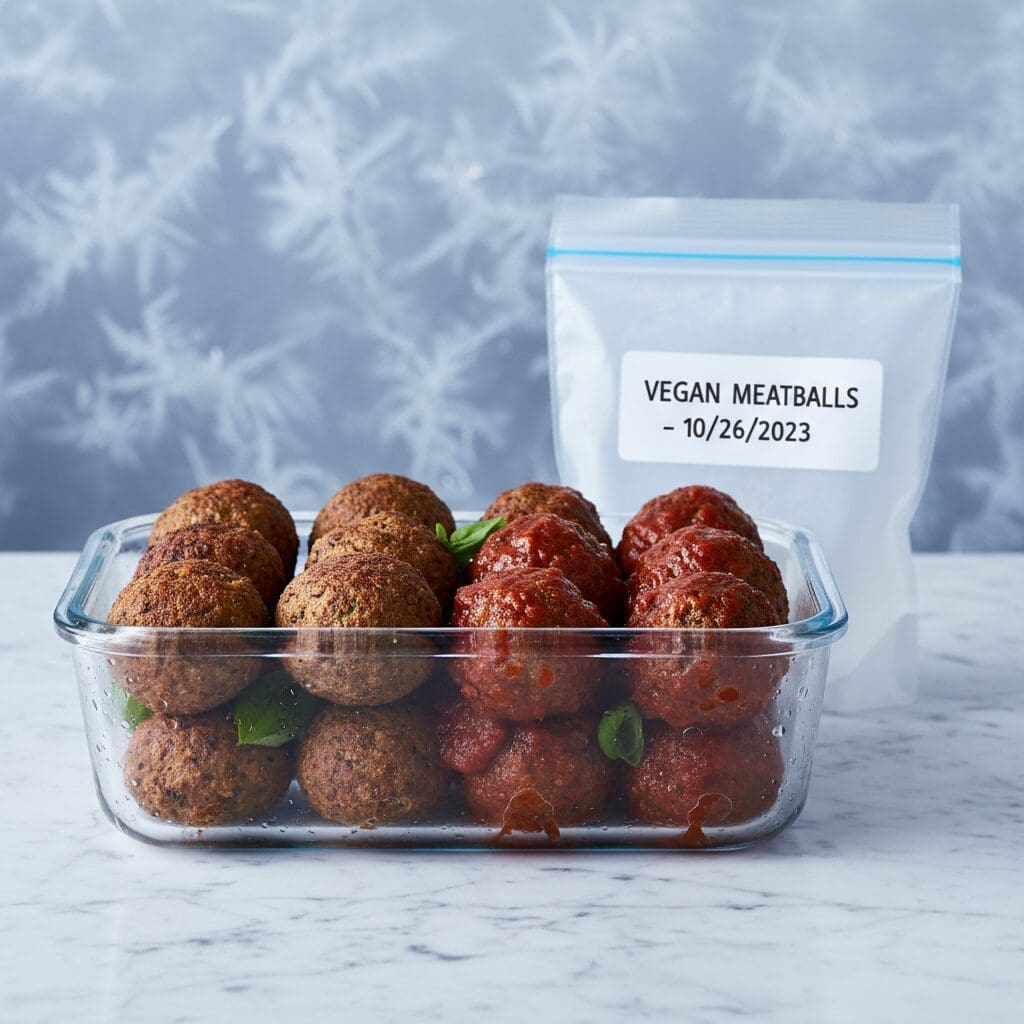
- Freezing: Cool completely, then freeze uncooked or cooked balls in a single layer on a tray before transferring to a freezer bag. They keep for up to 3 months. Thaw overnight in the fridge, then bake or simmer as directed.
- Reheating Tips: For best texture, reheat in the oven at 350°F for 10-15 minutes or microwave in short bursts. Avoid boiling in sauce if frozen, as it can make them denser.
According to USDA guidelines, always reheat to 165°F for safety. This longevity means you can prep ahead for busy weeks, aligning with sustainable eating habits promoted by the Academy of Nutrition and Dietetics.
Frequently Asked Questions
Can I make these gluten-free? Yes! Swap regular breadcrumbs for gluten-free ones or certified gluten-free rolled oats. Use GF pasta for the full meal.
Why do my meatballs fall apart? This is a common issue—ensure the flax egg is fully thickened and don’t overmix. Bake until fully firm, and handle gently in sauce.
What other beans can I use? Black beans or kidney beans work great for varied flavors. Lentils are another option, but process finely to avoid grittiness.
Are these kid-friendly? Absolutely—the mild seasoning appeals to picky eaters, and the familiar shape makes them fun. Hide extra veggies by adding finely chopped spinach to the mix.
How do I make them oil-free? Skip any greasing of the pan; use a non-stick sheet or silicone mat. The flax helps with natural moisture.
These FAQs address the most common queries from home cooks, ensuring your success on the first try.
Conclusion
These easy vegan chickpea meatballs prove that plant-based eating doesn’t require sacrifice—it’s all about smart, simple swaps that deliver comfort and nutrition. With pantry staples and minimal effort, you can enjoy a classic dish that’s kind to your body and the planet.
Experiment with the tips and variations to make it your own, and remember, consistent plant-based meals like this support long-term health as evidenced by ongoing research from the World Health Organization on vegan diets reducing chronic disease risk. Whip up a batch today and savor the satisfaction!
Thank you for your sharing. I am worried that I lack creative ideas. It is your article that makes me full of hope. Thank you. But, I have a question, can you help me?
Thanks for sharing. I read many of your blog posts, cool, your blog is very good.
Thank you for your sharing. I am worried that I lack creative ideas. It is your article that makes me full of hope. Thank you. But, I have a question, can you help me?