
Find Your Calm: How Mindfulness Meditation Reduces Stress and Improves Well-being

The constant buzz of notifications, looming deadlines, and personal responsibilities can leave even the most resilient among us feeling stressed and overwhelmed. According to the American Psychological Association, this chronic stress doesn’t just affect our mood; it takes a toll on our physical health, relationships, and overall quality of life.
Fortunately, there is a powerful, accessible tool to combat this modern-day epidemic: mindfulness meditation. This ancient practice, now backed by extensive scientific research, offers a pathway to a calmer, more focused, and more resilient mind.
In this article, we’ll delve into what mindfulness is, how it scientifically works to reduce stress, and how you can begin to incorporate it into your daily routine.
What Is Mindfulness Meditation?
At its core, as defined by pioneers like Jon Kabat-Zinn in his book Full Catastrophe Living, mindfulness is the practice of paying attention to the present moment on purpose, without judgment. It’s not about emptying your mind or stopping your thoughts; it’s about observing them as they come and go.
Mindfulness meditation is the formal practice you use to train this skill. It typically involves sitting in a quiet place, focusing on your breath, and gently bringing your attention back whenever your mind wanders.
Think of it as a workout for your brain, strengthening your ability to focus and stay grounded amidst the chaos of life.
The Science: How Mindfulness Rewires Your Brain for Calm
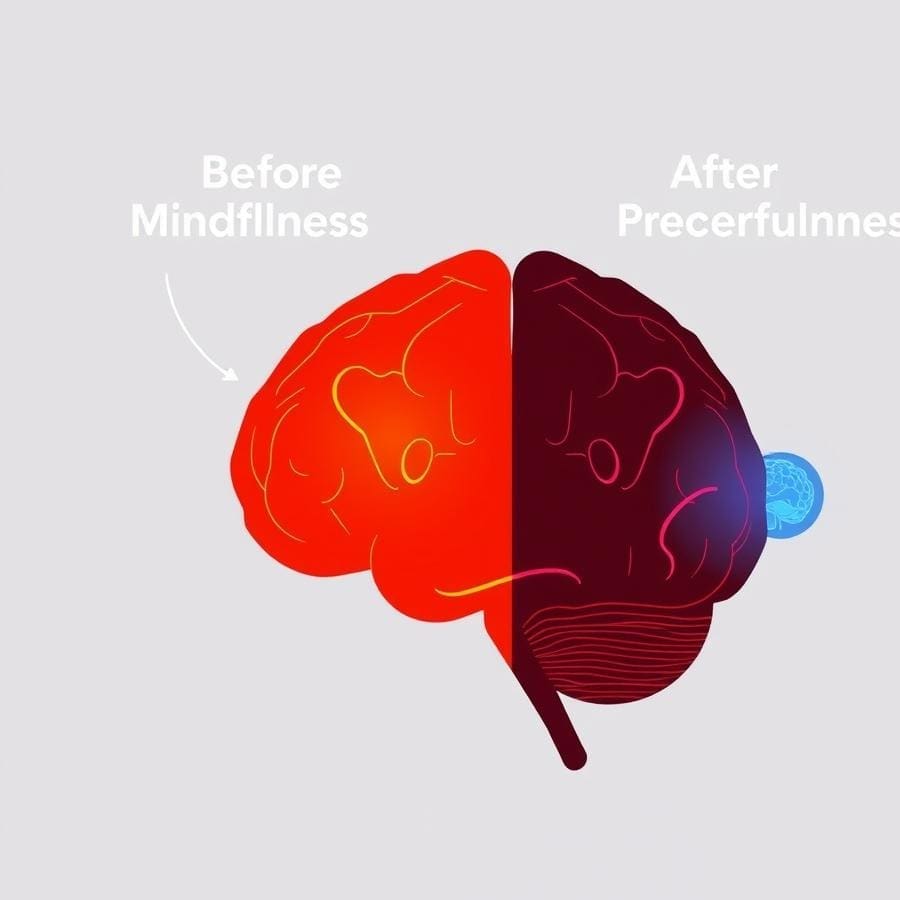
The benefits of mindfulness aren’t just anecdotal; they’re rooted in neuroscience. As we explore in our guide on how mindfulness meditation rewires your brain, studies using MRI scans show that regular meditation can actually change the structure and function of the brain.
Neuroscientific findings, including research from the Center for Healthy Minds at the University of Wisconsin-Madison, have shown it can decrease gray matter density in the amygdala, the brain’s ‘fight or flight’ center responsible for fear and stress. At the same time, it can increase density in the prefrontal cortex, which governs higher-order functions like awareness, concentration, and decision-making.
This shift helps you become less reactive to stressors and more intentional in your responses. Furthermore, with findings supported by studies in journals like JAMA Internal Medicine, mindfulness helps lower cortisol, the primary stress hormone, leading to a tangible feeling of relaxation and well-being.
A Simple 5-Minute Meditation for Beginners
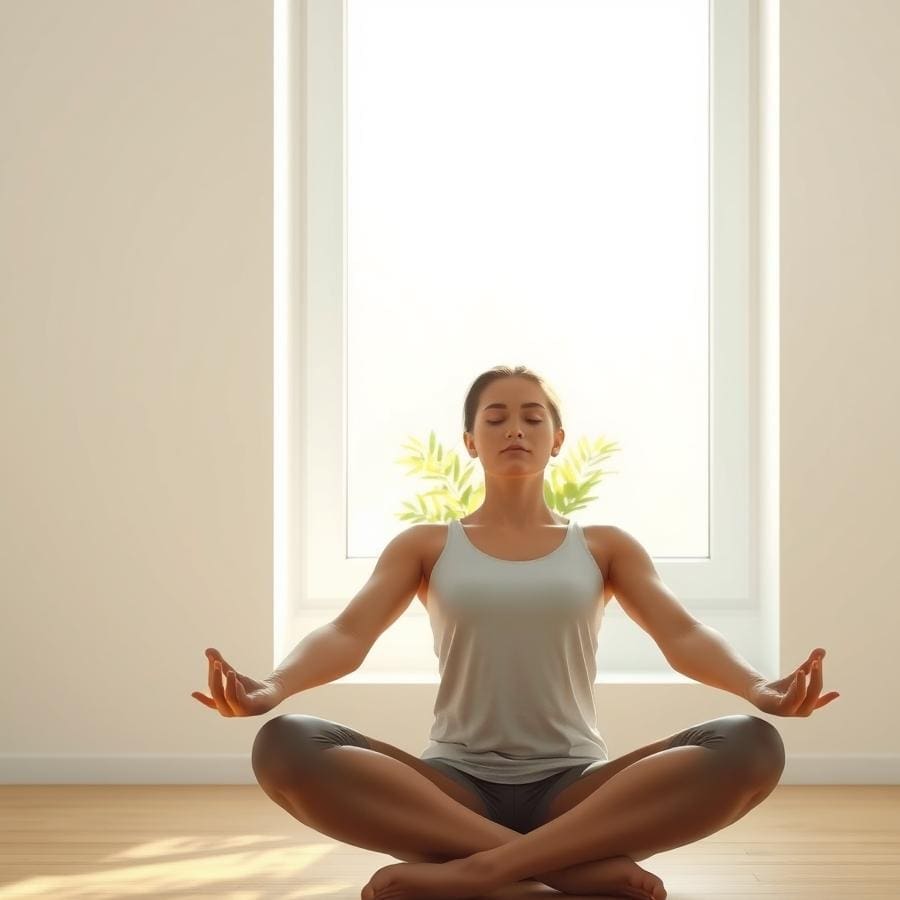
Getting started with mindfulness is simpler than you might think. You don’t need special equipment or a lot of time. Here’s a simple 5-minute practice you can do right now:
- Find a comfortable seat: Sit on a chair with your feet flat on the floor and your back straight but not stiff. Rest your hands on your lap.
- Close your eyes (or soften your gaze): Take a few deep breaths to settle in.
- Focus on your breath: Pay attention to the sensation of the breath entering and leaving your body. Notice the rise and fall of your chest or belly. Don’t try to change it; just observe.
- Acknowledge wandering thoughts: Your mind will inevitably wander. That’s completely normal. When you notice your mind has drifted, gently acknowledge the thought without judgment and guide your focus back to your breath.
- End with intention: After 5 minutes, gently bring your awareness back to the room and open your eyes. Notice how you feel.
Conclusion
Embracing mindfulness meditation is not about adding another task to your to-do list; it’s about giving yourself the gift of presence and peace. By consistently practicing, even for just a few minutes a day, you can fundamentally change your relationship with stress.
You learn to respond to life’s challenges with clarity and calm rather than with knee-jerk reactivity. Start your journey today and discover the profound peace that lies within the present moment.
Thank you for your sharing. I am worried that I lack creative ideas. It is your article that makes me full of hope. Thank you. But, I have a question, can you help me?