Is Gelatin Vegan? What It Is and What to Use Instead
In this guide8
- 01Is gelatin vegan? (The blunt answer)
- 02Wait, so it's basically boiled animal parts?
- 03Where gelatin hides (it's more than you think)
- 04The look-alike ingredients that confuse everyone
- 05Agar agar: the swap I reach for first
- 06Pectin and carrageenan: for jams and the softer stuff
- 07How to actually swap it in real life
- 08The bottom line
Short answer? No, gelatin is never vegan. It is made from the boiled skin, bones, and connective tissue of animals, usually cows and pigs. There is no plant version of gelatin itself, but there are excellent plant-based swaps.
I once spent twenty minutes in a supermarket aisle reading the back of a yogurt pot, because a friend had just told me that "some yogurts aren't even vegetarian, never mind vegan." I thought she was winding me up. She was not.
There, three lines down, in a fruit-on-the-bottom yogurt I'd eaten my whole life: gelatin. In yogurt. I put it back, mildly betrayed, and went down a rabbit hole I'm now going to save you the trouble of.
Gelatin is one of those ingredients that feels like it should be neutral. It's clear, it's flavorless, it sounds vaguely chemical and lab-made. It is the opposite of that. So let me tell you exactly what it is, the surprising places it hides, and the three plant swaps I actually keep in my cupboard.
Is gelatin vegan? (The blunt answer)
No. Gelatin is never vegan, and it isn't vegetarian either.
Gelatin is collagen, the structural protein that holds animal bodies together, pulled out of the skin, bones, and connective tissue of pigs and cows. To make it, those parts (mostly pig skin and cattle hide and bone left over from the meat industry) get simmered until the collagen breaks down, then it's filtered, dried, and ground into that innocent-looking colorless powder. Most commercial gelatin comes from pork and beef sources, which is also why you'll see "halal gelatin" and "kosher gelatin" marketed separately.
There's no plant version of the real thing. If a label says "gelatin," full stop, it came from an animal.
So this isn't a fuzzy honey-style debate where reasonable vegans land in different places. (Honey genuinely has gray areas, and I wrote about why honey isn't vegan separately.) Gelatin is a clean no.
Wait, so it's basically boiled animal parts?
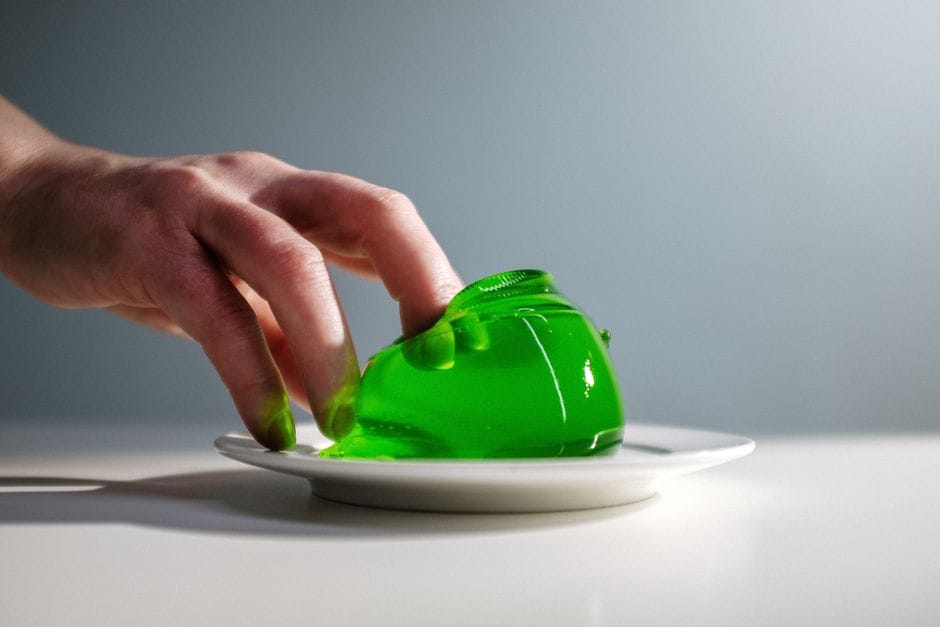 Photo: cottonbro studio / Pexels
Pretty much, yes. I know that's a lot to absorb while you're holding a packet of fruit pastilles.
Here's the part that reframes it for me: gelatin is a co-product of the meat industry. The skin and bones that don't get sold as meat get sent off and rendered into gelatin instead, which is part of why it's so cheap and so common.
It's efficient, from a slaughterhouse-economics point of view. It is also the reason a "just fruit and sugar" jelly dessert is built on cow and pig collagen.
You'll also see a few names that mean the same thing or come from the same place. Collagen powder, the trendy "beauty" supplement, is gelatin's close cousin, just processed a step further (it's called hydrolyzed collagen or collagen peptides) so it dissolves in cold liquid. Same animal source. Isinglass is a collagen product made from dried fish swim bladders, historically used to set and clarify foods. Hide glue and bone glue are, well, exactly what they sound like, and they share gelatin's origin story.
So when I say "gelatin is never vegan," I'm including the whole family.
Once you know what it is, the word starts jumping out at you on labels. Which brings us to the annoying part.
Where gelatin hides (it's more than you think)
Gelatin's superpower is texture. It makes things bouncy, chewy, wobbly, and glossy, so it turns up anywhere a food needs to set, hold a shape, or feel springy. The obvious suspects:
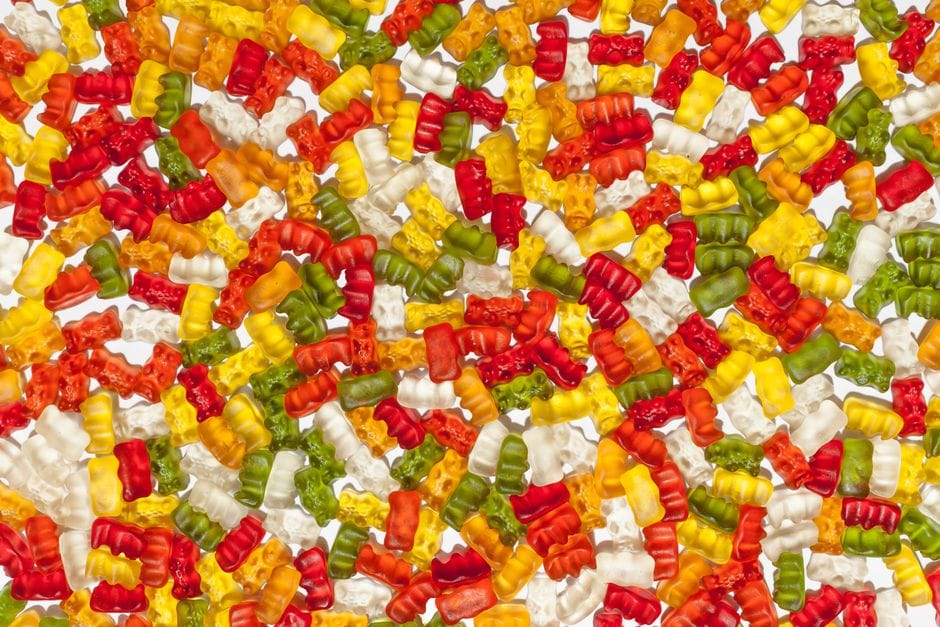
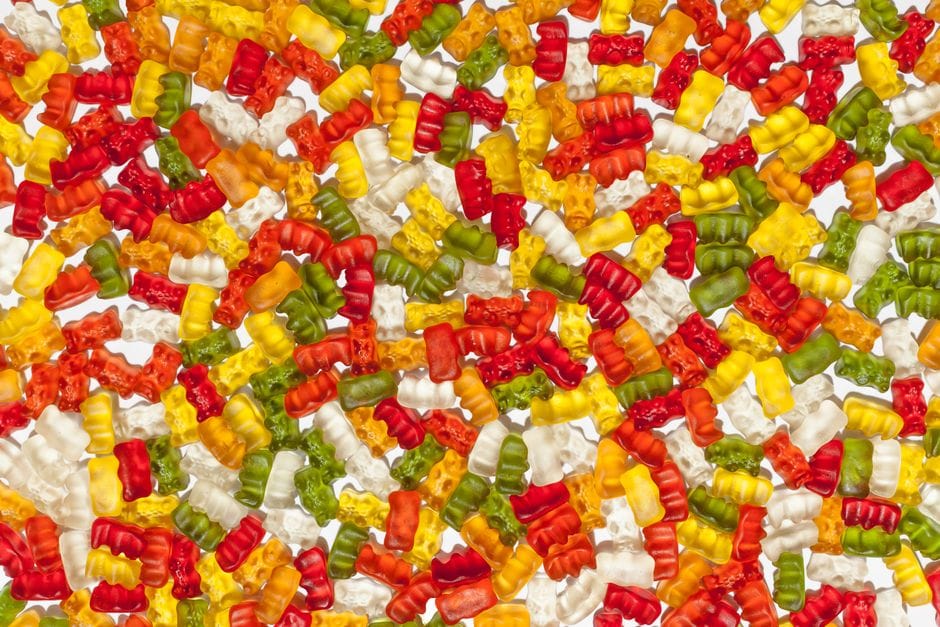
- Gummy candy. Gummy bears, fruit pastilles, soft chews, most springy sweets. That signature bounce is gelatin doing its job.
- Marshmallows. The whole reason a marshmallow holds its squishy structure. Classic ones are a gelatin product through and through.
- Jelly and jelly desserts. The wobble is the point, and the wobble is gelatin.
- Frosting and some whipped toppings. It's used as a stabilizer to keep frosting standing up and mousses holding their shape.
Then the sneaky ones, the labels I actually had to learn to check:
- Some yogurts. Especially low-fat and "set" style yogurts, where gelatin is added as a thickener to mimic the creaminess that the fat would otherwise provide. Not all yogurts, but enough that you can't assume.
- Supplement capsules and gel caps. This one catches people out constantly. The capsule shell itself, the part you swallow without thinking, is very often gelatin. Vitamins, fish-oil-style softgels, painkillers. The contents might be fine and the shell still isn't.
- Marshmallow-style cereal bits, mousses, panna cotta, aspic. Anywhere "set but soft" is the goal.
There's also a sneaky labeling wrinkle. On some products you won't see the word "gelatin" at all, you'll see vague phrasing like "gelling agent" or "stabilizer" with the specific source buried elsewhere, or nothing useful at all.
And gelatin can carry an E number in some regions (E441), which is easy to scroll right past if you don't know to look for it. The takeaway: a clean-looking front of the pack tells you nothing.
The back of the pack tells you, and sometimes even that needs decoding.
This is exactly the kind of trap where a quick label scan saves you. When I'm not sure, I run the ingredient list through our vegan ingredient checker, and for whole products I check the Is It Vegan database before I buy. It's faster than standing in an aisle squinting like I did with that yogurt.
The look-alike ingredients that confuse everyone
 Photo: Ron Lach / Pexels
Before we get to the swaps, two quick clarifications, because these trip people up.
Gelatin is not the same as glycerin (also called glycerol), even though both show up in capsules and candy. Glycerin can be made from plant oils or animal fat, so it's a "depends on the source" ingredient. Gelatin is always animal. Don't let the rhyme fool you.
And "gelatin-free" on a label does genuinely mean no gelatin, but it does not automatically mean vegan. A gelatin-free product could still contain dairy, egg, or honey. "Gelatin-free" answers one question, not all of them.
Same logic I apply to anything labeled "accidentally vegan," like the cross-contamination questions I dug into for whether Oreos are vegan.
Agar agar: the swap I reach for first
Now the fun part. You give up almost nothing.
Agar agar (sometimes just called agar) is made from red seaweed, and it's the closest thing to a gelatin replacement for firm, sliceable sets: think classic jelly, vegan panna cotta, a fruit terrine, or a wobble that holds a clean edge. It comes as powder, flakes, or bars, and powder is by far the easiest to measure.
The big difference you have to respect: agar sets much firmer than gelatin, and it needs to boil. Gelatin you can just bloom in cool water and stir in. Agar has to be brought to a proper boil for a minute or two to activate, then it sets as it cools, and it sets at room temperature, no fridge required.
A rough rule I use: about 1 teaspoon of agar powder per 1 cup of liquid for a firm jelly, less if you want it softer and more delicate. Start conservative, because over-agared jelly goes rubbery fast.
One catch worth knowing: a very acidic mix (lots of lemon or other tart juice) can weaken agar's set, so with sharp acidity you may want a little extra agar. This is actually where agar beats gelatin.
The enzymes in fresh pineapple, kiwi, and mango break protein down and stop gelatin from setting, but they have no effect on agar, because agar is a carbohydrate, not a protein. So the fresh-fruit problem people remember from gelatin simply does not apply here.
Two more habits that have saved me a wasted batch: don't add agar to a liquid that's already boiling and expect it to disperse evenly (whisk it into the cold liquid first, then heat), and if your set comes out too soft, you can remelt the whole thing, add a little more agar, and reset it. That second one is genuinely a relief the first time it happens, because gelatin is far less forgiving about a do-over.
Texture-wise, be honest with yourself about expectations. Agar gives you a clean, almost glassy set that holds a sharp edge, which is gorgeous for a layered fruit jelly or a molded dessert you want to turn out onto a plate.
What it does not give you is the soft, melt-on-the-tongue, slightly elastic wobble of a gelatin jelly. It's a different texture, not a worse one, but if you're chasing the exact mouthfeel of a childhood jelly, that's the gap.
Pectin and carrageenan: for jams and the softer stuff
Agar isn't always the right tool, so here are the other two.
Pectin comes from fruit, especially apples and citrus peel, and it's the natural setting agent behind jam and marmalade. If you've ever made jam, you've used pectin, possibly without buying any, because high-pectin fruits set themselves.
For a softer, spoonable, "spreadable" set rather than a firm wobble, pectin is your friend. It usually needs sugar and a bit of acid (like lemon juice) to set properly, which is why it lives in the jam world more than the jelly-dessert world.
For setting fruit on toast, I'd pick pectin over agar every time.
Carrageenan is also from red seaweed, and you've almost certainly eaten it without trying. It's the thickener and stabilizer in a lot of non-dairy milks, vegan puddings, ice creams, and squishy desserts, where it gives that smooth, creamy, slightly gelled body.
You're less likely to cook with raw carrageenan at home, but it's worth recognizing on a label as a plant-based "yes," not a red flag. (There's some online chatter about carrageenan and gut health, but the headline for this article is simpler: it's vegan.)
So: agar for firm jellies, pectin for jams and soft sets, carrageenan for creamy non-dairy textures. Different jobs, none of them animal.
How to actually swap it in real life
You won't be measuring agar by the gram for most of your life, so here's the practical version.
For candy and marshmallows, don't try to recreate them from gelatin-free first principles unless you want a project. Just buy the versions made for us. Plenty of brands now set gummies and marshmallows with pectin, agar, or modified starch and say "vegan" right on the front.
Read the front of the pack, then confirm on the back.
For supplements, look for "vegetarian capsules," "veggie caps," or "HPMC" (that's a plant cellulose capsule) on the bottle. Most major vitamin brands now offer a vegan-capsule line; you just have to pick it on purpose.
For cooking, keep a small tub of agar powder and you can handle jellies, panna cotta, and most molded desserts. Add pectin if you make jam. That genuinely covers it.
You can browse the wider list anytime in our vegan swaps hub, and if you want to go full from-scratch, the how-to guides walk through technique.
One honest note, because I try not to oversell: the swaps behave differently. Agar is firmer and needs heat, pectin needs sugar and acid, and neither gives the exact melt-in-the-mouth quality of a gelatin gummy. You adapt the recipe to the ingredient, not the other way around.
Once you do that a couple of times, it's second nature.
The bottom line
Gelatin is animal collagen, it's never vegan, and it hides in more places than the candy aisle, your yogurt, your frosting, and the capsule around your vitamins all included. But this is one of the easiest no's on the whole vegan checklist, because the plant swaps are cheap, widely available, and do the job.
Keep agar in the cupboard for anything that needs to set, reach for pectin when you're making jam, recognize carrageenan as a friendly face on a label, and pick veggie capsules on purpose. Then go eat a wobbly dessert with a completely clear conscience.
Frequently asked questions
Is gelatin vegan?+
No. Gelatin is a protein made by boiling down the skin, bones, and connective tissue of pigs and cows. There is no plant-based version of true gelatin, so anything that lists 'gelatin' on the label is not vegan. The good news is that agar agar and pectin do the same job.
What is gelatin actually made from?+
It is processed collagen, the structural protein in animal skin and bone. Most commercial gelatin comes from pig skin and cattle hides and bones left over from the meat industry. Boiling those parts releases collagen, which is then dried into the colorless powder or sheets you buy.
Is there a vegan substitute for gelatin?+
Yes, and there are three good ones. Agar agar (from seaweed) is the closest swap for firm jellies and panna cotta, pectin (from fruit) is best for jams and softer set desserts, and carrageenan (also seaweed) shows up in non-dairy milks and puddings. They behave differently, so you can't always sub them 1:1.
Are gummy bears and marshmallows vegan?+
Standard ones, no. Classic gummy bears and marshmallows get their chew and bounce directly from gelatin, so they are not vegan. Look for brands that specifically say vegan or 'gelatin-free,' which usually set their candy with pectin, agar, or modified starch instead.
Written by
VeganDigest Editorial is the small independent team that researches and fact-checks this site. We are not doctors or dietitians. For every is-it-vegan verdict we read the product's current ingredient list and manufacturer information, and for anything health-related we report guidance from recognized bodies such as the NHS, the Vegan Society, and the Academy of Nutrition and Dietetics rather than offering medical advice. Every page shows the date it was last verified, and our full process is on the How We Verify page.
Comments