Is Naan Bread Vegan? What the Ingredients Reveal
In this guide6
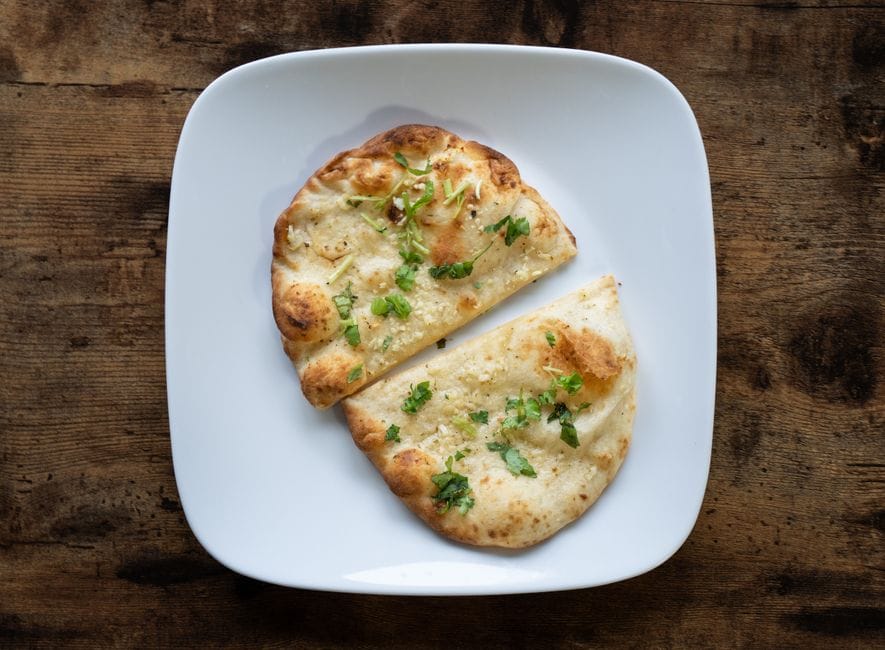
Traditional naan is not vegan. The classic recipe relies on yogurt, ghee (clarified butter), and often milk or eggs, all of which are animal-derived. That said, a small but growing number of store-bought brands and homemade recipes make fully plant-based naan that replicates the soft, pillowy texture without any animal products.
What Is Naan Bread?
Naan is a leavened flatbread with roots in South and Central Asian cuisine, tracing back at least to the 14th century when Indo-Persian poet Amir Khusrau described it at the royal court of the Delhi Sultanate. The word itself comes from the Persian "nan," simply meaning bread.
Traditionally baked in a tandoor, a cylindrical clay oven that reaches extremely high heat, naan develops its signature charred bubbles and chewy interior. Today it is sold in supermarkets worldwide and served alongside curries, used as a wrap, or eaten as a standalone snack. The widespread availability has made it a staple in many kitchens, but the standard commercial and restaurant recipe has never shed its dairy roots.
Why Traditional Naan Is Not Vegan
Four ingredients make most naan off-limits for vegans:
Yogurt is the most consistent offender. It softens the dough, helps it rise, and gives naan its characteristic tang. Without a substitute, the bread turns out denser and less tender.
Ghee is clarified butter, and it is almost always brushed over the bread right after baking. This is what gives restaurant naan its glossy sheen and rich, buttery flavor.
Milk often appears in the dough itself, sometimes alongside yogurt, to build extra softness.
Eggs show up less consistently but are still common enough to watch for, particularly in commercial recipes where they act as a binder and help with browning.
The result is a bread that is genuinely delicious but firmly in non-vegan territory by default. When you see naan on a restaurant menu, you can reasonably assume it contains at least yogurt and ghee unless the kitchen explicitly says otherwise.
Which Store-Bought Naan Brands Are Vegan?
The supermarket aisle is not hopeless, but you have to read labels carefully because most mainstream naan contains dairy. Here are the brands currently making vegan-verified options:
Atoria's Family Bakery offers both a Traditional Naan and a Garlic Naan that carry Non-GMO Project Verification and are certified vegan. Their ingredient list includes wheat flour, water, cane sugar, canola oil, wheat gluten, sea salt, cultured wheat, baking soda, yeast, and organic enzymes. No dairy, no eggs, no gums. These are available at Walmart, Safeway, and through Amazon.
Toufayan Bakeries labels its Original Tandoori Naan and Garlic Tandoori Naan as "naturally vegan" and Kosher Pareve on their official product pages. Pareve certification independently confirms the absence of meat and dairy under Jewish dietary law, which is a useful secondary signal for vegans.
Stonefire Organic Original Naan is an important exception within the Stonefire line. The company's standard naan explicitly contains buttermilk and ghee and is not vegan, but their organic variety uses organic wheat flour, soybean oil, sea salt, and plant-based leavening agents. No dairy appears in the organic line. The two products look similar on the shelf, so always check for the "Organic" label on the packaging.
A note on Trader Joe's: their most popular naan varieties contain dairy and are not vegan.
Ingredient formulations change. Always scan the allergen statement on the package before buying, even for brands listed here.
How to Spot Vegan Naan at a Restaurant or on a Label
At a restaurant, the safest approach is to ask directly before ordering. Specifically ask whether the dough contains yogurt or milk, and whether the finished bread is brushed with butter or ghee. Many Indian restaurants are happy to brush naan with oil instead of ghee if you request it, though the dough itself often still contains dairy.
On a packaged label, scan the ingredients list and the allergen statement. Watch for any of these terms:
- Yogurt, curd, or cultured milk
- Buttermilk or skim milk
- Ghee or clarified butter
- Butter or cream
- Egg or egg white
- Whey or casein (both milk proteins)
The allergen block at the bottom of the label will flag "Contains: Milk" or "Contains: Eggs" if either is present, which makes the check faster. A Kosher Pareve symbol is also a useful shortcut, since it guarantees the product contains no meat or dairy ingredients.
How to Make Vegan Naan at Home
Homemade vegan naan is straightforward and only requires pantry staples. The dairy-free swap that works best for yogurt is coconut cream or an unsweetened non-dairy yogurt made from soy, almond, or oat milk. Both keep the dough tender and slightly tangy.
A basic vegan naan dough comes together with:
- All-purpose flour (or a mix of bread flour and all-purpose)
- Instant or active dry yeast
- Warm water
- Coconut cream or plain non-dairy yogurt
- Olive oil or neutral plant-based oil
- Salt and a pinch of sugar to feed the yeast
- Baking powder for extra lift
After the dough rests and rises, roll each piece into an oval, cook it in a dry cast-iron skillet on high heat for about 90 seconds per side until char spots appear, then brush immediately with melted vegan butter and minced garlic if desired. The result is genuinely close to restaurant naan and free of every animal product.
For those avoiding gluten as well, some recipe developers have had success substituting a gluten-free flour blend, though the texture will differ and may need xanthan gum to hold together.
Vegan Naan in Context
Naan sits in the same category as many other breads that look simple but hide dairy: brioche, some dinner rolls, and garlic bread all commonly use butter or milk. The difference is that naan has a cultural association with vegetarian Indian cuisine, which can give the false impression that it is automatically plant-based. It is not, at least not in its traditional form.
The good news is that the vegan food space has moved quickly here. Plant-based versions from Atoria's and Toufayan are available at major retailers without hunting through specialty stores. And at home, skipping the yogurt and ghee requires almost no adjustment to the flavor or texture when the right substitutes are used. Naan can absolutely belong in a vegan kitchen.
Frequently asked questions
Is naan bread vegan?+
Traditional naan is not vegan. It typically contains yogurt, ghee (clarified butter), and sometimes milk or eggs. A few store-bought brands such as Atoria's Family Bakery and Toufayan make certified vegan versions, and naan can be made at home without any animal products.
Does naan always contain dairy?+
Standard restaurant and most supermarket naan contains dairy in the form of yogurt, milk, or ghee. However, some certified vegan brands are completely dairy-free, and homemade naan made with plant-based yogurt and oil contains no dairy at all.
What can I use instead of yogurt in vegan naan?+
Coconut cream or unsweetened non-dairy yogurt made from soy, almond, or oat milk are the closest substitutes for dairy yogurt in naan dough. Both provide the acidity and fat content that keep the bread tender and soft.
Is Stonefire naan vegan?+
Standard Stonefire naan is not vegan. It contains buttermilk and ghee. However, the Stonefire Organic Original Naan line uses an entirely dairy-free and egg-free recipe and is suitable for vegans.
Written by
VeganDigest Editorial is the small independent team that researches and fact-checks this site. We are not doctors or dietitians. For every is-it-vegan verdict we read the product's current ingredient list and manufacturer information, and for anything health-related we report guidance from recognized bodies such as the NHS, the Vegan Society, and the Academy of Nutrition and Dietetics rather than offering medical advice. Every page shows the date it was last verified, and our full process is on the How We Verify page.

Comments