Is Palm Oil Vegan? Technically Yes, Ethically Complicated
In this guide7
Short answer? Yes, palm oil is technically vegan, but it is ethically contested. It comes from a plant, so it passes the ingredient test. The real debate is about deforestation and the endangered animals that lose their habitat to it.
I once spent twenty minutes in a supermarket aisle reading the back of a cracker box like it owed me money. The ingredients were fine. Flour, salt, yeast, vegetable oil.
All plant stuff. And yet I put it back, because "vegetable oil" on a cheap packaged snack almost always means palm oil, and palm oil is the one ingredient that has me arguing with myself in public.
Here is the thing nobody tells you when you go vegan: the hardest questions aren't milk and eggs. Those are easy. The hard questions are the plant-based ingredients that are still tangled up in real harm.
Palm oil is the king of that category. It passes the vegan test on a technicality and fails the spirit of the thing in a way that genuinely keeps me up some nights.
Let me walk you through all of it, because the honest answer has more layers than a yes or a no.
Is palm oil vegan?
Yes. By the strict definition, palm oil is vegan.
It comes from the fruit of the oil palm tree, Elaeis guineensis. You press the reddish-orange fruit for palm oil and crack the seed inside for palm kernel oil. Both are squeezed out of a plant.
No animals are added, no animal processing is involved, nothing about the oil itself came from a living creature. If you are checking the ingredient against the Vegan Society's definition of veganism, palm oil clears it cleanly.
So if a friend asks "wait, is palm oil even vegan?" the literal answer is yes, the same way avocado oil or olive oil is vegan. If you only care about whether an animal ingredient is in your food, you can stop reading here and go eat the cracker.
But almost nobody who asks me this question is only asking about ingredients. They are asking the bigger thing.
Why it's ethically complicated
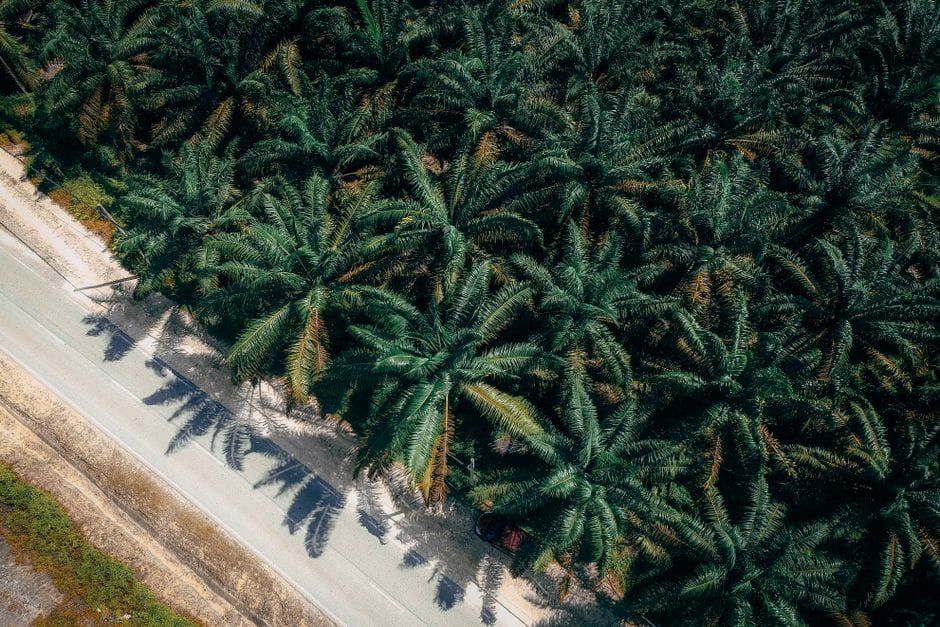 Photo: Pok Rie / Pexels
Veganism, at its core, isn't a diet. It's about excluding animal exploitation and cruelty as far as is practicable. And palm oil, despite being a plant, is one of the most efficient animal-harming substances on the planet.
Oil palms only grow in a narrow tropical band, and the biggest producers, Indonesia and Malaysia, have cleared enormous stretches of rainforest to plant them. That forest is home to orangutans, Sumatran tigers, and pygmy elephants, all of which are endangered, the orangutan and the Sumatran tiger critically so.
When the forest comes down, the animals lose everything. They get displaced, they starve, and in the worst cases they are killed as pests when they wander onto plantations.
So you end up with a perfectly plant-based oil whose production directly kills and displaces wild animals by the thousand. That is the contradiction. The ingredient is vegan.
The supply chain is anything but.
It gets worse than habitat loss, too. A lot of plantation expansion happens by draining and burning peatland, which releases enormous amounts of stored carbon and chokes the region in haze for weeks.
And the human cost is real, with documented labor abuses and land conflicts with Indigenous communities on some plantations. None of that is "animal product" in the literal sense, but if your reason for being vegan is that you don't want to bankroll suffering, it's hard to look at all of that and shrug.
This is the exact tension that makes processed snacks so tricky to evaluate, and it's why the question comes up over and over in our Is It Vegan database. It's also the part I think matters most when people ask whether Oreos are really vegan, because the cross-contamination warning is a technicality and the palm oil is a real ethical question.
If your veganism includes the environment and wild animals, and for most people it does, palm oil is not something you can wave through.
The boycott paradox nobody mentions
Here is where I have to complicate the easy story, because the easy story ("palm oil bad, never buy it") is wrong, or at least incomplete.
Palm is the highest-yielding vegetable oil crop in the world by a huge margin. It supplies somewhere around a third of all vegetable oil globally while using under a tenth of the land devoted to oil crops.
Soy, coconut, sunflower, and rapeseed all produce far less oil per acre. So if everyone boycotted palm oil tomorrow and switched to one of those, you would need vastly more farmland to make up the difference, and that land would also come from somewhere, often from forests in other parts of the world.
The IUCN, the global conservation body that maintains the endangered species Red List, said roughly this in a 2018 report: a blanket palm oil boycott would likely just shift the deforestation and biodiversity loss to other crops and other regions, not stop it. One often-cited 2020 study found that coconut, the wholesome-sounding alternative, threatens more species per ton of oil than palm does, because it grows on tropical islands packed with unique wildlife.
That per-ton framing is disputed (in raw numbers palm still harms far more species), but the basic point holds: no single oil crop is clean.
I find this genuinely humbling. The instinct to just ban the bad thing feels clean and righteous, and it might make the problem worse.
There's also a basic economics point worth sitting with: palm oil employs millions of small farmers across Indonesia, Malaysia, and West Africa, and a lot of them aren't running mega-plantations. They're families on a few acres. A boycott from wealthy countries doesn't gently nudge the industry toward virtue.
It can pull the floor out from under the people with the least power in the chain, while the biggest producers simply find other buyers.
So the "never buy palm oil" sticker on someone's reusable shopping bag, however well meant, can be the kind of activism that feels good and accomplishes the opposite. That doesn't mean palm oil gets a pass.
It means the real lever is not "no palm oil," it's "no deforestation palm oil." Which brings us to the certification fight.
What RSPO sustainable palm oil actually means
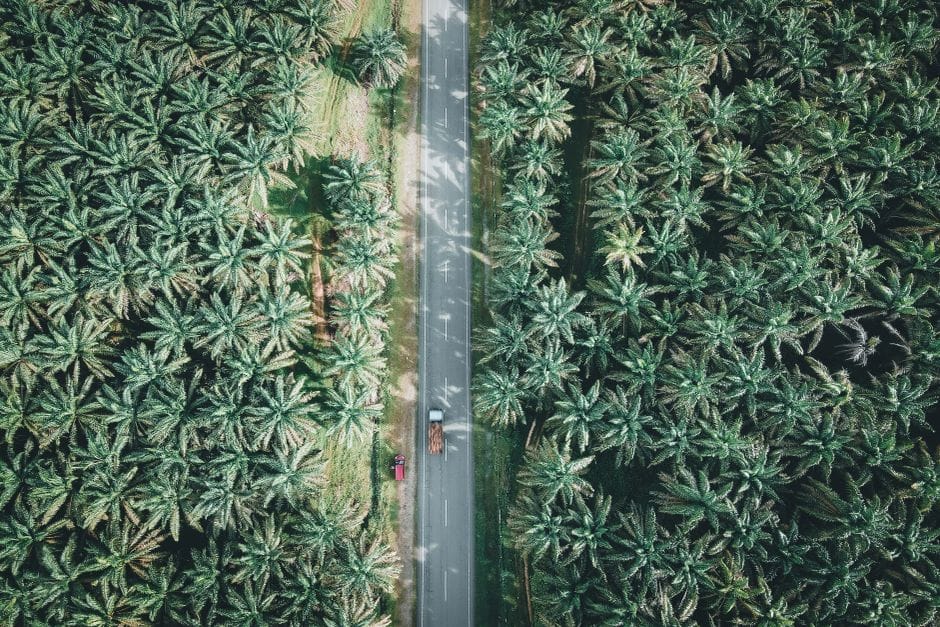 Photo: Pok Rie / Pexels
You will see "sustainable palm oil" and a little RSPO logo on a lot of products, and your first instinct is relief. Finally, a guilt-free version. Slow down.
RSPO stands for the Roundtable on Sustainable Palm Oil. It's an industry body that certifies palm oil grown without clearing primary forest or burning peatland. In theory it's exactly the fix the boycott paradox calls for.
In practice, the certification comes in tiers, and the tiers matter enormously.
The strongest tiers are "identity preserved" and "segregated," where the certified sustainable oil is physically kept separate from the dirty stuff all the way to your jar. Then there's "mass balance," where sustainable and conventional oil get mixed but the amounts are tracked.
And at the bottom is "book and claim," where a company buys credits to fund sustainable growers somewhere while the oil in their product can be ordinary deforestation palm oil. Same logo. Wildly different reality.
That bottom tier is why Greenpeace and other groups have accused parts of the RSPO system of being greenwashing. A brand can slap "supports sustainable palm oil" on the box while the oil inside changed nothing on the ground.
So the certification isn't worthless, far from it, but the logo alone doesn't tell you which tier you're getting. If you want the version that genuinely spared a forest, look for "segregated" or "identity preserved" RSPO, or brands that publish their sourcing.
This is the actual debate. Not palm versus no palm, but credible certification versus the cheap version of it.
Where palm oil hides (and the 200-plus names)
Even when you decide to limit palm oil, it fights you, because it is almost never labeled "palm oil." It's the chameleon of the ingredients list. By some counts there are over two hundred names that can indicate palm derivatives, and you'll meet a lot of them on food labels specifically.
The big one is plain "vegetable oil" or "vegetable fat," which on cheap snacks, spreads, and baked goods is very often palm. Then there's palm kernel oil, palmitate, palm olein, and palm stearin.
The trickier food additives include sodium stearoyl lactylate (a dough conditioner in a lot of bread), stearic acid, glyceryl stearate, and sodium palmitate. Even "sodium lauryl sulfate" and a few emulsifiers can trace back to palm, though those show up more in non-food products.
You are not going to memorize two hundred names, and you shouldn't try. This is exactly the kind of decoding our vegan ingredient checker was built for, so you can paste in an ingredients list and find out what's actually hiding in it without becoming a part-time chemist.
When I'm shopping, I mostly watch for "vegetable oil" with no origin stated and the stearate family, and I check the rest with the tool.
It's worth knowing this is a food problem too, not only a cosmetics one. The palm derivatives in your crackers, instant noodles, chocolate spread, margarine, and store-brand cookies are the everyday exposure for most people.
Palm oil is popular with food manufacturers for boring, practical reasons: it's cheap, it's solid at room temperature without hydrogenation, it has a long shelf life, and it doesn't carry a strong flavor. That combination is hard to replace, which is exactly why it ended up in roughly half the packaged products on the shelf in the first place.
How individual vegans actually decide
So where does a real person land? Honestly, all over the map, and I've made peace with that.
Some vegans avoid palm oil entirely, treating it like any other source of animal harm. Clean and consistent, though it eliminates a startling share of packaged food and pushes you toward those higher-impact alternative oils.
Some buy only segregated RSPO certified palm, betting that funding genuinely deforestation-free plantations does more good than a boycott that just moves the damage. Some, and I'll admit I drift here, minimize rather than purify: cook from scratch where it's easy, dodge the worst offenders, and not melt down over a cracker at a party.
And some take the view that individual shopping choices barely move an industrial supply chain, so the real action is voting, donating to forest conservation, and pressuring brands, not policing your own pantry. I don't fully agree, but I won't pretend it's a stupid position. It isn't.
What I'd gently push back on is the all-or-nothing energy. Veganism is "as far as is practicable," and practicable includes living in a world where palm oil is in roughly half the supermarket. You're allowed to make an imperfect, informed choice on purpose.
The worst version of this is paralysis, where the gray area is so exhausting you give up reading labels at all. If you want help building a sustainable everyday habit instead of a guilt spiral, our how-to hub and vegan swaps section are where I'd start, because cooking more of your own food quietly solves a lot of the palm oil problem without a single agonizing decision in the aisle.
The bottom line
Palm oil is vegan. Full stop, by ingredient, it passes. The thing it doesn't pass is the gut check, and you shouldn't expect it to, because the harm here is real and it's measured in burned forest and displaced orangutans.
But the clean righteous move, boycott it all, is the one position the evidence doesn't fully support, because palm is so land-efficient that quitting it can shift the wreckage to coconut and soy. The strongest stance isn't "no palm oil," it's "no deforestation palm oil": buy segregated RSPO when you can, decode the hidden names with the ingredient checker, cook from scratch where it's painless, and put your real energy into the brands and policies that actually clear forests.
Make the call on purpose. That's the whole game with palm oil, and it's the most honestly vegan thing you can do with an ingredient this complicated.
Frequently asked questions
Is palm oil vegan?+
Yes, by ingredient. Palm oil is pressed from the fruit of the oil palm tree, so it contains nothing animal-derived and clears the strict vegan definition. The complication is ethical, not dietary: palm oil production drives deforestation and habitat loss, which sits uneasily with veganism's harm-reduction goals.
Why do some vegans avoid palm oil if it's plant-based?+
Because veganism is about reducing harm to animals, and palm plantations destroy the rainforest homes of orangutans, Sumatran tigers, and pygmy elephants. So while palm oil isn't an animal product, growing it kills and displaces animals at scale. Many vegans treat that as a reason to minimize it, even though it technically passes the ingredient test.
Is RSPO certified sustainable palm oil actually better?+
Sometimes, but the label is weaker than it sounds. RSPO certification comes in tiers, and the lowest tier ('book and claim') lets a company buy credits without their actual oil being deforestation-free. Critics including Greenpeace have called parts of the system greenwashing. Look for 'segregated' or 'identity preserved' RSPO if you want the real thing.
Is boycotting palm oil the most ethical choice?+
Not necessarily, and this surprises people. Palm is the highest-yielding oil crop by a wide margin, so replacing it with soy, coconut, or rapeseed would need far more land and could push deforestation elsewhere. The IUCN has warned that a blanket boycott may shift the damage rather than stop it. Demanding genuinely sustainable palm is often the stronger position.
Written by
VeganDigest Editorial is the small independent team that researches and fact-checks this site. We are not doctors or dietitians. For every is-it-vegan verdict we read the product's current ingredient list and manufacturer information, and for anything health-related we report guidance from recognized bodies such as the NHS, the Vegan Society, and the Academy of Nutrition and Dietetics rather than offering medical advice. Every page shows the date it was last verified, and our full process is on the How We Verify page.
Comments