Types of Vegetarian: Every Diet on the Spectrum Explained

In this guide5
There are four recognised vegetarian diets: lacto-ovo, lacto, ovo, and vegan. Pescatarians and flexitarians are often grouped nearby in conversation, but neither qualifies as fully vegetarian because both may include animal flesh.\n\nUnderstanding the differences matters whether you are making a personal choice, cooking for someone else, or navigating labels at a restaurant. This guide covers each category, what it allows, what it excludes, and how they compare on nutrition.
The Four Recognised Vegetarian Diets
The word "vegetarian" covers a spectrum. All four variants below exclude meat, poultry, and seafood. They differ only in whether they allow dairy, eggs, or both.
Lacto-ovo vegetarian is the most common form. The prefix "lacto" comes from the Latin for milk and "ovo" from the Latin for egg. Lacto-ovo vegetarians eat dairy products (milk, cheese, yoghurt, butter) and eggs but avoid all animal flesh including fish, shellfish, and poultry.
Lacto vegetarian diets include dairy but exclude eggs alongside all animal flesh. This pattern is common in parts of South Asia and is closely aligned with certain Hindu and Jain traditions.
Ovo vegetarian is the mirror: eggs are permitted, dairy is excluded, and all animal flesh remains off the table. Ovo vegetarians often rely on eggs as a primary complete protein source.
Vegan is the strictest category. A vegan diet excludes every animal-derived food: meat, fish, shellfish, poultry, dairy, eggs, and honey. The Vegan Society defines veganism as a philosophy that seeks to exclude, as far as is possible and practicable, all forms of exploitation of animals, extending well beyond diet to clothing and consumer products.
Pescatarian and Flexitarian: Close but Not Vegetarian
Two popular eating patterns often appear alongside vegetarian diets in guides and menus, so it is worth clarifying exactly where they stand.
Pescatarian diets are plant-focused and exclude beef, chicken, turkey, and other land-animal flesh, but they include fish and seafood. Whether a pescatarian also eats eggs and dairy varies by individual preference. Because fish is animal flesh, pescatarian is not technically a vegetarian diet. The Vegetarian Society and most nutrition bodies classify it as a semi-vegetarian or fish-inclusive plant-based pattern.
Flexitarian (sometimes called semi-vegetarian) describes a primarily plant-based diet where meat, poultry, or fish is eaten occasionally or in small amounts. There is no formal threshold for how infrequently animal products must appear. By definition, flexitarians eat some animal flesh, so the diet is not vegetarian. It is best understood as a step on a continuum toward more plant-based eating rather than a fixed category.
Quick Comparison Table: What Each Diet Includes and Excludes
| Diet | Meat and poultry | Fish and seafood | Dairy | Eggs | Honey | Technically vegetarian |
|---|---|---|---|---|---|---|
| Lacto-ovo vegetarian | No | No | Yes | Yes | Varies | Yes |
| Lacto vegetarian | No | No | Yes | No | Varies | Yes |
| Ovo vegetarian | No | No | No | Yes | Varies | Yes |
| Vegan | No | No | No | No | No | Yes (strictest form) |
| Pescatarian | No | Yes | Varies | Varies | Varies | No |
| Flexitarian | Occasionally | Occasionally | Varies | Varies | Varies | No |
Note on honey: vegetarian bodies differ on this. The Vegan Society excludes honey; most vegetarian (non-vegan) organisations treat it as a personal decision.
Nutrition and Health: What the Evidence Shows
A well-planned vegetarian or vegan diet can meet all nutritional needs for adults. The Academy of Nutrition and Dietetics published its updated position in January 2025, valid through December 2032, concluding that appropriately planned vegetarian and vegan dietary patterns are nutritionally adequate and associated with lower incidence of cardiovascular disease, reduced body mass index, improved blood pressure and cholesterol levels, and better glycemic control in adults with type 2 diabetes.
The Academy also emphasises that not all plant-based diets are inherently healthy. A diet built on processed alternatives rather than whole foods loses much of its benefit, which is why the quality of food choices within any vegetarian pattern matters as much as the category itself.
The NHS identifies several nutrients that require consistent attention on vegetarian and especially vegan diets:
- Vitamin B12: Found naturally only in animal products. All vegans, and vegetarians who eat minimal dairy or eggs, need a reliable B12 source through fortified foods (yeast extract, plant milks, breakfast cereals) or a supplement.
- Iron: Plant-based iron is less readily absorbed than iron from meat. Pairing iron-rich foods (lentils, dark leafy greens, fortified cereals, dried apricots) with vitamin C improves absorption significantly.
- Calcium: Dairy-free vegetarians and vegans should rely on fortified plant milks, tofu set with calcium sulphate, kale, and broccoli.
- Omega-3 fatty acids: Short-chain omega-3s from flaxseed, walnuts, and chia seeds are available across all vegetarian diets. For long-chain EPA and DHA (the forms most directly used by the body), algae-based omega-3 supplements provide a direct vegan source, since algae is where fish obtain these fatty acids in the first place.
- Vitamin D: Applies broadly, not only to vegetarians. Fortified foods and a daily supplement through autumn and winter are recommended by the NHS for everyone in the UK.
Lacto-ovo vegetarians have the broadest safety net because eggs and dairy cover B12, calcium, and some D3. Vegans require the most planning but achieve nutritional adequacy reliably through supplementation and food variety.
Which Type Is Right for You
There is no single answer. The right category depends on your health goals, ethical position, cultural background, and practical circumstances.
If you are reducing animal product consumption for the first time, a lacto-ovo vegetarian pattern offers the gentlest transition because it keeps familiar protein and calcium sources in place. Lacto vegetarian suits those who want to avoid eggs for ethical or digestive reasons while keeping dairy. Ovo vegetarian is a good fit when dairy is avoided but eggs are acceptable.
Vegan is the choice aligned with the broadest ethical commitment to animals, and it can be nutritionally complete when approached with care. Plenty of long-term vegans maintain excellent health with the right supplementation routine.
Pescatarian and flexitarian patterns are useful stepping stones if a full vegetarian commitment feels out of reach right now. Both reduce overall meat consumption compared with an omnivorous diet, and both have been associated with improved diet quality in population studies. They simply should not be labelled as vegetarian in shared spaces like catering or ingredient labelling, because they allow animal flesh.
Frequently asked questions
Is a pescatarian a type of vegetarian?+
No. Pescatarians eat fish and seafood, which are animal flesh. Vegetarian diets exclude all animal flesh by definition. Pescatarian is best described as a semi-vegetarian or fish-inclusive plant-based pattern, not a true vegetarian diet.
What is the difference between lacto and lacto-ovo vegetarian?+
A lacto vegetarian eats dairy products such as milk, cheese, and yoghurt but avoids eggs as well as all animal flesh. A lacto-ovo vegetarian eats both dairy and eggs but still avoids all animal flesh including fish and poultry.
Can vegans get enough protein without meat or dairy?+
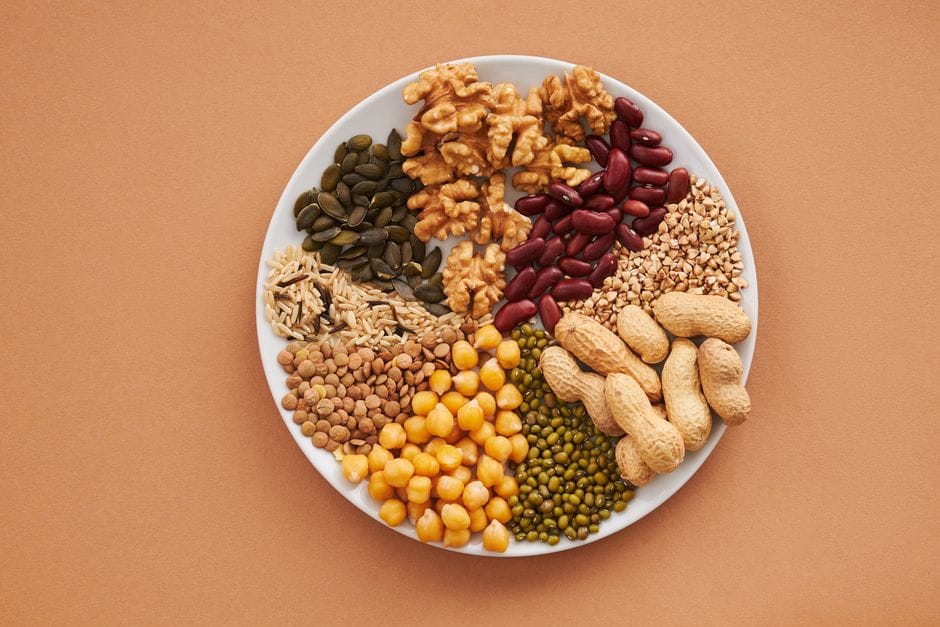
Yes. Legumes (lentils, chickpeas, black beans), tofu, tempeh, edamame, seitan, and combinations of whole grains and pulses all provide adequate protein. The Academy of Nutrition and Dietetics confirms that a varied vegan diet meets adult protein requirements without needing supplements for protein specifically.
Do vegetarians need to take supplements?+
It depends on the type. Lacto-ovo vegetarians who eat a varied diet are generally well covered for most nutrients, though a vitamin D supplement is widely recommended through winter months. Vegans are strongly advised to supplement vitamin B12 reliably, and may also benefit from algae-based omega-3, vitamin D, and iodine supplements depending on their diet. The NHS and the Academy of Nutrition and Dietetics both highlight B12 as the most critical supplement for anyone avoiding all animal products.
Written by
VeganDigest Editorial is the small independent team that researches and fact-checks this site. We are not doctors or dietitians. For every is-it-vegan verdict we read the product's current ingredient list and manufacturer information, and for anything health-related we report guidance from recognized bodies such as the NHS, the Vegan Society, and the Academy of Nutrition and Dietetics rather than offering medical advice. Every page shows the date it was last verified, and our full process is on the How We Verify page.

Comments