Creamy Vegan Mashed Potatoes (The Foolproof Method)
 Jump to recipe ↓
 In this guide5
Vegan mashed potatoes can be every bit as rich, fluffy, and satisfying as the dairy version. This recipe uses Yukon Gold potatoes, vegan butter, and warm unsweetened plant milk to deliver a bowl that is genuinely creamy without any cow milk or cream in sight.
The method matters as much as the ingredients. Salted boiling water, a thorough drain, and a hand masher (never a blender) are the three things that separate silky mashed potatoes from a gluey mess. Follow the steps below and you will have a crowd-pleasing side dish on the table in about 35 minutes.
Why This Recipe Works
The secret to genuinely creamy dairy-free mashed potatoes comes down to three decisions made before you even pick up a masher.
Potato choice matters. Yukon Golds have a naturally buttery flavor and a medium starch level that gives you fluffy mashed potatoes without the pasty texture you can get from high-starch Russets alone. You can also use half Yukon Gold and half Russet for extra fluffiness with the same rich taste.
Warm liquid prevents gummy results. Cold plant milk added to hot potatoes drops the temperature suddenly, making the starches seize. Warming the milk and butter together first means they incorporate smoothly, creating that velvety texture you are after.
Drying the potatoes after draining is not optional. Returning drained potatoes to the hot pot for one to two minutes (off the heat) drives off surface moisture. Wet potatoes dilute your butter and milk, and you end up adding more than you need trying to compensate. A quick dry step keeps the flavors concentrated.
Key Ingredients and Why They Work
Yukon Gold potatoes (4 lbs). Their thin skin, yellow flesh, and natural creaminess make them the top choice for mashed potatoes. You can peel them or leave the skin on for added fiber and a more rustic result.
Vegan butter (4 to 5 tablespoons). Earth Balance, Miyoko's, or Country Crock Plant Butter all melt cleanly and provide the rich, savory fat that makes mashed potatoes taste indulgent. Use more butter if you want an extra-luxurious bowl.
Unsweetened soy milk (1 cup, warmed). Soy milk is the closest plant milk to whole dairy milk in terms of protein content and body. It produces a neutral, creamy result. Cashew milk works well too. Always use the unsweetened, unflavored variety because sweetness in mashed potatoes is deeply unpleasant.
Garlic (3 to 4 cloves). Minced raw garlic sauteed briefly in butter before adding the milk gives a savory backbone. Roasted garlic is mellower and sweeter. Both are excellent. This step is optional but strongly recommended.
Kosher salt and black pepper. Season the cooking water generously. Potatoes cooked in well-salted water taste seasoned all the way through, not just on the surface.
Method Tips for Perfect Texture
Start in cold water. Place cut potatoes in cold salted water, then bring to a boil. This cooks them evenly from the outside in and avoids a hard center with a mushy exterior.
Cook until genuinely tender. Test with a fork or knife. The potato should slide off the blade with no resistance whatsoever. Undercooked potatoes will leave lumps no amount of mashing will fix.
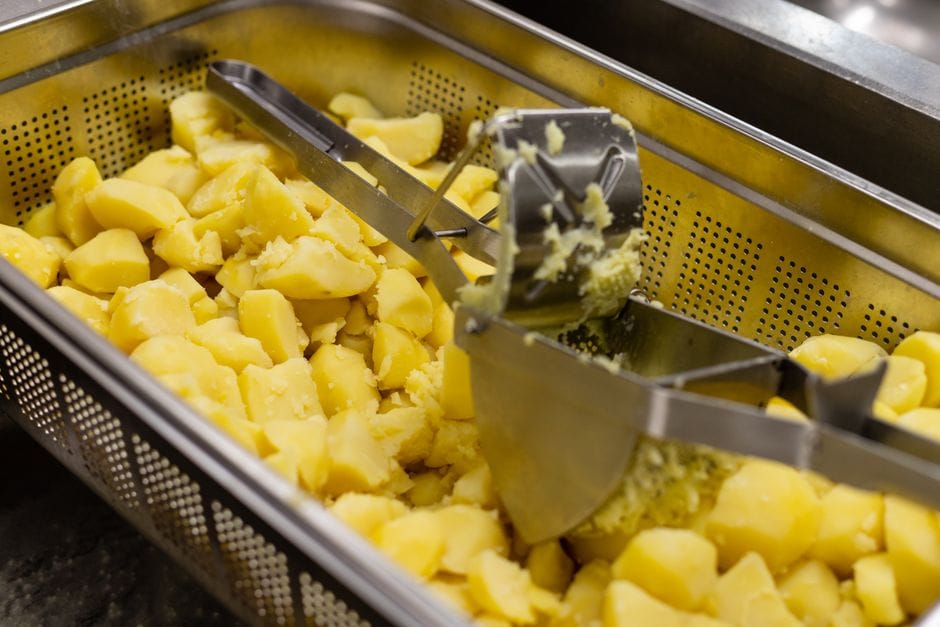
Use a potato masher or ricer, not a blender or stand mixer. Over-working potatoes breaks down the starch granules and activates gluten-like proteins, turning your mash into a sticky, gluey paste. A hand masher gives you control. A ricer gives the fluffiest result of all. An immersion blender is the one tool you should never reach for.
Add liquids in stages. Pour in half the warm butter-milk mixture and mash it in, then add more gradually until you reach your preferred consistency. Some people like a thick, rustic mash; others prefer it smooth and pourable. You are in control when you add liquid slowly.
Taste before serving. Potatoes absorb salt differently depending on variety and water content. Always taste and adjust salt and pepper right before the bowl hits the table.
Variations Worth Trying
Roasted garlic mashed potatoes. Slice the top off a whole head of garlic, drizzle with olive oil, wrap in foil, and roast at 400F for 35 to 40 minutes. Squeeze the cloves out and mash them directly into the potatoes. The flavor is sweet, nutty, and deep.
Sour cream style. Stir in 2 to 3 tablespoons of plain, unsweetened vegan sour cream (Kite Hill or Forager work well) for a tangy, tangy richness that mimics classic loaded mashed potatoes.
Herb and olive oil. Skip the butter and use 3 tablespoons of good extra-virgin olive oil plus a generous handful of fresh chives or parsley. This gives a Mediterranean feel that pairs well with roasted vegetables.
Truffle mashed potatoes. Add 1 teaspoon of truffle oil and a pinch of white pepper just before serving for a restaurant-style upgrade. A little truffle oil goes a long way, so start small.
Chive and vegan cheddar. Stir in 1/4 cup of shredded vegan cheddar (Violife or Follow Your Heart melt well) while the potatoes are still hot, then top with fresh chives and a drizzle of vegan butter.
Serving and Storage
Serving. Vegan mashed potatoes are best served immediately, straight from the pot. Transfer to a warmed bowl to keep them hot longer. Top with a pat of vegan butter, fresh chives, cracked black pepper, or a ladle of mushroom gravy. They pair beautifully with roasted vegetables, vegan lentil loaf, vegan chili, or a simple green salad.
Make ahead. You can prepare mashed potatoes up to two days in advance. Store in an airtight container in the refrigerator. They will thicken as they cool.
Reheating. Reheat gently on the stovetop over low heat, stirring in a splash of warm plant milk to loosen the texture. You can also microwave at 50 percent power in 2-minute intervals, stirring between each, to avoid overheating the starches. High-heat reheating makes mashed potatoes watery and dense.
Freezing. Mashed potatoes can be frozen in portions for up to one month. The texture becomes slightly grainier after thawing, but a good stir with warm milk and vegan butter brings them most of the way back. Thaw overnight in the refrigerator before reheating.
The recipe
Creamy Vegan Mashed Potatoes
Prep
15 min
Cook
20 min
Makes
6 to 8 servings
Ingredients
- 4 lbs (about 1.8 kg) Yukon Gold potatoes, peeled and cut into 2-inch chunks
- 1 tablespoon kosher salt, plus more to taste
- 1 cup unsweetened, unflavored soy milk (or cashew milk)
- 4 to 5 tablespoons vegan butter (such as Earth Balance or Miyoko's)
- 3 to 4 cloves garlic, minced (or 1 roasted garlic head, see notes)
- 1/2 teaspoon freshly ground black pepper, plus more to taste
- Fresh chives or parsley for topping (optional)
Instructions
- 1 Place potato chunks in a large pot. Cover with cold water by about 1 inch. Add the tablespoon of kosher salt. Bring to a boil over high heat.
- 2 Once boiling, reduce to a steady simmer and cook uncovered for 15 to 20 minutes, until the potatoes are very tender. A fork or knife should slide in with zero resistance.
- 3 While the potatoes cook, warm the plant milk and vegan butter together in a small saucepan over low heat, stirring until the butter melts. If using raw garlic, add it now and let the mixture gently simmer for 2 to 3 minutes until fragrant. Keep warm.
- 4 Drain the potatoes in a colander, then return them to the empty hot pot off the heat. Let them sit uncovered for 1 to 2 minutes to steam off excess moisture.
- 5 Mash the potatoes using a potato masher or ricer until no large lumps remain.
- 6 Pour in half the warm butter-milk mixture and mash to incorporate. Add the remaining mixture gradually, stirring gently with a spatula between additions, until you reach your preferred consistency. Avoid over-mixing.
- 7 Season with black pepper and additional salt to taste. Transfer to a warmed serving bowl and top with fresh chives, extra vegan butter, or cracked pepper. Serve immediately.
Notes
- ·For roasted garlic: slice the top off a whole garlic head, drizzle with olive oil, wrap in foil, and roast at 400F (200C) for 35 to 40 minutes. Squeeze the soft cloves directly into the warm butter-milk mixture.
- ·Always use unsweetened and unflavored plant milk. Sweetened or vanilla varieties will make the potatoes taste off.
- ·Yukon Golds deliver the creamiest result. You can substitute half the quantity with Russet potatoes for a fluffier texture.
- ·Never use an immersion blender or stand mixer. They overwork the starch and create a gluey, dense result.
- ·Leftovers keep in an airtight container in the refrigerator for up to 4 days. Reheat on the stovetop over low heat with a splash of warm plant milk, stirring until smooth.
Calories
230
Protein
6g
Fat
5g
Carbs
42g
Frequently asked questions
What is the best plant milk for vegan mashed potatoes?+
Unsweetened soy milk is the top choice because its protein content and body most closely match whole dairy milk, producing a rich, neutral result. Cashew milk is a close second for creaminess. Oat milk works but can add a faint sweetness. Always choose unsweetened and unflavored, no matter which variety you use.
Why do my vegan mashed potatoes turn out gluey?+
Gluey mashed potatoes are almost always caused by over-mixing. Using an electric mixer, blender, or immersion blender breaks down starch granules and creates a paste-like texture. Stick to a hand masher or potato ricer and fold the liquid in gently. Adding cold milk to hot potatoes can also cause this, so always warm your liquid first.
Can I make these mashed potatoes ahead of time?+
Yes. Make them up to two days ahead and store covered in the refrigerator. When reheating, add a splash of warm plant milk and stir over low heat on the stovetop, or microwave at 50 percent power in short intervals, stirring in between. Avoid high heat, which can make the texture watery.
Do vegan mashed potatoes taste as good as regular mashed potatoes?+
When made with good vegan butter and a neutral, creamy plant milk, vegan mashed potatoes are genuinely delicious. The key is using enough fat (do not shy away from the full amount of vegan butter), salting the cooking water properly, and serving them immediately while hot. Most people cannot tell the difference in a side-by-side tasting.
Written by
VeganDigest Editorial is the small independent team that researches and fact-checks this site. We are not doctors or dietitians. For every is-it-vegan verdict we read the product's current ingredient list and manufacturer information, and for anything health-related we report guidance from recognized bodies such as the NHS, the Vegan Society, and the Academy of Nutrition and Dietetics rather than offering medical advice. Every page shows the date it was last verified, and our full process is on the How We Verify page.
Comments