Vegan Overnight Oats (Creamy, No-Cook, Endlessly Adaptable)

 Jump to recipe ↓
 In this guide5
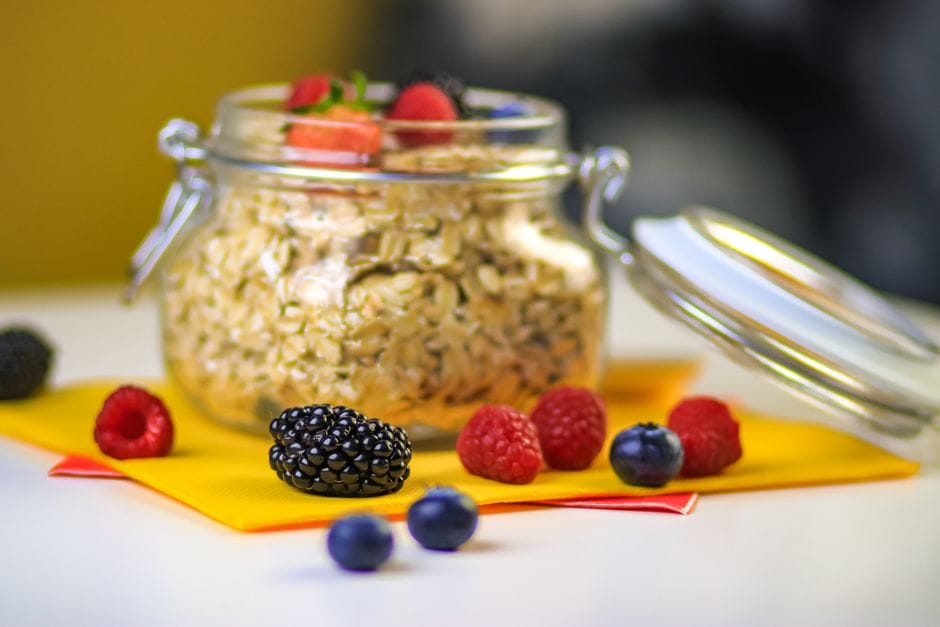
Vegan overnight oats are exactly what they sound like: rolled oats soaked in plant milk overnight, transforming into a thick, pudding-like breakfast with zero cooking required. Five minutes of stirring the night before gets you a ready-to-eat jar waiting in the fridge every morning.
The key to the genuinely creamy texture that makes overnight oats so satisfying is the combination of rolled oats, chia seeds, and a slightly higher liquid ratio than you might expect. Chia seeds expand dramatically as they soak, turning the mixture from loose cereal into something closer to a chia pudding crossed with porridge. This guide covers the tested base recipe, why each ingredient earns its place, and five flavor directions that can keep this in your breakfast rotation all week.
Why Overnight Oats Work Without Any Cooking
Oats do not need heat to become tender. Rolled oats (also called old-fashioned oats) have already been steamed and flattened during processing, meaning soaking in liquid for several hours completes what cooking would otherwise do. The starch in the oats gradually hydrates and softens, and the result is a texture that is genuinely creamy rather than raw or gummy.
Cold soaking also has a practical nutritional angle: it preserves more of the naturally occurring enzymes in oats, and the long soak time breaks down some of the phytic acid that can reduce mineral absorption. Whether or not you care about that detail, the practical upshot is that overnight oats digest easily for most people and sit well as a first meal.
Chia seeds pull their weight here beyond just thickening. Each seed forms a gel layer when it contacts liquid, and that gel is what gives the finished jar its pudding consistency. Without chia, a 1:1 oats-to-milk ratio produces something more like softened cereal. With chia, a 1:1.5 ratio produces a spoonable, substantial jar that holds its texture for days.
Key Ingredients and What Each One Does
Rolled oats. Old-fashioned rolled oats are the only variety worth using here. Quick oats dissolve into mush by morning, and steel-cut oats stay too firm even after a full night of soaking. Rolled oats absorb liquid steadily and hold a pleasant chew.
Plant milk. Any unsweetened non-dairy milk works: oat milk produces the richest, most neutral result; soy milk adds the most protein; almond milk keeps calories lower and adds a subtle nuttiness; full-fat coconut milk from a can makes the oats genuinely indulgent. For a single serving using chia seeds, 3/4 cup of plant milk to 1/2 cup of oats hits the right consistency. If you skip the chia seeds, drop to 1/2 cup of milk.
Chia seeds. One tablespoon per serving is enough. Chia seeds are nutritionally dense (omega-3 fatty acids, fiber, plant-based calcium) and functionally essential for the thick texture that distinguishes great overnight oats from watery ones.
Maple syrup. Two teaspoons per serving provides gentle sweetness without overpowering the oats. Agave nectar works as a 1:1 substitute. Adjust to taste or omit entirely if you plan to top with ripe fruit.
Alcohol-free vanilla extract or vanilla bean powder. A small amount deepens the flavor of the oats without adding any dominant taste. If you cannot find alcohol-free vanilla, a pinch of vanilla bean powder works perfectly or you can simply leave it out.
Pinch of salt. Salt balances the sweetness and rounds out the oat flavor. It sounds minor but the difference is noticeable.
Method Tips for the Best Texture Every Time
Stir twice. Mix all ingredients in the jar, then stir again after five minutes before sealing and refrigerating. This second stir redistributes the chia seeds before they begin to gel, preventing them from clumping at the bottom.
Minimum soak time is two hours, optimal is eight. Two hours in the fridge produces edible oats, but they will still be slightly chewy in the center. Eight hours (overnight) gives a uniformly soft, creamy result. Most people prep before bed and eat in the morning without any further waiting.
Adjust texture in the morning. After soaking, the oats will be quite thick. If you prefer a looser consistency, stir in a splash of plant milk until you reach the texture you want. If the jar seems too thin (this can happen if you skip chia seeds or use a very watery milk), refrigerate for another hour or stir in an extra teaspoon of chia seeds and wait 20 minutes.
Use a jar with a lid. A 16-ounce wide-mouth mason jar holds one generous serving plus toppings and is easy to eat from directly. Meal prepping in five jars on Sunday night and stacking them in the fridge is one of the most practical breakfast strategies available to anyone on a plant-based diet.
Eat cold or gently warm. Overnight oats are typically eaten cold straight from the fridge. If you prefer warm oats in winter, microwave the jar (lid off) for 60 to 90 seconds, then stir and add toppings.
Five Flavor Variations to Keep Breakfast Interesting
The base recipe is neutral enough to go in almost any direction. These five variations all work within the same base formula.
Peanut Butter Banana. Stir 1 tablespoon of natural peanut butter into the base before refrigerating. Top in the morning with sliced banana and a light drizzle of maple syrup. This is the highest-protein everyday variation.
Lemon Blueberry. Add 1/2 teaspoon of fresh lemon zest and a handful of fresh or frozen blueberries to the jar before soaking. The blueberries soften overnight and color the oats a light purple. Finish with a squeeze of lemon juice in the morning.
Double Chocolate. Stir 1 tablespoon of unsweetened cocoa powder and an extra teaspoon of maple syrup into the base. Top with a small handful of vegan chocolate chips or cacao nibs. This tastes like dessert for breakfast and is genuinely satisfying.
Apple Cinnamon. Add 1/4 teaspoon ground cinnamon and 1/4 cup of finely chopped apple to the base. The apple softens slightly overnight and flavors the surrounding oats. Top with a few walnut pieces in the morning for crunch.
Mango Coconut. Use full-fat coconut milk as your liquid, or swap half the plant milk for coconut milk. Add a handful of frozen mango chunks before refrigerating. Top with toasted coconut flakes in the morning. This variation works especially well in warmer months.
Serving and Storage
Overnight oats are best eaten within five days of preparation when stored in sealed jars in the refrigerator. The texture continues to thicken slightly each day, so jars eaten on days three to five may need a splash of milk to loosen them before eating.
Add any toppings that have significant moisture (fresh fruit, nut butters applied in quantity) right before eating rather than during prep. Dry toppings like granola, nuts, and seeds should always be added at serving time to preserve their crunch.
Overnight oats do not freeze well. The chia gel and oat texture both change unfavorably after freezing and thawing. Stick to refrigerating and consuming within the five-day window.
For a grab-and-go breakfast, prep with a lid that seals tightly and eat straight from the jar with a long spoon. No reheating, no dishes, no active morning effort required.
The recipe
Vegan Overnight Oats
Prep
5 min
Total
5 min
Makes
1 serving (scales easily to 5 jars)
Ingredients
- 1/2 cup old-fashioned rolled oats
- 3/4 cup unsweetened plant milk (oat, soy, almond, or coconut)
- 1 tablespoon chia seeds
- 2 teaspoons pure maple syrup (plus more to taste)
- 1/4 teaspoon alcohol-free vanilla extract or a small pinch of vanilla bean powder (optional)
- Pinch of fine sea salt
- Toppings of choice: fresh or frozen berries, sliced banana, nut butter, granola, chopped nuts
Instructions
- 1 Add the rolled oats, chia seeds, and salt to a 16-ounce jar or sealable container.
- 2 Pour in the plant milk, then add the maple syrup and vanilla if using.
- 3 Stir well until everything is combined. Wait 5 minutes, then stir a second time to redistribute the chia seeds before they begin to gel.
- 4 Seal the jar and refrigerate for at least 2 hours, or overnight (8 hours) for the best creamy texture.
- 5 In the morning, remove from the fridge and stir. If the oats are thicker than you like, add a splash of plant milk and stir again.
- 6 Add toppings of your choice and eat cold, or microwave for 60 to 90 seconds (lid off) for a warm version.
Notes
- ·Oat type matters: use old-fashioned rolled oats only. Quick oats turn mushy and steel-cut oats stay too firm.
- ·Without chia seeds, reduce plant milk to 1/2 cup (a 1:1 ratio) for a similar consistency.
- ·For the richest result, use full-fat canned coconut milk as part or all of the liquid.
- ·Refrigerate for up to 5 days. Add toppings right before serving. Do not freeze.
- ·To meal prep 5 jars at once, multiply all ingredients by 5 and assemble in individual jars on Sunday evening.
Calories
210
Protein
6g
Fat
6g
Carbs
33g
Frequently asked questions
Can I use quick oats or steel-cut oats instead of rolled oats?+
Quick oats will work in a pinch but turn quite soft and mushy by morning. Steel-cut oats do not soften enough with cold soaking alone and will remain too firm to eat comfortably. Old-fashioned rolled oats are strongly recommended for the best texture.
How long do vegan overnight oats last in the fridge?+
Up to 5 days when stored in sealed jars. The oats thicken slightly each day, so stir in a small splash of plant milk before eating jars that have been sitting for 3 or more days.
Do I need chia seeds to make overnight oats?+
No, chia seeds are optional but they make a significant difference in texture. Without them, reduce the plant milk to 1/2 cup (a 1:1 ratio with the oats) to avoid a watery result. With chia seeds, the extra liquid gets absorbed and the oats become thick and pudding-like.
Can I eat vegan overnight oats warm?+
Yes. Transfer the jar to a microwave-safe bowl or remove the lid and microwave the jar directly for 60 to 90 seconds, stirring halfway through. The texture softens slightly when warm, so you may want to reduce the plant milk addition in the morning if you plan to heat them.
Written by
VeganDigest Editorial is the small independent team that researches and fact-checks this site. We are not doctors or dietitians. For every is-it-vegan verdict we read the product's current ingredient list and manufacturer information, and for anything health-related we report guidance from recognized bodies such as the NHS, the Vegan Society, and the Academy of Nutrition and Dietetics rather than offering medical advice. Every page shows the date it was last verified, and our full process is on the How We Verify page.

Comments