Is Beeswax Vegan? What You Need to Know About E901
In this guide5
No, beeswax is not vegan. It is a wax secreted by honeybees to build their honeycomb, which places it firmly in the same category as honey and other bee-derived ingredients. Because it comes from an animal, it falls outside the boundaries of a vegan lifestyle by any standard definition of the term.
What Is Beeswax?
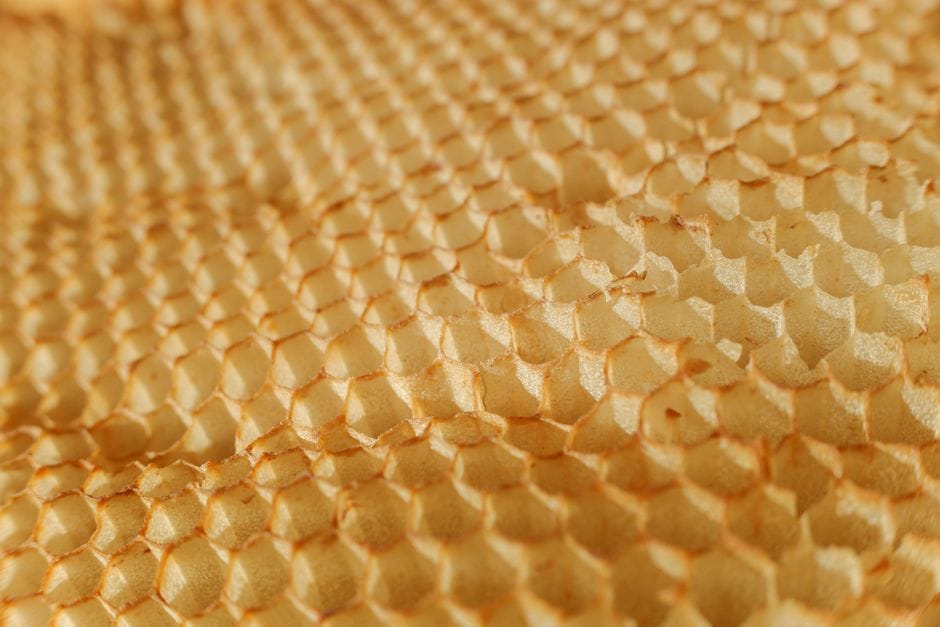
Beeswax is produced by worker honeybees through a set of glands on their abdomens. The bees use this wax to construct the six-sided cells of the honeycomb, where they store honey and raise their young. When beekeepers harvest honey, they remove the wax caps and entire comb sections, then melt and filter the material to produce the refined wax sold commercially.
The ingredient goes by several names depending on the context. In food labeling across the European Union and many other countries it appears as E901, the approved designation for beeswax used as a glazing and release agent. In cosmetics, the formal ingredient name is Cera Alba (white beeswax, which has been bleached) or Cera Flava (yellow beeswax, the natural unbleached form). All three names refer to the same animal-derived substance.
Is Beeswax Vegan? Why the Answer Is No
The Vegan Society defines veganism as a philosophy that seeks to exclude, as far as is possible and practicable, all forms of exploitation of and cruelty to animals. Beeswax fails this standard for the same reason honey does: it is a substance produced by bees, harvested by humans for human benefit.
To understand the scale, consider a well-cited figure in beekeeping science: worker bees must consume roughly ten kilograms of honey to produce just one kilogram of beeswax. When that comb is removed and processed, the bees lose both their food stores and the physical infrastructure of their home. Even if a beekeeper returns the bees to the hive, the material they built for themselves has been taken.
The fact that the production process does not kill bees outright does not change the vegan calculus. Veganism draws the line at use and exploitation, not only at killing. On that standard, beeswax is unambiguously an animal-derived product and is not vegan.
Where Beeswax Hides: Foods and Products to Watch
Beeswax shows up in more products than most people expect. Here are the most common places it appears.
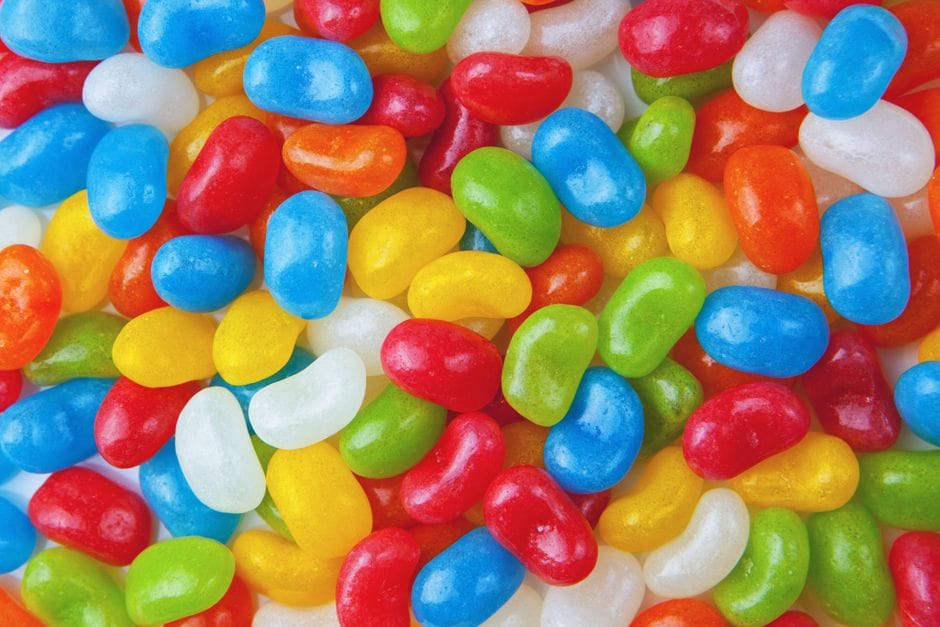
Confectionery and candy. Beeswax is widely used as a glazing agent on hard-shelled sweets, jelly beans, gummy candies, and chocolate-covered products. It gives those items their characteristic glossy finish. Manufacturers may list it as E901 rather than "beeswax," so the name is easy to miss.
Fresh produce. Citrus fruits, apples, and some other fresh produce receive a wax coating after harvest to slow moisture loss and extend shelf life. That coating is sometimes beeswax. Organic and clearly labeled "unwaxed" produce is a safer choice.
Dietary supplements and tablet coatings. Capsules and tablet supplements sometimes use beeswax as a coating or filler material. This is especially common in products marketed as "natural."
Chewing gum. Beeswax can appear in the gum base of some chewing gum products as a texturizer or glazing component.
Cosmetics and personal care. Lip balms, lipsticks, moisturizers, hair pomades, and solid lotion bars frequently rely on beeswax for structure and skin feel. It is one of the most common waxes in conventional cosmetics, which is why checking the INCI ingredient list matters even for beauty products.
How to Spot Beeswax on Labels
Beeswax can appear under any of the following names on ingredient labels.
- Beeswax (plain English, common in North America and Australia)
- E901 (EU food additive code, also used in some other regulatory systems)
- Cera Alba (INCI name for white beeswax used in cosmetics)
- Cera Flava (INCI name for yellow beeswax in cosmetics)
A few practical tips. In food products, scan the ingredients for E901 and also check for a phrase like "glazing agent" followed by a bracketed name. In cosmetics, look at the full INCI list rather than front-of-pack claims. A product can carry phrases like "natural" or even "cruelty-free" while still containing beeswax, because "cruelty-free" typically refers to animal testing policy rather than ingredient sourcing. The only label terms that reliably exclude beeswax are certified vegan (from an accredited body such as The Vegan Society or Vegan Action) or an explicit "beeswax-free" declaration.
When in doubt, contact the manufacturer directly and ask which wax or glazing agent is used.
Vegan Alternatives to Beeswax
Two plant-derived waxes cover the vast majority of beeswax applications in both food and cosmetics.
Candelilla wax (E902). Derived from the leaves of the candelilla shrub (Euphorbia antisyphilitica), native to northern Mexico, candelilla wax is fully plant-based and widely used in vegan lip balms, lipsticks, and candy glazes. It is harder than beeswax, so formulators typically use about half as much by weight to achieve a similar consistency. Look for E902 on food labels and candelilla wax on cosmetic INCI lists.
Carnauba wax (E903). Harvested from the leaves of the carnauba palm (Copernicia prunifera), a tree native to Brazil, carnauba is one of the hardest natural waxes available. It is already used to coat many vegan-friendly candies, pharmaceutical tablets, and fresh produce, and it appears in cosmetics as a film-forming agent. E903 is its EU food additive number.
Rice bran wax. A less common but fully vegan option derived from rice bran oil, rice bran wax works well in balms and creams and is gaining ground in natural cosmetics.
All three alternatives are recognized by vegan certification bodies. When shopping for certified vegan products, these are the waxes you will find doing the work that beeswax does in conventional formulations.
Frequently asked questions
Is beeswax cruelty-free even if it is not vegan?+
"Cruelty-free" and "vegan" mean different things. Cruelty-free typically refers to a product not being tested on animals, which says nothing about whether animal-derived ingredients were used. Beeswax is often found in products labeled cruelty-free because the wax itself is not tested on animals. However, beeswax is not vegan because it is produced by bees and harvested for human use. Always look for a certified vegan label rather than relying on cruelty-free claims alone.
Why is beeswax treated the same as honey for vegans?+
Both honey and beeswax are produced by bees for the bees' own purposes, and both are harvested by humans. Honey is food the bees made to sustain their colony; beeswax is the structural material they produced to build their home. In both cases, the bees expend significant energy creating the substance, and harvesting it appropriates something they produced for themselves. The vegan position is consistent across both: if an ingredient comes from an animal, it is not vegan regardless of whether the animal is harmed in an obvious or direct way.
Does E901 on a food label always mean beeswax?+
Yes. E901 is the EU-approved food additive designation specifically for beeswax, used as a glazing and release agent. There is no plant-based or synthetic version that shares the E901 code. If you see E901 on a label, it is beeswax. The equivalent wax alternatives, candelilla (E902) and carnauba (E903), each have their own distinct E numbers.
Can beeswax appear in "natural" or "organic" products?+
Yes. Beeswax is a natural ingredient and is permitted in many certified organic formulations, both for food and cosmetics. "Natural" and "organic" certifications focus on how ingredients are produced or processed, not on whether they come from animals. A lip balm or candy can carry an organic certification and still contain beeswax. Vegan certification is the only label that specifically excludes animal-derived ingredients like beeswax.
Written by
VeganDigest Editorial is the small independent team that researches and fact-checks this site. We are not doctors or dietitians. For every is-it-vegan verdict we read the product's current ingredient list and manufacturer information, and for anything health-related we report guidance from recognized bodies such as the NHS, the Vegan Society, and the Academy of Nutrition and Dietetics rather than offering medical advice. Every page shows the date it was last verified, and our full process is on the How We Verify page.
Comments