Is Shellac Vegan? The Truth About Confectioners Glaze
In this guide5
No, shellac is not vegan. It is a resin produced by the female lac insect (Kerria lacca), a tiny scale insect native to South and Southeast Asia, and its use in food means countless insects are killed during harvesting. On ingredient labels it hides under names like confectioners glaze, resinous glaze, and natural glaze, making it one of the trickiest animal-derived ingredients to spot in packaged food.
What Is Shellac?
Shellac is a natural resin that the female lac insect (Kerria lacca, also known as Laccifer lacca) secretes to form a protective cocoon around herself and her eggs on the branches of host trees, mainly in India and Thailand. Workers scrape this raw material, called sticklac, from the branches, then clean and process it into flakes or a liquid coating.
In food manufacturing the refined product is applied as an ultra-thin, glossy layer on the surface of confectionery, fresh produce, and pharmaceutical tablets. It dries to a hard, transparent film that extends shelf life and gives products that characteristic high-gloss shine. The US Food and Drug Administration classifies it as Generally Recognized as Safe (GRAS), and in Europe it carries the additive number E904.
Is Shellac Vegan? Why It Is Not
Shellac is firmly off the vegan list for two reasons: it is an animal secretion, and its production involves the death of insects on a vast scale.
The Vegetarian Resource Group (VRG) classifies shellac as vegetarian but not vegan, because it is derived directly from an insect's body activity. Gentle World, a long-running vegan organization, notes that approximately 300,000 lac insects are killed per kilogram of shellac produced. Plant Based News places the figure at around 100,000 insects per pound. Both estimates point to the same reality: extracting the resin is inseparable from killing the creatures that produce it.
Some people draw a line between bee products and other insect products, but the vegan position is consistent across the board. Using an animal, insect or otherwise, as a raw-material source conflicts with the principle of avoiding animal exploitation. The scale of insect death involved makes shellac one of the more ethically significant hidden animal ingredients in food.
Where Shellac Hides: Foods and Products to Watch
Shellac turns up in a surprisingly wide range of products. The most common hiding spots include:
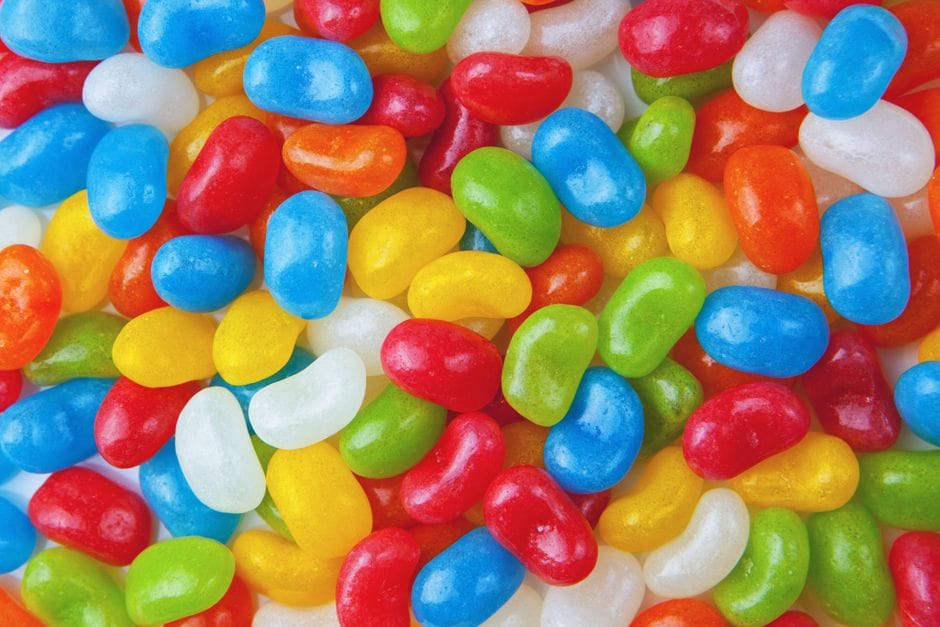
Candy and confectionery. Jelly beans are the classic example, but shellac also coats candy corn, chocolate-covered nuts and raisins, certain sprinkles, and many other hard-coated sweets. Brands like Jelly Belly use confectioners glaze on their standard jelly beans, and a range of well-known candy makers rely on shellac for that polished finish.
Fresh fruit. After apples, pears, and citrus are harvested and washed, their natural protective surface wax is removed. Producers often reapply a coating to extend shelf life. Shellac is one of the coatings used, particularly on apples in some markets, giving them an unnaturally bright shine.
Coffee beans. Some roasters apply a thin shellac coating to prevent beans from releasing oils that would make packaging greasy.
Pharmaceutical and supplement tablets. Shellac is widely used as a glazing agent on pills, including some vitamins and over-the-counter tablets, where it helps with controlled release and moisture protection.
Chewing gum. A number of gum products use confectioners glaze in their outer coatings.
The connecting thread is shine. If a candy, fruit, or tablet looks unusually glossy, it is worth checking the label.
How to Spot Shellac on Labels
Shellac rarely appears on ingredient labels under its own name. Manufacturers use a range of permitted synonyms, and because the coating is applied in very small amounts, it can be easy to overlook. Names to watch for include:
- Confectioners glaze (the most common term in the US)
- Resinous glaze
- Natural glaze
- Pure food glaze
- Candy glaze
- Confectioners resin
- Lac resin
- E904 (the EU additive code)
- Pharmaceutical glaze (on tablets and capsules)
The word "natural" in any of these names can be misleading. Natural in food labeling simply means the ingredient comes from a natural source, not that it is plant-based or vegan.
In the UK, products sold in supermarkets that use E904 on fresh fruit must declare it, but packaged confectionery sometimes buries it at the end of a long ingredient list. When a product is certified vegan by The Vegan Society or another recognized body, it will have been checked for shellac. Looking for that certification logo is the fastest shortcut.
Vegan Alternatives to Shellac
Food manufacturers have workable plant-based options that deliver the same glossy finish without any insect involvement.
Zein (corn protein). This is the most direct shellac replacement. Zein is a protein extracted from corn, tasteless, odorless, and water-insoluble, which means it forms the same kind of hard, clear, protective film. Companies like FloZein have commercialized it specifically as a vegan confectioners glaze for candy, nuts, fruit, and tablets. It holds GRAS status in the US.
Carnauba wax (E903). Derived from the leaves of the Brazilian carnauba palm, this plant wax produces an exceptional gloss and is already used widely in vegan-certified confectionery. Capol and other specialty ingredient companies market carnauba-based systems as direct shellac alternatives.
Candelilla wax. Sourced from the leaves of the candelilla shrub native to Mexico and the southwestern US, this is another fully plant-based option used in some confectionery and cosmetic coatings.
Cocoa butter. For chocolate-based products, a thin coat of cocoa butter gives a natural sheen without any added glaze.
For home cooks and bakers, carnauba-based food-grade polish sprays are available and work on fruit and homemade confectionery. When buying packaged sweets, look for products certified vegan or explicitly labeled shellac-free, as more brands are responding to consumer demand with plant-based coatings.
Frequently asked questions
Does shellac always appear on ingredient lists?+
In the US, shellac used as a coating on candy and confectionery must be declared somewhere on the label, though it may appear under synonyms like confectioners glaze or resinous glaze rather than the word shellac. On fresh produce, retailers are not always required to list coatings, so unwaxed or organically certified fruit is the safer choice if you want to be sure.
Are there any jelly beans that do not contain shellac?+
Yes. Several brands produce shellac-free jelly beans using plant-based coatings such as carnauba wax or zein. Surf Sweets and YumEarth are two commonly cited vegan-friendly options. Always verify the current formulation on the label or the brand's website, as recipes can change.
Is shellac in nail products the same as the shellac in food?+
They share the same source material, the resin of the lac insect, but nail shellac products are cosmetic formulations that are not food-grade. From a vegan standpoint the concern is the same: both are derived from insect secretions and neither is considered vegan.
What about medicines and vitamins coated with shellac? Do I need to avoid them?+
Many vegans do avoid shellac-coated tablets when alternatives are available, but some take a pragmatic view when a specific medication has no vegan alternative. The Vegan Society acknowledges that it is not always possible or practical to avoid all animal-derived ingredients in medicine. If your supplement or over-the-counter remedy lists pharmaceutical glaze or confectioners glaze, check with the manufacturer or ask a pharmacist whether a shellac-free version exists.
Written by
VeganDigest Editorial is the small independent team that researches and fact-checks this site. We are not doctors or dietitians. For every is-it-vegan verdict we read the product's current ingredient list and manufacturer information, and for anything health-related we report guidance from recognized bodies such as the NHS, the Vegan Society, and the Academy of Nutrition and Dietetics rather than offering medical advice. Every page shows the date it was last verified, and our full process is on the How We Verify page.
Comments