Is Pasta Vegan? Dried, Fresh, and the Egg Question
In this guide8
Short answer? Most dried pasta is vegan; fresh egg pasta is not. Classic boxed dried pasta is just durum wheat and water. The exceptions are fresh pasta, anything labelled egg pasta, and some filled or specialty shapes.
For my first few years of cooking vegan, I bought pasta the way most people buy salt: grab the box, throw it in the cart, never think about it again. Dried penne, dried spaghetti, dried fusilli. It genuinely never occurred to me to read the back.
Then a friend handed me a bag of fresh tagliatelle from a fancy deli, told me to enjoy, and I flipped it over out of habit and saw "egg" sitting right there in the ingredients.
That was the moment I learned the single most useful fact about pasta and veganism: the format tells you almost everything. Dried versus fresh is the whole game.
The short answer: most dried pasta is vegan
Standard dried pasta is vegan. Full stop, with a small asterisk I will get to.
The classic Italian dried pasta you buy in a box or a bag is made from two ingredients: durum wheat semolina and water. That is it. Semolina is just coarsely ground durum wheat.
Water is water. Both are plant-based, so the spaghetti, penne, rigatoni, fusilli, and farfalle sitting in your pantry right now are almost certainly fine.
This is actually protected by law in Italy. Under Italian regulations, anything sold simply as "pasta" (pasta di semola) must be made from durum wheat semolina and water with no egg added.
Egg pasta has to be labeled separately as pasta all'uovo, and the rule even specifies a minimum number of eggs per kilo of flour before a maker can call it egg pasta. So in Italy the naming itself does the work for you.
Elsewhere the rules are looser, which is exactly why the label still matters.
The asterisk: dried egg noodles exist, and some specialty dried pastas do contain egg. They will say so.
The usual suspects are German-style spaetzle and egg noodles (often labeled "Eiernudeln"), some dried tagliatelle and pappardelle nests that are made the egg way even in dried form, and a lot of the wide "egg noodle" products sold for stroganoff and casseroles. East Asian noodles are a separate world worth a quick note too: rice noodles, glass noodles, soba, and most ramen and udon are egg-free, but some fresh wheat egg noodles and certain wonton wrappers do contain egg, so the same label glance applies.
For the everyday Italian boxed stuff, though, dried equals vegan the overwhelming majority of the time.
Fresh pasta is where it goes wrong
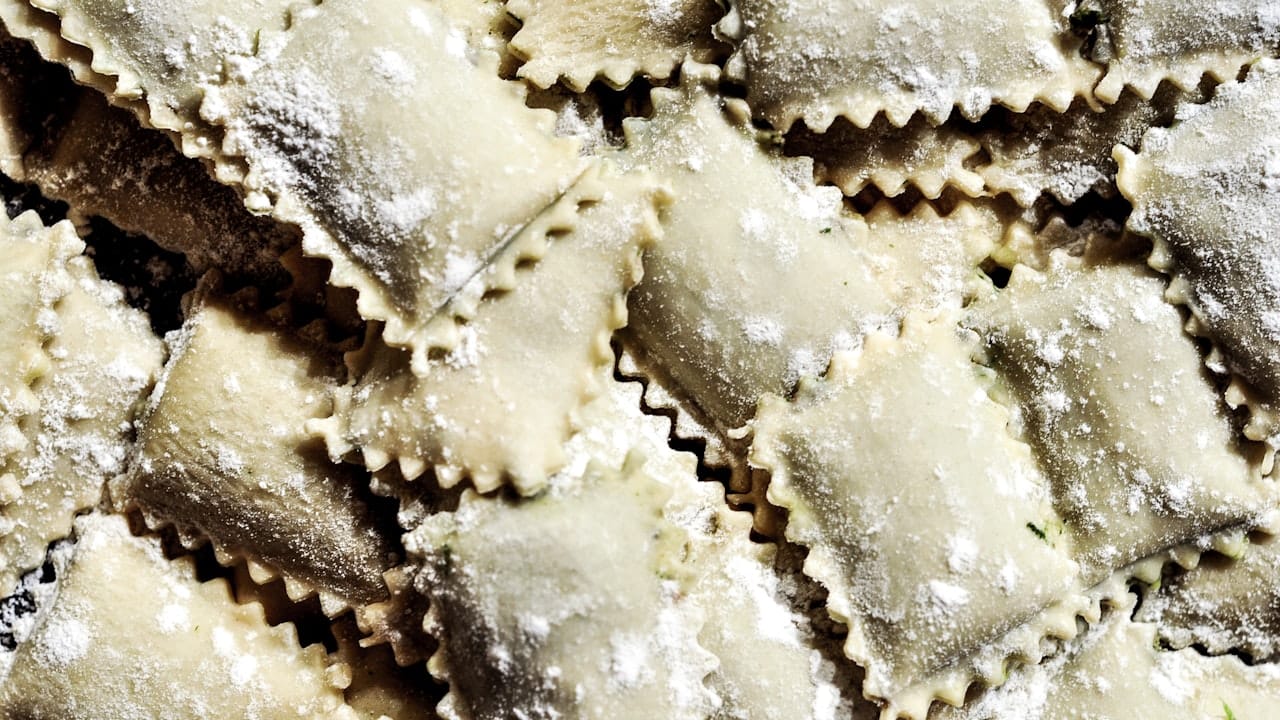 Photo: davide ragusa / Unsplash
Here is the flip side, and it catches people constantly. Fresh pasta is usually not vegan.
Traditional fresh pasta, the soft kind you find in the chilled aisle or get served in a good Italian restaurant, is made with eggs. A classic fresh egg pasta dough is flour and whole eggs, sometimes just yolks, kneaded together.
The eggs are what give fresh tagliatelle and pappardelle that rich yellow color and silky texture. That richness is the entire point of fresh pasta, and it comes from eggs.
So the default assumption flips depending on format. Dried? Assume vegan, confirm quickly.
Fresh? Assume it has egg, confirm before you buy. If the packet says pasta all'uovo, "egg pasta," or just lists egg in the ingredients, it is not vegan.
The good news is that vegan fresh pasta absolutely exists, and there is real history behind it. A lot of southern Italian pasta was traditionally eggless out of necessity, made with just semola and water, because eggs were a luxury in poorer regions.
That is why classic orecchiette from Puglia and many regional hand-shaped pastas are naturally vegan. So eggless fresh pasta is not some modern compromise. It is older than the egg-rich northern style most people picture.
You can lean on that. Make your own at home with semolina and warm water, which is genuinely satisfying and needs no special equipment beyond a rolling pin and your hands.
Or look for the eggless fresh pastas now stocked in larger supermarkets, which are clearly labeled once you start checking. You just have to look for them on purpose instead of grabbing the first fresh packet you see.
Filled pasta is a minefield
If fresh pasta is a yellow light, filled pasta is a red one. Ravioli, tortellini, tortelloni, agnolotti, cappelletti: these are the trickiest category by a wide margin, for two reasons stacked on top of each other.
First, the pasta wrapper is almost always fresh egg pasta. Second, the filling is usually some combination of cheese, egg, meat, or fish. Classic tortellini is filled with pork, prosciutto, and parmesan.
Standard ravioli is often ricotta and spinach, or a meat ragu. So you frequently get a non-vegan wrapper around a non-vegan filling, two problems in one bite.
This does not mean filled pasta is off-limits forever. Vegan ravioli and tortellini have gotten genuinely good, usually filled with things like butternut squash, mushroom, spinach with a cashew or tofu ricotta, or a plant-based cheese.
(If you want to fake that parmesan note in the filling or on top, our vegan parmesan guide covers the nutty, savory versions that actually work.) But with filled pasta you cannot coast. Assume non-vegan until the package or the menu tells you otherwise, every single time.
The "may contain egg" thing
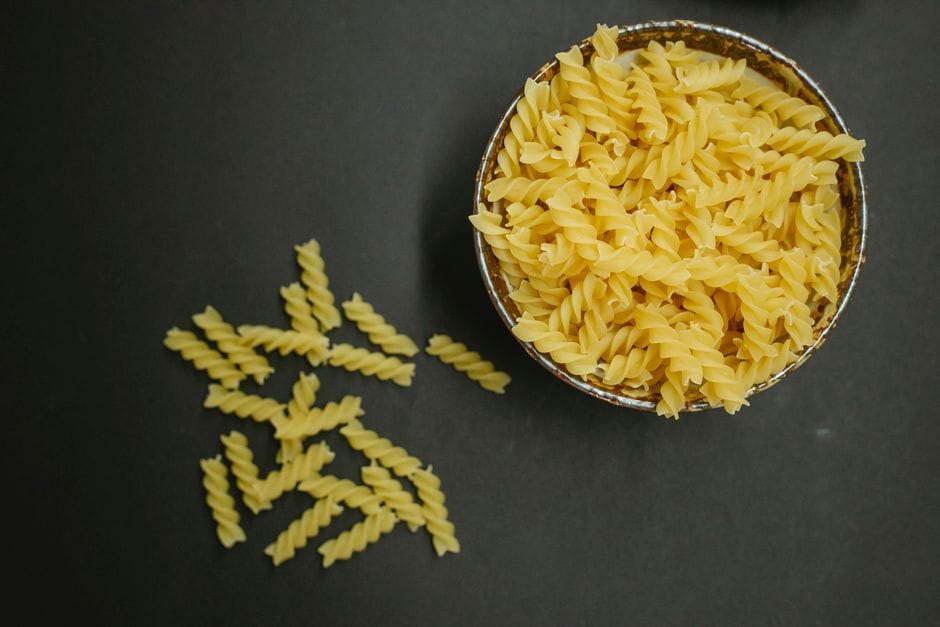 Photo: Klaus Nielsen / Pexels
Here is one that trips up careful label-readers. You will sometimes pick up a dried pasta whose ingredients are clearly just semolina and water, and then at the bottom you see "may contain traces of egg" or "produced in a facility that also handles egg."
That is a cross-contamination warning, not an ingredient. It means the factory runs egg pasta on shared equipment somewhere in the building, so they are legally covering themselves for people with egg allergies. There is no egg deliberately added to that pasta.
Whether this matters to you is a personal call, and I genuinely mean that. The Vegan Society defines veganism as avoiding animal exploitation "as far as is possible and practicable," and most vegans read that practicable clause as permission to treat trace warnings as a judgment call rather than a hard line.
If you applied the shared-facility standard absolutely, you would eliminate a huge chunk of packaged food. I treat "may contain egg" as a non-issue for ethical veganism and a real issue only for someone with an egg allergy. You might land somewhere different, and that is fine.
It is the same debate that comes up with Oreos and their "may contain milk" label.
How to read a pasta label in ten seconds
You do not need to study the label like a contract. Here is the whole routine.
Check the format first. Dried in a box or bag? Likely vegan. Fresh in the chilled aisle?
Likely has egg. Filled anything? Assume non-vegan.
That single glance gets you 90% of the way there.
Scan the ingredients for one word: egg. It is the only animal product that commonly hides in plain pasta. On European labels egg is bolded as an allergen, which makes it easy to spot. If there is no egg listed, dried pasta is essentially always vegan.
For filled or flavored pasta, look for the obvious dairy and meat words too: cheese, parmesan, ricotta, milk, butter, prosciutto, pancetta, anchovy.
Ignore the "may contain" line unless you have an allergy. That is cross-contamination, not an ingredient, and it is your personal call.
If a label is in another language or you hit an ingredient you do not recognize, paste it into our vegan ingredient checker and it will flag anything animal-derived. For a quick verdict on a specific brand or product, the Is It Vegan database is the faster route.
Pasta is one of those categories where the same few words decide everything, so this gets very fast once you have done it twice.
Restaurant pasta and the squid ink trap
Restaurants are their own situation, because you cannot read a label.
The big thing to know: most Italian restaurants making fresh pasta in-house are making egg pasta. That gorgeous house-made tagliatelle is almost certainly pasta all'uovo. Meanwhile, the dried pasta a restaurant boils from a box, your spaghetti, your penne, your bucatini, is usually vegan-safe as a base.
So a useful question to ask is simply, "Is this fresh pasta or dried?" The answer tells you a lot before you even get to the sauce.
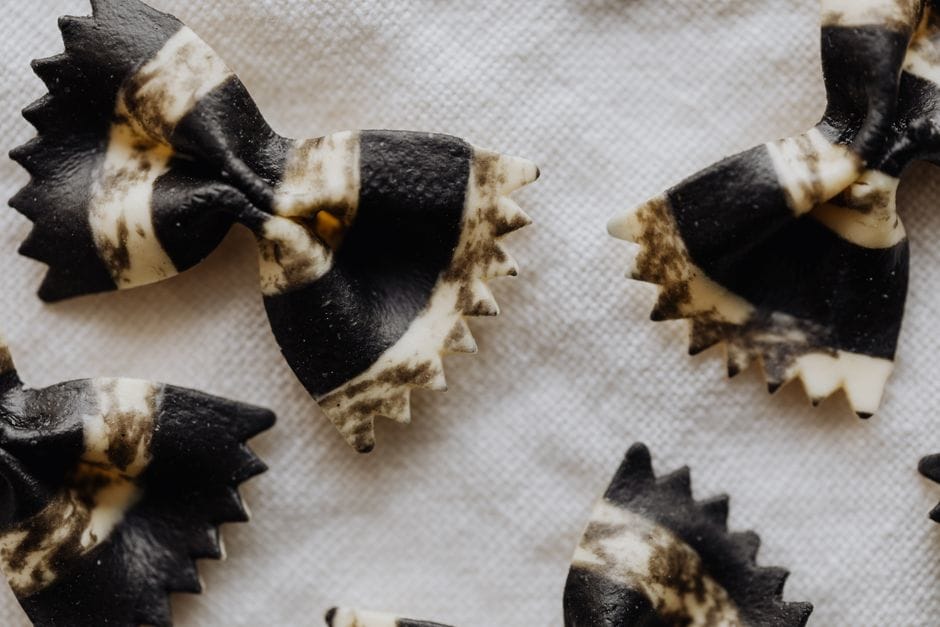
Then there is squid ink pasta, which I want to flag loudly because it looks dramatic and people assume the black color is something fancy and vegetal. It is not. Squid ink pasta, often called nero di seppia on Italian menus, is colored and flavored with real cuttlefish or squid ink, which is unambiguously an animal product.
It is not vegan. (Black pasta tinted with activated charcoal is a different, vegan product, but assume the ink version unless told otherwise.)
While you are asking, two more restaurant gotchas: ask whether the pasta water or finished dish has had butter or parmesan stirred through, because that happens constantly and invisibly. And carbonara is built on egg and cheese and cured pork, so it is never accidentally vegan no matter how it is described.
Common vegan dried brands and what about the sauce
You do not need a special vegan brand for basic dried pasta. The everyday Italian staples, De Cecco, Barilla classic blue box, Garofalo, Rummo, and most supermarket own-brand dried pasta, are made from durum semolina and water and contain no egg.
Whole wheat, chickpea, lentil, and brown rice pastas are also reliably vegan, since they are built from plants by definition. The only boxes to watch are the ones explicitly labeled as egg pasta or egg noodles, which announce themselves.
The sauce is honestly where more vegans get tripped up than the pasta itself. A plain tomato or arrabbiata sauce is usually vegan.
The ones to check are pesto (classic pesto contains parmesan and sometimes the cheese is made with animal rennet), any "creamy," alfredo, or carbonara style sauce, pink and rose sauces that lean on cream, cheese-heavy four-cheese sauces, and bolognese or ragu with meat. Cheese-stuffed and cheese-topped dishes obviously need a swap too.
The fixes are all easy now. A splash of oat milk or a quick blended cashew cream turns a tomato sauce silky without any dairy, plant butter handles the richness in a garlic and herb sauce, and a sprinkle of vegan parmesan finishes the plate with that salty, savory hit.
Nutritional yeast does a similar job stirred straight into the sauce. If you want a roundup of dependable dairy and egg replacements for exactly these situations, our vegan swaps hub is organized for it.
My honest bottom line
Pasta is one of the easiest foods to keep vegan, as long as you remember the one rule the rest of this hangs on: dried is your friend, fresh and filled need a look.
Stock dried semolina pasta and you basically never have to think about it. Reach for fresh, filled, flavored, or restaurant pasta and just take the extra ten seconds to check the format, scan for the word egg, and ask about butter and parmesan if you are eating out. Keep squid ink off the list entirely.
I have eaten an absurd amount of pasta in the years since that bag of tagliatelle caught me out, and almost none of it required any real effort to keep plant-based. The box in your cupboard is probably already vegan. It is the fancy stuff that needs the second glance.
Frequently asked questions
Is dried pasta vegan?+
Almost always, yes. Standard dried pasta from the supermarket is just durum wheat semolina and water, which are both plant-based. The exceptions are dried egg noodles and some dried egg pasta, which list egg right in the ingredients, so a quick label check settles it.
Is fresh pasta vegan?+
Usually not. Fresh pasta from the chilled aisle and most fresh pasta in restaurants is traditionally made with eggs, often listed as pasta all'uovo. There are vegan fresh pastas made with just flour and water, but you have to look for them specifically rather than assume.
Does spaghetti have egg in it?+
Standard dried spaghetti does not. Classic Italian dried spaghetti is semolina and water with no egg at all. Fresh spaghetti or 'egg spaghetti' is a different product and does contain egg, so the format and the label matter more than the shape name.
Is squid ink pasta vegan?+
No. Squid ink pasta, sometimes labeled nero di seppia, gets its black color and briny flavor from actual cuttlefish or squid ink, which is an animal product. Skip it. A black pasta colored with activated charcoal would be vegan, but that is a different ingredient, so read the label.
Written by
VeganDigest Editorial is the small independent team that researches and fact-checks this site. We are not doctors or dietitians. For every is-it-vegan verdict we read the product's current ingredient list and manufacturer information, and for anything health-related we report guidance from recognized bodies such as the NHS, the Vegan Society, and the Academy of Nutrition and Dietetics rather than offering medical advice. Every page shows the date it was last verified, and our full process is on the How We Verify page.
Comments