Vegan Aioli (Creamy Garlic Sauce, Two Ways)

 Jump to recipe ↓
 In this guide5
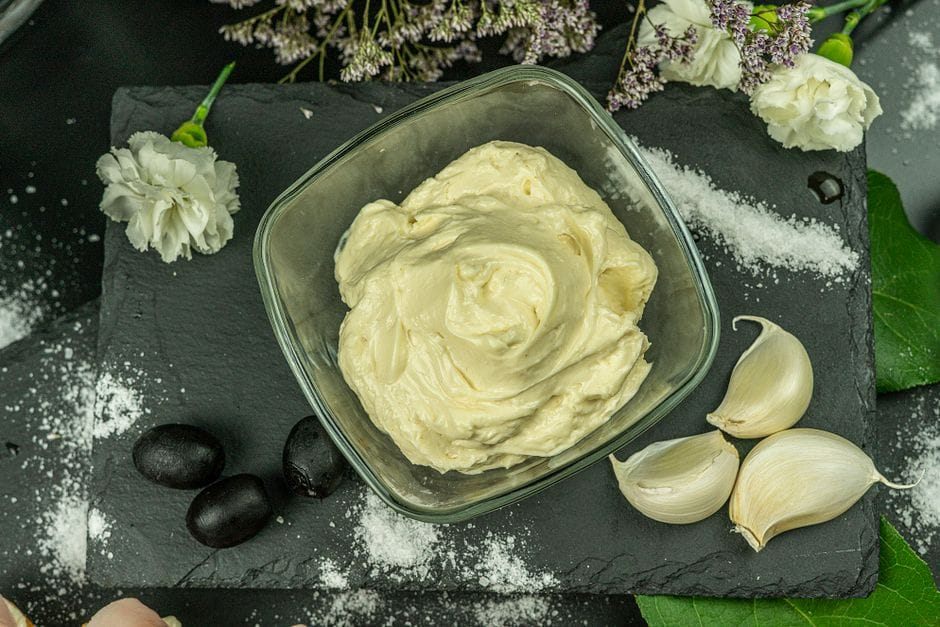
Vegan aioli works, and it works well. The classic version builds a genuine oil-in-water emulsion using aquafaba (the liquid from a can of chickpeas) instead of raw egg. The proteins in chickpea liquid behave nearly identically to egg white proteins, holding the oil droplets suspended in a thick, glossy, garlicky sauce. If you want something even faster, a five-minute mayo-based version is equally good as a dip or spread.
Both methods are covered here. The aquafaba route produces a from-scratch condiment with about 15 minutes of hands-on work and no soy or processed ingredients beyond a can of chickpeas. The mayo-based shortcut takes five minutes flat and is virtually foolproof. Either way, you get a sauce that does everything traditional aioli does: dunks fries, slicks sandwiches, and lifts roasted vegetables to a completely different level.
Why Vegan Aioli Actually Emulsifies
Traditional aioli is an emulsion, meaning tiny droplets of oil are suspended in a water-based liquid and held there by an emulsifier. In classic recipes, egg yolk provides the lecithin that does this job. In vegan aioli, two plant-based ingredients step in.
Aquafaba (the brine from cooked chickpeas) contains soluble proteins, starches, and saponins that act as surfactants, coating oil droplets and preventing them from coalescing. When you blend aquafaba with a steady, slow drizzle of oil, those proteins wrap around each droplet and lock them in place. The result is a thick, stable emulsion that holds for days in the refrigerator.
Dijon mustard plays a supporting role in both versions. It contains mucilage from mustard seeds, which is a secondary emulsifier. More practically, the mustard adds body and sharpness that rounds out the raw garlic and bright lemon.
One technical note on oil choice: blending pure extra-virgin olive oil at high speed can cause it to turn bitter. This happens because the mechanical action releases polyphenols that taste harsh. For the aquafaba version, use a neutral oil (avocado oil or sunflower oil) as the main base, then stir in a small amount of olive oil at the end if you want that Mediterranean character. For the mayo-based version, this is a non-issue since the oil is already emulsified inside the mayo.
Ingredients and What Each One Does
For the aquafaba version:
- Aquafaba (3 tablespoons from one 400g can of chickpeas): The emulsifier and base liquid. Use the liquid straight from the can, unsalted if possible. Cold aquafaba emulsifies more reliably than room-temperature.
- Neutral oil, 1 cup (avocado oil or sunflower oil): The body of the sauce. Avocado oil is the best choice because its mild flavor stays neutral and does not turn bitter in the blender.
- Extra-virgin olive oil, 1 tablespoon: Stirred in at the end for flavor, not blended. Optional but worth it.
- Garlic, 2 to 3 large cloves: The defining flavor. Macerate in lemon juice for 10 minutes before adding it to mellow the sharp, raw edge.
- Fresh lemon juice, 2 tablespoons: Acid that brightens the sauce and helps the garlic bloom. Bottled lemon juice works but fresh is noticeably better.
- Lemon zest, 1 teaspoon: Adds aromatic oils that juice alone cannot provide.
- Dijon mustard, 1 teaspoon: Secondary emulsifier and flavor anchor. Do not skip it.
- Fine sea salt, 3/4 teaspoon: Adjust at the end after tasting.
- White pepper, 1/8 teaspoon: Optional but traditional.
For the quick mayo version:
- Vegan mayonnaise, 3/4 cup: Use a brand you already like; this is the base and its flavor comes through.
- Garlic, 2 to 3 large cloves, microplaned or made into paste: Raw garlic paste integrates better than minced pieces.
- Fresh lemon juice, 1.5 tablespoons: Loosens the mayo slightly and adds brightness.
- Lemon zest, 1 teaspoon: Recommended.
- Dijon mustard, 1/4 teaspoon: Depth of flavor.
- Salt and pepper to taste.
Method Tips for a Reliable Emulsion
Aquafaba version tips:
The single most important variable is how slowly you add the oil. If you pour it in too fast, the emulsion breaks and you get a greasy, separated liquid that cannot easily be rescued. Use a measuring cup with a spout and drizzle in a thin, steady stream while the blender or food processor runs continuously. An immersion blender in a tall, narrow jar is the most reliable tool because you can control the pour with one hand while holding the blender with the other.
Start by blending the aquafaba alone for 30 seconds until it turns frothy. This aerates it and activates the proteins. Add the garlic-lemon-mustard mixture and blend briefly. Then start the oil, a few drops at a time for the first 30 seconds, then a thin stream. Once about half the oil is incorporated and the mixture looks creamy, you can drizzle slightly faster. The finished aioli will look like a thick, glossy mayonnaise.
After blending, the aioli seems a little loose. Refrigerate it for at least two hours (and ideally overnight) before serving. It thickens considerably as it chills and the flavors knit together.
Mayo version tips:
Grate the garlic on a microplane rather than mincing it. You want a smooth paste with no coarse pieces. Alternatively, sprinkle the minced garlic with salt and use the flat of a knife to smear it into a paste against the cutting board. Let the garlic, lemon juice, and mustard sit together for 10 minutes before stirring into the mayo. This step mellows the sharpness and is worth the wait. Chill for at least 30 minutes before serving, one hour is better.
Variations Worth Making
Roasted garlic aioli: Roast a full head of garlic at 200C (400F) for 40 to 45 minutes until the cloves are soft and caramelized. Squeeze out the cloves and use them in place of raw garlic. The flavor is sweeter, nuttier, and far less sharp, which makes this version excellent with delicate dishes like steamed artichokes or grilled asparagus.
Smoked paprika aioli: Add 1/2 teaspoon smoked paprika (hot or sweet) and a pinch of cayenne to either version. This is the natural companion for patatas bravas and also works well with roasted cauliflower.
Herb aioli: Blend in 2 tablespoons of fresh herbs after the emulsion is set. Flat-leaf parsley, chives, dill, or basil all work. Do not add herbs before blending or they will turn the sauce grey-green and bitter.
Sriracha aioli: Stir in 1 to 2 teaspoons of sriracha or chili garlic sauce. Excellent with crispy tofu, spring rolls, or as a burger spread.
Truffle aioli: Add 1/2 teaspoon of truffle oil (stirred in at the end, never blended) and a pinch of truffle salt. Use restraint. A little goes far and the flavors deepen after an hour in the fridge.
How to Use and Store Vegan Aioli
Serving ideas: Vegan aioli is one of the most versatile sauces in a plant-based kitchen. Use it as a dipping sauce for oven fries, sweet potato wedges, onion rings, or crudites. Spread it on sandwiches and wraps in place of plain mayo. Use it as the base for a creamy coleslaw dressing (thin slightly with extra lemon juice). Serve it alongside grilled or roasted vegetables, especially asparagus, broccolini, or artichokes. Drizzle it over grain bowls or use it as a dipping sauce for vegan sushi.
Storage: Store in a sealed glass jar or airtight container in the refrigerator. The aquafaba version keeps for 5 to 6 days. The mayo-based version keeps for up to 7 days, limited by the best-by date on the vegan mayo you used. Neither version freezes well; the emulsion breaks on thawing.
A note on sterilizing jars: If you want the aquafaba version to last toward the longer end of that window, rinse your jar with very hot water and let it air dry completely before filling. There is no need to do a formal canning process since this is a refrigerator condiment, but starting with a very clean jar matters.
Scaling: Both recipes scale up cleanly. Double or triple the quantities for meal prep. The mayo version is especially easy to batch since there is no emulsification to manage.
The recipe
Vegan Aioli (Aquafaba Garlic Emulsion)
Prep
15 min
Total
15 min
Makes
Makes about 1 cup (16 tablespoons), serves 8 to 10
Ingredients
- 3 tablespoons aquafaba (liquid from one 400g can of unsalted chickpeas), cold
- 1 cup (240ml) neutral oil such as avocado oil or sunflower oil
- 1 tablespoon extra-virgin olive oil (stirred in at the end, not blended)
- 3 large garlic cloves, microplaned or finely grated (about 15g)
- 2 tablespoons fresh lemon juice
- 1 teaspoon finely grated lemon zest
- 1 teaspoon Dijon mustard
- 3/4 teaspoon fine sea salt, plus more to taste
- 1/8 teaspoon white pepper or black pepper
Instructions
- 1 Grate the garlic using a microplane or the fine side of a box grater into a small bowl. Add the lemon juice, lemon zest, Dijon mustard, and salt. Stir to combine and set aside for 10 to 15 minutes. This step mellows the raw garlic and lets the flavors begin to develop.
- 2 Pour the cold aquafaba into the tall jar of an immersion blender (or into a food processor bowl). Blend for about 30 seconds until the aquafaba is frothy and slightly aerated.
- 3 Add the garlic-lemon-mustard mixture to the aquafaba and blend for 10 seconds until combined.
- 4 With the blender running continuously, begin adding the neutral oil. Start with just a few drops at a time for the first 30 seconds, then increase to a very thin, steady stream. The mixture will start to look creamy and opaque after the first quarter cup of oil has been incorporated. Continue adding oil slowly until all 1 cup is incorporated and the sauce is thick, glossy, and pale.
- 5 Taste and adjust seasoning. Add more salt, lemon juice, or a pinch more pepper if needed.
- 6 Stir in the tablespoon of extra-virgin olive oil by hand. Do not blend it in.
- 7 Transfer to a clean glass jar or airtight container. Refrigerate for at least 2 hours before serving. The aioli will thicken noticeably as it chills and the flavor improves significantly over the first few hours.
Notes
- ·Quick mayo version: Whisk together 3/4 cup vegan mayonnaise, 3 grated garlic cloves, 1.5 tablespoons fresh lemon juice, 1 teaspoon lemon zest, 1/4 teaspoon Dijon mustard, and salt and pepper to taste. Refrigerate for at least 30 minutes before serving. Keeps up to 7 days.
- ·If the aquafaba emulsion breaks and looks oily and separated, start fresh with 1 tablespoon of aquafaba in a clean jar, blend until frothy, then drizzle the broken mixture into it very slowly as if it were oil. This rescues it in most cases.
- ·Avocado oil produces the mildest, cleanest-tasting aioli. Sunflower oil is a close second. Do not use all olive oil as blending it at high speed releases polyphenols that turn the sauce bitter.
- ·Cold aquafaba emulsifies more reliably than room-temperature. If your kitchen is warm, chill the aquafaba in the freezer for 10 minutes before starting.
- ·Stores in the refrigerator for up to 6 days. Does not freeze well.
Calories
88 kcal
Protein
0.2g
Fat
9.5g
Carbs
0.5g
Frequently asked questions
Why does my vegan aioli taste bitter?+
The most common cause is blending extra-virgin olive oil at high speed for too long. Mechanical action releases polyphenols from olive oil that taste harsh and bitter. Use a neutral oil such as avocado oil or sunflower oil as the bulk of the emulsion, then stir a small amount of olive oil in by hand at the end for flavor. If the bitterness is from garlic, the fix is to let the minced garlic rest in lemon juice and salt for 10 to 15 minutes before adding it, which mellows its sharp raw edge.
Can I make vegan aioli without aquafaba?+
Yes. The quickest alternative is the mayo-based version: whisk together good vegan mayonnaise, grated garlic, fresh lemon juice, a little Dijon mustard, and salt. It takes five minutes and is reliable every time. You can also use silken tofu blended with a small amount of oil as the base, which produces a slightly lighter sauce with a clean, neutral flavor.
My aquafaba aioli came out too thin. What went wrong?+
Two likely causes: the oil was added too quickly before the emulsion was established, or not enough oil was used. A proper aquafaba aioli needs at least 3/4 cup to 1 cup of oil per 3 tablespoons of aquafaba to reach a thick, spreadable consistency. If the sauce is slightly thin but not fully broken, refrigerating it overnight usually helps because it thickens considerably when cold. If it is separated and oily, see the rescue note in the recipe.
How long does vegan aioli keep in the fridge?+
The from-scratch aquafaba version keeps for 5 to 6 days in a sealed jar in the refrigerator. The mayo-based version keeps for up to 7 days, limited by the best-by date on the vegan mayo used. Neither version freezes well because the emulsion breaks on thawing. Always store in a clean, airtight glass jar and use a clean spoon to scoop servings.
Written by
VeganDigest Editorial is the small independent team that researches and fact-checks this site. We are not doctors or dietitians. For every is-it-vegan verdict we read the product's current ingredient list and manufacturer information, and for anything health-related we report guidance from recognized bodies such as the NHS, the Vegan Society, and the Academy of Nutrition and Dietetics rather than offering medical advice. Every page shows the date it was last verified, and our full process is on the How We Verify page.
Comments