Vegan Buttermilk: The 2-Ingredient Swap for Any Recipe
- Oil-free
In this guide8
The first time I made biscuits without dairy, I almost talked myself out of even trying. The recipe wanted buttermilk, and I stood in my kitchen at seven in the morning convinced this was the ingredient that would finally expose me as a fraud.
Buttermilk felt special. Tangy, thick, a little mysterious. Surely you couldn't just fake it.
You can. You absolutely can. You stir an acid into plant milk, wait ten minutes, and you have something that does the exact same job in a recipe.
I've made it hundreds of times since, in pancakes and cake and cornbread, and I have never once bought a carton of the dairy kind again. Jump to the recipe if you just want the ratio.
What Buttermilk Actually Does in Baking
Here's the part nobody explained to me for years. Buttermilk isn't in your batter for richness, and it's barely there for flavor. It's there for chemistry.
Real buttermilk is acidic. When that acid hits baking soda, it reacts and releases carbon dioxide, which is what makes pancakes puffy and biscuits tall. The acid also softens gluten, which is why buttermilk baked goods come out so tender instead of tough and chewy.
And it gives that gentle tang you taste in good cornbread or a proper Southern biscuit.
So when you're recreating it, you don't need to match the dairy. You need to match three things: the acidity, the liquid volume, and roughly the thickness. Plant milk plus an acid hits all three.
That's the whole trick. Once I understood that buttermilk was basically just acidified milk doing a job, the intimidation evaporated.
Worth knowing too: the "buttermilk" most recipes call for today isn't even the old-fashioned kind. Traditional buttermilk was the tangy liquid left over after churning butter. The carton in your grocery store is cultured buttermilk, made by adding lactic-acid bacteria to milk so it sours and thickens.
Both are acidic, and acidic is the part we care about. That's genuinely all your batter is asking for, which is why a clean splash of lemon or vinegar substitutes so cleanly. You're delivering the same acidity by a faster route.
The 2-Ingredient Method
 Photo: Tima Miroshnichenko / Pexels
Plant milk and acid. That's it. One tablespoon of lemon juice or vinegar for every cup of plant milk.
You measure your milk, stir in the acid, and let it sit for five to ten minutes. During that rest, the acid reacts with the milk's proteins and you'll see it curdle. Little flecks and a slightly thickened, faintly lumpy texture.
That curdle is the visual proof it's working, the same way real buttermilk looks a touch clumpy. Then you stir it once and use it exactly where the recipe says buttermilk.
I do this in a glass measuring cup so I can watch it happen. With good soy milk, the curdle is obvious and a little dramatic. With oat milk, it's subtle, just a slight thickening, but it still does the job in the batter.
The lemon-versus-vinegar question comes up a lot. Lemon juice gives a cleaner, brighter tang and I reach for it in pancakes and cake. Distilled white vinegar is flavor-neutral and cheap, perfect for savory bakes like cornbread or anything where you don't want a citrus note.
Apple cider vinegar works too and sits somewhere in between. They're all interchangeable at the same 1 tablespoon per cup ratio.
Why Soy Milk Curdles Best
If you take one thing from this article, make it this: not all plant milks curdle equally, and the difference comes down to protein.
Soy milk has the most protein of the common plant milks, around 7 to 8 grams per cup, which is close to dairy. More protein means more for the acid to grab onto, which means a thicker, more convincing curdle.
When a recipe really leans on buttermilk for structure, like fluffy pancakes or a tender layer cake, soy is the one I trust.
Pea milk (Ripple is the brand I see most) is the surprise runner-up. It's also high in protein and curdles almost as well as soy. After that, the protein drops off.
Oat milk, almond milk, and cashew milk all sit around 1 to 3 grams of protein per cup, so they curdle lightly and stay thinner. They still work as a 1:1 swap and your pancakes will be fine, but you won't get that thick, clabbered look.
If you're curious about oat milk specifically, including which brands hold up in baking, I went deep on it in my oat milk guide.
One real-world note: buy plain and unsweetened. I once grabbed vanilla soy milk by mistake for a batch of savory cornbread and the whole pan tasted faintly like a milkshake. Read the carton.
A quick word on what curdling is and isn't. People sometimes panic the first time, because curdled milk sounds like spoiled milk. It's not.
You're watching the acid coax the milk proteins to clump together, the same harmless reaction that turns milk into the start of cheese. With soy you'll get visible curds and a buttermilk-like body.
With oat or almond you might barely see anything, just a faint thickening, and that's completely normal because there's less protein to seize up. Either way it's safe and ready to bake with.
The only time to worry is if the milk was already past its date and smelled off before you added anything.
Pancakes: The Easiest Place to Start
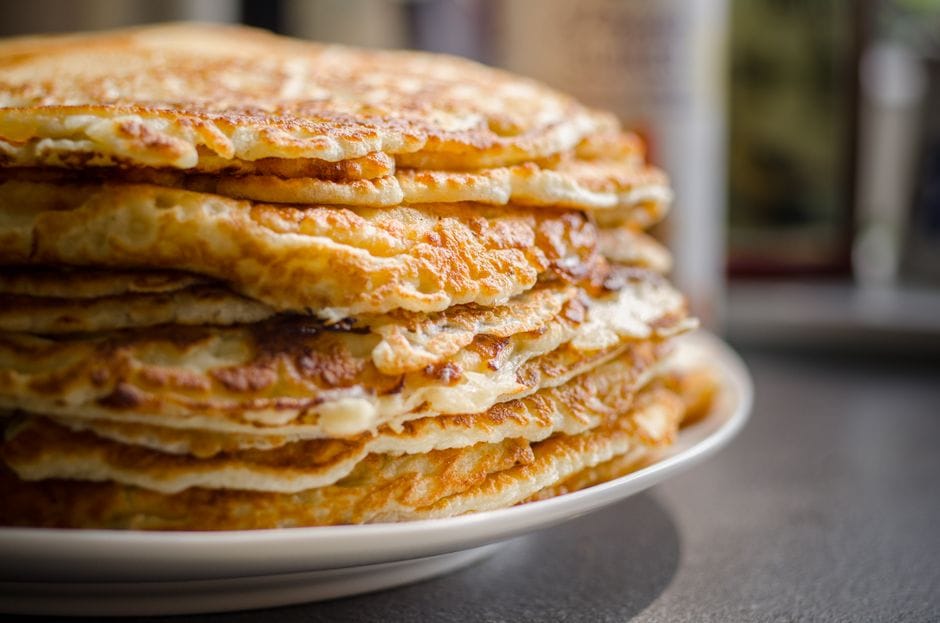 Photo: ClickerHappy / Pexels
Pancakes are where this swap shines and where you'll become a believer. The acid-plus-baking-soda reaction is what gives you height and those tender, fluffy insides, and vegan buttermilk delivers it perfectly.
My routine: I mix up a batch using the recipe below with soy milk, let it curdle while I measure out the dry ingredients, then combine. I add the baking soda to the dry side and only bring wet and dry together at the last second, because the moment that acidic buttermilk meets the soda, the clock starts.
You want those bubbles forming in the pan, not in the bowl. Cook them and the rise holds.
The texture is genuinely indistinguishable from dairy-buttermilk pancakes. Slightly crisp edges, soft middle, that faint tang in the background. I serve them with a smear of vegan butter and maple syrup and nobody has ever asked what's different.
Biscuits and the Cold-Fat Rule
Biscuits were my origin story, so I have opinions. Vegan buttermilk works beautifully here, but it has to be cold and so does your fat.
For flaky biscuits you cut cold solid vegan butter into the flour, then add cold vegan buttermilk and barely mix. The acid in the buttermilk tenderizes the gluten so the biscuits don't turn into hockey pucks, while the cold fat creates steam pockets in the oven that puff them up into layers.
Warm buttermilk softens the butter too early and you lose the flake.
So I make my buttermilk, then stick it in the fridge for fifteen minutes before it goes near the dough. Soy is my pick here because the slight extra thickness makes a dough that's easier to handle. The tang in the finished biscuit is exactly what you want under a swipe of jam.
Cake, Cornbread, and Quick Breads
This is the broad middle where vegan buttermilk just quietly works and you can stop overthinking it.
In cake, buttermilk gives you a tender, fine crumb and helps the rise. A classic vanilla or chocolate layer cake that calls for buttermilk will come out moist and soft with the vegan version, no other changes needed. I use soy here for the structure.
Cornbread is my favorite cornbread, full stop, and vegan buttermilk made with white vinegar (no citrus note) is part of why. It reacts with the baking soda for lift and gives that subtle sour edge that makes cornbread taste like cornbread instead of corn cake.
Quick breads, muffins, soda bread, scones, anything in that family, all take the swap at 1:1. If a recipe combines buttermilk with both baking soda and baking powder, leave both in. The vegan version provides the same acidity, so the leavening math stays the same.
Common Mistakes That Trip People Up
I've made every one of these, so let me save you the trouble.
Not waiting long enough. The acid needs five to ten minutes to react. Pour it in and use it immediately and you've basically added watery milk with a splash of lemon.
Give it time.
Using cold milk and rushing. Cold milk curdles slowly. Room temperature milk curdles faster and more fully.
If yours is straight from the fridge, let it sit out for ten minutes first, or just build in extra rest time.
Reaching for low-protein milk when structure matters. Almond and cashew milk are fine for a forgiving muffin, but for pancakes or cake where you want real lift and tenderness, use soy or pea milk. The protein is doing actual work.
Over-mixing once it hits the batter. Vegan buttermilk tenderizes, but you can undo that by beating the batter to death and developing the gluten anyway. Mix until just combined and stop.
Grabbing sweetened or flavored milk. Already confessed to the vanilla cornbread incident. Plain and unsweetened, every time.
Trying to make it ahead and store it for days. This is the one I get asked about most. Vegan buttermilk is a make-it-fresh ingredient.
The acid keeps reacting and the texture turns gluey and unpleasant if it sits in the fridge overnight, and the leavening power fades. It takes ten minutes, so just make it the moment you start a recipe.
If you absolutely must prep ahead, an hour in advance is the most I'd push it, kept cold. Scaling, on the other hand, is foolproof: hold the 1 tablespoon of acid per 1 cup of milk ratio and you can make a quarter cup or a quart with the same result.
If you're ever unsure whether a packaged plant milk or an acid you're using is genuinely vegan, our vegan ingredient checker and the Is It Vegan database are quick ways to confirm before you bake.
Is Store-Bought Buttermilk Vegan, and What About Brands?
Short answer: no, and there isn't really a brand to buy.
The cultured buttermilk in the dairy aisle is made from cow's milk, so it's out. And unlike vegan butter or vegan mayo, there's no popular shelf-stable carton of plant-based buttermilk sitting in the cold case. I've looked.
Powdered "vegan buttermilk" mixes exist online from a few small brands, but they're pricey, hard to find, and honestly pointless when the homemade version is two ingredients you already own.
So the brands that matter here aren't buttermilk brands. They're the plant milk you start with. For curdling and baking I lean on Silk and Edensoy for soy, and Ripple for pea milk, because they're high-protein and reliable.
For oat milk, Oatly Barista and Chobani Oat hold up better in batter than the thinner originals. Any plain unsweetened version of these gives you a great vegan buttermilk.
The Vegan Society keeps a searchable database of trademarked products if you want to double-check that a specific carton is certified.
For more swaps like this one, the full substitutes section covers butter, cream cheese, sour cream, and the rest of the dairy lineup.
So here's the takeaway I'd have given my seven-in-the-morning, biscuit-panicking self: buttermilk is not special and it is not hard. It's acidified milk doing a job in your batter, and plant milk plus a spoonful of lemon or vinegar does that job exactly as well.
Use soy when structure counts, give it ten minutes, keep it plain, and swap it 1:1 anywhere a recipe asks. You will never need the dairy carton again.
The recipe
2-Ingredient Vegan Buttermilk
Prep
10 min
Total
10 min
Makes
1 cup (240 ml)
Ingredients
- 1 cup (240 ml) plain unsweetened soy milk (highest protein, curdles best and thickest)
- OR 1 cup (240 ml) plain unsweetened pea milk such as Ripple (curdles almost as well as soy)
- OR 1 cup (240 ml) plain unsweetened oat, almond, or cashew milk (curdles lighter, still works 1:1)
- 1 Tbsp (15 ml) fresh lemon juice, for a bright tang in pancakes and cake
- OR 1 Tbsp (15 ml) distilled white vinegar, flavor-neutral, best for savory bakes like cornbread
- OR 1 Tbsp (15 ml) apple cider vinegar, a middle-ground option
- Pick one milk and one acid. That's the whole recipe.
Instructions
- 1 Bring your plant milk to room temperature if it's cold, so it curdles faster and more fully.
- 2 Measure 1 cup of plain unsweetened plant milk into a glass measuring cup or small bowl.
- 3 Add 1 tablespoon of lemon juice or vinegar and stir once or twice. Don't over-stir.
- 4 Let it sit undisturbed at room temperature for 5 to 10 minutes.
- 5 Watch for small curds and a slightly thickened, faintly lumpy texture. That's the curdle you want.
- 6 Stir gently before using to redistribute the curds, then use immediately in your batter or dough.
Notes
- ·Use room-temperature milk. Cold milk straight from the fridge curdles slower and less.
- ·Soy and pea milk curdle thickest. Oat, almond, and cashew curdle lightly but still work as a swap.
- ·Don't skip the rest time. The acid needs those few minutes to react with the milk proteins.
Calories
80 per cup
Protein
7 g
Fat
4 g
Carbs
3 g
Frequently asked questions
Is store-bought buttermilk vegan?+
No. Cultured buttermilk in the dairy aisle is made from cow's milk, so it's not vegan. There's no widely sold shelf brand of vegan buttermilk yet, which is partly why this swap exists. The good news is that homemade vegan buttermilk takes two ingredients and about ten minutes, so you never actually need a store version.
What's the ratio for vegan buttermilk?+
Use 1 tablespoon of lemon juice or vinegar per 1 cup (240 ml) of plant milk. Stir, then let it sit for 5 to 10 minutes until it curdles and thickens slightly. Scale it up or down keeping that 1 tablespoon per cup ratio and you'll be fine.
Which plant milk makes the best vegan buttermilk?+
Soy milk. Its higher protein content lets it curdle and thicken the most like real buttermilk, which matters in baking. Unsweetened pea milk works almost as well. Oat, almond, and cashew milk will curdle a little but stay thinner, so use them when you don't have soy on hand.
Can I use vegan buttermilk as a 1:1 swap in any recipe?+
Yes, anywhere a recipe calls for buttermilk you can use the same amount of the vegan version. It works in pancakes, biscuits, cake, cornbread, and quick breads. Just use plain unsweetened plant milk so you don't add unwanted sugar or vanilla notes to a savory bake.
Written by
VeganDigest Editorial is the small independent team that researches and fact-checks this site. We are not doctors or dietitians. For every is-it-vegan verdict we read the product's current ingredient list and manufacturer information, and for anything health-related we report guidance from recognized bodies such as the NHS, the Vegan Society, and the Academy of Nutrition and Dietetics rather than offering medical advice. Every page shows the date it was last verified, and our full process is on the How We Verify page.
Comments