Vegan Carrot Cake with Cream Cheese Frosting
 Jump to recipe ↓
 In this guide5
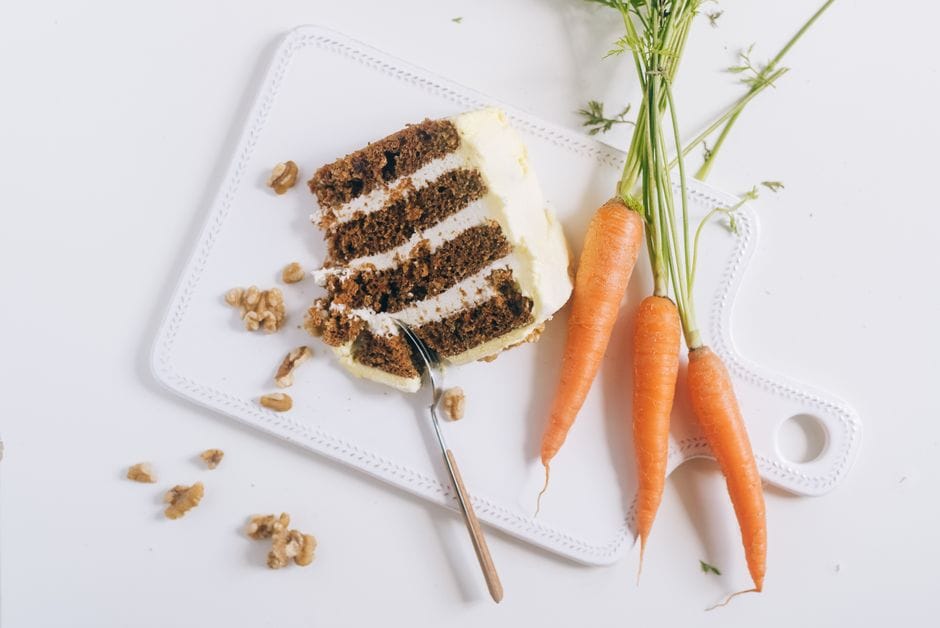
Vegan carrot cake is one of the most naturally suited cakes for a plant-based conversion. Carrots already carry moisture and structure, oil replaces butter without any fuss, and applesauce steps in for eggs so cleanly that most people eating a slice never guess it is dairy-free and egg-free. The result is a tender, deeply spiced two-layer cake with a tangy vegan cream cheese frosting that holds its own against any version you have had before.\n\nThis recipe uses a single bowl for the batter, two 8-inch round pans, and a straightforward cream cheese frosting built from vegan butter and vegan cream cheese. The whole project comes together in under two hours, and the cake keeps beautifully in the fridge for a full week.
Why This Cake Works Without Eggs or Dairy
Traditional carrot cake relies on eggs for lift and structure, and butter or sour cream for richness. In the vegan version, each of those jobs gets handed to an ingredient that is already in most kitchens.
Applesauce is the backbone of this swap. It adds moisture, a gentle natural sweetness, and enough binding power that no flax egg or chia egg is needed. Combined with canola oil, it produces a crumb that is genuinely moist without turning greasy or dense.
Baking powder and baking soda together provide the lift that eggs would normally supply. The slightly acidic almond milk activates the soda and helps the layers rise evenly. Freshly grated carrots add bulk and moisture that simply does not come from bagged pre-shredded carrots, which tend to be dry and too coarse.
The frosting works because brick-style vegan cream cheese (Kite Hill and Violife are widely available) behaves like dairy cream cheese in terms of fat content and texture. Beating it with vegan butter and powdered sugar produces a thick, tangy, pipeable frosting with no off-flavors.
Key Ingredients and What Each One Does
All-purpose flour (2.5 cups): Provides the structure. Spoon and level it rather than scooping directly from the bag to avoid packing in extra flour, which makes the cake dense.
Brown sugar and white sugar (1 cup each): Brown sugar adds molasses depth that complements the spices. White sugar keeps the crumb light. Using both is worth it.
Applesauce (1 cup): The egg replacement and primary moisture source. Unsweetened applesauce is best so the sweetness level stays in your control.
Canola oil (half cup): A neutral fat that keeps the cake tender at any temperature. Melted coconut oil works too, but avoid strongly flavored oils like unrefined coconut or extra-virgin olive oil.
Almond milk (three-quarters cup): Any unsweetened plant milk works here. Oat milk adds a faint sweetness; soy milk is the closest in protein content to cow's milk.
Freshly grated carrots (3 cups): Grate on the large holes of a box grater right before you use them. Squeeze out heavy excess moisture if the carrots seem very wet.
Spices: Cinnamon (2 teaspoons) carries the classic warmth. Ground ginger (half teaspoon) adds sharpness. Nutmeg (quarter teaspoon) deepens the background flavor. A pinch of ground cloves is optional but takes the spice profile from good to great.
Alcohol-free vanilla extract: Used in both the cake and the frosting. Standard vanilla extract is alcohol-based, so look for an alcohol-free version or use vanilla bean paste.
Brick-style vegan cream cheese (8 oz): Do not use the tub variety. Tub cream cheese has a softer texture designed for spreading, and the frosting will turn runny.
Method Tips for a Perfect Bake
Do not overmix. Once you add the wet ingredients to the dry, stir until just combined. Overworking the batter develops gluten and produces a tough, chewy cake rather than a tender one.
Line the pans properly. Spray the sides with oil, cut two circles of parchment for the bottoms, and press them in. Carrot cake can stick stubbornly. Skipping this step often means broken layers.
Grate the carrots yourself. Pre-shredded carrots from a bag are dry and stringy. Freshly grated carrots release moisture as they bake, which is exactly what keeps this cake soft for days.
Check at 35 minutes. Ovens vary. Start testing with a toothpick or thin knife at 35 minutes. The toothpick should come out clean or with a few moist crumbs but no raw batter. If it needs more time, check again every 3 to 5 minutes.
Cool completely before frosting. This is non-negotiable. If there is any warmth left in the layers, the frosting will melt and slide. Place the layers on a wire rack and wait at least 45 minutes after they come out of the oven.
Chill the frosting if needed. If your kitchen is warm or the frosting seems too soft after mixing, refrigerate it for 20 to 30 minutes before spreading. It firms up noticeably and is much easier to work with.
Variations Worth Trying
Sheet cake: Pour all the batter into a greased and lined 9x13-inch pan. Bake at 350 F for 30 to 40 minutes. This is the lowest-effort version and feeds a crowd easily.
With walnuts or pecans: Fold in 1 cup of roughly chopped walnuts or pecans when you add the carrots. They add texture and a slight bitterness that balances the sweet frosting.
With raisins: Half a cup of plain raisins stirred into the batter gives bursts of sweetness. Use plain raisins only, not the rum-soaked variety.
With crushed pineapple: Replace half the applesauce with well-drained crushed pineapple. The pineapple adds a tropical brightness and keeps the crumb exceptionally moist.
Cupcakes: Divide the batter among 18 to 20 lined muffin cups and bake at 350 F for 18 to 22 minutes. The frosting recipe below makes enough to generously top all of them.
Gluten-free: A 1:1 gluten-free all-purpose flour blend (like Bob's Red Mill) substitutes well in this recipe. The texture is slightly more delicate, so handle the layers carefully.
Serving and Storage
Serve the cake at room temperature for the best texture. Take it out of the fridge 30 to 45 minutes before slicing if it has been chilled, since cold cake can taste somewhat tight and the frosting is much more enjoyable when softened slightly.
Garish options that look good and taste relevant: a sprinkle of finely chopped walnuts pressed around the sides, a few thin carrot ribbons curled on top, or a light dusting of cinnamon over the frosting.
The frosted cake keeps covered in the refrigerator for up to 5 days. Unfrosted cake layers wrapped tightly in plastic wrap can be frozen for up to 3 months. Thaw overnight in the fridge, then bring to room temperature before frosting and serving.
The cream cheese frosting on its own stores in the fridge for up to 1 week. If it stiffens too much after chilling, let it sit at room temperature for 10 minutes and give it a quick stir before spreading.
The recipe
Vegan Carrot Cake with Vegan Cream Cheese Frosting
Prep
25 min
Cook
40 min
Makes
12 slices (two 8-inch layers)
Ingredients
- 2.5 cups all-purpose flour
- 1 cup brown sugar
- 1 cup white sugar
- 2 teaspoons baking powder
- 1 teaspoon baking soda
- 2 teaspoons ground cinnamon
- 0.5 teaspoon ground ginger
- 0.25 teaspoon ground nutmeg
- 0.125 teaspoon ground cloves (optional)
- 1 teaspoon fine salt
- 0.5 cup canola oil
- 1 cup unsweetened applesauce
- 0.75 cup unsweetened almond milk (or any plant milk)
- 1 tablespoon alcohol-free vanilla extract
- 3 cups freshly grated carrots (about 4 medium carrots)
- 1 cup chopped walnuts or raisins (optional)
- VEGAN CREAM CHEESE FROSTING:
- 0.5 cup vegan butter, slightly softened
- 8 oz brick-style vegan cream cheese
- 4 cups powdered sugar
- 1 teaspoon alcohol-free vanilla extract
- Pinch of fine salt
Instructions
- 1 Preheat the oven to 350 F (175 C). Grease two 8-inch round cake pans, line the bottoms with parchment circles, and spray again lightly.
- 2 In a large bowl, whisk together the flour, brown sugar, white sugar, baking powder, baking soda, cinnamon, ginger, nutmeg, cloves (if using), and salt until combined.
- 3 Add the canola oil, applesauce, almond milk, and vanilla extract directly to the dry ingredients. Stir until just combined. Stop as soon as no dry streaks remain. Do not overmix.
- 4 Fold in the grated carrots and walnuts or raisins (if using) with a spatula.
- 5 Divide the batter evenly between the two prepared pans. Bake for 35 to 45 minutes, until a toothpick inserted in the center comes out clean or with a few moist crumbs.
- 6 Cool the cakes in their pans for 20 minutes, then turn out onto wire racks and cool completely, at least 45 minutes more.
- 7 Make the frosting: Beat the softened vegan butter with a hand or stand mixer on medium speed until smooth and creamy, about 1 minute. Drain any excess liquid from the cream cheese container, then add the cream cheese. Mix for 30 seconds to 1 minute until combined. Do not overbeat.
- 8 Add the vanilla extract and salt. With the mixer on low, add the powdered sugar 1 cup at a time until the frosting is thick and spreadable. If it seems soft, refrigerate for 20 to 30 minutes before using.
- 9 Place one cooled cake layer on a serving plate. Spread a generous layer of frosting over the top. Place the second layer on top and frost the top and sides.
- 10 Refrigerate the finished cake for at least 30 minutes to let the frosting set. Remove from the fridge 30 minutes before serving for the best texture.
Notes
- ·Use brick-style vegan cream cheese, not tub-style. Kite Hill and Violife are reliable brands. Tub cream cheese makes runny frosting.
- ·Grate the carrots fresh rather than using pre-shredded. Fresh carrots release moisture as the cake bakes, keeping the crumb tender.
- ·Do not overmix the batter once wet and dry ingredients are combined. Overmixing leads to a dense, chewy result.
- ·For a sheet cake, use a greased 9x13-inch pan and bake at 350 F for 30 to 40 minutes.
- ·Frosted cake keeps in the fridge for up to 5 days. Unfrosted layers freeze well for up to 3 months.
Calories
480
Protein
4g
Fat
20g
Carbs
72g
Frequently asked questions
What is the best egg substitute for vegan carrot cake?+
Unsweetened applesauce works exceptionally well in carrot cake and is what this recipe uses. One cup of applesauce provides moisture and binding without any detectable flavor. Flax eggs (1 tablespoon ground flaxseed mixed with 3 tablespoons water per egg) also work if you prefer a whole-food option.
Why does my vegan cream cheese frosting turn out runny?+
The two most common causes are using tub-style cream cheese instead of brick-style, and overbeating after the cream cheese goes in. Tub cream cheese has a softer texture designed for spreading, not for frosting. Overbeating introduces air and breaks down the structure. Use a firm brick-style brand such as Kite Hill or Violife, mix briefly, and chill the frosting for 20 to 30 minutes if it still seems soft.
Can I make this carrot cake gluten-free?+
Yes. A 1:1 gluten-free all-purpose flour blend substitutes directly in the same amounts. Bob's Red Mill 1:1 and King Arthur Measure for Measure both work well here. The texture will be slightly more delicate, so be gentle when handling the layers after baking.
Can I make vegan carrot cake ahead of time?+
Yes, and it actually benefits from a day of rest. Bake the layers and cool them completely, then wrap each one tightly in plastic wrap and refrigerate for up to 2 days before frosting. The spices deepen overnight. You can also freeze the unfrosted layers for up to 3 months and thaw them in the fridge the night before you plan to assemble.
Written by
VeganDigest Editorial is the small independent team that researches and fact-checks this site. We are not doctors or dietitians. For every is-it-vegan verdict we read the product's current ingredient list and manufacturer information, and for anything health-related we report guidance from recognized bodies such as the NHS, the Vegan Society, and the Academy of Nutrition and Dietetics rather than offering medical advice. Every page shows the date it was last verified, and our full process is on the How We Verify page.
Comments