Vegan Condensed Milk (Sweetened, From Scratch)
- Soy-free
In this guide8
The first dessert I tried to veganize for my family was a tres leches cake, and I assumed the milks were the easy part. They were not. I had heavy cream sorted, I had evaporated milk worked out, and then I hit sweetened condensed milk and just stopped.
There is no animal-free can sitting next to the classic one at most shops, and I could not picture what would replace that thick, sticky, almost caramel sweetness that soaks into a sponge. I very nearly skipped the cake entirely.
What I learned that week is that condensed milk is not magic. It is just milk and sugar with most of the water boiled away. Once I understood that, the whole thing cracked open.
You can do the exact same trick with coconut milk or oat milk, simmer it down with sugar until it goes thick and glossy and caramelly, and you get something that behaves like the dairy original in fudge, pies, coffee, and yes, that tres leches cake. Here is everything I worked out, including the times it went wrong.
Why regular condensed milk is not vegan
Sweetened condensed milk is one of the simplest dairy products there is. You take cow's milk, add a lot of sugar, and gently boil off roughly 60 percent of the water until what is left is a thick, syrupy, intensely sweet liquid that keeps almost forever in the can.
That is the entire product. The milk is not a minor ingredient you could swap out around the edges; it is the base, the body, and the point.
So there is no version of the classic can that happens to be vegan by accident. Condensed milk is dairy by definition. If a recipe calls for it, you are not looking for a sneaky loophole on the label, you are looking for a replacement that recreates what it does: concentrated sweetness with body.
The good news is that the science is the same no matter what liquid you start with. Boil off water, concentrate the sugar, and you get that signature stickiness.
This also clears up a common worry. People sometimes ask whether the sugar itself is the problem. In some regions, cane sugar is filtered through bone char, which is not vegan.
That is a real consideration for your own sugar, and I touch on it below, but it has nothing to do with why dairy condensed milk is off the table. The dairy is the dealbreaker.
What actually replaces it
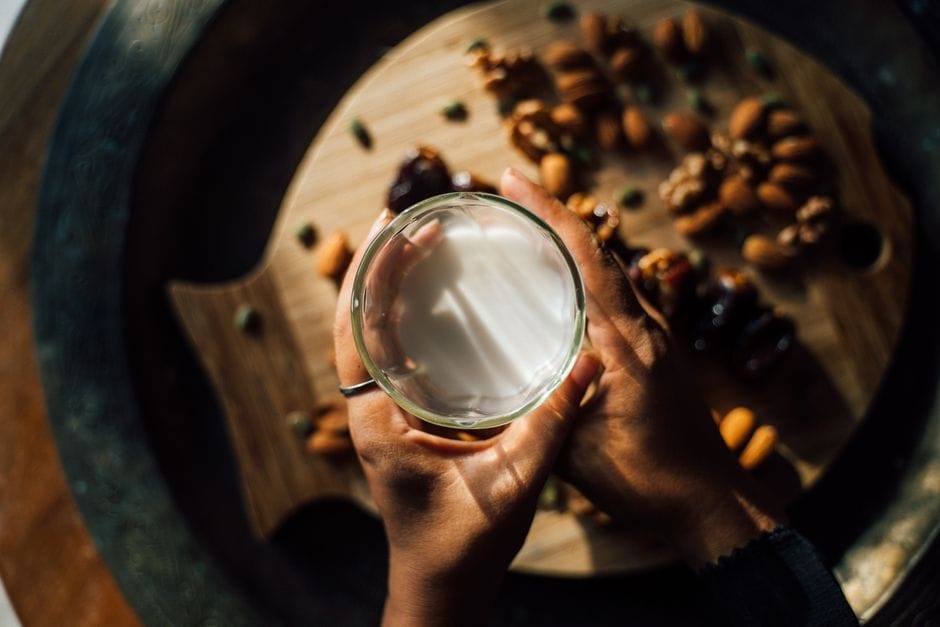 Photo: Anna Tarazevich / Pexels
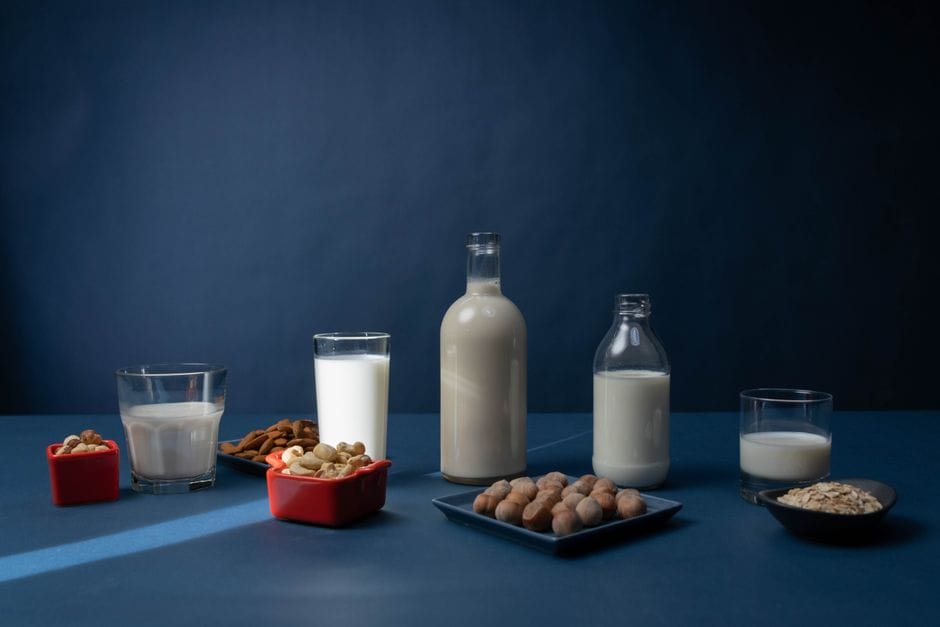
Once you stop thinking of condensed milk as a special ingredient and start thinking of it as reduced sweetened milk, the swap is obvious. You need a plant milk with enough fat and body to thicken when you cook it down, and then you add sugar and reduce.
Two liquids do this best. Full-fat coconut milk is the richest and the most forgiving, because all that coconut fat gives you body fast and a genuinely creamy, caramel-leaning result.
Oat milk is the neutral, nut-free choice; it reduces a little more stubbornly and tastes best with a touch more sugar, but it carries almost no competing flavor, which is perfect when you do not want anything to taste of coconut.
What does not work is thin, low-fat plant milk. A watery rice milk or a lite coconut can will reduce forever and still stay loose, because there is not enough fat or solids to build that sticky body.
This is the same wall you hit when people try to make vegan heavy cream out of barista oat milk: not enough fat to do the job. Start rich, and the reduction does the rest.
The from-scratch method, step by step
The recipe in the card above is my standard, and it really is just two main ingredients plus patience. But a few details are the difference between glossy caramel and a scorched, grainy mess, so let me walk through them.
Use a wide pan. This is the tip I wish someone had hammered into me earlier. A wide, heavy saucepan gives you more surface area, so the water evaporates faster and you spend less time hovering.
A narrow, deep pot traps the liquid and you will be stirring for an hour wondering why nothing is thickening.
Keep the heat low. Sugar and milk want to catch on the bottom of the pan, and the moment they do, you get a bitter, burnt note that you cannot stir out. A lazy, gentle simmer with regular scraping along the bottom and sides is the whole technique.
It takes 30 to 40 minutes for coconut, a bit longer for oat, and you cannot rush it with high heat without paying for it.
Stop early. This one cost me a batch.
Condensed milk thickens dramatically as it cools, so the consistency you want in the pan is noticeably looser than your final goal. The first time I made it, I cooked it until it looked perfect and pourable, walked away, and came back to something closer to soft fudge that I had to scrape out of the jar with a knife. Now I pull it off the heat while it still coats a spoon but clearly drips, and it sets into exactly the right pourable thickness once chilled.
Sweeten to your dish, not to a rule. The half cup of sugar in my recipe lands roughly where the dairy original sits, but condensed milk is meant to be intensely sweet, so if yours tastes thin and milky rather than rich and candy-like, it usually needs a little more sugar, not more cooking time.
I taste it warm near the end and adjust before it cools, because cold mutes sweetness and you do not want to discover it is underpowered only once it is in your pie.
Coconut versus oat: which to pick
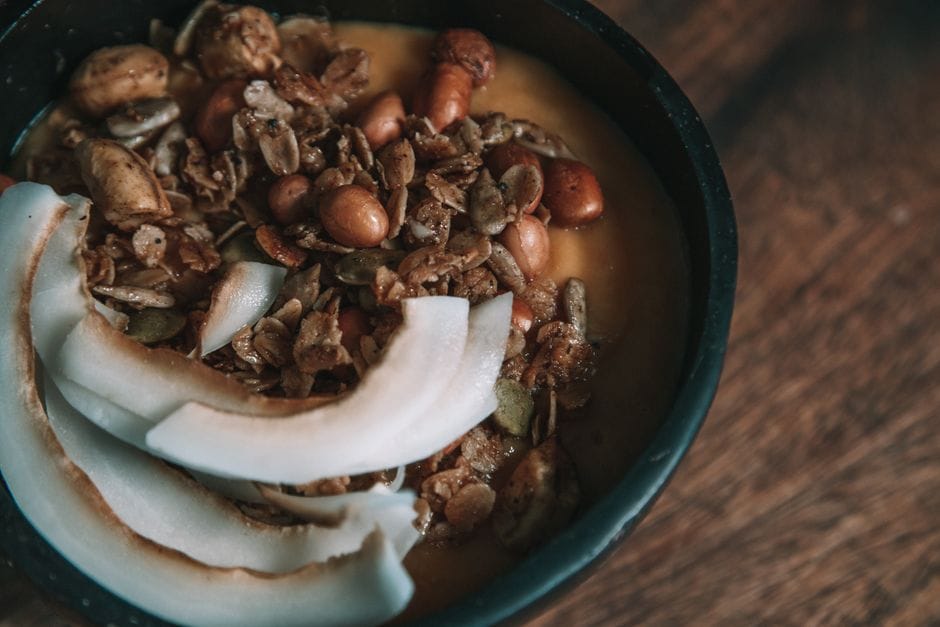 Photo: ROMAN ODINTSOV / Pexels
Both work, and the right one depends entirely on the dish.
Coconut is my default for desserts. It reduces quickly, it gets genuinely creamy, and it leans toward caramel as it cooks, which is exactly what you want in fudge, pie, or a sweet coffee.
There is a mild coconut flavor, but in a sweet dessert it usually disappears into the background or reads as a pleasant richness. If you want the closest thing to the dairy original with the least fuss, use full-fat coconut milk.
Oat is the pick when coconut would clash, or when nut and coconut allergies are in play. A reduced oat milk is impressively neutral, which makes it the better base for something delicate where you do not want any background flavor competing.
The trade-offs are honest: it takes longer to thicken, it scorches more easily, so the heat has to stay even lower, and it benefits from a little extra sugar to hit the same sweetness. If you have never made your own oat base, my notes on oat milk explain why fat and starch content vary so much between brands, which directly affects how well it reduces.
A quick warning from experience: do not try this with a thin, watery store oat milk meant only for cereal. Use a full-fat or barista-style one. The thin stuff simply will not build body no matter how long you simmer it.
The best store-bought vegan condensed milk
You will not always want to stand over a pan for 40 minutes, and you do not have to. The dedicated vegan condensed milk category is small but genuinely good, and one product leads it.
Nature's Charm Coconut Sweetened Condensed Milk is the one I keep in the cupboard. It comes in a can or a squeeze bottle, the ingredient list is essentially coconut milk and sugar, and it pours and behaves almost exactly like the dairy original. It is the closest thing to a true one-to-one swap I have found, and it is what I reach for when I want condensed milk without the project.
Nature's Charm also makes an oat-based version and a coconut caramel sauce that are worth knowing about if you spot them.
Beyond that, availability gets patchy and depends on where you live. Some regions have own-brand or specialty coconut condensed milks in health shops and Asian grocers, and they are often excellent and cheaper. The squeeze bottle format is especially nice for drizzling over coffee or fruit without dirtying a spoon.
Is store-bought vegan condensed milk actually vegan?
Mostly yes, but read carefully, because this is a shelf where mistakes happen. The dedicated dairy-free products, Nature's Charm chief among them, are vegan, made from coconut or oat milk and sugar with no animal ingredients. That part is reliable.
The trap is the labeling. Plenty of products are simply called "condensed milk" or "sweetened condensed milk" with no dairy disclaimer, and those are usually still made from cow's milk.
They sit on the same shelf, sometimes in similar tins, and it is genuinely easy to grab the wrong one on autopilot. Always check that it actually says coconut, oat, or another plant base, not just "condensed milk."
The only other thing worth a glance is the sugar, if you are strict about bone-char filtering, though most coconut condensed milks use unrefined or coconut sugar and sidestep the question entirely. If an ingredient ever looks unfamiliar, you can run the full list through our vegan ingredient checker, which flags anything animal-derived in plain language, or cross-check the specific product against our Is It Vegan database.
I do this any time a new brand shows up, because formulas get quietly reformulated and last year's safe product is not always this year's.
What to actually make with it
This is where vegan condensed milk earns its place, because it unlocks a whole shelf of recipes people assume they have to give up.
- Fudge. This is the easiest win. Melt good dark chocolate with a tin of coconut condensed milk and a pinch of salt, pour it into a lined tin, and chill it until firm. It is almost foolproof and tastes like proper old-fashioned fudge.
- Pie. Key lime, banana cream, and no-bake icebox pies all lean on condensed milk for that thick, set, sweet filling. The coconut version sets up just as well once chilled.
- Sweet coffee. This is the use I make most. A generous drizzle of coconut condensed milk in strong coffee over ice is the heart of Vietnamese-style iced coffee, and it is honestly the reason I always have a bottle of Nature's Charm in the door of the fridge.
- Tres leches. The cake that started all of this. Soak a sponge in a blend of plant milks and a homemade coconut condensed milk, and you get that wet, rich, custardy crumb without any dairy.
- Caramel and dulce de leche. Cook your homemade version a little longer until it turns golden, and you have a coconut caramel to swirl into ice cream, spread on toast, or fold into bars.
For the wider map of dairy-free swaps these recipes lean on, from cream to butter, the substitutes hub keeps the rest in one place.
My honest bottom line
Do not let a missing can stop you from making the dessert. Sweetened condensed milk is the least mysterious dairy product there is, just milk reduced with sugar, and you can recreate it perfectly with plants.
For the convenient route, keep a bottle of Nature's Charm coconut condensed milk on hand and use it spoon-for-spoon like the original. For the from-scratch route, simmer full-fat coconut milk or a rich oat milk with sugar over low heat in a wide pan, stop while it still drips off the spoon, and let it thicken as it cools. Either way, the fudge, the pie, the iced coffee, and yes, the tres leches cake, are all back on the table, and nobody at the table will be able to tell the dairy is gone.
The recipe
From-Scratch Vegan Sweetened Condensed Milk
Prep
5 min
Cook
35 min
Makes
about 1 cup (240 ml), roughly equal to one standard can
Ingredients
- 1.5 cups (360 ml) full-fat canned coconut milk (the richer the can, the thicker and faster it reduces; lite cans will not work)
- 1/2 cup (100 g) granulated cane sugar (use organic or beet sugar if you want to be sure it is bone-char free)
- 1 pinch fine sea salt (sharpens the sweetness so it does not read flat)
- 1/2 tsp alcohol-free vanilla or 1/4 tsp vanilla powder (optional, for a rounder, dessert-friendly flavor)
- 1 tsp neutral oil (optional, for an extra glossy, pourable finish)
- 1 Tbsp coconut sugar (optional, swap in for some of the cane sugar for a deeper, caramel-leaning color and flavor)
- 1.5 cups (360 ml) full-fat or barista-style oat milk (optional, use this instead of coconut milk for a neutral, nut-free version; reduce lower and slower)
- 1 to 2 tsp warm water or plant milk (optional, kept aside for loosening the finished milk once it sets firm in the fridge)
Instructions
- 1 Add the coconut milk, sugar, and salt to a wide, heavy-bottomed saucepan. A wide pan matters because more surface area means faster evaporation and less risk of scorching.
- 2 Set the heat to medium and stir until the sugar fully dissolves and the mixture just begins to bubble at the edges.
- 3 Drop the heat to low so it holds a gentle, lazy simmer. A hard boil will catch on the bottom and turn bitter, so keep it slow.
- 4 Let it reduce for 30 to 40 minutes, stirring every few minutes and scraping the bottom and sides so nothing sticks. It will slowly deepen from white to a warm ivory.
- 5 It is done when it has reduced by about half, coats the back of a spoon, and a line drawn through it on the spoon holds for a second before closing. It should look glossy and pourable, not stiff.
- 6 Stir in the vanilla and oil if using, then take it off the heat. Remember it will thicken a lot more as it cools, so stop while it is still slightly looser than you want.
- 7 Cool fully, then pour into a clean jar and refrigerate. Use within 7 to 10 days, loosening with a little warm water if it sets too firm.
Notes
- ·Oat milk works too and is nut-free, but reduce it lower and slower; it scorches more easily than coconut and tastes best with a little extra sugar.
- ·For a caramel-forward dulce de leche style, let it cook 5 to 10 minutes longer until it turns golden, watching closely so it does not burn.
- ·No coconut flavor wanted? A barista-style oat milk reduced with sugar gives the most neutral result.
Calories
110 per 2 Tbsp
Protein
1 g
Fat
6 g
Carbs
14 g
Frequently asked questions
Why is regular condensed milk not vegan?+
Sweetened condensed milk is made by simmering cow's milk with sugar until much of the water evaporates and it thickens. The milk is the whole point of the product, so it is dairy by definition and not vegan. There is no animal-free version of the classic blue-and-white cans, which is exactly why you either make your own or reach for a coconut-based one.
What can I use instead of condensed milk in a vegan recipe?+
The closest one-to-one swap is canned coconut condensed milk, which pours and behaves almost exactly like the dairy original. If you want to make it yourself, reduce full-fat coconut milk or oat milk with sugar over low heat until it is thick, glossy, and caramelly. For a quick fix in coffee, even a homemade coconut version drizzled in does the job beautifully.
Is store-bought vegan condensed milk actually vegan?+
Yes, the dedicated dairy-free condensed milks are vegan. Nature's Charm Coconut Sweetened Condensed Milk is the most widely available and is just coconut milk and sugar, with no dairy. Always read the label, since some products labeled simply 'condensed milk' are still dairy and sit right next to the vegan ones on the shelf. When in doubt, paste the ingredient list into our checker.
How long does homemade vegan condensed milk last?+
Stored in a clean sealed jar in the fridge, homemade coconut or oat condensed milk keeps for about 7 to 10 days. It thickens noticeably as it chills, so loosen it with a teaspoon of warm water or plant milk and stir before using. It also freezes well in a small container for up to 3 months, which is handy if you only need a few spoonfuls at a time.
Written by
VeganDigest Editorial is the small independent team that researches and fact-checks this site. We are not doctors or dietitians. For every is-it-vegan verdict we read the product's current ingredient list and manufacturer information, and for anything health-related we report guidance from recognized bodies such as the NHS, the Vegan Society, and the Academy of Nutrition and Dietetics rather than offering medical advice. Every page shows the date it was last verified, and our full process is on the How We Verify page.
Comments