Vegan Donuts (Baked, Glazed, and Actually Worth Making)

 Jump to recipe ↓
 In this guide5
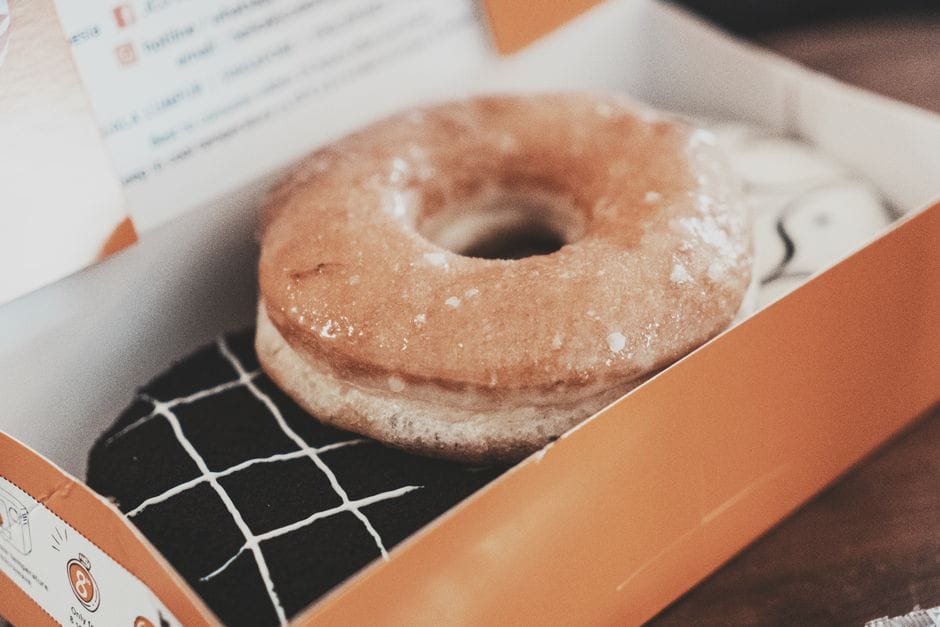
Baked vegan donuts are one of the fastest things you can pull out of a plant-based kitchen: no yeast, no frying, no eggs, no dairy, and a total time under 30 minutes. The result is a soft, cake-style donut with a tender crumb and a glossy glaze that sets firm enough to stack. They taste like a proper glazed donut from a bakery counter, not like a health muffin wearing a ring shape.
The recipe works because it borrows two reliable tricks from conventional baking: a vegan buttermilk made by curdling plant milk with apple cider vinegar, and applesauce as a moisture-rich egg replacement. Both ingredients are pantry staples, and together they give the batter the lift and cohesion that eggs and dairy would normally provide.
Why Baked Beats Fried for a Home Vegan Donut
Fried donuts need yeast, a proof window, hot oil, and a thermometer. Baked donuts need a pan and an oven. For a weekday treat or a weekend batch you actually finish, baked wins on every practical count.
The trade-off is texture. A baked vegan donut is honestly closer to a cake than a Krispy Kreme original. The inside is moist and soft, the outside firms up slightly at the edges, and the glaze is the main event. Once you accept that and lean into it, the result is genuinely satisfying. Several recipes from tested vegan food blogs make this point explicitly: the donut is delicious on its own terms, not a lesser version of something fried.
The ring shape also matters beyond aesthetics. A 6-cavity or 12-cavity silicone or metal donut pan creates a high surface-area-to-volume ratio that lets the outside set before the center dries out. Do not try to bake these as muffins with a hole pressed in; the bake dynamics are different.
Key Ingredients and What They Actually Do
All-purpose flour is the backbone. Spelt flour works as a one-to-one swap and gives a slightly nuttier flavor. Avoid almond flour or oat flour as a one-to-one replacement without reformulating the liquid ratios.
Vegan buttermilk is plant milk plus apple cider vinegar, left to sit for 10 minutes until it curdles slightly. The acid activates the baking powder faster and tenderizes the crumb. Soy milk curdles most reliably; oat milk and almond milk both work. Use half a cup of plant milk with half a tablespoon of apple cider vinegar.
Applesauce replaces the egg. It adds moisture, a small amount of natural pectin for binding, and just enough sugar to round out the flavor without sweetening the donut noticeably. Two to three tablespoons is the right range for one cup of flour. More than that and the center can come out gummy.
Vegan butter (melted) adds richness and helps the glaze adhere properly. Refined coconut oil works as a substitute at the same volume.
Baking powder is the primary leavener. Use fresh baking powder. If your tin has been open for more than six months, buy a new one; flat donuts are almost always a stale leavener problem.
Powdered sugar glaze is two cups of sifted powdered sugar to two tablespoons of plant milk and two tablespoons of melted vegan butter. This ratio produces a glaze thick enough to set on its own within a few minutes of dipping.
Method Tips for a Reliable Bake
Do not overmix. This is the single most important tip across every reputable baked donut recipe. Stir the wet and dry ingredients together until just combined. A few small lumps are fine. Overmixing develops gluten and turns the crumb tight and chewy.
Pipe the batter. Spooning batter into the cavities works, but a piping bag (or a zip-lock bag with one corner snipped) fills the cavities more evenly and keeps the center post clear. Fill each cavity about three-quarters full.
Grease the pan generously. Even non-stick donut pans need a coat of cooking spray or brushed-on melted vegan butter. Skipping this step is the main reason donuts tear when removed.
Pull them early rather than late. The bake window is 9 to 10 minutes at 350 degrees F (180 degrees C). At 8 minutes, check for lightly golden edges and a clean toothpick inserted into the thickest part. Overbaking dries out the crumb quickly because of the small volume of each donut.
Cool before glazing. Give the donuts at least 10 minutes on a wire rack before dipping. A warm donut will melt the glaze and it will slide off rather than setting in a clean coat. Dip the flat bottom side (the top once they are flipped on the pan) for the cleanest look.
Variations Worth Trying
Chocolate glaze: Replace half a cup of the powdered sugar in the base glaze with three tablespoons of good quality cocoa powder, then add plant milk one teaspoon at a time until the consistency is right. The result is a dark, glossy finish.
Cinnamon sugar coating: Skip the glaze entirely. While the donuts are still slightly warm, brush them with melted vegan butter and roll them in a half cup of granulated sugar mixed with one teaspoon of cinnamon. This version is messier to eat and much harder to stop eating.
Sprinkle donuts: The classic. Dip in the white powdered sugar glaze and immediately shower with rainbow sprinkles before the glaze begins to set. These are the ones children (and most adults) will eat first.
Lemon glaze: Add the zest of one lemon and two teaspoons of fresh lemon juice to the base glaze, reducing the plant milk by the same amount. Bright and clean, and a natural pairing with fresh berries on the side.
Cocoa batter: Add two tablespoons of cocoa powder to the dry ingredients and increase the plant milk by one tablespoon to compensate for the extra dry volume. Top with the powdered sugar glaze for a chocolate-glazed donut.
Serving and Storage
Baked vegan donuts are best on the day they are made. The glaze is at its best within two hours of dipping: it has set but not yet started to pull moisture from the air and go tacky.
For same-day serving, store at room temperature loosely covered. Do not refrigerate glazed donuts; the cold air dries the crumb and makes the glaze sweat.
If you want to make them ahead, bake and freeze the unglazed donuts. Wrap each one individually once fully cooled, freeze for up to two months, and thaw at room temperature for 30 minutes before dipping in fresh glaze. The crumb holds up well to freezing; the glaze does not.
For a brunch spread, glaze two or three varieties (plain white, chocolate, cinnamon sugar) and arrange on a cake stand. The visual difference between glazes makes the spread look much more involved than the actual labor involved.
The recipe
Baked Vegan Donuts with Classic Glaze
Prep
15 min
Cook
10 min
Makes
12 donuts
Ingredients
- 1/2 cup (120ml) unsweetened soy milk (or other plant milk)
- 1/2 tablespoon apple cider vinegar
- 2 cups (240g) all-purpose flour
- 1/2 cup (100g) granulated sugar
- 2 teaspoons baking powder
- 1/4 teaspoon fine sea salt
- 1/2 teaspoon ground cinnamon
- 3 tablespoons unsweetened applesauce
- 3 tablespoons vegan butter, melted (plus extra for greasing)
- 1 teaspoon alcohol-free vanilla extract
- For the glaze: 2 cups (240g) powdered sugar, sifted
- For the glaze: 2 tablespoons vegan butter, melted
- For the glaze: 2 to 3 tablespoons unsweetened plant milk
- For the glaze: 1 pinch fine sea salt
- Sprinkles or other toppings, optional
Instructions
- 1 Make the vegan buttermilk: combine the plant milk and apple cider vinegar in a small bowl or measuring cup, stir briefly, and set aside for 10 minutes. It will look slightly curdled; that is correct.
- 2 Preheat your oven to 350 degrees F (180 degrees C). Grease a 12-cavity donut pan generously with melted vegan butter or cooking spray.
- 3 In a large bowl, whisk together the flour, sugar, baking powder, salt, and cinnamon until evenly combined.
- 4 Add the vegan buttermilk, applesauce, melted vegan butter, and vanilla extract to the dry ingredients. Stir with a spatula until just combined. Stop mixing the moment no dry flour streaks remain; a few small lumps in the batter are fine.
- 5 Transfer the batter to a piping bag or a zip-lock bag with one corner snipped. Pipe the batter into the greased donut cavities, filling each about three-quarters full.
- 6 Bake for 9 to 10 minutes, until the edges are lightly golden and a toothpick inserted into the thickest part comes out clean. Do not overbake.
- 7 Let the donuts cool in the pan for 5 minutes, then transfer to a wire cooling rack. Allow them to cool for at least 10 minutes before glazing.
- 8 Make the glaze: whisk together the melted vegan butter, 2 tablespoons of plant milk, and the pinch of salt in a medium bowl. Add the sifted powdered sugar a little at a time, whisking after each addition, until the glaze is smooth. Add the third tablespoon of plant milk only if needed to reach a thick but dippable consistency.
- 9 Dip the flat side of each cooled donut into the glaze. Lift it straight up, let the excess drip back into the bowl for a few seconds, then place the donut glaze-side up on the rack. Add sprinkles immediately if using, before the glaze sets.
- 10 Allow the glaze to set for 5 to 10 minutes before serving.
Notes
- ·Do not skip the 10-minute rest for the vegan buttermilk; the acid reaction with the baking powder is what gives the donuts their lift.
- ·Overmixing is the most common mistake. Stir until just combined and stop.
- ·Soy milk curdles most reliably for the vegan buttermilk step, but oat milk and almond milk both work.
- ·For a chocolate version, add 2 tablespoons of cocoa powder to the dry ingredients and increase the plant milk by 1 tablespoon.
- ·Unglazed donuts freeze well for up to 2 months. Thaw at room temperature and glaze fresh before serving.
- ·Store glazed donuts at room temperature for up to 1 day. Do not refrigerate.
Calories
210
Protein
2g
Fat
5g
Carbs
40g
Frequently asked questions
Do I need a donut pan to make these?+
Yes, a donut pan is necessary for this baked recipe. The pan's ring molds create the right shape and surface area for an even bake. Silicone and metal pans both work; metal tends to give slightly crisper edges. A 6-cavity or 12-cavity pan works equally well; just adjust the yield accordingly.
Can I make these gluten-free?+
You can substitute a 1-to-1 gluten-free baking flour blend (such as Bob's Red Mill 1-to-1) for the all-purpose flour. Reduce the flour by 2 tablespoons, as gluten-free blends absorb liquid differently and can produce a denser result if used at the full amount. The bake time stays the same.
Why did my glaze slide off instead of setting?+
The donuts were still warm when you dipped them. Even 5 minutes of warmth is enough to thin the glaze. Wait a full 10 minutes after transferring to the rack, and make sure the glaze itself contains enough powdered sugar to be thick. If your kitchen is warm, a 5-minute rest in the fridge before dipping can also help.
Can I use a different egg replacer instead of applesauce?+
Yes. A flax egg (1 tablespoon ground flaxseed mixed with 3 tablespoons water, rested for 5 minutes) works well and adds a very subtle nutty flavor. Mashed ripe banana is another option at the same volume as the applesauce, though it adds noticeable banana flavor. Applesauce is the most neutral choice.
Written by
VeganDigest Editorial is the small independent team that researches and fact-checks this site. We are not doctors or dietitians. For every is-it-vegan verdict we read the product's current ingredient list and manufacturer information, and for anything health-related we report guidance from recognized bodies such as the NHS, the Vegan Society, and the Academy of Nutrition and Dietetics rather than offering medical advice. Every page shows the date it was last verified, and our full process is on the How We Verify page.
Comments