Vegan Guacamole: The Classic Recipe That Never Needs Anything Extra
 Jump to recipe ↓
 In this guide5
Guacamole has always been vegan. Ripe avocados, fresh lime juice, a little heat from jalapeño, the brightness of cilantro, and salt: nothing in that list was ever meat, dairy, or egg. The dish does not need a vegan makeover because the original is already there.
What it does need is a bit of technique. The difference between a guacamole that disappears in minutes and one that sits untouched on the table comes down to three things: avocado ripeness, salt, and acid. Get those right and the rest takes care of itself in about ten minutes flat.
Why This Recipe Works
Guacamole is one of those recipes where simplicity is the point, not a shortcut. The fat in avocado carries flavor, so every seasoning you add lands more intensely than it would in a leaner dish. Lime juice does two jobs at once: it brightens the flavor and slows the oxidation that turns avocado brown. Salt draws out moisture and deepens every other ingredient's taste.
The ratio across well-tested recipes converges on roughly one tablespoon of fresh lime juice per avocado. Any less and the dip tastes flat; any more and the acid overwhelms the creamy richness that makes guacamole worth making in the first place. Three avocados, two to three tablespoons of lime juice, and half a teaspoon of salt is the tested baseline. From there, onion, cilantro, and jalapeño are the classic supporting players.
Choosing and Ripening Your Avocados
No other ingredient matters as much as avocado ripeness. An underripe avocado will not mash properly and tastes grassy and bitter. An overripe one tastes sour and turns brown almost immediately after you cut it.
The right avocado gives slightly under gentle pressure at the stem end, feels firm everywhere else, and still has its stem nub attached. If you press and it dents deeply and stays dented, it is past its prime.
Planning ahead is the easiest way to guarantee good avocados. Buy them two to four days before you need them and leave them at room temperature. Once they reach that perfect give, move them to the fridge, where they will hold for another two days without over-softening. This one habit means you never have to compromise on ripeness.
Ingredients and What Each One Does
Avocados (3, ripe): The base and the bulk. Hass avocados are the standard choice for their creamy texture and rich flavor.
Fresh lime juice (2 to 3 tablespoons): Fresh only. Bottled lime juice has a cooked, slightly bitter edge that fights with avocado. Zesting the lime before squeezing it adds an extra layer of citrus fragrance that makes a noticeable difference.
Red onion (1/4 cup, finely diced): Sharper and slightly sweeter than white onion, which makes it better suited to a no-cook preparation. If raw onion is too assertive for you, rinse the diced pieces under cold water for thirty seconds and pat dry.
Jalapeño (1 small, seeded and finely diced): Seeds and membrane carry most of the capsaicin heat. Remove them for a mild guacamole or leave some in for real punch. Serrano works as a substitute and is noticeably hotter.
Fresh cilantro (1/4 cup, chopped): Cilantro's aromatic oils are volatile, meaning they fade fast. Add it at the end so the flavor stays bright. If you or your guests find cilantro soapy, flat-leaf parsley is a reasonable swap.
Sea salt (1/2 teaspoon, plus more to taste): Start here and adjust at the end. Guacamole that tastes bland is almost always under-salted, not under-avocadoed.
Optional additions: Two seeded and diced Roma tomatoes add color and freshness. Half a teaspoon of ground cumin adds a mild earthiness. One or two minced garlic cloves add depth.
Method and Key Tips
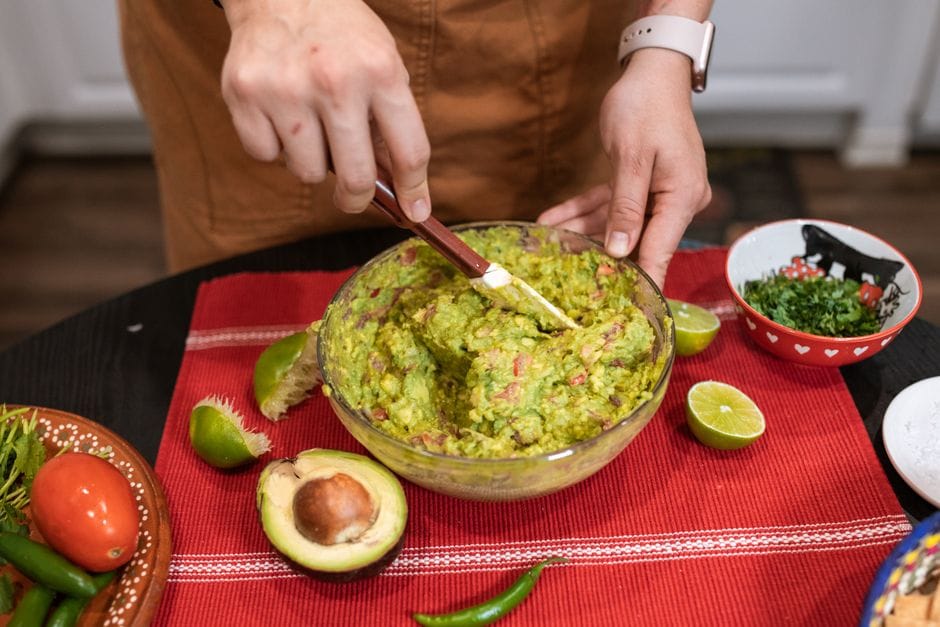
Mash first, mix second. Halve the avocados, remove the pits, and scoop the flesh into a large bowl. Mash with a fork or potato masher before you add anything else. This gives you control over texture: a few passes for chunky, more for creamy. Adding the other ingredients and then mashing tends to produce an uneven result where chunks of onion or jalapeño get pressed into the avocado unevenly.
Fold, do not stir. Once the avocados are mashed to your liking, fold in the lime juice, onion, jalapeño, and cilantro with a light hand. Over-stirring breaks down the avocado further and pushes the dip toward paste.
Taste three times. Taste after the first mix. Adjust salt if it tastes flat. Taste again. Add a squeeze more lime if the brightness is missing. Taste one final time before serving. Great guacamole is almost always the result of this last round of seasoning.
Serve immediately. Guacamole is at its best the moment it is made. If you are prepping ahead, press plastic wrap directly onto the surface of the guacamole so there is zero air contact, then refrigerate. The Downshiftology method of adding a thin layer of water (about half an inch) on top of flattened guacamole in a sealed container is effective: the water keeps oxygen away, and you simply pour it off before serving.
Variations and Serving Ideas
Make it fruity: Fold in half a cup of finely diced fresh mango or pineapple for a sweet-heat version that works brilliantly with spicy food.
Make it smokier: A pinch of smoked paprika or chipotle powder along with the cumin shifts the profile toward something richer and more complex.
Make it creamier: Some cooks add a spoonful of vegan sour cream for extra richness, though the avocado is already plenty creamy on its own.
For serving, the obvious choice is tortilla chips, but good guacamole stretches much further. Spread it inside a burrito or taco, spoon it over a grain bowl, use it as a sandwich spread in place of mayo, or serve it alongside raw vegetables as a lighter dipping option. It also makes an outstanding topping for vegan nachos when you need something fresh to balance baked, crispy toppings.
Storage: Fresh guacamole keeps in the fridge for up to two days. It will not freeze well because the texture breaks down on thawing.
The recipe
Vegan Guacamole
Prep
10 min
Total
10 min
Makes
4
Ingredients
- 3 ripe Hass avocados
- 2 to 3 tablespoons fresh lime juice (about 2 limes), plus zest of 1 lime
- 1/4 cup red onion, finely diced
- 1 small jalapeño, seeds removed and finely diced
- 1/4 cup fresh cilantro, finely chopped
- 1/2 teaspoon sea salt, plus more to taste
- 2 Roma tomatoes, seeded and diced (optional)
- 1/2 teaspoon ground cumin (optional)
Instructions
- 1 Halve the avocados lengthwise, remove the pits, and scoop the flesh into a large bowl.
- 2 Mash the avocado with a fork or potato masher to your preferred texture: a few passes for chunky, more for smooth and creamy.
- 3 Add the lime zest, lime juice, diced red onion, jalapeño, cilantro, and salt. Fold gently to combine.
- 4 If using, fold in the diced tomatoes and cumin.
- 5 Taste and adjust: add more salt if it tastes flat, more lime juice if it needs brightness, more jalapeño if you want heat.
- 6 Serve immediately with tortilla chips or your preferred accompaniment.
Notes
- ·Ripe avocados are essential. The avocado should give slightly under gentle pressure at the stem end but still feel firm overall.
- ·Use fresh lime juice only. Bottled juice has a cooked, bitter edge that clashes with fresh avocado.
- ·To store, flatten the surface, press plastic wrap directly onto the guacamole with no air gaps, and refrigerate for up to 2 days.
- ·Alternatively, add about 1/2 inch of water on top of flattened guacamole in a sealed container and pour it off before serving.
- ·If raw onion is too sharp, rinse the diced onion under cold water for 30 seconds and pat dry before adding.
Calories
185
Protein
2.5g
Fat
15.8g
Carbs
12.3g
Frequently asked questions
Is guacamole always vegan?+
Classic guacamole is always vegan. The traditional ingredients are avocado, lime juice, onion, cilantro, jalapeño, and salt, none of which are animal products. The only time guacamole stops being vegan is if someone adds sour cream or cheese, which is a non-traditional addition. If you are ordering at a restaurant, it is worth asking whether anything has been stirred in.
How do I stop guacamole from turning brown?+
Browning is caused by oxygen reaching the cut surface of the avocado. The most effective method is to press plastic wrap directly onto the guacamole surface so no air can get in. Adding lime juice to the recipe also slows oxidation significantly. A thin layer of water poured over the surface of stored guacamole (then poured off before serving) is another method that works well.
Can I make guacamole ahead of time?+
You can make it a few hours ahead and store it covered in the fridge with plastic wrap pressed directly onto the surface. For best flavor and color, make it no more than 2 to 3 hours before serving. Guacamole made more than a day in advance loses brightness and the texture softens noticeably.
What if my avocados are not ripe yet?+
Leave them at room temperature for two to four days. Do not refrigerate unripe avocados as the cold stops the ripening process. To speed things up slightly, place the avocados in a paper bag with a banana or apple: the ethylene gas those fruits release helps accelerate ripening.
Written by
VeganDigest Editorial is the small independent team that researches and fact-checks this site. We are not doctors or dietitians. For every is-it-vegan verdict we read the product's current ingredient list and manufacturer information, and for anything health-related we report guidance from recognized bodies such as the NHS, the Vegan Society, and the Academy of Nutrition and Dietetics rather than offering medical advice. Every page shows the date it was last verified, and our full process is on the How We Verify page.
Comments