Vegan Lasagna with Tofu Ricotta, Marinara, and Vegan Cheese

 Jump to recipe ↓
 In this guide4
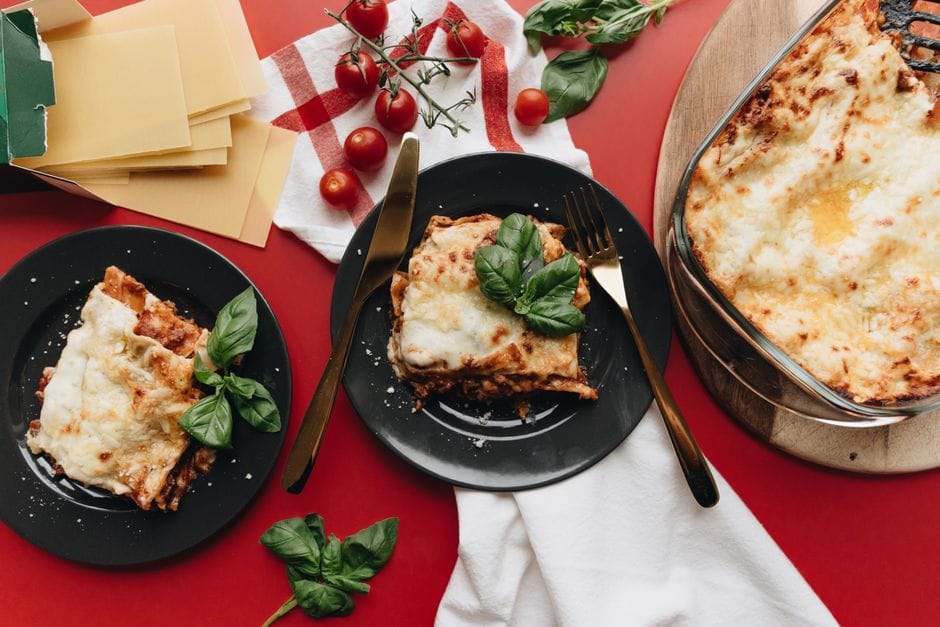
Vegan lasagna with tofu ricotta is everything classic lasagna promises: layers of tender noodles, a savory herbed filling, bubbling marinara, and golden melted cheese. Every element is completely plant-based, and the result is rich, satisfying, and absolutely freezer-worthy.
The secret is a blended tofu ricotta that delivers the creamy, slightly grainy texture of dairy ricotta without any compromise on flavor. Nutritional yeast, fresh lemon juice, and dried herbs bring the filling to life. Pair that with a generous marinara and good-quality shredded vegan mozzarella, and you have a dish that holds its shape when sliced and wins over skeptics at the dinner table.
Why This Vegan Lasagna Actually Works
The core challenge with vegan lasagna is filling texture. Dairy ricotta has a light, creamy crumble that plant-based swaps often miss. Pressed extra-firm tofu solves this because its protein structure mimics that texture almost exactly once blended. You keep it slightly coarse rather than perfectly smooth, and it behaves just like the real thing between layers.
Nutritional yeast adds a savory, umami-forward depth that replaces the funk of dairy cheese without tasting artificial. A squeeze of fresh lemon juice brightens the whole filling and cuts through the richness of the marinara. Together these three elements (tofu, nutritional yeast, lemon) are the engine that makes the filling taste complete.
On the moisture side, a good vegan lasagna needs enough sauce to cook the noodles through and keep the layers from drying out during baking. The standard ratio across tested recipes is roughly 48 oz (about two 25-oz jars) of marinara for a full 9x13 dish. This gives you enough sauce to spread generously at each layer and still have a saucy, cohesive result after the foil comes off.
Key Ingredients and What Each One Does
Extra-firm tofu (14 to 16 oz): The base of the ricotta. Press it for at least 20 to 30 minutes to remove excess water. Wet tofu will make the filling watery and loose. Firm and extra-firm both work, with extra-firm giving a slightly drier, more ricotta-like result.
Nutritional yeast (1/4 to 1/2 cup): Adds the cheesy, savory depth the ricotta needs. Start with 1/4 cup and taste before adding more. Too much becomes overwhelming.
Fresh lemon juice (2 to 3 tablespoons): Brightens and lifts the filling. This is not optional. Without acid, the ricotta tastes flat.
Dried basil and oregano: Classic Italian herbs that ground the ricotta in the right flavor profile. Garlic powder rounds everything out without the sharpness of raw garlic.
Marinara sauce (about 48 oz): Use a sauce with no wine in the ingredient list (many jarred sauces are wine-free but check the label). A simple tomato, garlic, and herb marinara is ideal. You can also use homemade.
Lasagna noodles (12 sheets): Regular dried noodles work fine without pre-boiling as long as there is enough sauce in the dish. No-boil noodles are equally reliable.
Shredded vegan mozzarella (2 to 3 cups): Brands like Violife, Follow Your Heart, or Miyoko's melt best. Reserve at least one cup for the final uncovered bake so the top browns and bubbles properly.
Method Tips for Perfect Layers
Press the tofu seriously. Wrap the block in a clean kitchen towel or several layers of paper towel and place something heavy on top for 20 to 30 minutes. This single step is the difference between a creamy ricotta and a watery one.
Pulse the ricotta, do not puree it. The food processor should run in short bursts until the mixture is creamy but still has some texture. Fully smooth ricotta loses the appeal of the real thing.
Spread sauce on the very bottom of the dish first. Even a thin half-cup prevents the bottom noodles from sticking and drying out.
Layer order matters. Four noodles, then half the ricotta spread to the edges, then sauce. Repeat. Finish with noodles and a generous layer of sauce all the way to the corners so every noodle gets covered.
Cover tightly with foil for the first 40 to 45 minutes at 350 degrees F. The steam trapped under the foil cooks the noodles and melts everything together. Remove the foil, add remaining vegan mozzarella to the top, and bake uncovered for 15 to 20 minutes until the cheese is melted and the edges are bubbling and slightly brown.
Rest before slicing. At least 15 minutes, ideally 30. Hot lasagna straight from the oven will fall apart when cut. Resting lets the layers firm up so each slice holds its shape on the plate.
Variations Worth Trying
Add spinach to the ricotta: Stir 3 cups of fresh baby spinach (or one 10-oz package of thawed, squeezed frozen spinach) into the tofu ricotta before layering. It adds color, nutrition, and a classic Italian-American touch.
Add lentils to the marinara: Simmer 1 cup of dried red lentils in 3 cups of water for about 20 minutes until soft, then stir into the marinara. This creates a hearty, meaty sauce layer without any processed meat substitutes.
Make it nut-free: The core recipe is already nut-free. Some versions blend in raw cashews (1/2 cup soaked) for extra creaminess, but the plain tofu ricotta here is just as good and keeps it allergy-friendly.
Add mushrooms: Saute 8 oz of sliced cremini or baby bella mushrooms in a little olive oil with garlic and salt until golden. Layer them alongside the ricotta for a savory, umami boost.
Serving and storage: Serve with a simple green salad and crusty bread. Leftovers keep in an airtight container in the refrigerator for 4 to 5 days. The lasagna also freezes well, either before or after baking, for up to 3 months. Thaw overnight in the refrigerator and reheat covered at 350 degrees F until hot throughout, about 25 to 30 minutes.
The recipe
Vegan Lasagna with Tofu Ricotta
Prep
30 min
Cook
1h 5m
Makes
9 to 12 servings
Ingredients
- 12 dried lasagna noodles (regular or no-boil)
- 2 tablespoons olive oil
- 1 medium yellow onion, diced
- 4 cloves garlic, minced
- 2 (25-oz) jars marinara sauce, wine-free (check label), about 48 oz total
- 1 teaspoon dried oregano
- Salt and black pepper to taste
- 14 to 16 oz extra-firm tofu, pressed dry for 20 to 30 minutes
- 1/3 cup nutritional yeast
- 2 tablespoons fresh lemon juice
- 1 teaspoon garlic powder
- 1 teaspoon dried basil
- 1/2 teaspoon dried oregano (for ricotta)
- 3/4 teaspoon fine sea salt
- 1/4 teaspoon black pepper
- 1 tablespoon olive oil (for ricotta)
- 3 cups shredded vegan mozzarella (divided), such as Violife or Follow Your Heart
Instructions
- 1 Press the tofu: Wrap the tofu block in a clean kitchen towel or several layers of paper towel. Place a heavy pan or book on top and let it press for 20 to 30 minutes to remove excess moisture.
- 2 Preheat the oven to 350 degrees F (175 degrees C).
- 3 Make the marinara: Heat 2 tablespoons olive oil in a large saucepan over medium heat. Add the diced onion and cook, stirring occasionally, for 5 to 6 minutes until softened. Add the minced garlic and cook 1 minute more. Pour in both jars of marinara, add 1 teaspoon oregano, and season with salt and pepper. Simmer for 5 minutes, then remove from heat.
- 4 Make the tofu ricotta: Break the pressed tofu into large chunks and place in a food processor. Add the nutritional yeast, lemon juice, garlic powder, dried basil, 1/2 teaspoon oregano, sea salt, black pepper, and 1 tablespoon olive oil. Pulse in short bursts until the mixture is creamy but still has some texture, similar to dairy ricotta. Taste and adjust salt or lemon juice as needed.
- 5 If using regular (not no-boil) noodles: Cook according to package directions until just al dente. Drain and lay flat on a lightly oiled surface to prevent sticking. (Skip this step for no-boil noodles.)
- 6 Assemble the lasagna in a 9x13-inch baking dish. Spread about 3/4 cup of marinara sauce evenly across the bottom.
- 7 Lay 4 noodles lengthwise over the sauce, overlapping slightly.
- 8 Spread half of the tofu ricotta evenly over the noodles. Sprinkle with 3/4 cup vegan mozzarella. Spoon about 1 cup of marinara sauce over the cheese.
- 9 Lay 4 more noodles. Spread the remaining ricotta, sprinkle another 3/4 cup vegan mozzarella, and spoon another 1 cup marinara over the top.
- 10 Lay the final 4 noodles. Pour the remaining marinara over the top, spreading it all the way to the corners and edges so all noodles are covered.
- 11 Cover the dish tightly with aluminum foil. Bake at 350 degrees F for 40 to 45 minutes, until the sauce is bubbling and the noodles are tender.
- 12 Remove the foil. Sprinkle the remaining 1.5 cups of vegan mozzarella evenly over the top. Return to the oven uncovered and bake for 15 to 20 minutes more, until the cheese is melted and the edges are golden and bubbly.
- 13 Remove from the oven and let the lasagna rest for at least 15 to 30 minutes before slicing. This resting time is important for the layers to firm up and hold their shape when served.
Notes
- ·Check the marinara label: some jarred sauces contain wine. Choose a wine-free marinara or use homemade tomato sauce.
- ·Pressing the tofu is not optional. Skipping this step results in a watery filling that makes the lasagna soggy.
- ·For a spinach version, stir 3 cups of fresh or one 10-oz package of thawed and squeezed frozen spinach into the ricotta before layering.
- ·To freeze before baking: assemble fully, cover tightly with two layers of foil, and freeze for up to 3 months. Bake from frozen at 375 degrees F, covered, for 60 minutes, then uncover and bake 20 to 25 minutes more.
- ·To freeze after baking: cool completely, slice into portions, wrap individually, and freeze for up to 3 months. Reheat covered at 350 degrees F for 25 to 30 minutes.
- ·Leftovers keep in the refrigerator in an airtight container for 4 to 5 days.
Calories
380
Protein
18g
Fat
13g
Carbs
48g
Frequently asked questions
Do I need to boil the lasagna noodles first?+
Not necessarily. If you use no-boil noodles, skip the pre-cook entirely. Regular dried noodles can also go in uncooked as long as the dish has enough sauce (which this recipe does) to create steam under the foil. If you prefer to pre-boil regular noodles for extra assurance, cook them just to al dente, drain, and lay flat before assembling.
Can I make vegan lasagna ahead of time?+
Yes, this is a great make-ahead dish. Assemble it fully, cover tightly, and refrigerate for up to 24 hours before baking. Add about 10 extra minutes to the covered baking time since it starts cold. You can also freeze it before or after baking for up to 3 months.
What is the best vegan mozzarella for melting?+
Violife, Follow Your Heart, and Miyoko's all melt well in the oven. Shredded varieties generally melt better than sliced. Avoid brands that use a lot of starch with little fat, as they tend to not melt smoothly. If you cannot find shredded vegan mozzarella, a vegan cheese sauce drizzled over the top before the final bake also works well.
Is this recipe nut-free?+
Yes, the core recipe is completely nut-free. The tofu ricotta relies only on tofu, nutritional yeast, lemon juice, and herbs. Some vegan lasagna recipes add soaked cashews for extra creaminess, but this version skips them entirely and still delivers a rich, satisfying filling.
Written by
VeganDigest Editorial is the small independent team that researches and fact-checks this site. We are not doctors or dietitians. For every is-it-vegan verdict we read the product's current ingredient list and manufacturer information, and for anything health-related we report guidance from recognized bodies such as the NHS, the Vegan Society, and the Academy of Nutrition and Dietetics rather than offering medical advice. Every page shows the date it was last verified, and our full process is on the How We Verify page.
Comments