How to Freeze Tofu (For a Chewier, Spongier Texture)

In this guide8
The first time I froze tofu, it was an accident. I'd bought three blocks on sale, ran out of room in the fridge, and shoved one into the freezer figuring I'd deal with it later. A week passed.
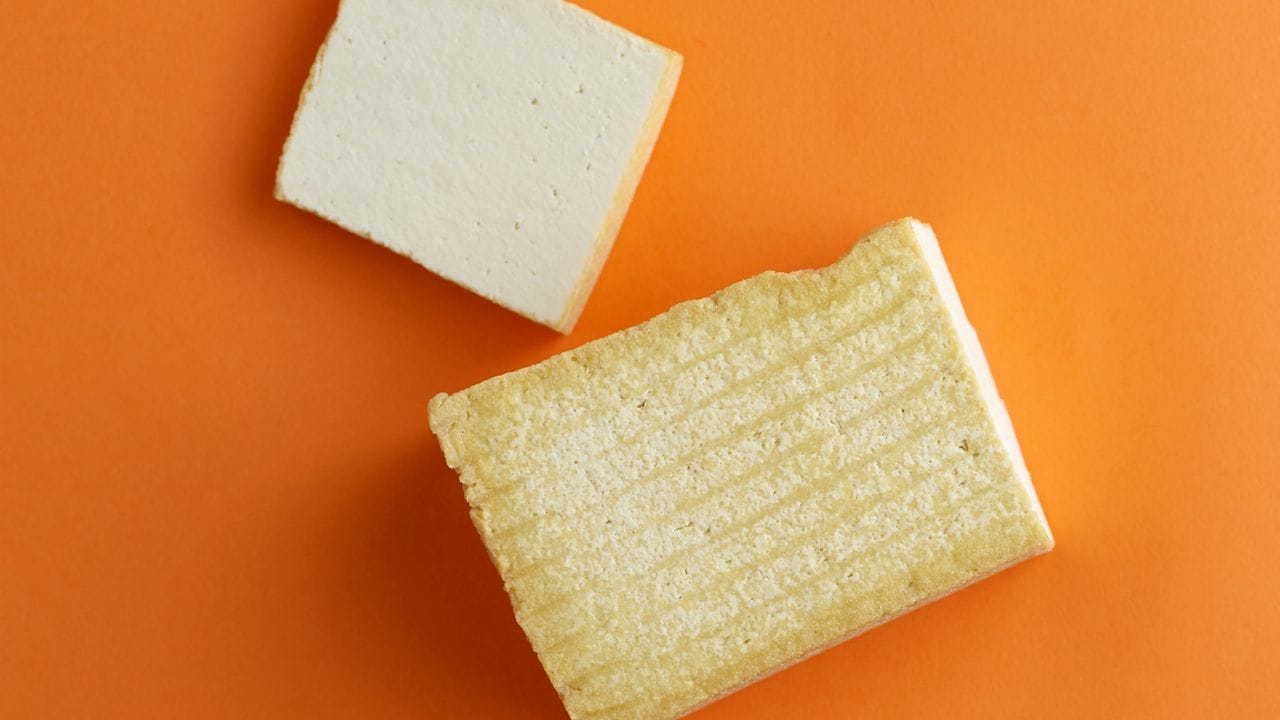
When I thawed it on the counter and pressed it, I genuinely thought I'd ruined it. The block had gone yellow, the surface looked spongy and pocked like a kitchen sponge, and water poured out of it when I squeezed. I almost threw it away.
Instead I cubed it, tossed it in a hot pan with a little soy and chili, and it was the best tofu I had ever made. Chewy, a little toothsome, soaking up sauce so fast the pan went dry. That accident turned into my default move.
Now I freeze tofu on purpose, and I want to walk you through exactly why it works and how to do it right.
What Freezing Actually Does to Tofu
Tofu is mostly water, somewhere around 70 to 85 percent depending on the variety. In a fresh block, that water sits in tiny, evenly distributed spaces throughout the curd, which is why fresh tofu feels smooth and dense and a little custardy.
When you freeze it, that water turns to ice. And ice takes up more room than liquid water, so as it freezes it expands and physically shoves the curd apart, carving out a network of channels and pockets.
When you thaw the block, the ice melts back into water, but the holes it left behind stay. What you're left with is a structure that looks and behaves like a honeycomb or a sponge.
That's the whole trick. There's no additive, no special equipment, just physics doing the work in your freezer overnight. The chewy, meaty texture people chase with marinades and cornstarch is mostly just this: open pores where there used to be solid curd.
If you want the deeper science, the texture section of the Tofu entry on Wikipedia describes how freezing reorganizes the protein matrix into that porous, chewy form.
The first time, the yellowing scared me. I want to say this plainly so you don't make my mistake: frozen tofu turning amber or pale yellow is normal. It is not spoiled.
The color shifts because freezing concentrates the natural compounds in the soybeans, and the new spongy surface reflects light differently. Once it's cooked and sauced, you will not notice it.
Which Tofu Freezes Best
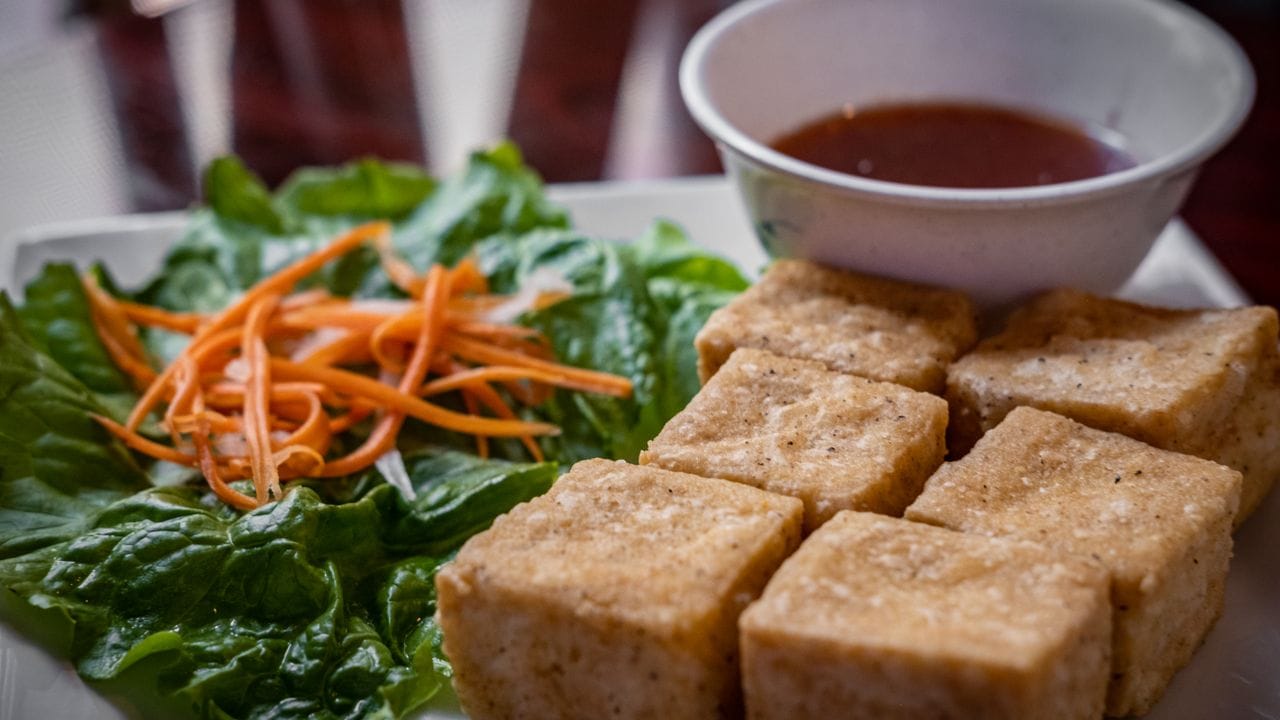
 Photo: Polina Tankilevitch / Pexels
Not every block is a good candidate, and reaching for the wrong one is the fastest way to be disappointed.
Firm and extra-firm tofu are the sweet spot. They have enough water to form those big satisfying pores, but enough structure to hold together once thawed.
In a typical American grocery store, the water-packed firm and extra-firm options I freeze most are House Foods (the blue and green packages), Nasoya, and Trader Joe's organic firm. They're cheap, reliable, and they come out of the freezer with exactly the chew I want.
Super-firm and high-protein tofu, the vacuum-packed kind like Wildwood High Protein Super Firm or Trader Joe's High Protein Organic Tofu, freeze fine, but they change less. They start out so dry and dense that there's less water to expand, so the texture shift is more modest.
Still worth doing if that's what you have, just don't expect the same dramatic sponge.
Silken and soft tofu are the ones to skip, mostly. They're so full of water that freezing turns them fragile and crumbly.
The exception: if you actually want a loose, crumbly texture for a tofu scramble, freezing soft tofu and crumbling the thawed block can be a shortcut to that ragged, eggy look. For everything else, leave the silken in the fridge.
If you're unsure which variety you've got or which to buy, my guide to tofu breaks down every type and how each one behaves.
The Freeze-Thaw-Press Method, Step by Step
Here's the full sequence I use. It's simple, but the order matters and a couple of small choices make a real difference.
1. Decide: drain first, or freeze in the package? You can freeze the whole sealed package as-is, water and all, and it works.
But I prefer to drain off the packing water first and freeze the block on its own, because freezing a block surrounded by a lot of water means a slower, less even freeze and a soggier thaw. If you're freezing the unopened package, that's the lazy-day option and it's totally fine.
2. Cube it, or freeze it whole. This is the choice I wish someone had told me about sooner. Freezing the block whole gives you a uniform sponge you can slice however you like later.
But if you cube the tofu before freezing, every piece develops pores on all sides, and the cubes are ready to cook the moment they thaw. I almost always cube first now.
Cut a firm block into roughly one-inch pieces, lay them on a baking sheet or a plate so they're not touching, and freeze them spread out before bagging, so they don't fuse into one brick.
3. Freeze it solid. Give it at least 8 hours, but overnight is easiest. Once the cubes are frozen through, transfer them to a freezer bag, squeeze out the air, label with the date, and tuck them back in.
4. Thaw fully. You can move the bag to the fridge the night before, leave it on the counter for a few hours, or, when I'm impatient, set the frozen cubes in a bowl and pour boiling water over them to speed it up.
Thaw all the way through. A still-frozen center won't press out and will steam instead of sear in the pan.
5. Press out the water, hard. This is the step people skip, and it's the one that matters most. Thawed frozen tofu holds a shocking amount of water in those new pores, and if you don't get it out, you've wasted the whole exercise.
Gather the cubes in a clean kitchen towel and squeeze each one over the sink like a sponge. Water will gush out. For a whole block, press it under real weight for at least 20 minutes.
I go deeper on technique in how to press tofu, but with frozen tofu you can be far more aggressive than with fresh, because the structure won't fall apart. Wring it.
That's it. Cube, freeze, thaw, squeeze. The drier you get it, the chewier and thirstier for sauce it becomes.
Why the Sponge Soaks Up Sauce So Well
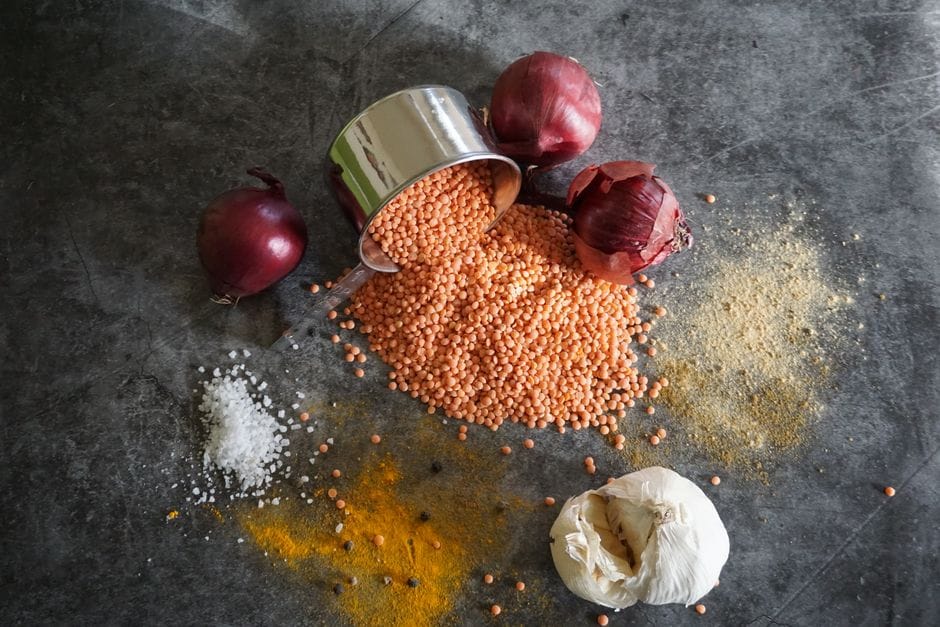
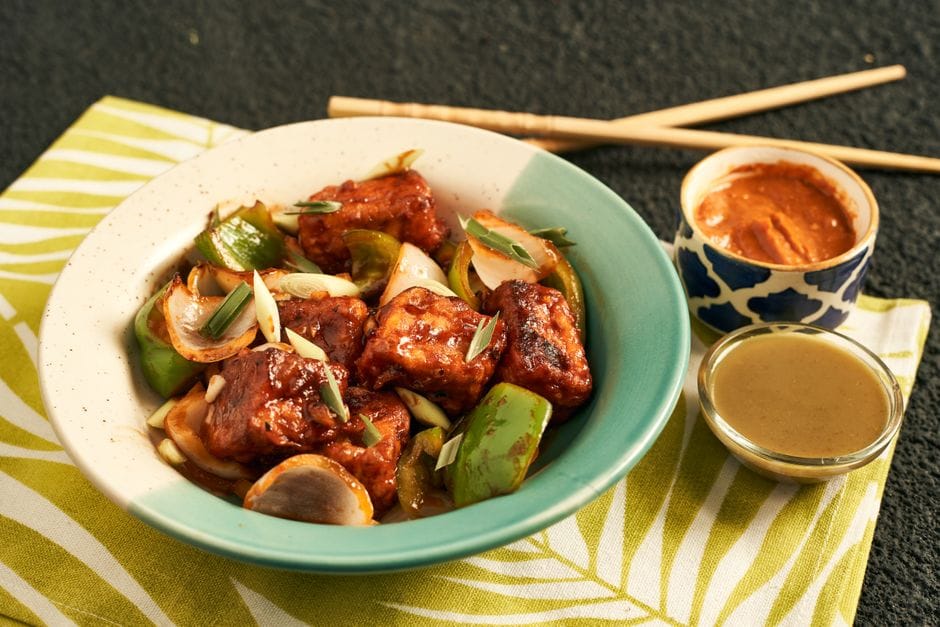 Photo: dhiraj jain / Pexels
Once you've squeezed all that water out, you've created the opposite of a problem I write about constantly: fresh tofu won't absorb flavor because its pores are already full of water. Marinade has nowhere to go, so it slides off and pools at the bottom of the bowl.
Frozen-and-pressed tofu fixes that completely. You've emptied the pores, so now there's room for flavor to move in. Drop those squeezed cubes into a sauce and they drink it up like a paper towel.
The same soy-ginger glaze that barely clung to a fresh block will saturate a frozen one in minutes.
This is the reason I freeze tofu for almost anything saucy. A stir-fry, a curry, a sticky glaze: the frozen cubes don't just sit there coated on the outside, they pull the flavor into the center. If you've ever bitten into restaurant tofu and wondered why the inside tasted seasoned all the way through, freezing is very often the secret.
The Best Ways to Use Frozen Tofu
This texture shines in specific dishes, and falls flat in others. Here's where I reach for it.
Stir-fries and rice bowls. This is the headliner. Press the thawed cubes dry, toss them in a little cornstarch, and pan-fry until golden. The chewy, porous structure crisps up at the edges and grabs sauce in the bowl.
My full crisping method, including the cornstarch ratio, is in how to cook tofu, and it's even better with frozen tofu than fresh.
Vegan chicken and "shredded" tofu. This is the use that surprises people most. Take a whole frozen-and-thawed block, squeeze it, then shred it with your hands or two forks. The spongy structure pulls apart into ragged strands that look and bite remarkably like shredded chicken.
Season it, pan-fry it, and pile it into tacos, sandwiches, or a buffalo-style wrap. It's my favorite low-effort meat alternative, and it gets you most of the way to a chewy vegan chicken with none of the work that a from-scratch seitan would take.
Soups and braises. Chewy frozen tofu holds its shape in a long simmer where fresh tofu would go soft and break. It stays toothsome in a brothy noodle soup or a coconut curry, soaking up the liquid without disintegrating.
Where I don't use it: anywhere I want silky, delicate tofu, like a soft mapo or a custardy dessert. Freezing destroys that smoothness on purpose, so it's the wrong tool for those jobs.
How Long Frozen Tofu Keeps
Here's the honest answer, with the distinction that actually matters. Frozen tofu stays safe to eat almost indefinitely, because freezing halts the bacterial growth that spoils food. Safety is not really the limiting factor.
Quality is. Over time, even well-wrapped tofu develops freezer burn, those dry, leathery patches where moisture has escaped from the surface, and the texture suffers. For the best results, I use frozen tofu within about three months. FoodSafety.gov's cold-storage guidance makes the same point about frozen foods generally: indefinitely safe, but best quality within a few months.
To get the full three months without freezer burn, squeeze the air out of the bag or wrap the block tightly, and label it with the date. I cannot count how many mystery blocks I've found at the back of my freezer with no idea how old they were.
Date it. Future you will be grateful.
A Few Mistakes I Made So You Don't Have To
Not thawing all the way. A frozen center won't press out and will steam in the pan, leaving you with pale, watery tofu. Thaw completely before you press.
Skipping the squeeze. This is the big one. If you don't wring the water out after thawing, the pores stay full, the tofu won't absorb sauce, and it'll spit and steam when it hits the oil. Be aggressive.
You genuinely cannot over-press frozen tofu.
Freezing the cubes in a heap. If you bag them while still wet and unfrozen, they fuse into one solid clump you'll have to thaw all at once. Freeze them spread out on a tray first, then bag.
Forgetting it exists. Three months goes by fast. Label the bag.
Keeping It Vegan When You Sauce It
Tofu itself is reliably vegan, but the sauces you toss it in are where things sneak up on you. A store-bought stir-fry sauce, a bottled glaze, or a "vegetarian" oyster-style sauce can hide fish, honey, or other animal-derived ingredients.
If a label makes you pause, run it through our vegan ingredient checker or look the brand up in our Is It Vegan database before you buy. It takes ten seconds and saves you the frustration of finding out after dinner.
That caution aside, freezing tofu is one of the highest-reward, lowest-effort tricks in a plant-based kitchen. There's no equipment, no cost, and no real skill involved. You take a block you already have, leave it in the freezer overnight, thaw it, and wring it out.
What you get back is a chewy, spongy, sauce-hungry version of tofu that finally tastes like something. If you've ever thought tofu was bland or rubbery in a bad way, this is the fix. Freeze a block tonight and find out.
Frequently asked questions
Does freezing tofu really change the texture?+
Yes, dramatically, and it's not subtle. As the water inside the tofu freezes, it expands into ice crystals that push the curd apart, leaving a network of open pores. After you thaw and press, you're left with a chewy, spongy block that bites more like cooked chicken than soft custard. It's the single biggest texture change you can make to tofu without buying a different product.
Why does my frozen tofu turn yellow?+
That amber or pale-yellow color is completely normal and not a sign of spoilage. Freezing concentrates the natural compounds in the soybeans and changes how light hits the new spongy structure, so the block looks darker than the bright white you started with. Once you cook it and add sauce, you won't notice the color at all.
How long does tofu keep in the freezer?+
Frozen tofu stays safe to eat almost indefinitely, but quality is the real limit. For the best texture and to avoid freezer burn, use it within about three months. Wrap it well or seal it in a freezer bag with the air squeezed out, and label it with the date so you actually remember it's in there.
Can you freeze any kind of tofu?+
Firm and extra-firm freeze beautifully and give you that prized chewy sponge. Super-firm and high-protein blocks freeze fine too, though they change less since they hold less water to begin with. Silken and soft tofu are a different story: they have so much water that freezing makes them fragile and crumbly, so skip those unless you're after a scramble-style crumble.
Written by
VeganDigest Editorial is the small independent team that researches and fact-checks this site. We are not doctors or dietitians. For every is-it-vegan verdict we read the product's current ingredient list and manufacturer information, and for anything health-related we report guidance from recognized bodies such as the NHS, the Vegan Society, and the Academy of Nutrition and Dietetics rather than offering medical advice. Every page shows the date it was last verified, and our full process is on the How We Verify page.
Comments