How to Make Oat Flour (1 Ingredient, 1 Minute)

 Jump to recipe ↓
 In this guide8
I figured out how to make oat flour the way most people do: I was halfway through a pancake recipe, reached for the bag of oat flour I was sure I had, and found nothing but a cloud of dust in the corner of an empty bag. What I did have was a full container of rolled oats and a blender on the counter.
Ninety seconds later I had more oat flour than the recipe needed, and I have never bought a bag since.
This is the kind of kitchen task that feels like a secret once you know it. Oat flour is just oats ground into powder. That is the entire concept.
There is no soaking, no straining, no special equipment beyond something that spins fast. And yet I spent years paying four dollars a bag for a thing I could make in the time it takes to find the bag in the store.
Let me walk you through exactly how I do it, including the texture details nobody mentions and the honest truth about baking with it, because that is where most people get burned.
What oat flour actually is
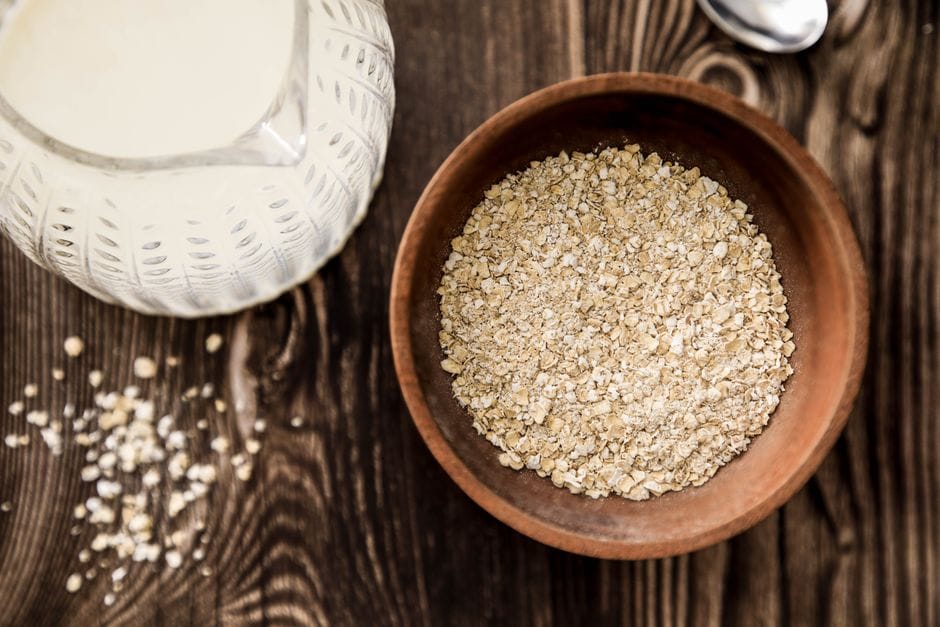
Oat flour is whole rolled oats blended until they turn into a fine, pale powder. That is it. One ingredient.
No additives, no processing, nothing removed. Because you are grinding the whole oat, you keep the bran and the germ, which is why oat flour is a whole-grain flour with real fiber rather than a stripped-down white powder.
That whole-grain quality is the selling point and also the catch. The same bran that makes it nutritious is what keeps it from behaving like wheat flour in baking. We will get to that.
For now, just hold onto the idea that oat flour is genuinely a one-ingredient food. If you are scanning a store-bought bag and it lists anything beyond oats, that is the brand adding starch or stabilizers, and you do not need any of it.
You can confirm a packaged flour is clean by dropping it into our vegan ingredient checker if you ever want to double-check an unfamiliar brand.
The one tool you actually need
 Photo: Anh Nguyen / Pexels
You need something that spins a blade fast. That is the whole requirement. Here is what works, ranked by how well it does the job:
- A high-speed blender (Vitamix, Blendtec, Ninja) is the gold standard. It produces the finest, most uniform flour, and it does it in under a minute. This is what I use.
- A regular blender works, just expect a slightly coarser grind and a little more sifting. Run it in stages so the motor does not strain.
- A food processor does the job but tends to leave the flour a touch grainier, because the wider bowl lets oats bounce around the blade instead of getting pulled through it.
- A spice or coffee grinder is brilliant for tiny batches and actually grinds the finest of all, but the bowl is small, so you are doing it in three or four rounds.
I have made oat flour in all four. The blender wins on speed and texture, but honestly none of them fail. If you can grind a peppercorn, you can grind an oat.
How to make oat flour, step by step
Here is the actual method, start to finish.
Add the oats. Pour rolled oats into the dry blender jar. Do not fill it more than halfway, because the oats need room to circulate. For a high-speed blender, two cups of oats at a time is comfortable.
Make sure the jar is bone dry. Any moisture turns the flour gummy and makes it cling to the sides in clumps.
Blend on high. Run it for 45 to 60 seconds. You will hear the sound change as the oats break down, from a rough rattle to a smoother, higher whir. That shift is your cue that the grind is getting fine.
Stop and check. Turn it off, lift the lid, and let the dust settle for ten seconds before you look. I learned to wait the hard way, after taking a faceful of oat cloud. Rub a pinch between your fingers.
If it feels like soft powder, you are done. If you feel grit, give it another 15 seconds.
Let it settle before you open. This sounds fussy but it matters. Fine flour stays airborne for a surprisingly long time. Crack the lid, wait, then pour.
Otherwise half your yield ends up coating your counter.
That is the whole process. One ingredient, one minute, one tool. The technique here is the same dry-blending move you use for our almond flour guide, so once you have it down you can grind a whole shelf of flours.
Texture and the sifting step most people skip
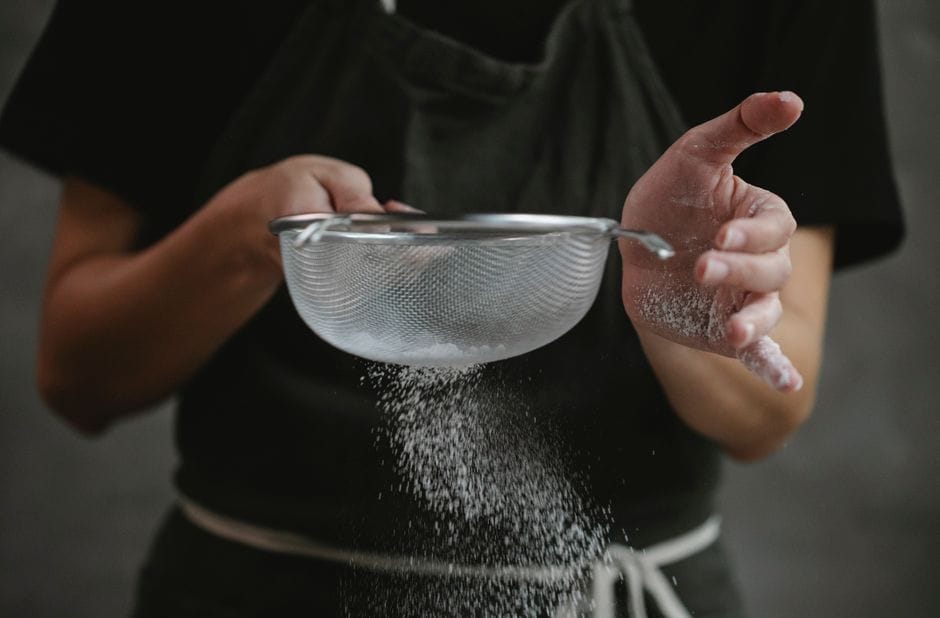 Photo: Klaus Nielsen / Pexels
Here is the detail that separates good homemade oat flour from gritty homemade oat flour: sifting.
Even with a high-speed blender, a small fraction of the oats stays coarser than the rest. These are the bits of bran and the stubborn flakes that never quite broke down. In a rustic recipe like banana bread, that grit disappears and nobody notices.
In something delicate, like a crepe or a smooth cake batter, you feel it on your tongue.
So I sift. Set a fine-mesh sieve over a bowl and pour the flour through it. The fine powder falls straight through.
The coarse bits stay behind. You have two choices with those holdouts: toss them back in the blender for another round, or just dump them into the bowl with the rest if you are making something forgiving. For pancakes I do not bother.
For a layer cake I sift every time.
One honest note from my own kitchen. The first time I made oat flour for shortbread, I skipped sifting because I was impatient, and the cookies came out with a faint sandpapery texture that no amount of butter could fix.
The flour was fine; my laziness was the problem. Sifting takes 30 seconds and it is the difference between flour that feels store-bought and flour that feels homemade in the bad way.
Baking with oat flour: it is NOT a 1:1 swap
This is the section to read twice, because it is where good intentions turn into hockey-puck muffins.
Oat flour has no gluten. Gluten is the stretchy protein network in wheat that traps gas and gives bread its chew and cakes their structure. Without it, oat flour cannot hold a baked good together the same way.
Swap it cup-for-cup into your grandmother's cake recipe and you get something dense, crumbly, and flat that falls apart when you cut it.
Here is what actually works:
- Use recipes written for oat flour. This is the single best move. Oat flour pancakes, oat flour muffins, and oat flour cookies are designed around its behavior, usually with an extra binder and a bit more leavening. Search for the recipe with "oat flour" in the title rather than converting a wheat recipe.
- If you must convert, swap only part of it. Replacing about a quarter of the wheat flour in a standard recipe with oat flour usually works fine and adds a lovely nutty, tender quality. Push past a third and you start losing structure.
- Add a binder. Because there is no gluten, oat flour bakes need help holding together. A flax egg is my go-to, or a mashed banana, or a spoonful of ground chia. These give the batter something to grip.
- Expect more spread and less rise. Oat flour cookies spread wider and cakes rise less. That is normal. Slightly more baking powder helps, and chilling cookie dough before baking controls the spread.
The flavor payoff is real, though. Oat flour brings a gentle sweetness and a soft, almost cake-like crumb that wheat cannot match. I genuinely prefer oat flour pancakes to regular ones now.
They are tender and they brown beautifully. You just have to meet the flour where it is instead of forcing it to be wheat.
The gluten-free question, answered honestly
People assume oat flour is automatically gluten-free, and the truth is more nuanced.
The oat plant itself is gluten-free. There is no gluten in an oat. But the overwhelming majority of oats sold are grown, harvested, transported, and milled alongside wheat, barley, and rye, so cross-contamination is the norm rather than the exception.
According to the guidance from celiac organizations, that contamination is enough to cause a reaction in people with celiac disease, which is why certification exists.
So the rule is simple. If you are cooking for someone with a gluten sensitivity or celiac disease, buy oats that are explicitly labeled certified gluten-free, like Bob's Red Mill, One Degree, or GF Harvest.
Grinding them at home does nothing to change their gluten status, good or bad. The flour is exactly as gluten-free as the oats you put in the blender. If gluten is not a concern in your house, any rolled oats work and you can ignore the label entirely.
This is the same logic behind whether common foods are safe, and if you ever wonder about a borderline product, our Is It Vegan database is a quick place to check an ingredient before you trust it.
Storing oat flour so it lasts
Because oat flour is whole-grain, it contains the natural oils from the oat germ, and those oils can eventually go rancid. This is the one way homemade oat flour can let you down, and it is entirely preventable.
For short-term use, keep it in an airtight container in a cool, dark cupboard. It will hold its flavor for about two to three months. A mason jar with a tight lid is perfect, and a glass jar lets you see if anything looks off.
For longer storage, put it in the fridge or freezer. The cold slows the oils way down, and frozen oat flour keeps for six months to a year with no loss of quality.
I keep my main jar in the cupboard and a backup bag in the freezer, and I just scoop from the cupboard until it runs low. There is no need to thaw frozen oat flour before using it; spoon out what you need and it comes back to room temperature in minutes.
The smell test never fails you. Fresh oat flour smells faintly sweet and toasty, like clean oats. If it smells sharp, bitter, or like old crayons, the oils have turned and it is time to start a new batch.
Since a batch costs pennies and takes a minute, I never feel bad tossing one.
Why I stopped buying it
The math is almost silly. A bag of rolled oats runs a couple of dollars and makes pounds of flour.
A bag of oat flour costs three or four times as much for less product, and half the time it has been sitting on a shelf long enough to lose its fresh-oat smell. Grinding it yourself means it is always fresh, always one ingredient, and always whatever quantity you actually need.
If you cook plant-based, oat flour also slots neatly into a kitchen built on whole ingredients. It thickens, it bakes, and it pairs naturally with the rest of the from-scratch staples like homemade oat milk, which uses the very same oats you already have on the counter.
Buy one bag of rolled oats and you have just unlocked two pantry staples.
So here is the practical takeaway. Keep a container of rolled oats in your pantry, keep a blender within reach, and never buy oat flour again.
Grind it the minute you need it, sift it if the recipe is delicate, respect the fact that it is not wheat, and store the extra somewhere cold. That is the whole skill, and it takes less time to do than to read about.
The recipe
Homemade Oat Flour
Prep
1 min
Total
1 min
Makes
about 1 cup (240 ml)
Ingredients
- 1 1/4 cups rolled oats (or quick oats)
Instructions
- 1 Pour the rolled oats into a dry blender jar. Do not fill more than halfway so the oats have room to circulate. Make sure the jar is completely dry, as any moisture will make the flour gummy.
- 2 Blend on high for 45 to 60 seconds. Listen for the sound to shift from a rough rattle to a smoother, higher whir, which signals the oats are becoming fine flour.
- 3 Turn off the blender and let the dust settle for about 10 seconds before lifting the lid. Rub a pinch between your fingers. If it feels like soft powder, it is done. If you feel grit, blend for another 15 seconds.
- 4 Crack the lid and wait a moment for airborne flour to settle, then pour the oat flour into a bowl or storage container.
- 5 Optional: pour the flour through a fine-mesh sieve set over a bowl. The fine powder falls through and any coarser bits stay behind. Return those bits to the blender for another short run, or add them directly to the bowl for rustic recipes like pancakes or banana bread.
Notes
- ·Use 1 1/4 cups of rolled oats to get approximately 1 cup of oat flour. Grind a little extra since some flour clings to the blender.
- ·Quick oats work as a substitute and grind slightly finer. Avoid steel-cut oats, which are too dense and leave a gritty result.
- ·Oat flour is not a 1:1 substitute for all-purpose flour. It has no gluten, so baked goods can come out crumbly if you swap it cup for cup. Use recipes written for oat flour, or replace only about a quarter of the wheat flour in a standard recipe.
- ·For gluten-free needs, use oats labeled certified gluten-free (such as Bob's Red Mill or One Degree). Grinding at home does not change the gluten status of the oats.
- ·Store in an airtight container in a cool, dark cupboard for 2 to 3 months, or in the fridge or freezer for 6 months to 1 year. Fresh oat flour smells faintly sweet and toasty. Discard it if it smells sharp, bitter, or like old crayons.
Frequently asked questions
What is the ratio of rolled oats to oat flour?+
Oats lose almost no volume when you blend them, but they pack down once ground, so the cup count drops. As a rough rule, 1 1/4 cups of rolled oats gives you about 1 cup of oat flour. I always grind a little extra because some flour clings to the blender. When a recipe asks for a cup of oat flour, start with 1 1/3 cups of oats and you will have plenty.
Can I use quick oats or steel-cut oats to make oat flour?+
Quick oats work and actually grind a touch finer because they are pre-cut, so they are a fine substitute. Steel-cut oats are a different story. They are hard, dense kernels that most home blenders cannot break down evenly, leaving you with gritty bits. Stick to rolled or quick oats. If steel-cut is all you have, run them longer and sift hard, but expect a coarser result.
Is homemade oat flour gluten-free?+
Oats are naturally gluten-free, but most are processed on equipment shared with wheat, barley, and rye, so cross-contamination is common. If you need genuinely gluten-free oat flour, buy oats labeled certified gluten-free, like Bob's Red Mill or One Degree. The grinding step at home does not add or remove gluten, so the flour is only as gluten-free as the oats you started with.
Can I substitute oat flour 1:1 for all-purpose flour?+
No, and this trips a lot of people up. Oat flour has no gluten, so it does not build structure the way wheat flour does. Baked goods made with straight oat flour come out crumbly and flat unless the recipe is written for it. For best results, use recipes designed for oat flour, or replace only about a quarter of the wheat flour in a standard recipe and keep the rest as-is.
Written by
VeganDigest Editorial is the small independent team that researches and fact-checks this site. We are not doctors or dietitians. For every is-it-vegan verdict we read the product's current ingredient list and manufacturer information, and for anything health-related we report guidance from recognized bodies such as the NHS, the Vegan Society, and the Academy of Nutrition and Dietetics rather than offering medical advice. Every page shows the date it was last verified, and our full process is on the How We Verify page.
Comments