Is Red 40 Vegan? The Animal-Testing Catch Most Labels Never Mention

In this guide6
Red 40 is technically vegan by ingredients because it is a synthetic, petroleum-derived dye that contains nothing sourced from animals. However, it carries a real ethical catch that matters to many plant-based eaters: FD&C color additives like Red 40 are, as PETA documents, continuously tested on animals because of their carcinogenic properties. That single fact sits at the heart of almost every debate about this dye in vegan communities.
What Is Red 40?
Red 40 goes by several names depending on where you are in the world: Allura Red AC, FD&C Red No. 40, Food Red 17, and E129 in European Union labeling. It is an azo dye, meaning it belongs to a family of synthetic colorants built around a nitrogen-nitrogen double bond (the azo group). The raw materials come from petroleum, and the finished compound is a disodium salt (chemical formula C18H14N2Na2O8S2) that dissolves easily in water and produces the vivid orange-red shade you see across thousands of packaged foods.
Red 40 is currently the most widely used certified color additive in the United States, approved by the FDA under 21 CFR 74.340 for use in food, beverages, cosmetics, and pharmaceutical coatings. In April 2025, the FDA called on manufacturers to phase out petroleum-based synthetic dyes in favor of natural alternatives, giving the industry a target of end of 2026 to transition. Whether that transition lands on schedule or not, Red 40 still appears in an enormous share of products on shelves today.
Is Red 40 Vegan? The Honest Answer
From a strict ingredient standpoint, yes. Red 40 is manufactured entirely from petroleum chemistry. No animals, animal secretions, or animal byproducts are used at any stage of production, and the final product contains no animal-derived molecules. On that basis alone, most dietary vegans treat it as acceptable.
The more complicated question is whether a synthetic dye that has been tested on animals throughout its regulatory history can sit comfortably within a vegan lifestyle. PETA's animal-ingredients resource states plainly that FD&C colors (the category Red 40 belongs to) are continuously tested on animals because of their carcinogenic properties. That testing has included mice, rats, dogs, rabbits, and pigs. The Vegan Society's definition of veganism seeks to exclude, as far as is possible and practicable, all forms of exploitation of and cruelty to animals for food or any other purpose, and it explicitly extends that principle to products tested on animals.
So the honest answer has two layers. Red 40 is vegan by ingredients. It is not vegan by the broadest ethical definition, because ongoing safety assessments involve animal studies. Which layer you weigh more heavily is a personal call, and most vegan community guides acknowledge both positions without condemning either.
Red 40 vs. Carmine: A Critical Distinction
Red 40 and carmine are both red colorants, but they are not remotely in the same ethical category, and understanding the difference will sharpen your label-reading significantly.
Carmine (also listed as cochineal extract, cochineal, natural red 4, or E120) is made by harvesting, drying, and grinding female cochineal beetles. According to vegan.com, it takes roughly 70,000 of these insects to produce just 100 grams of carminic acid, the pigment at the core of carmine. The beetles are killed as a direct part of production. Carmine is therefore unambiguously not vegan. Full stop.
Red 40 involves no insects and no animals in its manufacture. The animal-welfare concern is limited to the safety testing stage, which is a meaningful distinction even if it is not a clean one. When you see a product marketed as carmine-free or free from cochineal, that is a meaningful signal for vegans. When you see a product that swaps carmine for Red 40, it has eliminated the directly animal-derived ingredient, though it has not eliminated the animal-testing history.
Where Red 40 Hides in Everyday Food
Red 40 is one of the most pervasive food additives in existence. Once you start looking for it, you will find it almost everywhere a product needs to look red, pink, or orange. Common hiding spots include:
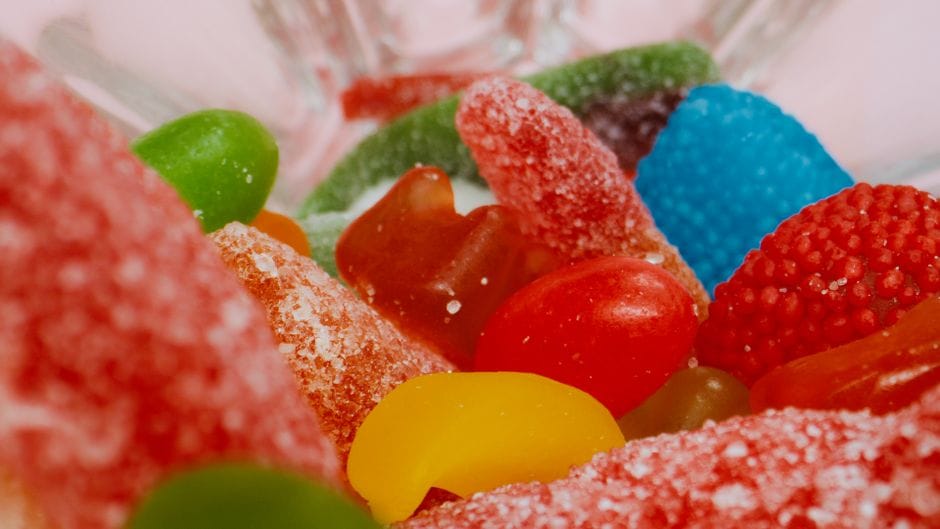
Candy and confections. Gummy candies, fruit chews, lollipops, candy-coated chocolates, and maraschino cherries are among the highest-concentration sources.
Beverages. Fruit punches, sports drinks, flavored sodas, powdered drink mixes, and flavored water enhancers frequently rely on Red 40 for color.
Breakfast cereals. Many fruit-flavored or frosted cereals, especially those marketed to children, use Red 40 to give colored pieces their hue.
Packaged baked goods. Store-bought cakes, pastries, cookies with colored frosting, and snack bars often contain it.
Savory snacks and condiments. Some flavored chips, cheese-flavored crackers, and certain hot sauces or flavored dressings include it to deepen color.
Medications and supplements. Liquid cough syrups, children's pain relievers, and some vitamin gummies use Red 40 for appearance, so it is worth checking non-food labels too.
How to Spot Red 40 on Ingredient Labels
The FDA requires that certified color additives be listed individually on ingredient panels. Unlike some additives that can shelter under umbrella terms like natural flavors, Red 40 must appear by name. In practice, you are looking for any of these:
- Red 40 (most common US shorthand)
- FD&C Red No. 40 (full US regulatory name)
- Allura Red AC (INCI and some international labeling)
- E129 (European Union coding)
- Food Red 17 (some Asian market labeling)
One practical tip: scan the ingredient list for the word Red before you reach for a brightly colored packaged product. If you see Red 40 and want to avoid it, the natural-food coloring aisle has workable substitutes at most grocery stores.
Also keep a separate eye out for carmine's aliases (E120, cochineal extract, natural red 4) so you do not confuse a directly animal-derived dye with a synthetically produced one.
Vegan Alternatives to Red 40
If you prefer to avoid synthetic petroleum-derived dyes altogether, there are several plant-based colorants that deliver genuine red and pink tones without the animal-testing history:
Beet juice powder. Offers a rich, deep red hue and is widely available for home baking. It works especially well in smoothies, frostings, and desserts.
Hibiscus extract. Produces a vibrant red-to-pink color with a slightly tart flavor. PETA recommends it specifically for beverages and confections.
Pitaya (dragon fruit) powder. Delivers a bright pink-magenta shade and is increasingly common in vegan protein powders and baked goods.
Anthocyanins from red cabbage or berries. These naturally occurring plant pigments shift color with pH, ranging from red in acidic conditions to purple in neutral ones, which makes them versatile for savory and sweet applications.
Paprika oleoresin. Extracted from sweet red peppers, this gives a stable orange-red color and works well in savory contexts like chips, sauces, and soups.
For home cooking and baking, PETA's guidance is direct: ditch synthetic dyes and try plant-based options instead. An increasing number of packaged food brands, particularly in the natural and organic segment, now use these alternatives, so the phrase colored with vegetable juice on a label is a reliable indicator that the product has moved away from petroleum-derived dyes.
Frequently asked questions
Is Red 40 made from animals or insects?+
No. Red 40 is synthesized from petroleum-derived chemical compounds and contains no animal-derived ingredients at all. It is often confused with carmine, which actually is made from ground cochineal insects. Red 40 and carmine are completely different substances.
Why do some vegans avoid Red 40 if it has no animal ingredients?+
PETA notes that FD&C color additives like Red 40 are continuously tested on animals because of regulatory safety requirements. Strict ethical vegans, following the Vegan Society's definition, aim to avoid products tested on animals as far as is practicable. For those vegans, the animal testing history is reason enough to choose plant-based colorants instead.
What is the difference between Red 40 and carmine?+
Carmine (E120, cochineal extract, natural red 4) is directly derived from killing and grinding tens of thousands of female cochineal beetles per batch. It is unambiguously not vegan. Red 40 (E129, Allura Red AC) is a synthetic dye with no animal ingredients in its manufacture. The ethical concern with Red 40 is limited to animal testing during safety assessments, not to animals being used as raw material.
Is Red 40 being phased out?+
In April 2025, the FDA called on food manufacturers in the United States to transition away from petroleum-based synthetic dyes including Red 40, with a target of end of 2026. Several individual US states have also passed or proposed restrictions. Red 40 remains legally permitted and widely used in the meantime, so label-checking is still essential.
Written by
VeganDigest Editorial is the small independent team that researches and fact-checks this site. We are not doctors or dietitians. For every is-it-vegan verdict we read the product's current ingredient list and manufacturer information, and for anything health-related we report guidance from recognized bodies such as the NHS, the Vegan Society, and the Academy of Nutrition and Dietetics rather than offering medical advice. Every page shows the date it was last verified, and our full process is on the How We Verify page.


Comments