How to Read Food Labels as a Vegan (Hidden Animal Ingredients)
In this guide7
The first time a label genuinely fooled me, it was a packet of "yogurt-coated" raisins. Plant-based snack, surely. I turned it over out of habit, ran my finger down the list, and hit shellac.
A resin secreted by an insect, brushed onto my raisins to make them shiny. I stood there in the aisle feeling like I'd been let in on a secret nobody had bothered to tell me.
That's the thing about reading labels as a vegan. The obvious stuff, milk, eggs, meat, gets called out in bold for allergen reasons. It's the quiet ingredients, the ones dressed up as additives and processing aids, that slip past you.
So here is the actual system I use now, the specific words I scan for, and the handful of ingredients where even a careful reader has to do extra digging.
The five that are always a no
Let me start with the clean cases. These five ingredients are animal-derived, full stop, and if you see them, the product isn't vegan. No gray area, no "depends on the brand."
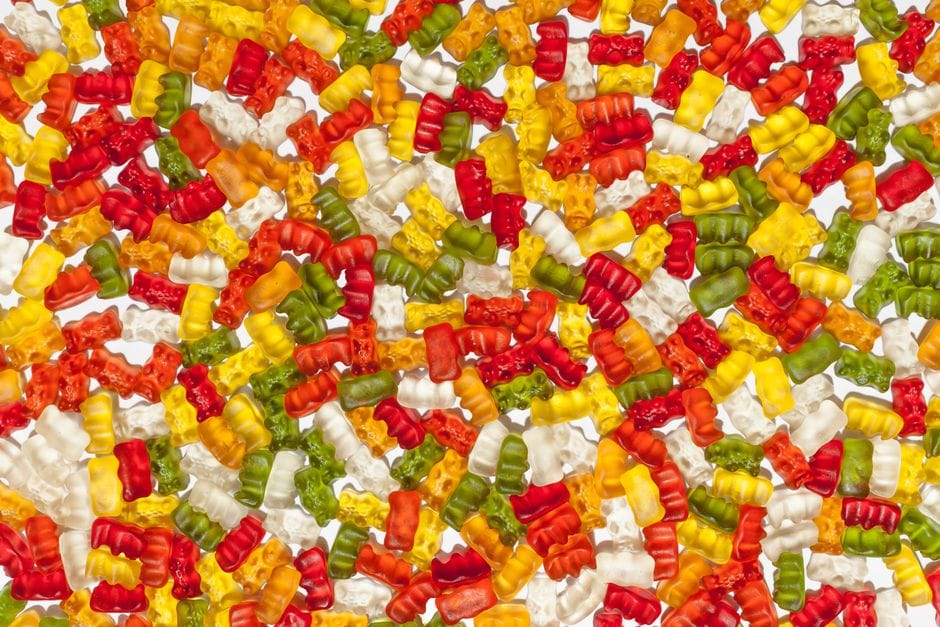
Gelatin. Boiled-down collagen from pig and cow skin and bone. It's the bounce in gummy sweets and the set in some yogurts and mousses. I wrote a whole breakdown of why gelatin is never vegan if you want the full story, but the short version: see the word, put it back.
Carmine. Also listed as cochineal, carminic acid, or E120. It's a deep red dye made from crushed cochineal insects, and it takes roughly 70,000 of them to make a pound.
It hides in red and pink things you'd never suspect: strawberry yogurts, certain fruit juices, some candies, even pink grapefruit drinks. "Color added" can be the tell, but the cleaner signal is the word carmine or that E120 code.
Casein (and caseinate, sodium caseinate, calcium caseinate). This is the main protein in milk, and it's the one that ruins so many "non-dairy" products.
Plenty of non-dairy coffee creamers and "dairy-free" cheese slices list sodium caseinate right there, because the word "non-dairy" is a marketing term in the US, not a legal vegan one. I've been burned by this exact trick.
Whey. The other milk protein, the liquid left over from cheesemaking. It turns up in bread, crackers, protein bars, chips, and chocolate. Whey powder, whey protein, hydrolyzed whey, all dairy.
Shellac. My raisin nemesis. A resin secreted by the lac insect, used as a glaze or confectioner's glaze to make candies, coated chocolates, and shiny fruit gleam. On a label it might read shellac, confectioner's glaze, or E904.
Burn those five into your memory and you'll catch the large majority of accidental slip-ups. If you want them on your phone, the Is It Vegan database has them indexed so you're not relying on memory in the aisle.
The processing aids the label doesn't always show
 Photo: Future Kind Vegan Supplements / Pexels
Here's where it gets sneaky, and it's the part most label guides skip. Some animal-derived substances are used as processing aids, which means they help make a product but aren't always required to appear on the final ingredient list at all.
The classic example is isinglass, a setting and clarifying agent made from the dried swim bladders of fish. It's used to clear cloudiness out of certain drinks, the haze gets pulled out and the isinglass goes with it, so the manufacturer can argue it isn't an "ingredient" in the finished product.
Which means you can read a perfectly innocent-looking label and still be drinking something that was filtered through fish. There's no word to scan for, because the word isn't there.
This is the uncomfortable truth I want you to sit with for a second: a clean ingredient list is not a guarantee. Processing aids, fining agents, and certain glazes can be invisible. This is exactly why a trusted vegan certification mark matters more than a clean-looking label, because certification covers the stuff that never makes it onto the panel.
The Vegan Society Trademark is the one I trust most, because it audits the whole process, not just the printed list.
The "it depends on the source" ingredients
Now the genuinely maddening category. These ingredients can be vegan or not vegan depending entirely on where the manufacturer sourced them, and the label gives you no way to tell. Don't panic when you see them, but do treat them as a yellow flag worth a second look.
Mono- and diglycerides (E471). These are emulsifiers used in bread, peanut butter, ice cream, margarine, and a hundred other things. They're made from glycerol and fatty acids, and those fatty acids can come from either plant oils or animal fat.
Most large manufacturers use plant sources now because it's cheaper and more consistent, but "most" isn't "all." The word on the panel tells you nothing about the origin.
Natural flavors (and "natural flavoring"). This is the big foggy one. By law it just means a flavor derived from a natural source, and that source can be a plant, a spice, a fruit... or an animal. The overwhelming majority are plant or microbial in practice.
The famous animal exception people cite is castoreum, a secretion from beavers occasionally used in vanilla-adjacent flavoring, though it's genuinely rare and expensive these days. Still, the term is a black box, and the only way to know for certain on a specific product is certification or a direct question to the company.
Vitamin D3. This catches a lot of people, including me, in fortified foods like plant milks, cereals, and orange juice. Most vitamin D3 (cholecalciferol) is made from lanolin, the waxy grease extracted from sheep's wool.
There's a vegan D3 made from lichen, but it costs more, so fortified products often use the lanolin version unless they specifically say "vegan vitamin D3" or list D3 from lichen. Vitamin D2, by contrast, is always plant-derived and always vegan.
So a fortified oat milk can quietly contain a sheep-derived nutrient, which is why I check the Is It Vegan database for specific brands rather than assuming.
The honest takeaway here: for these three, a careful vegan and a relaxed vegan will land in different places. Some people avoid every yellow-flag ingredient on principle. Others accept that mono-diglycerides and natural flavors are plant-derived the vast majority of the time and don't sweat it.
Both are reasonable. I'll tell you where I land at the end.
My actual scan-the-label routine
 Photo: Jakub Zerdzicki / Pexels
Reading every word on every package is exhausting and you won't keep it up. So I use a routine that takes about ten seconds and catches almost everything. Here's the exact order I run my eyes in.
-
Check the allergen line first. The bolded "Contains: milk, eggs" line at the bottom is your fastest filter. If it flags milk or eggs and the product isn't deliberately vegan, you're usually done in one second. This single habit catches more than half of the misses.
-
Scan for the five villains. Gelatin, carmine, casein/caseinate, whey, shellac. I've trained my eye to snag on those specific letter shapes the way you'd spot your own name in a list. You're not reading, you're pattern-matching.
-
Watch the E-numbers. E120 (carmine), E904 (shellac), E471 (mono- and diglycerides). Outside the US these codes are everywhere, and they're faster to spot than the full words.
-
Pause on the yellow flags. Natural flavors, mono-diglycerides, vitamin D3, "non-dairy." None is an automatic no, but each earns a second of thought about whether you care on this particular product.
-
Look for a certification mark. A registered vegan trademark short-circuits the whole process and covers the invisible processing aids. When I see it, I stop reading.
That's it. Allergen line, five villains, E-numbers, yellow flags, cert mark. When a label is borderline and I can't resolve it on the spot, I drop the product name into the vegan ingredient checker tool and let it flag anything questionable for me, which is far faster than squinting at a panel under bad supermarket lighting.
The "may contain milk" question
This one confuses new vegans more than anything else, so let me settle it. A "may contain milk" or "made in a facility that also processes eggs" line is not an ingredient. It's an allergen and cross-contamination warning.
It means the recipe is plant-based, but the product was made on shared equipment that also handles dairy or eggs, so trace amounts could theoretically transfer.
For somebody with a dairy allergy, that warning is a hard stop. For a vegan, it's a personal judgment call, because veganism is about reducing harm and animal exploitation as far as is practicable, not about chasing molecular purity. The recipe itself contains no animal products.
Most vegans I know, myself included, happily eat foods carrying a "may contain" line, because boycotting every product made on shared equipment would rule out a huge chunk of perfectly plant-based food without sparing a single animal. But I know vegans who avoid them, and I respect that too. The key thing is to understand what the warning actually means so you're making a real choice rather than a confused one.
Where labels lie by omission
A few last traps worth naming, because they're the ones that got past me longest.
"Non-dairy" and "dairy-free" are not the same as vegan. Non-dairy creamers routinely contain sodium caseinate, a milk derivative, as I mentioned. The term is regulatory theater, not a vegan promise.
"Plant-based" is mostly marketing. It's a great signal, but it isn't a legally defined or audited claim in most places, so it doesn't carry the weight of a certified mark. A product can say "plant-based" on the front and still contain honey or D3 in the back.
Restaurant and bulk foods have no panel at all. This is where stocking your own kitchen pays off, because home cooking is the only place you control every ingredient. If you're building a reliable base, my guide to how to stock a vegan pantry covers the staples I never have to second-guess, and the broader substitutes hub helps when a recipe calls for something animal-derived.
Sugar, in the US, can be processed with bone char. It won't say so on the label, because bone char is a filtering aid that doesn't end up in the final product. Cane sugar is the gray one; beet sugar never uses it. This is another case where the panel simply cannot tell you the truth.
So what do I actually do?
After years of this, my own rule is pragmatic. I treat the five villains and isinglass-style processing aids as hard nos, I trust certified vegan marks completely, and I let the yellow-flag ingredients slide on everyday products while spot-checking new brands I'm unsure about.
I don't lose sleep over a "may contain milk" warning, and I keep a well-stocked kitchen so most of what I eat never has a label at all.
The honest reality is that reading vegan food labels gets dramatically easier with practice. The first month you'll feel like you need a chemistry degree. By month three, your eye snags on carmine and caseinate automatically and a ten-second scan becomes muscle memory.
When in doubt, run the product through the vegan ingredient checker and let it do the squinting for you. And if you're brand new to all of this and feeling overwhelmed by the whole project, start with my walkthrough on how to start a vegan diet and let the label-reading become second nature on its own.
It will. Mine did, raisins and all.
Frequently asked questions
What are the most common hidden animal ingredients on food labels?+
Gelatin, carmine (cochineal), casein, whey, and shellac are the big five that catch people out. Gelatin shows up in candy and yogurt, carmine is a red dye from insects, casein and whey are milk proteins that hide in 'non-dairy' creamers, and shellac is an insect resin used as a glaze. None of them are vegan, and most don't look like animal products at first glance.
Are natural flavors vegan?+
It depends, and the label won't tell you. 'Natural flavors' is a catch-all term that can be plant-derived or animal-derived, and manufacturers aren't required to specify which. In practice the vast majority are plant or microbial, but if you want certainty on a specific product, check it against a vegan certification or ask the company directly.
Is vitamin D3 vegan?+
Usually not. Most vitamin D3 added to foods is cholecalciferol made from lanolin, the grease extracted from sheep's wool. There is a vegan version of D3 made from lichen, but it's more expensive, so fortified foods often use the lanolin kind. Vitamin D2 is always plant-derived and vegan.
What does 'may contain milk' mean on a vegan product?+
It's an allergen warning about cross-contamination, not an ingredient. A product can be made from entirely plant-based ingredients and still carry a 'may contain milk' line because it shares factory equipment with dairy products. For most vegans this is a personal call: the recipe is vegan, but trace cross-contact is possible.
Written by
VeganDigest Editorial is the small independent team that researches and fact-checks this site. We are not doctors or dietitians. For every is-it-vegan verdict we read the product's current ingredient list and manufacturer information, and for anything health-related we report guidance from recognized bodies such as the NHS, the Vegan Society, and the Academy of Nutrition and Dietetics rather than offering medical advice. Every page shows the date it was last verified, and our full process is on the How We Verify page.
Comments