Vegan Alfredo (Creamy, Cashew-Cauliflower Sauce)
 Jump to recipe ↓
 In this guide5
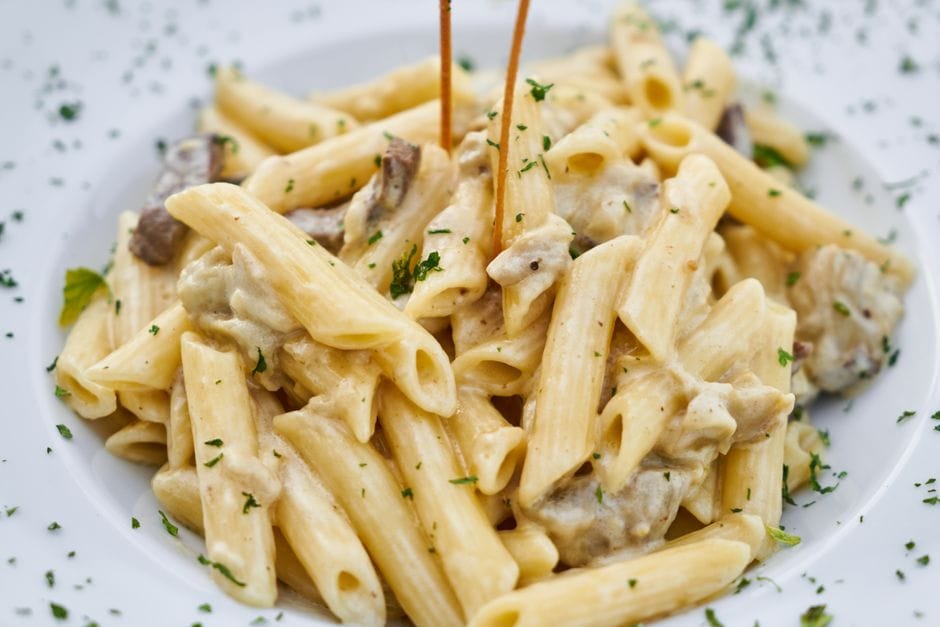
Vegan alfredo is one of the most satisfying switches you can make in a plant-based kitchen. This version builds a genuinely creamy sauce from raw cashews and cauliflower, blended together into something thick, glossy, and deeply savory. You do not need vegan cream or a long ingredient list. What you need is a good blender and about 30 minutes.
The cashew-cauliflower combination works because each ingredient brings something the other cannot do alone. Cashews add richness and body. Cauliflower adds bulk and a mild sweetness that rounds out the nutritional yeast's sharpness. Blended hot, the two become almost indistinguishable from a cream-based sauce in texture. This recipe is tested, reliable, and serves four to six people straight from one pot.
Why This Sauce Actually Works
Traditional alfredo relies on butter and heavy cream for fat and thickness, and Parmesan for salt and umami. Vegan alfredo has to recreate all three without any of them.
Cashews are about 46 percent fat by weight, and that fat is mostly unsaturated. When you boil raw cashews until soft and then blend them with liquid, the cell walls break down and the fat emulsifies into a smooth, stable cream. No gum, no cornstarch needed.
Cauliflower florets, cooked in the same water as the cashews, contribute starch and plant fiber that give the sauce body. On their own they would produce a thin, watery puree. Combined with cashews they produce something much closer to a bechamel in texture.
Nutritional yeast is the third pillar. Two tablespoons adds enough glutamates to mimic the savory, slightly cheesy quality of Parmesan without any dairy. Dijon mustard adds depth and a faint sharpness that keeps the sauce from tasting flat. Lemon juice brightens everything and prevents the cashew richness from becoming heavy.
Key Ingredients and What They Do
Cauliflower florets (12 oz). Fresh works better than frozen. Frozen cauliflower releases extra water and tends to make the sauce thinner. One small head yields roughly the right amount.
Raw cashews (1/2 cup). Raw only, not roasted or salted. Roasted cashews have a stronger flavor that competes with the sauce. They boil soft in about 8 minutes alongside the cauliflower, so no overnight soaking is required.
Nutritional yeast (2 tablespoons). This is non-negotiable for the right flavor. It has a naturally cheesy, slightly nutty taste and is packed with B vitamins. Do not substitute with brewer's yeast, which is bitter.
Extra-virgin olive oil (1/4 cup). This adds richness and helps the sauce emulsify. You can reduce it slightly but the sauce will be noticeably thinner.
Garlic (2 cloves). Added raw to the blender, which keeps the flavor sharp and aromatic. If you prefer a milder garlic taste, use one clove or roast the garlic first.
Dijon mustard (1/2 teaspoon). A small amount makes a real difference. It acts as an emulsifier and adds complexity.
Fresh lemon juice (2 tablespoons). Brightens the sauce and balances the fat. Bottled lemon juice works in a pinch but fresh is noticeably better.
Pasta water (reserved, up to 1 cup). Starchy pasta water is the secret to finishing the dish. It helps the sauce cling to every strand of fettuccine and allows you to adjust consistency without diluting flavor.
Method Tips for the Creamiest Result
Boil the cauliflower and cashews together. Adding both to the same pot saves time and means you drain everything at once. Eight minutes at a rolling boil leaves the cauliflower fork-tender and the cashews fully softened.
Blend while still hot. Hot ingredients blend into a smoother, silkier sauce than cold ones. Transfer directly from the pot to your blender.
Use a high-powered blender if you have one. A Vitamix or similar machine will produce a sauce that is completely smooth in about 60 seconds. A standard blender works but may need 2 to 3 minutes. A food processor will work but the texture will be slightly less smooth. Do not use an immersion blender as it cannot achieve the same result with cashews.
Salt the pasta water well. The sauce contains salt but the pasta absorbs most of its seasoning from the cooking water. Under-salted pasta makes any sauce taste flat.
Reserve pasta water before you drain. This is easy to forget. Set a measuring cup next to the pot as a reminder. You may not need all of it, but you will almost certainly want some.
Taste and adjust at the end. The sauce recipe gives you a base. After tossing with pasta, taste again and add more salt, lemon juice, or a pinch of pepper as needed. Sauces always need a final adjustment when they meet the pasta.
Variations Worth Trying
Pure cashew base. For an even richer, restaurant-style sauce, skip the cauliflower entirely and use 1 1/2 cups of raw cashews. Soak them in cold water for at least 5 hours or pour boiling water over them and soak for 10 minutes. Blend with 2 cups of unsweetened plant milk (oat or almond both work well), 1/4 cup nutritional yeast, 6 garlic cloves (sauteed until fragrant in olive oil with half a diced onion), 1 tablespoon lemon juice, and 1 teaspoon salt. This makes a sauce that is noticeably richer and holds up well to heavier toppings.
Add roasted mushrooms. Toss sliced cremini mushrooms in olive oil and roast at 400F for 20 minutes until golden. Stir into the finished pasta. The earthiness pairs well with the cashew cream.
Broccoli or spinach. Steam broccoli florets and fold them in just before serving. Or wilt a few handfuls of baby spinach directly in the warm sauce in the pot.
Gluten-free. Swap fettuccine for brown rice pasta or any gluten-free pasta you enjoy. The sauce itself is naturally gluten-free.
Oil-free version. Omit the olive oil and increase the water in the blender to 3/4 cup. The sauce will be slightly less rich but still very creamy.
Serving and Storage
Serve vegan alfredo straight away, topped with chopped fresh parsley, a grind of black pepper, and vegan Parmesan if you have it. The sauce thickens as it sits, so serve immediately after tossing.
Leftovers keep well in a sealed container in the refrigerator for up to 4 days. The sauce will thicken considerably when cold. To reheat, add a splash of plant milk or water to the pot over low heat and stir until the sauce loosens back to the right consistency. Do not microwave without adding liquid first or the sauce will seize.
The sauce alone (without pasta) freezes well for up to 2 months. Freeze in portions using a silicone ice cube tray, then transfer cubes to a freezer bag. Thaw overnight in the refrigerator and reheat gently with a little liquid.
The recipe
Vegan Alfredo (Cashew-Cauliflower Sauce)
Prep
5 min
Cook
20 min
Makes
4 to 6
Ingredients
- 12 oz (340g) cauliflower florets, from about 1 small head
- 1/2 cup raw cashews (not roasted or salted)
- 1/4 cup extra-virgin olive oil
- 1/2 cup water
- 2 garlic cloves, peeled
- 2 tablespoons fresh lemon juice
- 2 tablespoons nutritional yeast
- 1 teaspoon fine sea salt, plus more to taste
- 1/2 teaspoon Dijon mustard
- Freshly ground black pepper, to taste
- 16 oz (450g) fettuccine or pasta of choice
- Chopped fresh parsley, to serve
Instructions
- 1 Bring a large pot of well-salted water to a boil. Add the cauliflower florets and raw cashews. Boil for 8 minutes, until the cauliflower is fork-tender and the cashews are soft. Drain thoroughly.
- 2 Transfer the drained cauliflower and cashews to a high-powered blender. Add the olive oil, water, garlic, lemon juice, nutritional yeast, salt, Dijon mustard, and a generous grind of black pepper.
- 3 Blend on high speed for 60 to 90 seconds until completely smooth and creamy. If using a standard blender, blend for 2 to 3 minutes, stopping to scrape down the sides as needed. Taste and adjust salt or lemon juice.
- 4 While the sauce blends, cook the fettuccine in a large pot of salted boiling water according to package directions until al dente. Before draining, reserve 1 cup of the starchy pasta water.
- 5 Drain the pasta and return it to the pot. Pour the sauce over the pasta and toss to coat evenly. Add reserved pasta water a little at a time (start with 1/4 cup) to loosen the sauce to a creamy, clinging consistency.
- 6 Serve immediately, topped with fresh parsley and extra black pepper. Add vegan Parmesan if desired.
Notes
- ·Use raw cashews only. Roasted or salted cashews change the flavor of the sauce.
- ·A high-powered blender (such as a Vitamix) produces the smoothest result. A standard blender works but needs more time.
- ·Do not skip reserving the pasta water. The starch is what helps the sauce cling properly to the pasta.
- ·For a pure cashew version (richer and creamier): skip the cauliflower, use 1 1/2 cups raw cashews soaked for at least 5 hours, blend with 2 cups unsweetened plant milk, 1/4 cup nutritional yeast, 6 garlic cloves (sauteed), 1 tablespoon lemon juice, and 1 teaspoon salt.
- ·Leftovers keep refrigerated for up to 4 days. Reheat gently with a splash of plant milk or water to restore the consistency.
- ·The sauce alone freezes well for up to 2 months.
Calories
Approx. 500 kcal per serving (sauce + pasta)
Protein
15g
Fat
18g
Carbs
70g
Frequently asked questions
Do I need to soak the cashews before making vegan alfredo?+
Not in this recipe. Boiling the cashews for 8 minutes alongside the cauliflower softens them fully and produces a smooth sauce. If you prefer the pure cashew version without cauliflower, soak the cashews in cold water for at least 5 hours (or pour boiling water over them and soak for 10 minutes) before blending.
Can I make vegan alfredo without a high-powered blender?+
Yes. A standard countertop blender works, but you will need to blend for 2 to 3 minutes and may want to stop and scrape down the sides once or twice. The result is slightly less silky but still very good. A food processor can work in a pinch but will produce a rougher texture. An immersion blender is not recommended for cashew-based sauces.
Is vegan alfredo sauce gluten-free?+
The sauce itself contains no gluten. To make the full dish gluten-free, simply use a certified gluten-free pasta such as brown rice fettuccine or chickpea pasta in place of regular fettuccine.
Why does my vegan alfredo sauce taste bland?+
The most common reasons are under-salting and not enough nutritional yeast. Taste the sauce before tossing with pasta and adjust the salt and lemon juice. Also check that your pasta water was well-salted. A pinch of garlic powder or an extra half-clove of raw garlic can also sharpen the flavor significantly.
Written by
VeganDigest Editorial is the small independent team that researches and fact-checks this site. We are not doctors or dietitians. For every is-it-vegan verdict we read the product's current ingredient list and manufacturer information, and for anything health-related we report guidance from recognized bodies such as the NHS, the Vegan Society, and the Academy of Nutrition and Dietetics rather than offering medical advice. Every page shows the date it was last verified, and our full process is on the How We Verify page.
Comments