Vegan Pesto (No Parmesan Needed)
- Gluten-free
- Soy-free
In this guide8
I killed a basil plant once trying to use it all up before a trip. Not lovingly, in a pot on the windowsill, but in the most aggressive way possible: I stripped every leaf off it in one go, made what I can only describe as a swamp, and threw the whole grey-green mess out.
The problem was that I had been making pesto the way my grandmother did, by hand, with a wooden spoon and a wedge of Parmesan, and once I went vegan I had no idea what to do with the cheese-shaped hole in the recipe. So I just kept adding more of everything else and hoping.
What I eventually figured out is that vegan pesto is not a sad compromise. It is, if anything, easier than the original, it costs less, and the nutritional yeast does a frankly uncanny job of standing in for the cheese.
I make a jar of it most weeks now, all summer when basil is cheap and even in winter with the bagged stuff. Here is exactly how, plus every swap and shortcut I have tested, including the ones that flopped.
Why You Don't Need the Parmesan
Let's start with the thing that scares people off. Traditional pesto leans on a hard aged cheese, usually Parmesan, sometimes Grana Padano or Pecorino, for its savory backbone. Take that out and beginners panic that the sauce will taste like blended grass.
It won't, because real Parmesan is doing a very specific and very replaceable job. It brings salt, fat, and a deep umami savoriness that comes from glutamates that build up as the cheese ages.
That umami is the part people mean when they say pesto tastes "cheesy" and "rich." And it turns out you can get almost all of it from nutritional yeast, those golden flakes that taste savory and faintly nutty straight out of the tub.
There's a practical reason to skip the cheese beyond ethics, too. Authentic Parmesan, the protected Parmigiano-Reggiano kind, is made with animal rennet, an enzyme taken from the stomach lining of calves. That means it isn't even vegetarian, let alone vegan, no matter how it's marketed.
You can read the plain version of this on the Wikipedia Parmesan entry. So the cheese was never the friendly part of the recipe anyway.
If you want the full breakdown of swaps, I wrote a whole guide on vegan parmesan that goes deeper than I can here.
How Nutritional Yeast Does the Heavy Lifting
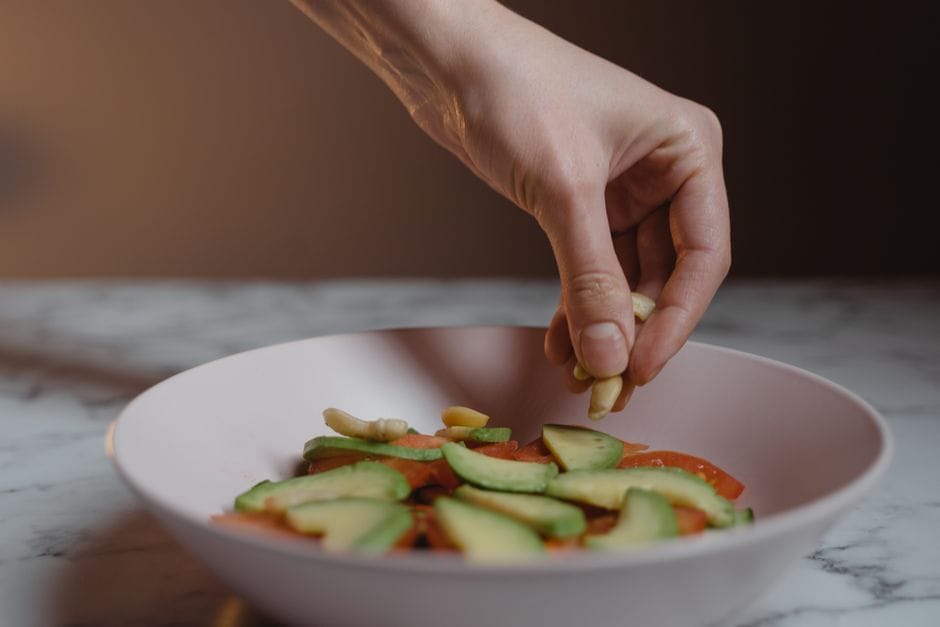
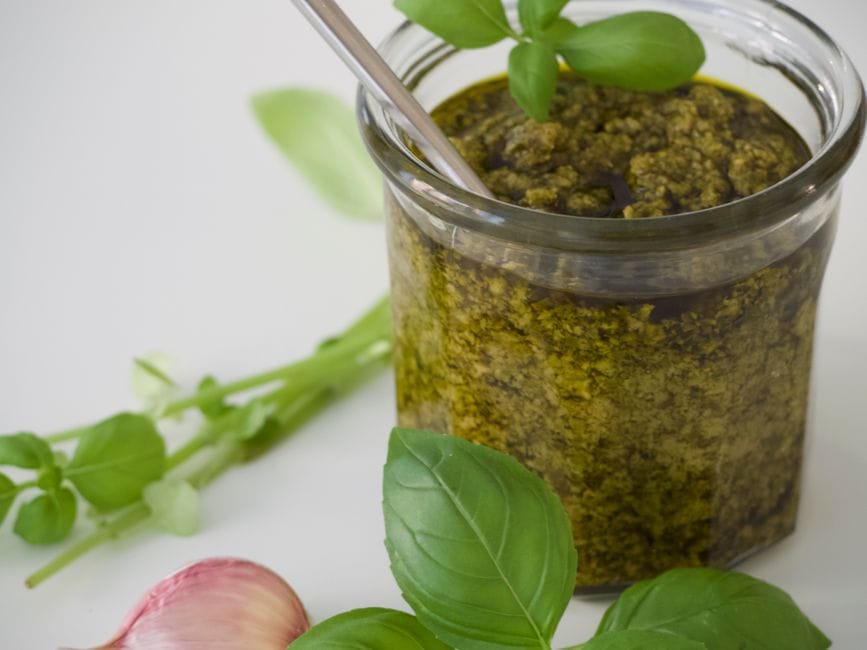 Photo: thea a / Pexels
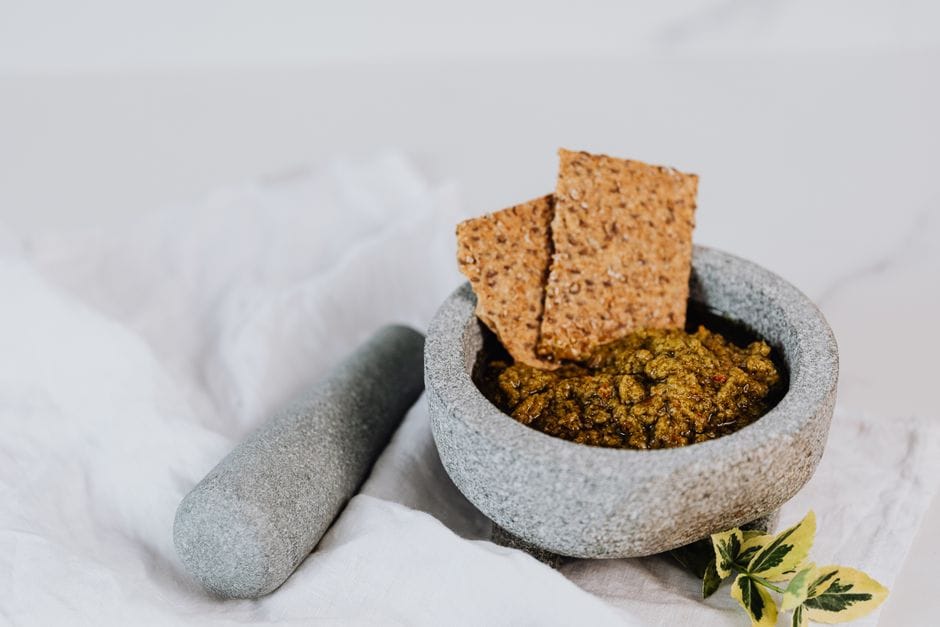
Nutritional yeast, or "nooch" as basically everyone in plant-based kitchens calls it, is deactivated yeast grown on molasses, dried, and sold as flakes or powder. It does not taste like baking yeast and it won't make anything rise. What it tastes like is cheese, specifically that salty, savory, slightly aged note.
In pesto it pulls double duty. First, the flavor: three tablespoons gives you the umami the Parmesan used to. Second, the texture.
Nooch absorbs a little of the oil and basil moisture and thickens the sauce, so your pesto clings to pasta instead of sliding off in a thin slick. That body is something a lot of cheese-free recipes miss, and it's why mine never tastes watery.
A couple of honest tips. Start with two tablespoons and taste before adding the third, because brands vary in strength and some are saltier than others.
And buy the unfortified or fortified flakes you like the taste of, not the cheapest tub, since this is a raw, no-cook sauce where the flavor is front and center. If nooch is new to you, my full nutritional yeast 101 walkthrough covers the brands I trust and how to store it so it doesn't go stale.
The 10-Minute Recipe, Explained
The card up top has the exact amounts. Here's what's actually happening so you can make it your own.
You toast the nuts first, always. This is the single step most people skip and the one that makes the biggest difference. Three or four minutes in a dry skillet wakes up the oils and rounds off any raw bitterness, especially with walnuts.
Then it's a food processor job: pulse the cooled nuts with the garlic, add the basil, nooch, lemon, salt, and pepper, and finally stream in the olive oil until it comes together into a glossy paste.
The two rules I'd tattoo on a beginner's hand: don't over-blend, and salt boldly. If you run the processor until it's a smooth puree, you've made something flat and pasty. A little coarseness keeps it tasting alive.
And basil plus nooch needs more salt than you expect to read as a finished sauce rather than a green smear. Add it a pinch at a time and keep tasting until it tips from "fine" to "oh, that's good."
The lemon juice is not optional in my kitchen, even though classic pesto doesn't use it. A small amount keeps the basil a vivid green instead of oxidizing to a dull olive, and the acidity lifts everything.
If you've ever wondered why your homemade pesto goes brown in the fridge, the answer is usually not enough acid and not enough oil sealing the top.
Pine Nuts vs Walnuts vs Everything Else
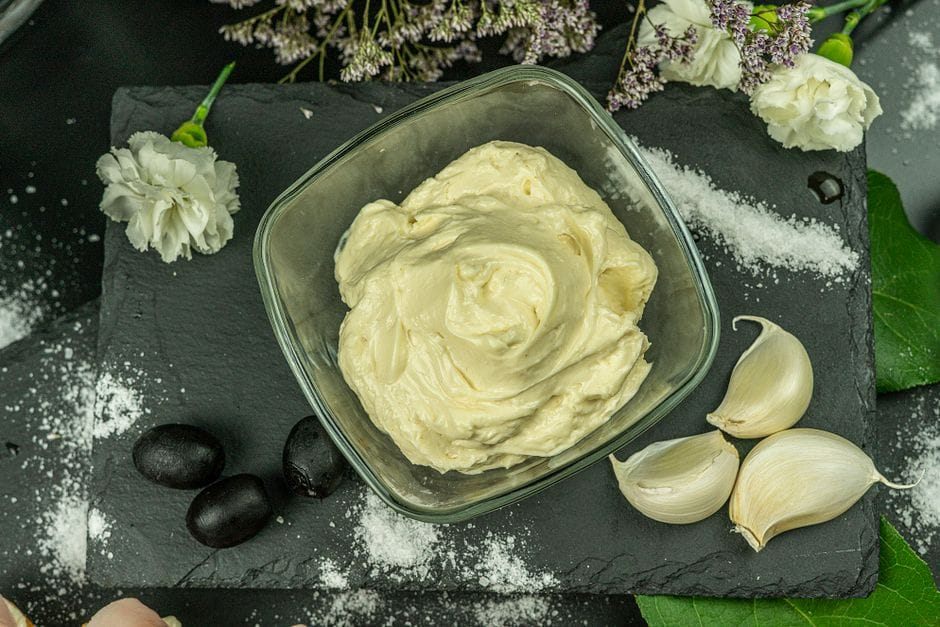
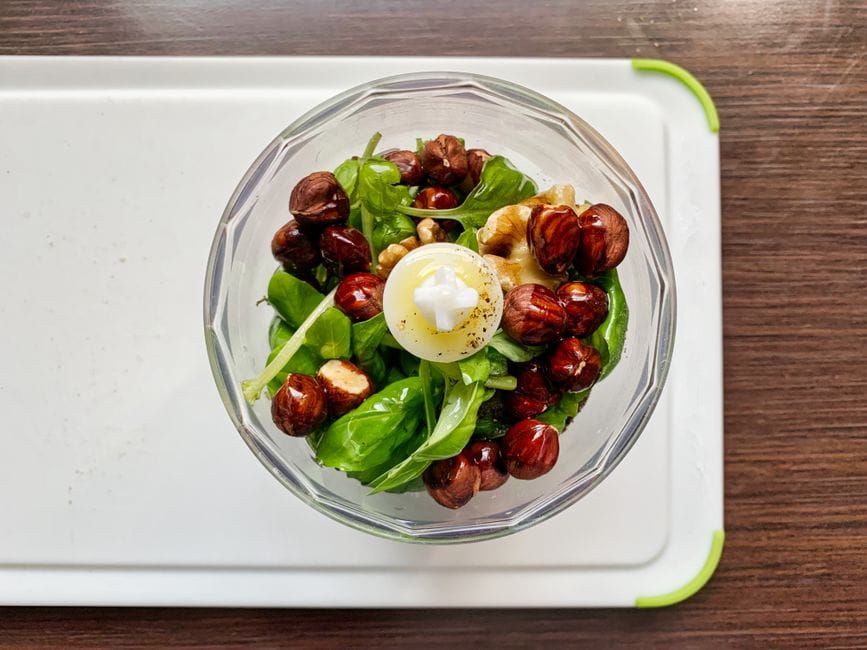 Photo: Marta K / Pexels
Pine nuts are traditional and they are wonderful: buttery, soft, almost creamy when blended. They are also expensive, prone to going rancid fast, and a genuine pain to find fresh. So while I love them, they are not the only option, and frankly not my everyday choice.
Walnuts are my default. They're cheap, available everywhere, and once toasted they give a deeper, earthier pesto with real backbone. Some people detect a faint bitterness in raw walnuts, which is exactly why toasting matters, it tames that edge.
Cashews make a softer, sweeter, creamier sauce, almost luxurious, and they're a good middle ground if pine nuts are out of budget. Toasted almonds work and bring a pleasant firmness.
And if you're cooking for a nut allergy or just have nothing in the cupboard, raw or toasted sunflower seeds or shelled pumpkin seeds make a perfectly good pesto that nobody at the table will question.
Here's the swap that failed for me, so you don't repeat it: I once tried peanuts because they were all I had. The flavor was so assertive it bulldozed the basil completely. It tasted like a satay sauce wearing a pesto costume.
Some flavors are too loud for this job, and peanut is one of them. Stick to the milder nuts and seeds and you'll be fine.
Is Store-Bought Vegan Pesto Any Good? (And the Best Brands)
Yes, I keep a jar around for lazy nights, and the category has gotten much better. But this is the section to read carefully, because pesto is a classic trap.
The default jarred and fresh refrigerated pestos almost all contain Parmesan or Grana Padano, which means they're not vegan and, because of the rennet, not even vegetarian. Do not assume.
The good news is that explicitly vegan options exist now. Le Grand makes a genuinely excellent fresh vegan pesto sold in the refrigerated section that tastes bright and herby. Gotham Greens offers a vegan basil pesto that's widely stocked and reliable. Bove's has a shelf-stable vegan jar that's handy for the pantry. Trader Joe's Vegan Pesto is a solid, cheap option if you have one nearby. Availability shifts by region and brands come and go, so treat these as a starting point, not gospel.
My one firm rule: read the label every single time, and look for the word "vegan" or "dairy-free" stated outright, not just "made with basil." If an ingredient name is unfamiliar, drop it into our vegan ingredient checker before you buy.
For a specific product verdict, our Is It Vegan database is faster than squinting at fine print in the aisle. The cheese hides in there more often than you'd think, so a ten-second check saves you bringing home a jar you can't use.
How to Actually Use It (Pasta and Beyond)
This is where a jar of pesto earns its place in the fridge. A few of my regulars.
Pasta, obviously. Cook your pasta, save a mug of the starchy water before draining, then toss the hot pasta with a few generous spoonfuls of pesto and a splash of that water. The starchy water is the trick: it loosens the pesto into a silky sauce that coats every strand instead of clumping.
Never heat pesto in a pan over high heat, it dulls the basil and the nooch turns slightly bitter. Off the heat, residual warmth is all you need.
Sandwiches and wraps. This is the use I'd argue is underrated. A thick smear of pesto on good bread does more than mayonnaise ever could. I layer it on toasted sourdough with sliced tomato, roasted peppers, and a little crumbled tofu, and it's lunch.
It's also a brilliant base for a grilled veg panini, or thinned slightly and used like a dressing. If you usually reach for a creamy spread, try pesto next to your vegan mayo and see which sandwich you'd rather eat.
Everywhere else. Swirled into a bowl of white beans, dolloped on roasted potatoes, stirred through a grain salad, spooned over a pizza after it comes out of the oven, or used as a dip with crusty bread. It also makes a fast pasta sauce richer if you stir a spoonful into marinara.
Pesto is less a single recipe than a flavor bomb you keep on hand.
Storing and Freezing
Fresh pesto keeps about five days in the fridge if you treat it right, which mostly means keeping air off the surface. Scrape it into a clean jar, press it down to remove air pockets, and pour a thin layer of olive oil over the top to seal it.
That oil cap is the difference between a vivid green sauce on day four and a sad brown one. Re-cover with fresh oil each time you dig in.
For longer storage, freezing is genuinely the best move and I do it every summer when basil is cheap. The classic method is an ice cube tray: spoon the pesto in, freeze solid, then transfer the cubes to a freezer bag.
Each cube is roughly one serving, and they melt in a minute or two stirred into hot pasta straight from frozen. They keep three months easily.
One thing I've learned: if you know a batch is destined for the freezer, go a little lighter on the garlic and the nooch. Both flavors intensify and can turn slightly harsh after weeks in the cold, so a sauce that tasted perfectly balanced fresh can come out a touch aggressive.
Season it to "almost there" rather than "perfect" and finish the seasoning when you thaw it. You can always add salt and a squeeze of lemon to a thawed cube, but you can't pull garlic back out.
My Honest Takeaway
Vegan pesto is one of those swaps that quietly becomes better than the original once you stop trying to fake the cheese and start leaning into what nutritional yeast actually does. Toast your nuts, salt it like you mean it, don't blend it to mush, and seal the jar with oil.
Do those four things and you'll have a sauce that's cheaper, faster, and greener than anything in a shop jar, and a basil plant that finally meets a dignified end. Mine these days goes straight from windowsill to food processor to pasta bowl, no swamp required.
The recipe
10-Minute Vegan Basil Pesto
Prep
10 min
Total
10 min
Makes
About 1 cup (240 ml), enough for 4 servings of pasta
Ingredients
- 2 packed cups (about 60 g) fresh basil leaves, washed and well dried so the pesto doesn't go watery
- 1/3 cup (45 g) pine nuts or walnuts, lightly toasted for a deeper, rounder flavor
- 2 to 3 cloves garlic, smashed (start with 2, raw garlic gets sharper as it sits)
- 3 Tbsp nutritional yeast, for the salty, savory, cheesy hit that replaces the Parmesan
- 1/2 cup (120 ml) good extra-virgin olive oil, plus a little more to cover the surface
- 2 Tbsp fresh lemon juice (about half a lemon), to keep the green bright and add tang
- 1/2 tsp fine sea salt, then more to taste
- Freshly ground black pepper, to taste
- 1 to 2 Tbsp cold water, only if you want a looser, more spoonable sauce
Instructions
- 1 Toast the nuts first. Put the pine nuts or walnuts in a dry skillet over medium heat and shake for 3 to 4 minutes until they smell nutty and turn pale gold. Watch them, they burn in seconds. Let them cool.
- 2 Add the toasted nuts and smashed garlic to a food processor and pulse a few times until coarsely chopped.
- 3 Add the basil, nutritional yeast, lemon juice, salt, and pepper. Pulse until everything is finely chopped, scraping down the sides once or twice.
- 4 With the motor running, stream in the olive oil slowly until the pesto comes together into a thick, glossy paste. Stop before it turns completely smooth, a little texture is what you want.
- 5 Taste. It will almost certainly need more salt and probably a touch more lemon. Adjust a pinch at a time until it tastes vivid, not flat.
- 6 If it's too thick to coat pasta, pulse in 1 to 2 Tbsp cold water rather than more oil, which keeps it from getting greasy.
- 7 Use right away, or scrape into a jar, smooth the top, and pour a thin layer of olive oil over the surface to seal out air. It keeps about 5 days in the fridge.
Frequently asked questions
Is store-bought pesto vegan?+
Usually not. The classic jarred and refrigerated pestos almost always contain Parmesan and sometimes Grana Padano, both of which are made with animal rennet, so they're not even vegetarian. A growing number of brands now make explicitly vegan versions, but you cannot assume the green jar on the shelf is safe. Read the label every time or run it through a vegan ingredient checker first.
Why does nutritional yeast replace the Parmesan?+
Parmesan brings two things to pesto: a salty savory punch and an umami, slightly nutty depth. Nutritional yeast delivers almost exactly that profile, with a cheesy, savory flavor that comes from its naturally high glutamate content. It also adds a little body so the sauce doesn't taste thin. A couple of tablespoons does the job that a fistful of grated cheese used to.
Can I use walnuts instead of pine nuts?+
Yes, and I often do. Pine nuts are the traditional choice and the most buttery, but they're expensive and go rancid fast. Walnuts are cheaper, easier to find, and give a slightly earthier, more robust pesto that I genuinely love. Toast them first to round off any bitterness. Cashews, almonds, and even sunflower seeds all work too.
Can you freeze vegan pesto?+
Freezing is the best thing you can do with a big batch. Spoon it into an ice cube tray, freeze solid, then pop the cubes into a bag. Each cube is roughly one serving, and they thaw in minutes stirred into hot pasta. Leave the nutritional yeast and any garlic a touch light if you know it's going in the freezer, since those flavors intensify over time.
Written by
VeganDigest Editorial is the small independent team that researches and fact-checks this site. We are not doctors or dietitians. For every is-it-vegan verdict we read the product's current ingredient list and manufacturer information, and for anything health-related we report guidance from recognized bodies such as the NHS, the Vegan Society, and the Academy of Nutrition and Dietetics rather than offering medical advice. Every page shows the date it was last verified, and our full process is on the How We Verify page.
Comments