Vegan Pizza (Homemade Dough, Sauce, and Cheese)

 Jump to recipe ↓
 In this guide5
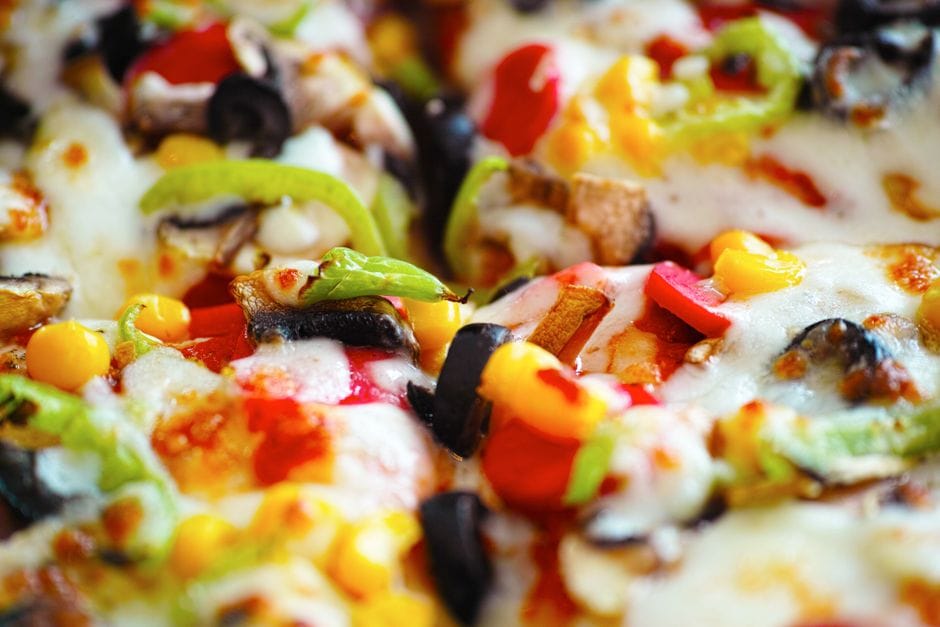
Vegan pizza is genuinely great pizza. With a properly made yeast dough, a bright 5-minute tomato sauce, and the right vegan cheese (grated from a block, not pre-shredded), you get a crispy-edged, chewy-centered pie that holds its own against anything from a delivery box. This guide walks through every component from scratch so you understand not just what to do but why it works.
The method here is grounded in real tested ratios: 2 cups of all-purpose flour to 3/4 cup warm water produces a dough that stretches without tearing and bakes up with a proper open crumb. The oven goes to 450 to 500 degrees Fahrenheit because high heat is the single biggest lever you have in a home kitchen. Everything else is detail, and the detail below is worth reading.
Why This Vegan Pizza Actually Works
Three things separate a vegan pizza that wows from one that disappoints.
First, the dough is a real yeast dough with a 1-hour rise. Quick-rise shortcuts produce a bread-like crust that puffs without chew. The full rise develops gluten structure and flavor compounds that make the crust taste like something, not just something to hold the toppings.
Second, the oven temperature matters more than almost any other variable. Most home ovens top out at 500 degrees Fahrenheit, and you should use all of it. A screaming-hot oven sets the crust fast, creates the char spots and blistering that define good pizza, and keeps the interior from drying out. Preheating the baking sheet or pizza stone inside the oven for at least 20 minutes before the pizza goes in gives you extra bottom heat that mimics a deck oven.
Third, vegan cheese from a grated block (Violife mozzarella and Miyokos creamery are the most reliable options tested by multiple recipe developers) melts and browns far better than pre-shredded. Pre-shredded varieties contain anti-caking agents that prevent proper melt. Buy a block and grate it yourself.
Key Ingredients and What Each One Does
All-purpose flour: The backbone of the dough. All-purpose flour has enough protein (about 10 to 12 percent) to develop gluten without making the crust tough. If you want a more Neapolitan texture, swap in "00" pizza flour, which is milled finer and gives a silkier, more extensible dough.
Active dry yeast plus sugar: The yeast feeds on the sugar to produce carbon dioxide, which creates the airy crumb. Proofing the yeast in warm water (between 105 and 110 degrees Fahrenheit) for 10 minutes before mixing tells you immediately if the yeast is alive. If it does not foam, your dough will not rise.
Olive oil: Two tablespoons in the dough lubricate the gluten strands, giving a tender crumb and helping the crust brown. A brush of oil on the rim before baking produces that golden, restaurant-quality finish.
Canned crushed tomatoes or tomato sauce: The sauce needs no cooking time if you are using good quality canned tomatoes. Crush them by hand or blend briefly, add dried oregano, garlic powder, a pinch of sugar, and salt. Thin sauce prevents a soggy crust, so use it sparingly.
Vegan mozzarella block: Grated Violife or Miyokos mozzarella provides the melt and pull that makes pizza satisfying. Nutritional yeast sprinkled over the top after baking adds a sharp, cheesy depth that fills in the flavor gap left by dairy.
Vegetables (pre-sauteed): Raw vegetables release moisture in the oven, which steams the crust from above and prevents crisping. Sauteing bell peppers, mushrooms, and onions for 5 minutes before topping removes most of that moisture and concentrates their flavor significantly.
Method Tips for a Perfect Crust
Proof the yeast first. Combine warm water, yeast, and sugar and wait the full 10 minutes. You want a visible foam cap. Skip this step and you risk a flat, dense crust.
Knead properly. Eight minutes by hand or 5 minutes with a stand mixer develops the gluten network. The dough should pass the windowpane test: stretch a small piece thin enough to see light through without it tearing.
Give the rise time it needs. One hour at room temperature in a lightly oiled, covered bowl is the minimum. The dough should double. A longer, cold overnight rise in the refrigerator produces even more flavor.
Par-bake the crust. Roll the dough out, brush with oil, poke the surface all over with a fork (this prevents large air bubbles), and bake at 450 degrees Fahrenheit for 5 to 7 minutes before adding toppings. This step is the difference between a crispy bottom and a doughy one.
Add toppings after par-baking. Spread sauce thinly (too much sauce = soggy), add grated vegan cheese, then your pre-cooked vegetables. Return to the oven for 10 to 12 minutes until the cheese is melted and beginning to brown at the edges.
Rest before slicing. Let the pizza sit for 3 to 5 minutes after it comes out of the oven. The cheese firms slightly, the sauce stops bubbling, and slices hold together instead of sliding apart.
Variations Worth Making
Classic Margherita Style: Sauce, vegan mozzarella, and fresh basil leaves added after baking. Simple, and the quality of each ingredient shows through.
White Garlic Pizza: Skip the tomato sauce. Brush the par-baked crust with garlic-infused olive oil, top with vegan ricotta (blended soaked cashews with lemon juice and nutritional yeast), wilted spinach, and sliced roasted garlic. Finish with black pepper and a drizzle of olive oil.
Roasted Vegetable Pizza: Top with a mix of roasted red peppers, zucchini, and cherry tomatoes. Add Kalamata olives and a sprinkle of fresh thyme. This is the best showcase for peak-season produce.
Spicy Red Pizza: Use a harissa-spiked tomato sauce (stir 1 tablespoon of harissa into your standard sauce), top with thinly sliced red onion, jalapeños, corn kernels, and vegan cheddar. Finish with hot sauce and cilantro.
Cashew Parmesan Finish: For any variation, a cashew parmesan (blend 1/2 cup raw cashews, 2 tablespoons nutritional yeast, 1/2 teaspoon garlic powder, 1/2 teaspoon salt until crumbly) scattered over the hot pizza adds richness and a sharp, salty note that completes the flavor.
Serving and Storage
Serve pizza straight from the oven after a brief rest. Pair it with a simple green salad dressed with lemon and olive oil, or serve alongside roasted vegetables for a more substantial meal.
Leftover slices keep well. Store them in an airtight container in the refrigerator for up to 3 days. Reheat in a dry skillet over medium heat with a lid on for 4 to 5 minutes. This method crisps the bottom crust and melts the cheese without the microwave's tendency to make everything rubbery.
The dough itself can be made ahead and refrigerated (tightly wrapped) for up to 3 days, or frozen for up to 3 months. Thaw frozen dough overnight in the refrigerator, then bring it to room temperature for 30 minutes before stretching. Having dough in the freezer means a homemade pizza is always within reach of an hour.
The recipe
Vegan Pizza (Homemade Dough, Sauce, and Toppings)
Prep
20 min
Cook
1h 15m
Makes
4 servings (one 12-inch pizza)
Ingredients
- FOR THE DOUGH
- 3/4 cup warm water (105 to 110 degrees Fahrenheit)
- 2 1/4 teaspoons active dry yeast (one standard packet)
- 1 teaspoon granulated sugar
- 2 cups all-purpose flour, plus more for dusting
- 1 teaspoon fine sea salt
- 2 tablespoons extra-virgin olive oil, plus more for the bowl and brushing
- FOR THE QUICK TOMATO SAUCE
- 1 cup canned crushed tomatoes or tomato sauce
- 1/2 teaspoon dried oregano
- 1/2 teaspoon garlic powder
- 1/4 teaspoon dried basil
- 1/4 teaspoon granulated sugar
- 1/4 teaspoon fine sea salt, or to taste
- FOR THE TOPPINGS
- 1 1/2 cups vegan mozzarella, grated from a block (Violife or Miyokos recommended)
- 1/2 cup bell pepper (red, green, or orange), thinly sliced
- 1/3 cup red onion, thinly sliced
- 1 cup button mushrooms, sliced
- 1 tablespoon olive oil (for sauteing vegetables)
- 1/4 teaspoon garlic powder
- Salt and black pepper to taste
- OPTIONAL FINISH
- 2 tablespoons nutritional yeast
- Fresh basil leaves
- Red pepper flakes
Instructions
- 1 Make the dough: Combine warm water, yeast, and sugar in a large bowl. Stir gently and let sit for 10 minutes until the mixture is visibly foamy. If it does not foam, the yeast is inactive and you should start again with fresh yeast.
- 2 Add the olive oil and salt to the yeast mixture and stir to combine. Add the flour 1/2 cup at a time, mixing after each addition, until a shaggy dough forms.
- 3 Turn the dough out onto a lightly floured surface and knead for 8 minutes by hand (or 5 minutes in a stand mixer with a dough hook) until the dough is smooth, slightly tacky, and springs back when poked.
- 4 Place the dough in a lightly oiled bowl, turn to coat, then cover with a clean kitchen towel. Let rise in a warm, draft-free spot for 1 hour, or until doubled in size.
- 5 While the dough rises, make the sauce: Stir together the crushed tomatoes, oregano, garlic powder, basil, sugar, and salt in a small bowl. Taste and adjust seasoning. Set aside.
- 6 Saute the vegetables: Heat 1 tablespoon of olive oil in a skillet over medium heat. Add the bell pepper, red onion, and mushrooms. Season with garlic powder, salt, and pepper. Cook, stirring occasionally, for 5 to 6 minutes until softened and lightly caramelized. Set aside.
- 7 Preheat your oven to 450 degrees Fahrenheit (230 degrees Celsius). If using a baking sheet, place it in the oven while it preheats to get it very hot.
- 8 Once the dough has risen, punch it down and transfer it to a lightly floured surface. Roll or stretch it into a roughly 12-inch circle. Transfer to a piece of parchment paper or a cornmeal-dusted pizza pan.
- 9 Brush the surface of the dough with olive oil and poke all over with a fork. Slide the dough (on the parchment) onto the hot baking sheet. Par-bake for 5 to 7 minutes until the surface looks dry and the bottom is just beginning to color.
- 10 Remove the crust from the oven. Spread the tomato sauce evenly over the surface, leaving a 3/4-inch border for the crust. Scatter the grated vegan mozzarella over the sauce, then arrange the sauteed vegetables on top.
- 11 Return the pizza to the oven and bake for 10 to 12 minutes, until the cheese is melted and beginning to brown at the edges and the crust is deep golden.
- 12 Remove from the oven and let rest for 3 to 5 minutes. Scatter nutritional yeast and fresh basil over the top if using. Slice into 8 pieces and serve immediately.
Notes
- ·Grate vegan cheese from a block rather than using pre-shredded. Anti-caking agents in pre-shredded cheese prevent proper melting.
- ·Water temperature is critical for yeast activation. Between 105 and 110 degrees Fahrenheit is the sweet spot. Hotter than 130 degrees will kill the yeast.
- ·For a thinner, crispier crust, roll the dough to 14 inches instead of 12. For a thick, focaccia-style base, press the dough into a 10-inch pan.
- ·The dough can be made up to 3 days ahead and stored tightly wrapped in the refrigerator, or frozen for up to 3 months.
- ·Leftover slices reheat best in a dry skillet over medium heat with a lid on for 4 to 5 minutes.
Calories
385
Protein
11g
Fat
14g
Carbs
54g
Frequently asked questions
What is the best vegan cheese for pizza?+
Grated Violife mozzarella and Miyokos creamery mozzarella are the most consistently recommended options among vegan recipe developers for melt and flavor. The key is always to grate from a block rather than buy pre-shredded, since pre-shredded varieties contain anti-caking agents that prevent proper melting and browning.
Can I make vegan pizza dough without yeast?+
Yes. A simple flatbread-style pizza base can be made with 2 cups of self-raising flour and 3/4 cup of plain unsweetened plant-based yogurt, mixed until a soft dough forms. It requires no rise time and bakes up thin and crisp. The texture is different from a yeasted crust (less chewy, no air pockets) but it works well and is ready in about 15 minutes.
Why does my vegan pizza crust come out soggy?+
Three common causes: too much sauce (apply a thin layer only), wet toppings placed on raw (saute vegetables first to remove moisture), or the oven not hot enough (aim for 450 to 500 degrees Fahrenheit). Par-baking the crust for 5 to 7 minutes before adding toppings is the most reliable fix for a reliably crisp bottom.
Can I freeze vegan pizza dough?+
Yes, and it works very well. After the first rise, punch the dough down, form it into a ball, and wrap tightly in plastic wrap. Freeze for up to 3 months. To use, thaw overnight in the refrigerator, then let it sit at room temperature for 30 minutes before stretching. Having frozen dough on hand means homemade pizza is always possible on a weeknight.
Written by
VeganDigest Editorial is the small independent team that researches and fact-checks this site. We are not doctors or dietitians. For every is-it-vegan verdict we read the product's current ingredient list and manufacturer information, and for anything health-related we report guidance from recognized bodies such as the NHS, the Vegan Society, and the Academy of Nutrition and Dietetics rather than offering medical advice. Every page shows the date it was last verified, and our full process is on the How We Verify page.
Comments