Flaky Vegan Scones (No Eggs, No Dairy)
 Jump to recipe ↓
 In this guide5
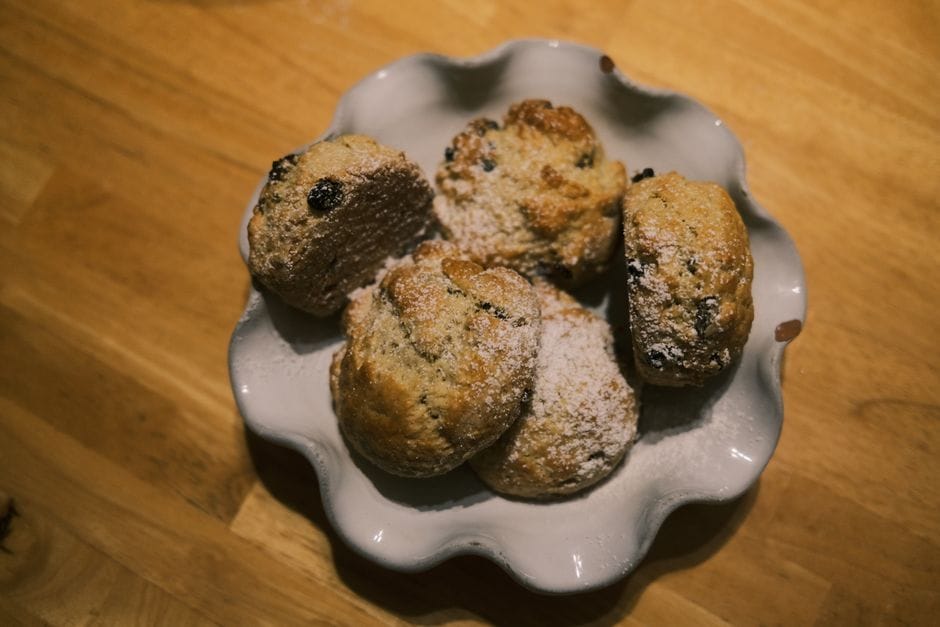
Vegan scones are genuinely flaky, tall, and buttery when you follow one rule: keep the fat cold. By combining cold vegan butter with a simple plant-milk buttermilk, you get tender layers that shatter at the edges exactly the way a classic scone should. No eggs and no dairy are needed at any point in the process.\n\nThis guide walks through the science behind the flakiness, the handful of ingredients that matter most, and a reliable method that works whether you prefer round cut scones or wedges. Expect a 35-minute total time, including baking.
Why Vegan Scones Work Without Eggs or Butter
Traditional scones rely on cold dairy butter for flakiness and eggs for a little structure and lift. In a vegan version, both are replaced by ingredients that do the same mechanical work.
The fat pockets principle. Flakiness in any scone or pastry comes from solid fat distributed through the dough in small pieces. When the oven heat hits those pieces, they release steam and melt, pushing the dough apart and forming air pockets. Vegan block butter (look for brands like Miyoko's, Violife, or Earth Balance sticks) is solid at refrigerator temperature and behaves almost identically to dairy butter when cold. The key word is cold: if the fat softens before baking, the pockets collapse and you get a dense, greasy crumb instead of layers.
The buttermilk swap. Eggs are not strictly necessary in scones. Their main roles are a little moisture and a light richness, both of which plant milk covers. Adding half a teaspoon of lemon juice or apple cider vinegar to plant milk creates a quick vegan buttermilk: the acid curdles the proteins, adds a very mild tang, and reacts with baking powder to boost lift. Soy milk works best here because its protein content is closest to dairy, but oat and cashew milk both produce good results.
No egg wash needed. A brush of plant milk mixed with a little maple syrup gives the tops the same golden finish as a traditional egg wash, without any animal product.
Key Ingredients and What Each One Does
Understanding each ingredient helps you troubleshoot if something goes wrong.
Plain flour (240g / 2 cups). All-purpose flour gives structure. Self-raising flour can be used if you reduce the added baking powder by half. Either works. Do not use bread flour, as the higher protein content makes scones tough.
Baking powder (1 tablespoon). This is the primary lift agent. Use fresh baking powder, as old stock that has been sitting open loses potency quickly. A small pinch of baking soda added alongside it extends the reaction time and gives a slightly more even rise.
Cold vegan butter (112g / half a cup). This is the most important ingredient. Cut it into small cubes and put it back in the freezer for 30 minutes before you start. You can also freeze a stick and grate it directly into the flour on a box grater, which distributes the fat evenly without warming it from your hands.
Plant milk with acid (180ml / three-quarters cup). Combine cold soy or oat milk with half a teaspoon of lemon juice or apple cider vinegar. Let it sit for two to three minutes. You will see it thicken slightly and look curdled, which is exactly what you want.
Sugar (50 to 100g). Plain scones use closer to 50g for a savory-leaning result. Sweet scones for serving with jam and cream use up to 100g. Caster sugar or regular granulated sugar both work.
Salt (half a teaspoon). Do not skip this. Salt sharpens all the other flavors and prevents the scone from tasting flat.
Method Tips for the Flakiest Result
The method matters more than any single ingredient. Three habits separate good vegan scones from great ones.
Handle the dough as little as possible. Overmixing develops gluten, which tightens the crumb and makes the scones chewy rather than tender. Add the wet ingredients to the dry and fold with a spatula or your hands until a shaggy, rough dough just comes together. Visible streaks of flour are fine. A smooth, uniform dough is a sign you have gone too far.
Work fast and keep everything cold. If your kitchen is warm, put the mixing bowl in the freezer for five minutes before you start. After shaping the dough, place the scones on their baking tray and refrigerate them for 10 to 15 minutes while the oven fully preheats to 220 C (425 F). This step re-solidifies any butter that softened during shaping, which means cleaner layers and better lift.
Cut, do not twist. When using a round cutter, press straight down and lift straight up. Twisting seals the cut edge and prevents the scone from rising cleanly. Dip the cutter in flour between each cut so it releases cleanly. For wedge-shaped scones, pat the dough into an eight-inch disc about two centimeters thick and cut it like a pizza into eight equal triangles. No cutter required.
Brush the tops, not the sides. Brushing plant milk or the milk-maple glaze down the sides of the scones glues the layers together and stops them from rising. Apply glaze only to the flat top surface.
Bake hot and fast. Vegan scones bake at 220 C (425 F) for 14 to 17 minutes. You are looking for a deep golden top and a pale but set base. They will feel slightly underdone when you press the top, but they firm up as they cool for the first five minutes on the tray.
Variations Worth Trying
Once you have the plain scone down, the base dough is very adaptable.
Fruit scones. Fold in 80g of raisins, dried cranberries, or chopped dried apricots with the wet ingredients. Toss them in a tablespoon of flour first so they do not sink to the bottom.
Blueberry lemon. Fold in one cup of fresh blueberries (also tossed in flour) and add the zest of one lemon to the dry ingredients. Drizzle the baked scones with a simple glaze of icing sugar, a little plant milk, and fresh lemon juice.
Chocolate chip. Reduce the sugar to 50g and fold in 80g of dairy-free dark chocolate chips. Good for an afternoon treat rather than a classic cream tea.
Savory cheese and herb. Omit the sugar entirely, add half a teaspoon of garlic powder, a tablespoon of nutritional yeast, and 60g of grated vegan cheddar. These pair well with soup.
Mini scones. Roll the dough to two centimeters thick and use a five-centimeter cutter instead of a seven-centimeter one. Reduce the bake time by two to three minutes and watch closely from the eight-minute mark.
Serving and Storage
Vegan scones are at their absolute best within two hours of coming out of the oven. The exterior is still slightly crisp, the inside is warm and soft, and the butter flavor is at its peak. Serve them split across the middle with a generous spoon of jam and a dollop of vegan whipped cream or whipped coconut cream.
For a classic cream tea arrangement, spread the vegan cream first and then top with jam. For the Devon style, jam goes first. Either works with this dough.
Storing leftovers. Cool the scones completely before storing. Wrap tightly in an airtight container and keep at room temperature for up to two days. Refrigerating them dries them out faster than leaving them at room temperature. To refresh day-old scones, place them in an oven at 160 C (325 F) for five to eight minutes. They will not be quite the same as fresh, but they come close.
Freezing. These scones freeze well either baked or unbaked. To freeze unbaked, shape the scones, place them on a tray, freeze solid for two hours, then transfer to a freezer bag. Bake from frozen at 220 C (425 F) for 18 to 20 minutes. Baked scones can be frozen for up to three months; thaw fully at room temperature and then warm briefly in the oven.
The recipe
Flaky Vegan Scones
Prep
20 min
Cook
15 min
Makes
8 scones
Ingredients
- 240g (2 cups) plain all-purpose flour, plus extra for dusting
- 1 tablespoon baking powder
- 1/4 teaspoon baking soda
- 1/2 teaspoon fine sea salt
- 100g (1/2 cup) caster sugar or granulated sugar
- 112g (1/2 cup) vegan block butter, very cold (cubed or frozen and grated)
- 180ml (3/4 cup) cold soy milk or oat milk
- 1/2 teaspoon apple cider vinegar or lemon juice
- 1 teaspoon alcohol-free vanilla extract (optional)
- 1 tablespoon soy milk, for brushing
- 1 teaspoon maple syrup, for brushing
- Coarse sugar for topping (optional)
Instructions
- 1 Cut vegan butter into small cubes and freeze for 30 minutes (or freeze a stick and grate it). Line a baking tray with parchment paper.
- 2 In a small jug, stir together the cold plant milk, apple cider vinegar (or lemon juice), and vanilla extract if using. Set aside for 2 to 3 minutes to curdle into a vegan buttermilk.
- 3 In a large bowl, whisk together the flour, baking powder, baking soda, salt, and sugar.
- 4 Add the cold vegan butter to the flour mixture. Using your fingertips or a pastry cutter, work the butter in quickly until the mixture resembles coarse, sandy crumbs with some pea-sized pieces remaining. Work fast so the butter stays cold.
- 5 Pour the buttermilk into the flour and butter mixture. Fold gently with a spatula until a rough, shaggy dough just comes together. Do not overmix. A few streaks of flour are fine.
- 6 Turn the dough out onto a lightly floured surface. Pat (do not knead) into a disc about 2 to 2.5cm (roughly 1 inch) thick.
- 7 Cut into 8 wedges like a pizza, or use a 6 to 7cm round cutter pressing straight down without twisting. Re-pat offcuts gently once to cut more rounds.
- 8 Place scones on the prepared tray, spaced at least 3cm apart. Refrigerate on the tray for 10 to 15 minutes while you preheat the oven to 220 C (425 F).
- 9 Whisk together the brushing milk and maple syrup. Brush only the tops of the scones, not the sides.
- 10 Bake for 14 to 17 minutes until the tops are deep golden and the scones have risen. They should feel just set when pressed gently on top.
- 11 Cool on the tray for 5 minutes, then transfer to a wire rack. Serve warm, split with jam and vegan cream.
Notes
- ·Cold butter is essential. If at any point the butter feels soft or greasy, slide the whole tray into the freezer for 10 minutes before baking.
- ·Do not twist the cutter when cutting round scones. Press straight down and lift straight up for the cleanest rise.
- ·For fruit scones, fold in 80g of raisins or dried cranberries with the wet ingredients.
- ·Scones are best the day they are baked. To freeze unbaked scones, freeze solid on the tray then transfer to a bag. Bake from frozen at 220 C for 18 to 20 minutes.
- ·Use a vegan block butter (not a spread tub), as the higher fat content and lower water content of block butter gives better flakiness.
Calories
245
Protein
3g
Fat
11g
Carbs
33g
Frequently asked questions
Why did my vegan scones not rise?+
The most common cause is butter that warmed up during mixing, which prevents the steam pockets from forming in the oven. Make sure the butter is frozen or fridge-cold before you start, and chill the shaped scones on the tray for 10 to 15 minutes before baking. Also check that your baking powder is fresh; stir half a teaspoon into hot water and if it does not bubble immediately, replace it.
Can I use coconut oil instead of vegan butter?+
Refined solid coconut oil works in a pinch but the result is noticeably different. Coconut oil melts at a lower temperature than vegan block butter, so the dough warms up faster during handling and the scones spread more. If you use coconut oil, keep it solid, measure it in its solid state, and freeze the shaped scones for at least 15 minutes before baking. Vegan block butter gives a far better, more buttery flavor and texture.
What plant milk works best for vegan scones?+
Soy milk is the best choice because its protein content is the closest to dairy milk and it curdles most reliably with lemon juice or vinegar to form a proper vegan buttermilk. Oat milk and cashew milk also work well. Avoid very thin or watery plant milks such as rice milk, as they do not provide enough fat to keep the dough moist.
Can I make the dough ahead of time?+
Yes. Shape the scones, place them on the lined tray, cover with plastic wrap, and refrigerate for up to 24 hours before baking. You can also freeze the shaped, unbaked scones solid and bake straight from frozen, adding 3 to 4 minutes to the bake time. Avoid mixing the wet and dry ingredients and then waiting to shape, as the baking powder starts reacting immediately once it contacts liquid.
Written by
VeganDigest Editorial is the small independent team that researches and fact-checks this site. We are not doctors or dietitians. For every is-it-vegan verdict we read the product's current ingredient list and manufacturer information, and for anything health-related we report guidance from recognized bodies such as the NHS, the Vegan Society, and the Academy of Nutrition and Dietetics rather than offering medical advice. Every page shows the date it was last verified, and our full process is on the How We Verify page.

Comments