How to Start a Vegan Diet (A Realistic First Month)
In this guide7
The night before I went vegan, I ate what I solemnly decided would be my "last" pizza, the way people do when they think they are about to enter a period of grim deprivation. I had a mental image of my future: sad salads, a single brave block of tofu, friends quietly pitying me at restaurants.
"Appropriately planned vegetarian, including vegan, diets are healthful, nutritionally adequate, and may provide health benefits for the prevention and treatment of certain diseases."
Source: Academy of Nutrition and Dietetics
None of that turned out to be true. What I actually discovered, somewhere around week three, is that I was eating better food than before, not worse, because I had finally started paying attention to what was on my plate.
The deprivation story is the biggest myth standing between most people and a vegan diet that actually sticks.
So this is the guide I wish I had that first month. No lectures, no purity tests, no pretending it is effortless.
Just the practical moves that make the transition feel like an upgrade instead of a sentence, the few things you genuinely need to get right, and a week-one plan you can actually follow. Let's get you fed.
Start With Meals You Already Love
The single best decision I made was to stop trying to learn an entirely new cuisine. You do not need fifty new recipes. You need to look at the meals already in your rotation and find the ten or so that are either already vegan or one swap away from it.
Sit down and list what you actually eat in a normal week. When I did this, I was a little stunned by how much was already there. Spaghetti with marinara.
A big pot of chili. Bean burritos. Peanut butter toast.
Stir-fries. Oatmeal. Hummus and pita. Curry and rice.
None of those needed reinventing, they just needed me to notice them. Then take the meals that are close, your tacos, your pasta bake, your weekend breakfast, and figure out the one or two ingredients standing in the way.
That is the whole job in the first month: not building a new identity, just running swaps on food you already know how to cook. If you want the full method for converting a recipe by what each ingredient is doing rather than what it is, I wrote out the framework in how to veganize any recipe, and it makes this part almost mechanical.
The Swaps to Stock in Your Kitchen
 Photo: Jason Briscoe / Unsplash
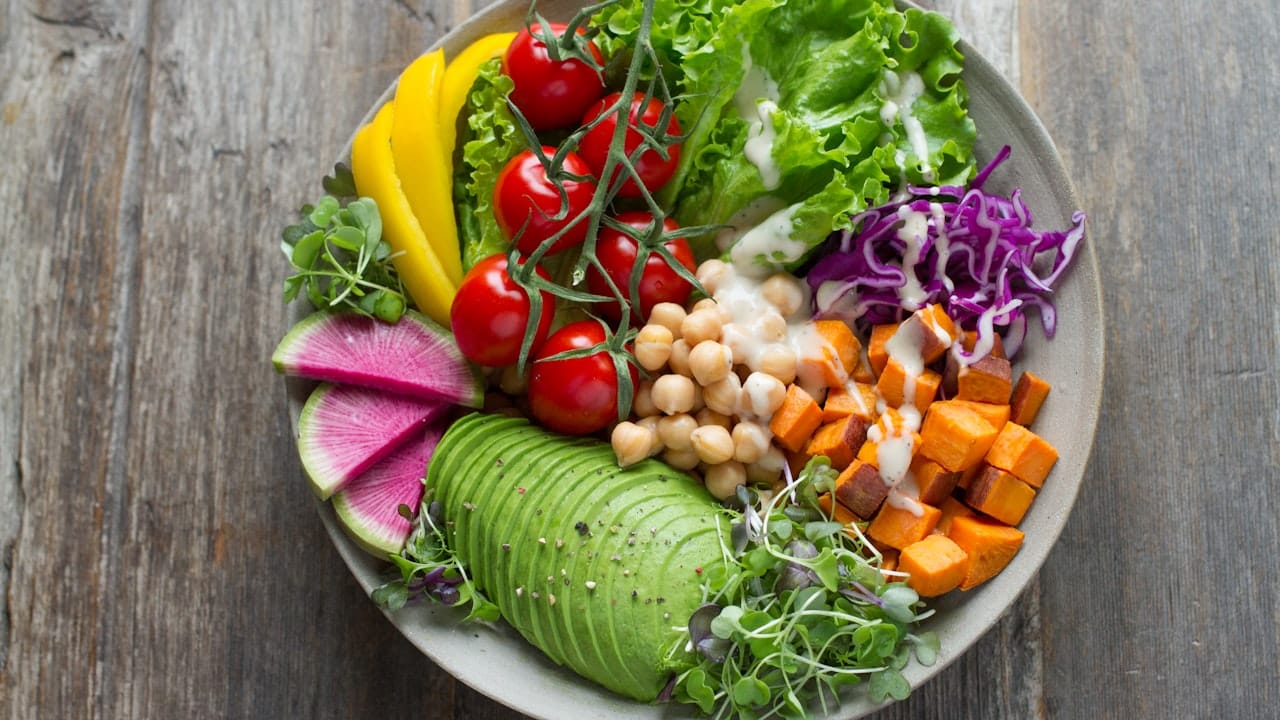
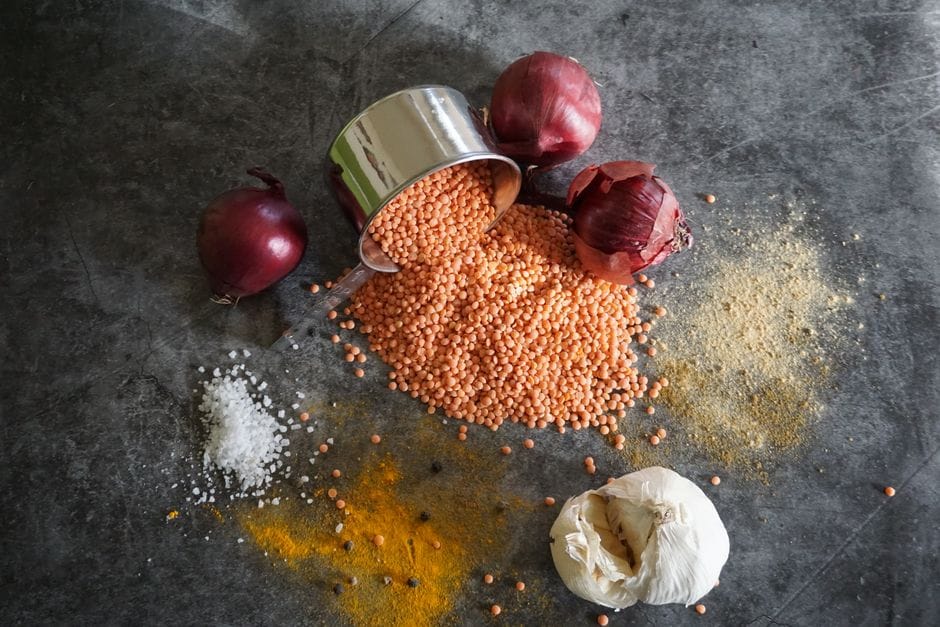
A short shopping trip up front saves you a hundred small frustrations later. These are the workhorses, the things that let you swap on the fly without a special plan.
For dairy, I keep a carton of plant milk in the fridge at all times. Oat milk is the one I reach for because it foams and tastes neutral in coffee and cooking, and you can even make your own; I broke it down in our oat milk guide.
Soy is the highest in protein if that matters to you. Then a tub of vegan butter for toast and baking (I lean on Miyoko's or Country Crock Plant Butter), a jar of vegan mayo like Vegenaise or Hellmann's plant-based, and a bag of shredded vegan cheese for melting, with the honest caveat that most brands do not brown or stretch like dairy, so adjust your expectations on pizza night.
For the savory, umami, "something is missing" feeling that trips up a lot of beginners, two pantry items do the heavy lifting. The first is nutritional yeast, those yellow flakes that taste cheesy and nutty and turn a plain bowl of pasta into something you want to eat; I covered every use in nutritional yeast 101.
The second is a jar of miso paste, which adds the deep salty backbone that meat and parmesan used to provide. Round it out with canned beans, lentils, a block of tofu, and decent soy sauce, and you can cook most weeknights without a recipe.
The Nutrients to Watch (It Is a Short List)
Here is where I want to be honest, because too many guides either fearmonger or wave the whole topic away. A vegan diet is nutritionally complete for every stage of life, that is the position of major dietetic bodies, but there is a short list of things worth your attention. It is shorter than you have been led to believe.
The non-negotiable one is vitamin B12. Plants do not reliably make it, full stop, so you take a supplement or eat fortified foods, and you do not improvise here. The Vegan Society has the clearest plain-English rundown of how much and how often.
A cheap tablet a few times a week, or a daily one, settles it forever.
After that, the list is just "eat with a little intention." Get omega-3s from a tablespoon of ground flax or chia, or an algae-oil capsule.
Get iron from lentils, tofu, and dark greens, and pair it with something high in vitamin C, like the tomatoes in your chili or a squeeze of lemon, because vitamin C dramatically boosts absorption. Iodine comes from iodized salt or a small amount of seaweed.
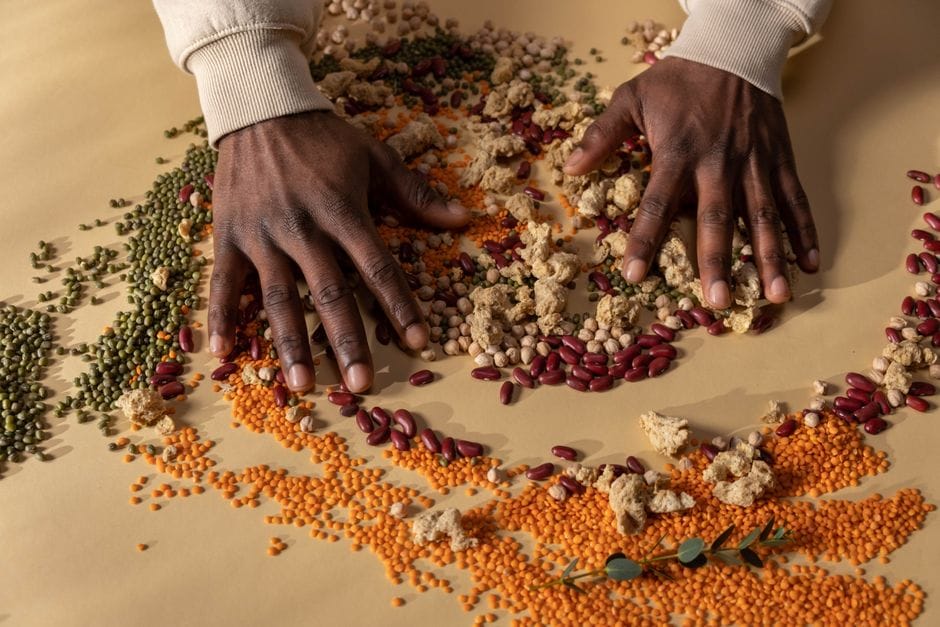
Vitamin D you should probably take if you live somewhere with real winters, vegan or not. And protein, which everyone panics about and almost nobody actually lacks, comes from beans, tofu, tempeh, lentils, and whole grains, spread across the day; I laid out the real numbers in how to get protein on a vegan diet.
That is the whole list. It fits on a sticky note.
Eating Out Without the Stress
 Photo: Fotos / Unsplash
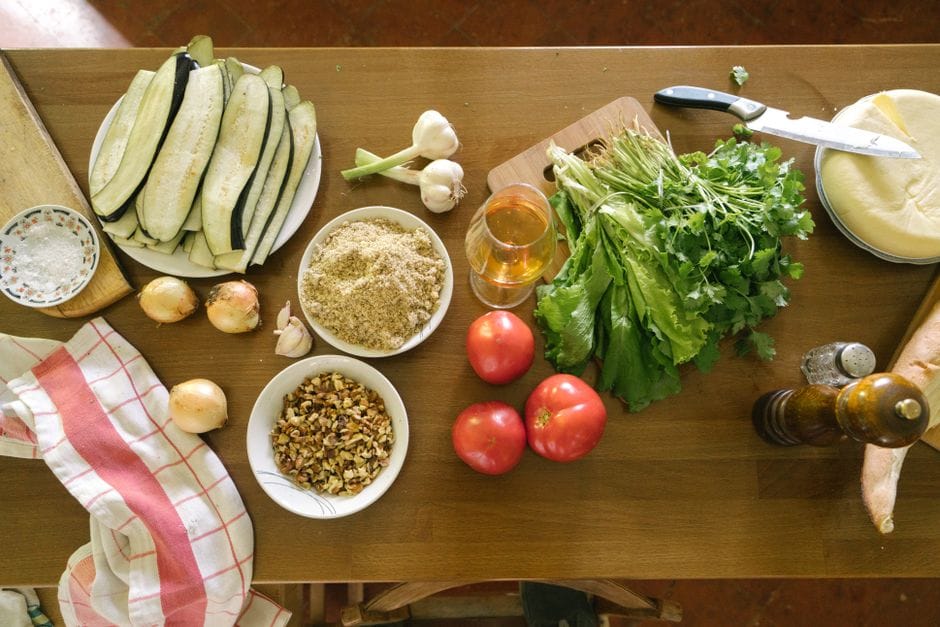
The fear that you will become a nightmare dinner guest is overblown, but eating out does take a little strategy the first month, mostly because menus are written for people who are not paying attention to dairy and egg.
My default move is to lean on cuisines that are already full of vegan options instead of fighting an American steakhouse menu. Indian, Thai, Ethiopian, Lebanese, Mexican, and most noodle shops have naturally plant-based dishes baked into the tradition, and you are not asking the kitchen to invent anything.
When the menu is less friendly, I scan for a dish I can modify, a grain bowl without the cheese, pasta with marinara instead of a cream sauce, a veggie sandwich with no mayo, then I ask one or two specific questions rather than announcing my whole philosophy to a busy server. The two ingredients that hide most often are butter (cooked into a lot of vegetables and breads) and fish sauce (lurking in Thai and Vietnamese dishes), so those are worth asking about directly.
If you are ever unsure whether a packaged item or sauce qualifies, our Is It Vegan database and the vegan ingredient checker tool will settle it in about ten seconds, which is faster than spiraling at the table.
Handling Cravings Without Quitting
Cravings are the part people are most embarrassed to admit, so let me say it plainly: I missed cheese with an intensity that surprised me. Pepper jack, specifically, on crackers. It was not a moral struggle, it was a sensory one, and the way through was not gritting my teeth.
The mistake is treating a craving like a test of character you have to pass by suffering. It is not.
It is just your palate asking for fat, salt, and umami, and you can give it those things in a vegan form while your taste buds recalibrate, which they genuinely do over a few weeks. When I wanted cheese, I made cheesy pasta with nutritional yeast or melted a slice of decent vegan cheddar onto toast.
When I wanted a burger, I cooked a thick portobello or a Beyond patty with all the trimmings. The craving showed up, I answered it, and within a month or so the intensity faded on its own.
What does not work, in my experience, is pretending you are above the craving, because that is exactly the mindset that has you face-down in a real pizza by Friday, feeling like you blew it.
When You Slip Up (You Will, and It Is Fine)
You are going to eat something with a hidden animal ingredient. You will discover the "vegetable" soup had a chicken stock base, or that the bread had milk powder, or you will just be tired and eat the wrong thing on autopilot.
This is not a hypothetical, it happened to me within the first ten days and I felt absurdly guilty about it.
Here is the reframe that kept me going, and it is the official framing too. Veganism, as the Vegan Society defines it, is about excluding animal exploitation "as far as is possible and practicable," not achieving a spotless record.
A slip is not a failure of identity, it is a data point. Note what tripped you up, learn to read that particular label, and eat the next meal. The people who quit almost never quit because the food was bad; they quit because they decided one mistake meant the whole project was a sham and they might as well give up.
Do not hand a single slice of accidental cheese that much power. Progress, not purity, is the entire game.
A Realistic Week-One Plan
Theory is nice, but the first week is won or lost on having food in the house. Here is a concrete, low-effort plan I would hand my past self. Nothing fancy, nothing that needs a specialty store.
Breakfast, pick one and repeat it: oatmeal cooked with oat milk, cinnamon, banana, and peanut butter, or whole-grain toast with avocado and a sprinkle of salt, or a tofu scramble with turmeric and nutritional yeast if you want something hot. Breakfast is the easiest meal to make vegan, so let it be boring and automatic.
Lunch, lean on leftovers and assembly: a big batch of lentil soup or chili made Sunday that carries you through Wednesday, hummus wraps with whatever vegetables are wilting in the drawer, or rice bowls with beans, salsa, and avocado. Dinner is where you run your swaps on the meals you already love: spaghetti with marinara and a handful of nutritional yeast, bean tacos, a stir-fry with tofu and frozen vegetables over rice, a curry from a jar of paste and a can of coconut milk.
Snacks are roasted chickpeas, fruit, nuts, peanut butter, and dark chocolate, which is often accidentally vegan anyway. If tofu intimidates you, and it did me, our guide to cooking tofu walks through getting it crispy instead of soggy, which is the difference between loving it and giving up on it.
Notice what this plan is not: it is not ten new recipes, it is a handful of repeatable meals with a grocery list you could write from memory. Repetition in week one is a feature, not a failure.
You are building a default, and a default you do not have to think about is exactly what carries you from a motivated first week into a quiet, durable habit.
That is the real secret nobody tells you on day one. Going vegan is not an act of willpower you sustain forever, it is a set of small defaults you set up once and then stop deciding.
Stock the swaps, take the B12, lean on the meals you already love, and forgive yourself the inevitable mistakes. Do that for a month and the diet stops feeling like a project and starts feeling like the way you eat.
Then you can throw out the "last meal" mindset for good, because there is nothing to mourn.
Frequently asked questions
Do I have to go vegan all at once, or can I ease into it?+
You can absolutely ease in, and honestly most people who stick with it did. There is no rule that you have to flip a switch overnight, and white-knuckling a perfect first day usually backfires by week two. I tell friends to pick one meal to make vegan first, breakfast is the easy one, then expand once that feels automatic. Going gradually means you build real habits instead of relying on willpower, and habits are what actually last.
What is the one supplement I really need on a vegan diet?+
Vitamin B12, full stop. It is the single nutrient you genuinely cannot count on getting from plants, because B12 comes from bacteria and is reliably found in animal products or in fortified foods and supplements. A cheap B12 supplement, taken as directed, closes that gap completely and costs a few cents a day. Everything else on a vegan diet is manageable through food with a little attention, but B12 is the one I would never leave to chance.
How do I handle cravings for cheese or meat when starting out?+
Cravings are normal and they fade faster than you expect, usually within a few weeks for most people. The trick is to satisfy the craving rather than ignore it, so reach for a good vegan version instead of pretending you do not want it. A sharp vegan cheddar on toast or a seasoned mushroom burger scratches the same itch while your palate recalibrates. Treating cravings as information rather than failure keeps you from quitting over a slice of pizza.
What if I slip up and eat something with dairy or egg in it?+
Then you keep going, because one mistake does not undo anything. Veganism is about reducing harm as far as is practical, not achieving a flawless record, and getting tripped up by a hidden ingredient is part of learning. Note what happened, check the label more carefully next time, and move on with the next meal. The people who quit are usually the ones who decided one slip meant they had failed, which is the only real way to fail at this.
Written by
VeganDigest Editorial is the small independent team that researches and fact-checks this site. We are not doctors or dietitians. For every is-it-vegan verdict we read the product's current ingredient list and manufacturer information, and for anything health-related we report guidance from recognized bodies such as the NHS, the Vegan Society, and the Academy of Nutrition and Dietetics rather than offering medical advice. Every page shows the date it was last verified, and our full process is on the How We Verify page.
Comments