Vegan Bacon: 4 Ways That Actually Taste Smoky
- Nut-free
In this guide9
- 01The One Marinade That Powers All Four
- 02Tempeh Bacon: The Hearty One
- 03Rice Paper Bacon: The Crispiest of All
- 04Coconut Bacon: The 12-Minute Crunch
- 05Mushroom Bacon: The Umami Bomb
- 06Getting Any of Them Properly Crispy
- 07The Best Store-Bought Vegan Bacon Brands
- 08What to Actually Do With Vegan Bacon
- 09The Takeaway
The first time someone served me vegan bacon, it was a sad, floppy strip of something beige draped over a breakfast sandwich, and it tasted like salted cardboard. I ate it to be polite and quietly wrote the whole category off. That was a mistake.
The problem was never the idea of vegan bacon. The problem was that nobody had bothered to make it smoky, and nobody had bothered to make it crisp.
Get those two things right and you can make plant strips that genuinely satisfy the bacon craving, the salty, smoky, sweet, fatty thing that makes people put it on everything.
I have spent more weekend mornings than I will admit testing ways to do this, and I have landed on four that actually work: tempeh, rice paper, coconut, and mushroom. They all run on the same smoky-sweet marinade, so once you learn it, you can pick whichever base suits the meal. Let me walk you through all four, plus the store brands worth buying and the crisping rules that separate good vegan bacon from the floppy stuff.
The One Marinade That Powers All Four
Before we talk about the bases, let's talk about the flavor, because it is identical across every version here. Four ingredients do almost all the work.
Liquid smoke is the non-negotiable one. It is condensed wood smoke suspended in water, nothing more, and a single tablespoon gives you that cured, over-a-fire quality that no amount of paprika alone can fake.
If you have only ever known liquid smoke as something in a barbecue sauce, it is worth reading what it actually is on the Wikipedia page for liquid smoke, because it explains why a few drops do so much.
Maple syrup is the sweet, cured note. Real bacon has a faint sweetness from the curing process, and maple nails it. Use the real stuff, not pancake syrup, which is mostly corn syrup and tastes flat here.
Soy sauce or tamari brings the salt and a deep, savory backbone, and smoked paprika adds color plus a soft, warm smokiness that backs up the liquid smoke. My base ratio is roughly 3 tablespoons soy sauce, 2 tablespoons maple syrup, 1 tablespoon liquid smoke, and 1 teaspoon smoked paprika, with a little garlic powder and black pepper.
Scale it up or down, but keep those proportions and you will get bacon flavor every single time.
Tempeh Bacon: The Hearty One
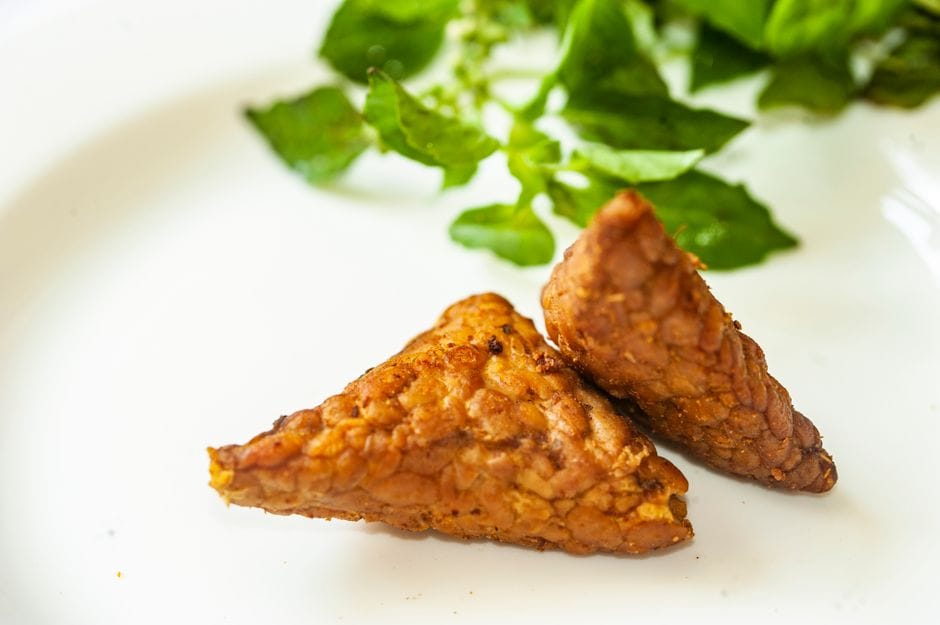
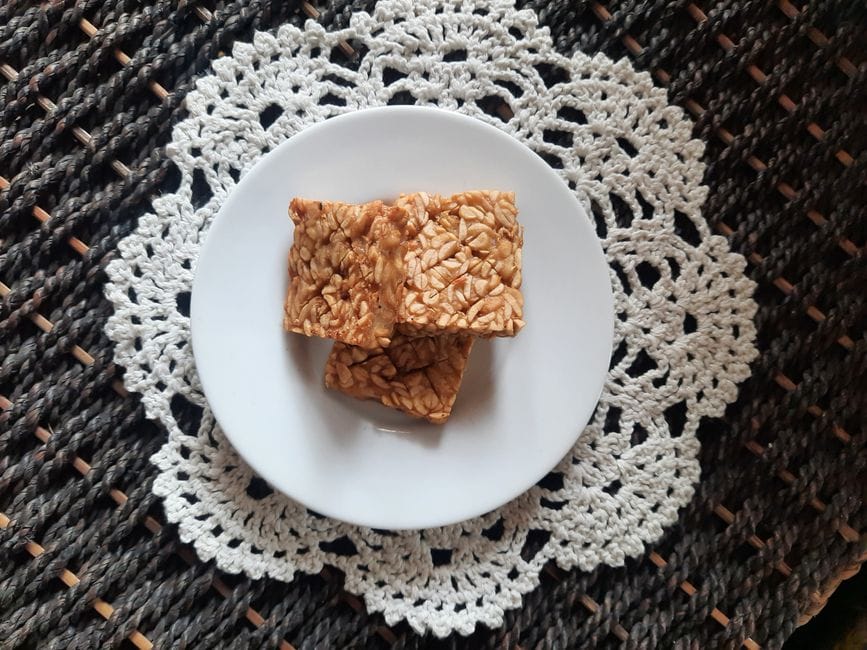 Photo: yok lesmono / Pexels
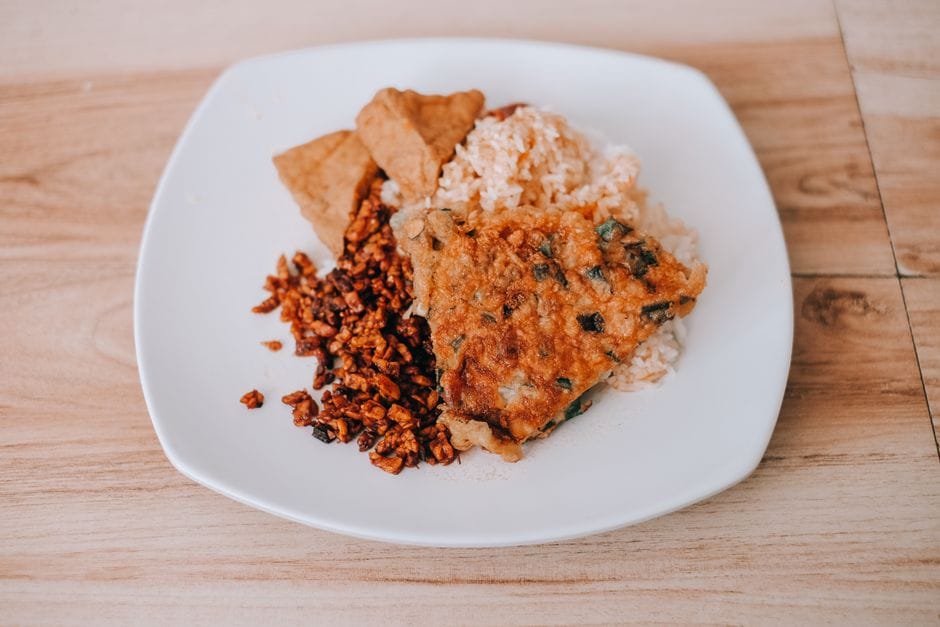
Tempeh is my pick when bacon is the star of the plate, because it has real chew and a serious protein hit. The fermented soybean cake takes the marinade beautifully, especially if you steam it first.
Slice the block lengthwise into thin strips, about an eighth of an inch. Thickness is the number one mistake here.
Thick tempeh stays chewy in the middle and never crisps, so go thinner than feels natural. Steam the strips for ten minutes before anything else, which pulls out tempeh's natural bitterness and makes it porous enough to soak up flavor. If that step is new to you, my full guide to cooking tempeh breaks down exactly why the steam matters and how to nail the texture.
After steaming, marinate the warm strips for fifteen to thirty minutes, then pan-fry them in a thin film of oil over medium-high heat, about three to four minutes a side. Brush on a little reserved marinade at the very end so it glazes into a sticky, dark crust.
That glaze is what makes people ask what they are eating. The full measured recipe is in the card above, but tempeh bacon is the one I make most, so it earned the headline spot.
Rice Paper Bacon: The Crispiest of All
If you want the shattering, glassy crunch of a really thin bacon strip, rice paper is the surprise winner. Those translucent spring roll wrappers turn into impossibly crisp ribbons, and they are naturally gluten-free.
Here is the technique that took me a few tries to get right. Stack two sheets of rice paper, brush both lightly with water until pliable, then press them together and cut into strips with scissors.
Two layers matter, because a single sheet fries up too fragile and shatters into dust. Dip each double strip in the smoky marinade, just a quick coat, not a soak, since rice paper goes gummy if it sits too long in liquid.
That was my first failure: I let them swim in the marinade and ended up with sticky, gluey strips that fused into a blob in the pan.
Fry them in a thin layer of hot oil for under a minute per side. They crisp almost instantly and go from perfect to burnt in seconds, so do not walk away. The payoff is a strip that crackles like the real thing.
These are best eaten the day you make them, since they soften if they sit, but fresh out of the pan they are the most convincing crunch on this list.
Coconut Bacon: The 12-Minute Crunch
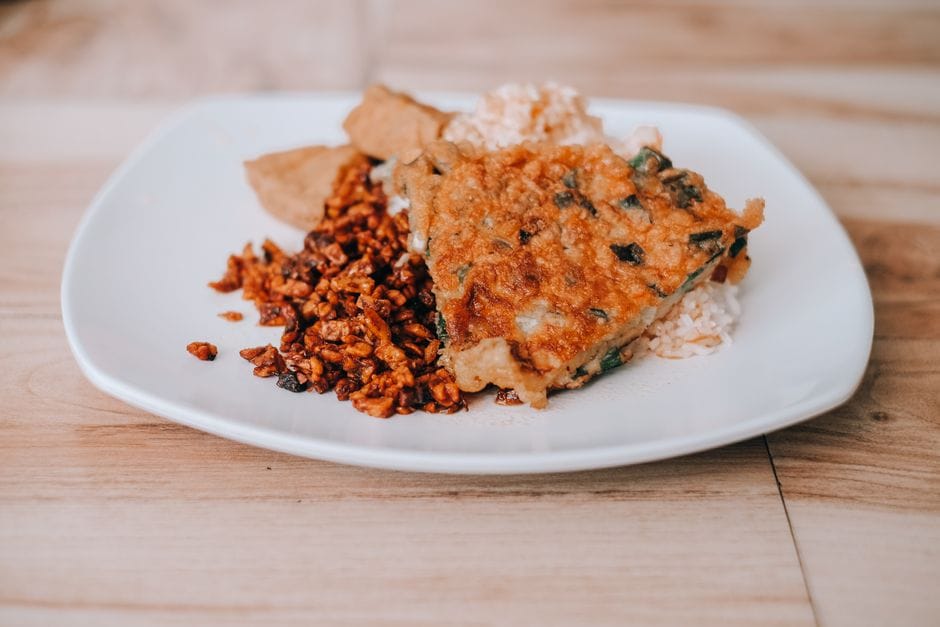
 Photo: Loren Castillo / Pexels
Coconut bacon is the easiest by a mile and the one I keep in a jar for sprinkling. It will not give you a bacon strip, but it delivers smoky, salty, crunchy bits that are unbeatable scattered over salads, baked potatoes, soups, and avocado toast.
Use large unsweetened coconut flakes, not the fine shredded coconut, which burns to nothing. Toss about two cups of flakes with two tablespoons soy sauce, one tablespoon maple syrup, one tablespoon liquid smoke, and a half teaspoon smoked paprika until evenly coated.
Spread them in a single layer on a parchment-lined sheet and bake at 325F (160C) for ten to fifteen minutes, stirring every few minutes so the edges do not scorch.
This is the version where I have burned the most batches, so learn from me. Coconut goes from golden to acrid fast because of its natural oils and the maple sugar.
Pull the tray when the flakes are deep golden brown but not yet dark, because they keep cooking and crisping as they cool on the hot pan. They will seem soft straight out of the oven and turn shatteringly crisp within a couple of minutes.
Stored in an airtight jar, coconut bacon keeps for a couple of weeks, which makes it the most practical of the four.
Mushroom Bacon: The Umami Bomb
Mushrooms are pure savory depth, so mushroom bacon leans hardest into the meaty, umami side of the bacon experience. Shiitakes and king oyster mushrooms both work, but my favorite is a big flat portobello or, for thin crisps, shiitake caps.
Slice your mushrooms as thinly as you can, ideally on a mandoline, because thin slices are what let them crisp instead of steam. Mushrooms hold a lot of water, and that water is the enemy of crispness.
Toss the slices in the smoky marinade, then either roast them at 375F (190C) for twenty to twenty-five minutes, flipping halfway, or fry them in a little oil until the edges curl and darken. Roasting drives off more moisture, so it gives you crispier results.
The honest truth: mushroom bacon shrinks dramatically as the water cooks off, so start with more than you think you need. A heaping tray cooks down to a modest pile.
What you get is intensely savory, chewy-crisp ribbons with a deep woodsy flavor, brilliant tucked into a sandwich or chopped over creamy pasta. It is the least bacon-shaped of the four and the most flavor-packed.
Getting Any of Them Properly Crispy
Across all four versions, the same handful of rules decide whether you get crisp bacon or a floppy disappointment.
Slice thin. This is the big one. Thick strips trap moisture in the center and never crisp through, no matter how long you cook them.
Thin is your friend everywhere here.
Dry the surface before it hits heat. Whether you steamed tempeh or marinated mushrooms, let excess liquid drip off first. Surface water has to boil away before browning can even start, so a wet strip just steams in the pan, going limp and pale.
This is the same physics that governs a good sear on tofu, and if you have read how I handle that in our guide to cooking tofu, it will feel familiar.
Give the pieces room. Crowding the pan traps steam and ruins the crisp. Cook in batches with space between strips.
And remember that most vegan bacon firms up as it cools, so pull it while it still has a slight bend and let it rest two minutes on a rack. If it is genuinely still soft after cooling, it needed a hotter pan or more time, not less.
The Best Store-Bought Vegan Bacon Brands
Some mornings you just want to open a package, and the store options have gotten genuinely good. Three are worth knowing.
Lightlife makes a soy-based smoky tempeh and strip product that is widely stocked and reliably plant-based, with a chewy, savory bite. Sweet Earth Benevolent Bacon is a seitan and wheat-based strip, so it has a meatier, denser texture and is not gluten-free.
Hooray Foods is the one to grab if you want the closest thing to a real strip, since it is a coconut-oil and rice-flour based product that crisps up glassy and is naturally gluten-free, much like the homemade rice paper version above.
A quick honesty note on store-bought, since this is the question I get most. Products marketed as vegan bacon are built without animal ingredients, but recipes and labels do change, and a few smoky strip products on the shelf are vegetarian rather than strictly vegan. I never assume.
I glance at the ingredient list, and when something is unclear I check it against our Is It Vegan database or run the label through the vegan ingredient checker before it goes in the cart. Thirty seconds of checking beats a surprise at home.
What to Actually Do With Vegan Bacon
The whole point of bacon is that it goes on everything, and the plant versions are no different. A proper BLT with crisp tempeh or rice paper strips, ripe tomato, lettuce, and a good smear of vegan mayo is the sandwich I make to convert skeptics.
Coconut bacon turns a plain salad or a bowl of soup into something you actually look forward to, and it is unreal on a loaded baked potato.
Crumble any of these into a breakfast scramble, scatter them over pancakes for a sweet-and-salty thing, or tuck mushroom bacon into a grilled cheese alongside some vegan sausage for a full plant brunch. The smoky-sweet flavor plays the same role here that pork bacon does in an omnivore kitchen: it is a finishing flourish that makes the rest of the plate taste richer.
The Takeaway
Vegan bacon stopped being a sad imitation the moment I understood it as two separate problems: get the smoke right and get the crisp right. The smoke comes from that four-part marinade of liquid smoke, maple, soy, and smoked paprika, and it works identically on tempeh, rice paper, coconut, and mushroom.
The crisp comes from slicing thin, drying the surface, giving the pieces room, and letting them firm up as they cool. Pick the base that fits your meal, keep a jar of coconut bacon around for everyday sprinkling, and grab a package of Hooray Foods or Lightlife for the lazy mornings.
Smoky, sweet, salty, crisp. That is the whole game, and it is fully plant-based.
The recipe
Smoky-Sweet Tempeh Bacon
Prep
20 min
Cook
12 min
Makes
About 16 to 20 strips (one 8 oz / 227 g block of tempeh), serves 3 to 4
Ingredients
- 1 block (8 oz / 227 g) tempeh, sliced lengthwise into thin 1/8-inch strips (thin slices crisp far better than thick ones)
- 3 Tbsp soy sauce or tamari (tamari keeps it gluten-free and brings the salty, cured depth)
- 2 Tbsp pure maple syrup (the sweet, cured note that mimics smoked bacon; do not swap in pancake syrup)
- 1 Tbsp liquid smoke (the whole secret to smoky flavor; hickory or applewood both work)
- 1 Tbsp neutral oil like avocado or refined coconut, plus more for the pan
- 1 tsp smoked paprika (for color and a gentle smoky warmth)
- 1/2 tsp garlic powder (rounds out the savory backbone)
- 1/2 tsp onion powder (optional, adds a faint cured sausage note)
- 1/4 tsp black pepper, plus a pinch more to finish
Instructions
- 1 Steam the tempeh strips for 10 minutes first. This pulls out the natural bitterness and opens the tempeh up so it drinks the marinade. Pat the strips dry afterward.
- 2 Whisk the soy sauce, maple syrup, liquid smoke, oil, smoked paprika, garlic powder, onion powder, and black pepper in a wide shallow dish until smooth.
- 3 Lay the steamed strips in the marinade in a single layer. Spoon the liquid over the top so every strip is coated. Let them soak 15 to 30 minutes, flipping once.
- 4 Heat a thin film of oil in a nonstick or cast iron pan over medium-high heat. Lift the strips out and let the excess marinade drip off so they fry instead of steam.
- 5 Lay the strips in a single layer with room between them. Cook 3 to 4 minutes per side until deeply browned and crisp at the edges, pressing lightly with a spatula.
- 6 In the last 30 seconds, brush on a little reserved marinade and let it bubble into a sticky glaze. Watch closely, since the maple sugars can scorch fast.
- 7 Transfer to a rack or paper towel. The strips firm up and get crispier as they cool for 2 minutes. Finish with a crack of black pepper.
Notes
- ·For oven-baked tempeh bacon, lay marinated strips on parchment and bake at 400F (200C) for 18 to 20 minutes, flipping halfway and brushing with reserved marinade.
- ·The exact same marinade works on rice paper, coconut flakes, and mushrooms. It is the one recipe you will reach for again and again.
- ·Leftovers keep 4 to 5 days in the fridge. Re-crisp in a hot dry pan or the air fryer rather than the microwave, which turns them rubbery.
Calories
150 per serving (about 5 strips)
Protein
13 g
Fat
8 g
Carbs
9 g
Frequently asked questions
Is store-bought vegan bacon actually vegan?+
The products marketed as vegan bacon, like Lightlife, Sweet Earth Benevolent Bacon, and Hooray Foods, are made without animal ingredients by design. The catch is that recipes and labels change, and a few smoky strip products on the shelf are vegetarian rather than fully vegan. I always glance at the ingredient list before buying, and if anything looks unfamiliar I run it through our vegan ingredient checker rather than guessing.
Which homemade vegan bacon tastes the most like real bacon?+
Tempeh bacon wins on satisfying chew and protein, so it is the one I make when bacon is the main event of the meal. Rice paper bacon gets the closest to that shattering, glassy crisp you get from a thin strip. Coconut and mushroom are more about smoky crunch and umami than mimicking a full rasher. Honestly I keep all four in rotation depending on the dish.
What makes the smoky bacon flavor in vegan bacon?+
Liquid smoke is the single most important ingredient. It is just condensed wood smoke captured in water, so a few drops give you that campfire, cured quality without any meat. From there, maple syrup brings the sweet cured note, soy sauce or tamari brings salt and depth, and smoked paprika rounds it all out with color and a gentle warmth. That four-part marinade is the backbone of every version here.
How do you get vegan bacon crispy instead of chewy?+
Three things: keep the strips thin, dry off excess marinade before it hits the heat, and give the pieces room in the pan so they fry instead of steam. Most homemade vegan bacon also crisps as it cools, so pull it from the heat while it still has a hair of give and let it sit for two minutes. If it is still bendy after cooling, it needed more time or a hotter pan.
Written by
VeganDigest Editorial is the small independent team that researches and fact-checks this site. We are not doctors or dietitians. For every is-it-vegan verdict we read the product's current ingredient list and manufacturer information, and for anything health-related we report guidance from recognized bodies such as the NHS, the Vegan Society, and the Academy of Nutrition and Dietetics rather than offering medical advice. Every page shows the date it was last verified, and our full process is on the How We Verify page.
Comments