Vegan Chicken (Seitan and Soy Curl Methods)

- Nut-free
In this guide8
- 01What Actually Makes Something Taste Like Chicken
- 02Method One: Shredded Seitan Chicken
- 03Why You Simmer, Not Boil
- 04The Trick to a Genuinely Stringy Pull
- 05Method Two: Soy Curls, the Easy Win
- 06Frying, Battering, and Making Nuggets
- 07Is Store-Bought Vegan Chicken Vegan, and Which Brands Are Best
- 08A Few Honest Notes Before You Start
The first time I tried to make vegan chicken I treated it exactly like the seitan sausage I already knew how to make, kneaded it for thirty seconds, simmered it, and pulled out a smooth, dense puck that sliced like a pencil eraser. It tasted fine.
It did not for one second resemble chicken, because chicken is not smooth and dense, it is stringy. The whole sensory experience of a piece of chicken is the way it pulls apart into ropes and fibers along a grain.
Miss that, and no amount of poultry seasoning saves you.
Once I understood that the texture is the entire game, both methods clicked. There are really two good ways to make convincing vegan chicken at home: build it from scratch with vital wheat gluten and force the gluten into aligned strands, or start with soy curls, which are already fibrous and just need waking up.
I make both constantly, for different reasons, and below is exactly how, plus an honest read on the store brands worth your freezer space.
What Actually Makes Something Taste Like Chicken
Chicken is a strangely subtle thing to imitate, because on its own it barely tastes of anything. It is mild, faintly savory, a little bit sweet, and the flavor we associate with it is mostly the cooking: the browned skin, the herbs, the stock it simmered in.
That is genuinely good news for us, because mild and broth-driven is much easier to fake than the deep, fatty, mineral punch of beef.
So you chase two things. The first is poultry herbs, the sage-thyme-marjoram-rosemary blend that lives in every box of old-fashioned chicken stuffing. That herb profile is so tied to roast chicken in our memories that it does an enormous amount of the work by itself.
The second is a genuinely good broth. A weak, watery stock gives you bland, sad protein, so I build mine strong with a no-chicken bouillon like Better Than Bouillon No Chicken Base or a Not-Chick'n cube.
If you want to go from scratch, our guide to vegan stock walks through a savory base you can lean on here, and a spoon of nutritional yeast rounds the whole thing into something that reads as poultry.
Method One: Shredded Seitan Chicken
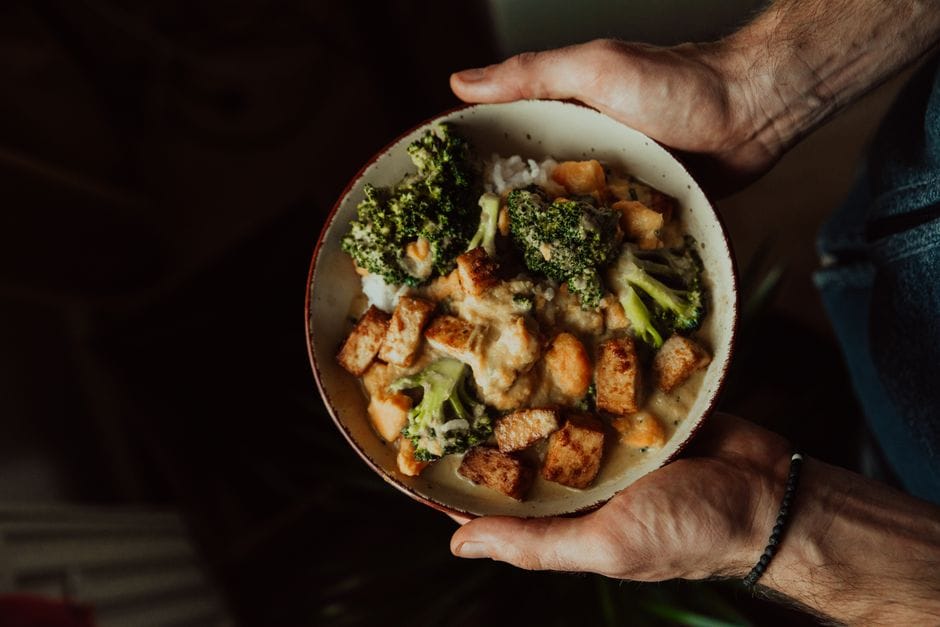 Photo: Alesia Kozik / Pexels
This is the from-scratch route, and it is built on vital wheat gluten, the same powdered wheat protein behind all homemade seitan. If you have never worked with it, my full guide to making seitan covers the fundamentals, and this recipe is essentially a poultry-seasoned, deliberately stringy version of that.
Here is the part that surprised me most, because it is the exact opposite of making sausage. For a tender sausage crumb you knead as little as possible.
For shreddable chicken you do the reverse: you knead hard, for a full four or five minutes, because you actually want a strong, tight gluten network. Tight gluten is what gives you long fibers instead of a soft crumb.
Then you take that tough dough and stretch it into a rope, fold it, and stretch it again, ten times over. That stretch-and-fold aligns all the strands in one direction, like combing tangled hair straight.
When the cooked, cooled seitan finally gets pulled apart along that grain, it tears into ropes that genuinely look like shredded chicken breast.
Why You Simmer, Not Boil
The cooking liquid matters as much as the dough. I simmer the seitan slab in a full quart of strong no-chicken broth, and the temperature has to stay at a bare, lazy simmer, the kind where a bubble breaks the surface every couple of seconds. Never a rolling boil.
A hard boil is the single fastest way to wreck this. Violent water forces the seitan to expand and trap air, and you get a bloated, spongy, bready texture that no longer pulls into clean strands.
I learned this on batch number two, when I walked away and let the pot reach a proper boil, and came back to a puffed-up gray lump that tasted like a wet dinner roll. Gentle heat keeps the protein compact and the fibers intact.
The broth is also doing flavor work the whole time, seasoning the seitan from the outside in over those 45 minutes. This is why a flavorful simmering liquid matters and why I never simmer seitan in plain water.
When in doubt about whether a particular bouillon or broth concentrate is vegan, I run it through our vegan ingredient checker rather than guess, because a few brands still tuck in chicken fat or whey.
The Trick to a Genuinely Stringy Pull
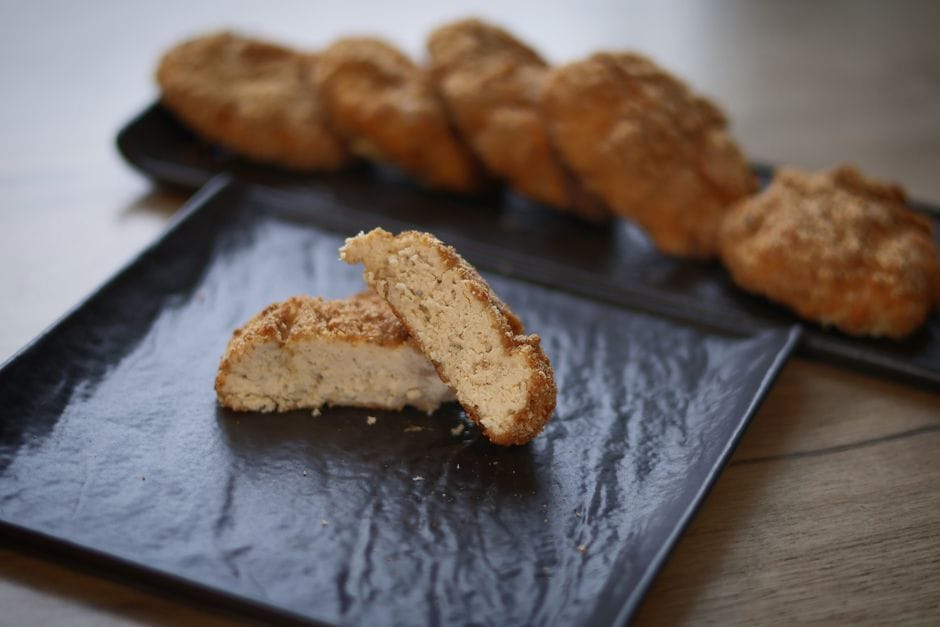 Photo: Project of food / Pexels
Two things decide whether your seitan shreds like chicken or crumbles like a veggie burger. The first is the stretch-and-fold I already mentioned, which builds the grain. The second is temperature when you pull it.
Cold seitan shreds dramatically better than hot. Straight out of the simmering broth the protein is soft, slippery, and a little fragile, so it tends to mash and crumble when you try to tear it.
Let it cool down to at least room temperature, and ideally chill it in the fridge overnight, and the strands firm up and separate cleanly. I now make the slab a day ahead almost every time, because cold-pulled seitan gives me those long, satisfying ropes, while hot-pulled gives me sad little nuggets of fluff.
When you do pull it, use two forks or just your fingers and always follow the direction you stretched the dough. Going across the grain shortens the fibers and ruins the effect. Go with it, and a single slab unravels into a generous pile of shreds that you would not look twice at in a taco or a sandwich.
Method Two: Soy Curls, the Easy Win
Now for the method I reach for on a Tuesday when I do not want to knead anything. Soy curls are made from whole soybeans that have been cooked, textured, and dried, and the dominant brand by a mile is Butler Soy Curls, sold as dry, pale, twisty strips.
They are already fibrous, which means they skip the entire problem of building strands. The fiber is built in. They are also naturally gluten-free, so they are the move if wheat is off the table for you.
The method is almost embarrassingly simple. Cover the dry curls with hot, strong no-chicken broth and let them sit for about ten minutes until they plump up and go soft and pliable.
Then, and this step is the one people skip, squeeze them firmly to wring out the excess liquid, because waterlogged curls will steam in the pan instead of browning. Once they are squeezed dry, toss them with poultry seasoning, a little soy sauce, garlic and onion powder, and a teaspoon of cornstarch.
That cornstarch is the secret to a crisp, lacquered edge.
Then fry them hard. Heat a couple of tablespoons of oil in a wide skillet over medium-high and spread the curls in a single layer, pressing them down and letting them sit undisturbed so they catch and crisp.
You want browned, chewy, slightly crunchy edges, the texture of a good chicken stir-fry. In ten minutes of total active work you have a pile of savory, fibrous vegan chicken that holds up in fajitas, curries, a barbecue sandwich, or straight off the cutting board.
For more pantry proteins that work the same fast, fry-and-season way, our vegan substitutes hub is full of them.
Frying, Battering, and Making Nuggets
Both methods turn into proper fried chicken and nuggets with the same approach, and you do not need anything fancy or boozy to get a shatteringly crisp crust. Skip any beer-batter recipe you find, a plain seasoned flour-and-plant-milk system fries up just as crunchy.
Set up a simple double dredge. In one bowl, whisk plant milk with a tablespoon of dijon or a spoon of vegan mayo to help it cling.
In a second bowl, season flour generously with the same poultry herbs, plus paprika, garlic powder, salt, and a good amount of black pepper. For extra crunch I add a few tablespoons of cornstarch to the flour, which fries lighter and crispier than flour alone.
Take a piece of seitan or a clump of soy curls, dip it in the wet, dredge it in the seasoned flour, then dip and dredge a second time. That double coat is what builds the craggy, brittle crust.
Fry in oil at a steady medium-high, around 350F, until deep golden and crisp, about three to four minutes, turning once. Do not crowd the pan, because cold pieces crash the oil temperature and you end up with a greasy, pale coating instead of a crisp one.
For nuggets, cut the seitan into bite-size chunks before you dredge, or press soy curls into small clumps. Drain on a rack, not paper towels, so the bottoms stay crisp.
A swipe of vegan mayo whisked with hot sauce and a little maple makes the dipping sauce I always come back to.
Is Store-Bought Vegan Chicken Vegan, and Which Brands Are Best
Here is the honest answer: most dedicated plant-based chicken is vegan, but not all meatless chicken is, and the difference matters. The classic offender is Quorn, whose mycoprotein patties and breaded products often contain rehydrated egg white as a binder, which makes them vegetarian but not vegan.
Some older vegetarian ranges did the same with egg or milk. The reassuring news is that the major plant-based brands have moved away from this, and even MorningStar reformulated its Original Chik'n Patties to be fully vegan, but I still read the allergen line every single time, and when a label leaves me guessing I check our Is It Vegan database before buying.
A Vegan Society trademark on the front is the cleanest signal you can ask for.
As for which to actually buy, here is my take after working through most of them. Gardein is the most available and the most versatile, and their Ultimate Plant-Based Chick'n Filets and tenders are built on a soy, wheat, and pea protein blend with a few grains, so they fry crisp and shred reasonably well, all fully vegan.
Daring makes my favorite pieces, a remarkably short ingredient list of mostly soy protein and sunflower oil, no gums or methylcellulose, and it has a genuinely chicken-like pull that takes a marinade beautifully, plus it happens to be gluten-free. Tofurky's Slow Roasted Chick'n is the most seitan-forward of the three, built on vital wheat gluten and tofu, denser and chewier, fantastic sliced cold into a salad or sandwich where you want real bite.
If you want one all-rounder that is easy to find, Gardein. If you want the cleanest ingredient list and the best plain texture, Daring. If you want something hearty and sliceable that eats like homemade seitan, Tofurky.
None of them, for the record, is cheaper than the from-scratch slab above, which is the main reason I still make my own.
A Few Honest Notes Before You Start
The seitan method is built entirely on wheat gluten, so it is emphatically not gluten-free, and there is no swap that makes it so, because the gluten is the structure. If wheat is off your table, the soy curls are your method, full stop, and they get you to a similar place with zero gluten involved.
Soy curls do contain soy, obviously, so they are out if you are avoiding that instead.
Both of these are leaner and cleaner than most packaged options, but they are still a made thing, not a magic health food, so I treat them as one good protein among many. Across a week I rotate them with beans, lentils, and tofu, and if you want a fast, weeknight protein to round things out, our guide to cooking tofu pairs perfectly alongside a batch of either of these.
The whole game comes down to one idea: vegan chicken lives or dies on texture, not flavor. Build a tight gluten and align the strands by stretching, simmer gently so they stay intact, cool the seitan before you pull it, and always finish with a hard sear.
Or skip all of that, rehydrate soy curls in a strong broth, squeeze them dry, and fry them crisp. Get the strings right and the poultry herbs and good broth do the rest, and you stop missing chicken entirely.
The recipe
Hand-Pulled Shredded Seitan Chicken
Prep
20 min
Cook
50 min
Makes
4 servings (about 600 g shredded)
Ingredients
- 1 1/2 cups (180 g) vital wheat gluten, the protein that gives the chew and lets it pull into strands (Bob's Red Mill or Anthony's)
- 3 Tbsp chickpea flour or all-purpose flour, to soften the bite so it isn't pure rubber
- 1 cup (240 ml) warm no-chicken broth, the main flavor (Better Than Bouillon No Chicken Base, mixed strong)
- 2 Tbsp nutritional yeast, for savory, slightly poultry-stock depth
- 1 Tbsp soy sauce or tamari, the salt and umami base
- 1 Tbsp neutral oil, plus 1 tsp white miso if you have it, for richness and rounded savoriness
- 1 1/2 tsp poultry seasoning (sage, thyme, marjoram, rosemary), the flavor that reads as chicken
- 1 tsp onion powder, 1 tsp garlic powder, 1/2 tsp white pepper, the savory base layer
- 1 quart (1 L) extra no-chicken broth, for simmering the dough
Instructions
- 1 Whisk the vital wheat gluten, chickpea flour, nutritional yeast, poultry seasoning, onion powder, garlic powder, and white pepper in a large bowl.
- 2 Stir the 1 cup warm broth, soy sauce, oil, and miso together, then pour into the dry mix. Stir with a fork until it pulls into a shaggy dough.
- 3 Knead hard for 4 to 5 full minutes. Unlike sausage, you WANT to develop the gluten here, because tight aligned strands are what shred. The dough will feel tough and elastic.
- 4 Stretch the dough into a long rope, fold it back on itself, and stretch again. Repeat this stretch-and-fold ten times. This lines up the strands in one direction so it pulls apart later. Rest 10 minutes.
- 5 Bring the 1 quart of broth to a bare simmer (never a hard boil). Flatten the dough into a slab about an inch thick and lower it in. Keep it at the gentlest simmer, partly covered, for 45 to 50 minutes, turning once.
- 6 Lift the cooked seitan out and let it cool until you can handle it, at least 15 minutes. It firms up as it cools and shreds far more cleanly cold than hot.
- 7 Pull the seitan apart along the grain with two forks or your fingers. Follow the direction you stretched it and it tears into long ropes rather than crumbs.
- 8 Pan-fry the shreds in a little oil over medium-high until the edges go crisp and golden. This browning step is non-negotiable, it turns pale boiled protein into something that tastes finished.
Notes
- ·The simmer must stay gentle. A rolling boil puffs the seitan into a spongy, bloated texture and you lose the tight strands you worked to build.
- ·Cold seitan shreds best. If you can make the slab a day ahead and refrigerate it overnight, the strands separate even more cleanly.
- ·For cutlets instead of shreds, skip the stretch-and-fold, press the dough into flat patties, and simmer those. Less alignment means a more solid, less stringy bite.
Calories
210 per serving
Protein
32 g
Fat
5 g
Carbs
12 g
Frequently asked questions
Is store-bought vegan chicken actually vegan?+
The big plant-based brands are, but not every meatless chicken is. Gardein, Daring, and Tofurky are all fully vegan with no egg or dairy. The trap is the older vegetarian-but-not-vegan products: Quorn's classic breaded patties contain rehydrated egg white, and some legacy meat-free ranges sneak in egg or milk as a binder. The word plant-based on the front is your green light, but I still read the allergen line every time, because formulas change without warning.
How do you get vegan chicken to shred into strings?+
Stringiness comes from aligning the gluten, not from any special ingredient. After you mix vital wheat gluten into a dough, you knead it hard to develop the protein, then stretch and fold it repeatedly so the strands line up in one direction. Once it is cooked and cooled, you pull it apart along that grain and it tears into ropes instead of crumbs. Soy curls cheat their way to the same result, because they are already fibrous and just need rehydrating.
What seasonings make vegan chicken taste like chicken?+
Two things do almost all the work: poultry herbs and a genuinely good broth. The classic poultry blend is sage, thyme, marjoram, and a little rosemary, the exact herbs in old-fashioned chicken stuffing. For the savory chicken backbone, use a no-chicken bouillon like Better Than Bouillon No Chicken Base or a Not-Chick'n cube. Add nutritional yeast for roundness and a pinch of white pepper. That combination reads as poultry to almost everyone.
Are soy curls or seitan better for vegan chicken?+
They solve different problems. Soy curls are faster and almost foolproof: you rehydrate, squeeze, season, and fry, with no kneading and no gluten to fight. Seitan takes more effort but gives you a denser, meatier, more sliceable result you can shape into cutlets or shred into long strands. I keep soy curls in the pantry for weeknight tacos and stir-fries, and I make seitan when I want a centerpiece. Soy curls are also naturally gluten-free, which seitan can never be.
Written by
VeganDigest Editorial is the small independent team that researches and fact-checks this site. We are not doctors or dietitians. For every is-it-vegan verdict we read the product's current ingredient list and manufacturer information, and for anything health-related we report guidance from recognized bodies such as the NHS, the Vegan Society, and the Academy of Nutrition and Dietetics rather than offering medical advice. Every page shows the date it was last verified, and our full process is on the How We Verify page.
Comments