Vegan Chocolate Ganache (2 Ingredients)
- Gluten-free
- Nut-free
- Soy-free
In this guide7
The first time I made ganache without dairy I assumed it would be a downgrade, some compromise version that almost worked. I had a half-eaten can of coconut cream in the fridge and a bar of dark chocolate I had been saving, and I poured the warm cream over the chopped chocolate mostly out of curiosity.
Three minutes of waiting, a slow whisk from the center out, and I was staring at a bowl of glossy, thick, mirror-shiny ganache that looked exactly like the photos in pastry books. I genuinely could not tell it apart from the dairy version I grew up eating.
I have made it dozens of times since, for cakes, for truffles I rolled at midnight, and for the nights I just eat it warm off a spoon, which I will not apologize for.
Here is the thing nobody tells you about ganache: it is the easiest fancy thing in the kitchen. It is two ingredients. There is no sugar to caramelize, no eggs to temper, no candy thermometer.
The only ways to mess it up are using the wrong chocolate or being impatient with the heat, and I will walk you through both. Below is my reliable two-ingredient recipe, the exact ratios for glaze versus truffles versus frosting, how to know which chocolate is actually vegan, how to rescue a split batch, and what to pour it over.
Why regular ganache is not vegan
Traditional ganache is famously simple: hot heavy cream poured over chopped chocolate, stirred into a smooth emulsion. The problem is both halves can carry dairy. The cream is obviously dairy, the whole point of it being cream.
But the chocolate is the sneakier issue, because plenty of dark chocolate and nearly all milk chocolate contain milk solids or milk fat, even bars that look plain and serious.
So a standard ganache is usually not vegan twice over. That sounds like bad news, but it actually makes ganache one of the friendliest dairy products to rebuild, because you only have two things to swap and both have clean plant replacements.
You replace the cream with a rich coconut cream and you pick a chocolate that left the milk out. That is the entire conversion.
If you want the deeper version of how dairy cream behaves and what plant fats stand in for it, my notes on a proper vegan heavy cream cover the same logic from the savory and pourable side.
What you do not have to worry about is sugar or cocoa itself. Cocoa solids, cocoa butter, and sugar are all plant-based. The dairy is the only dealbreaker, which is why a good dark bar plus a good coconut cream gets you all the way there.
Which chocolate is actually vegan
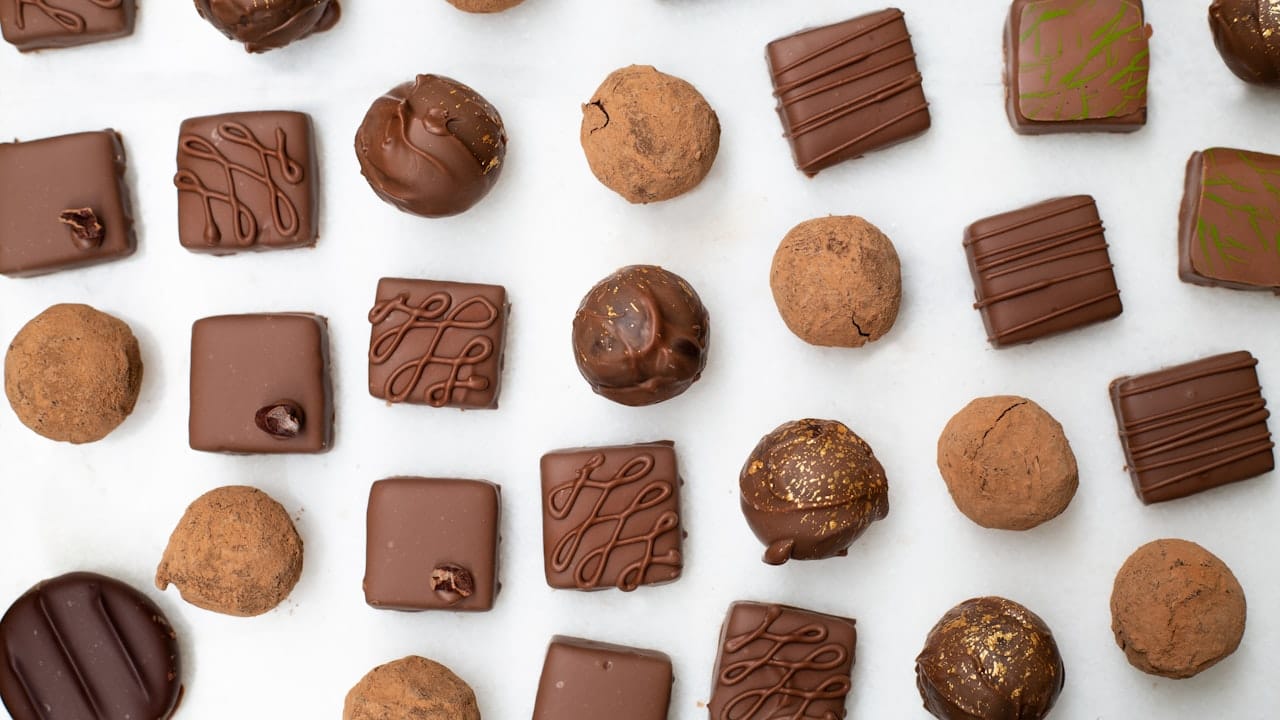 Photo: Jessica Loaiza / Unsplash
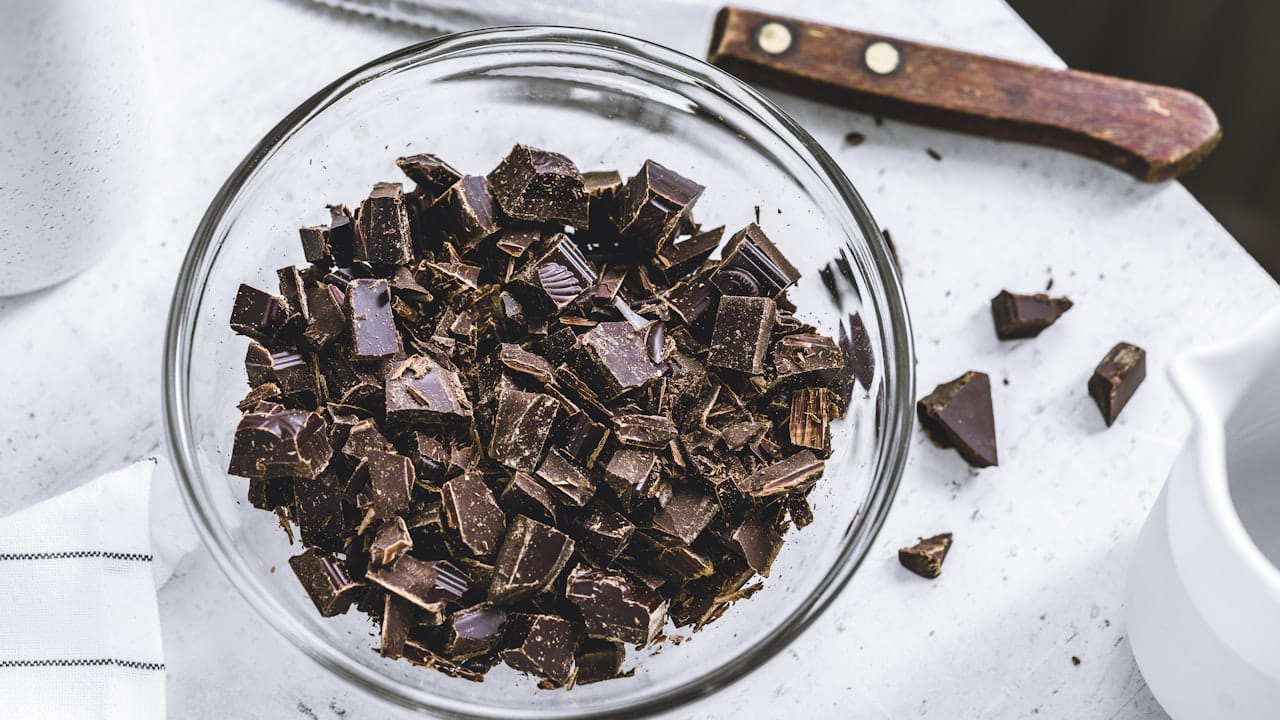
This is the step that trips people up, so slow down here. Cocoa butter and cocoa solids are vegan, but milk fat and milk solids are extremely common additives, and they hide in bars you would assume were safe. The label is the only thing that matters.
Flip the bar over and read the ingredients, not the marketing on the front.
Dark chocolate is your best bet, generally anything 60 percent cacao and up, because the higher the cocoa percentage, the less room there is for milk. But "dark" is not a guarantee.
I have picked up 55 percent "dark" bars that listed milk fat right there in the ingredients. What you are scanning for is any mention of milk, milk solids, milk fat, milk powder, whey, or casein. If none of those appear, you are good.
The phrase "may contain milk" is a cross-contamination warning, not an ingredient, so that is a personal call rather than a hard no.
Brands I reach for and trust: Tony's Chocolonely dark (their 70 percent and 85 percent), Hu Kitchen dark bars, Endangered Species dark, Lily's dark chips, Enjoy Life chocolate chips (made in a fully dairy-free facility, which I love for nervous bakers), and Guittard's Extra Dark and Bittersweet chips. Many supermarket own-brand dark cooking bars are also incidentally vegan, so do not overlook the cheap option.
When I am genuinely unsure about an unfamiliar bar, I run it through the vegan ingredient checker before it goes in the bowl, or cross-reference it in the Is It Vegan database so I am not squinting at a label in the baking aisle.
The two ingredients you actually need
The recipe card up top really is two core ingredients, and I want to be honest about that, because plenty of "easy" ganache recipes quietly need butter, corn syrup, and three other things. Mine is chopped vegan dark chocolate and full-fat coconut cream. Everything else on that list is marked optional and the ganache works completely without it.
The chocolate is the flavor and the structure. Chop it finely, the finer the better, because small even pieces melt the instant the hot cream hits them. Big chunks are how you end up whisking forever and still finding a stubborn lump at the bottom.
Chips work too, though some are formulated to hold their shape and melt a touch slower, so give them an extra minute.
The coconut cream is the richness and the body that lets it set. You want the thick stuff, either a can labeled coconut cream or the solid top layer scooped off a chilled can of full-fat coconut milk.
Skip lite cans and skip carton coconut drink, because there is not enough fat to build a real emulsion and your ganache will stay loose and weepy no matter how long it cools. The faint coconut note mostly disappears behind dark chocolate, but if you are sensitive to it, a thick homemade cashew cream is a clean, neutral alternative I use often.
The glaze vs truffles vs frosting ratio
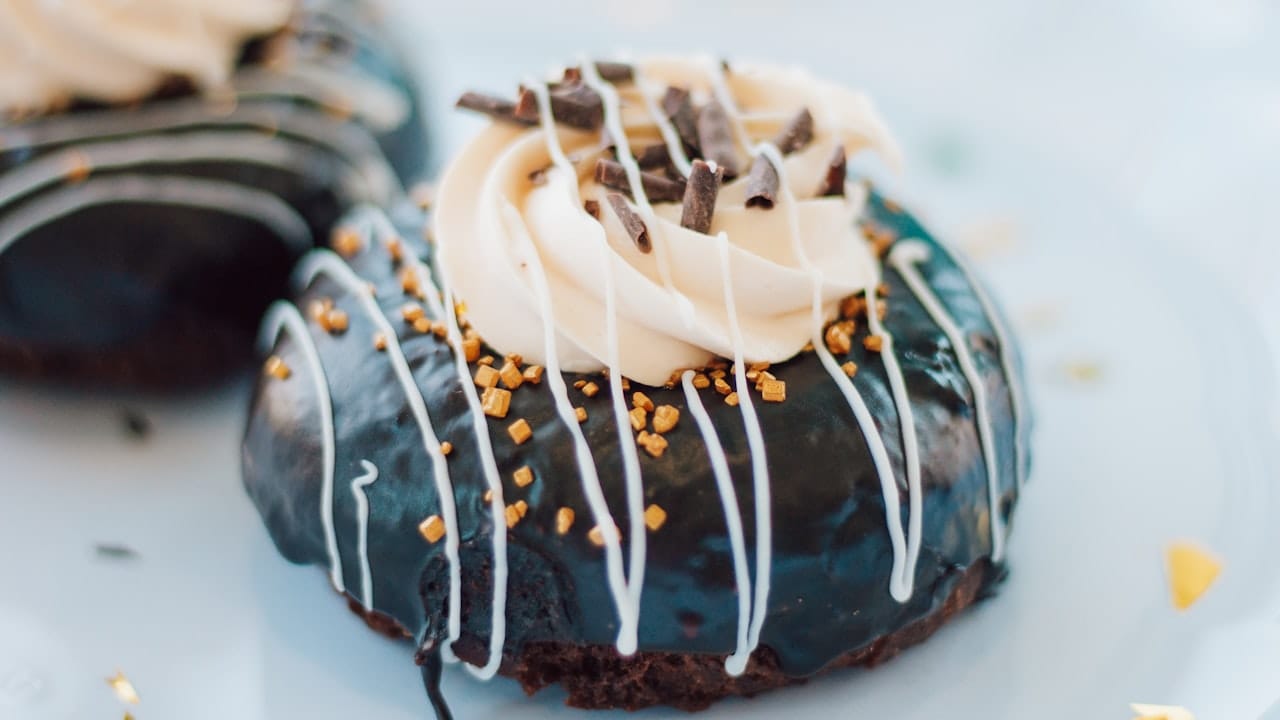 Photo: Shayna Douglas / Unsplash
This is the part that turns one recipe into ten, and it all comes down to the ratio of chocolate to cream by weight. Same two ingredients, same method, wildly different results depending on the proportion. Weigh them if you can, because volume measuring chocolate is genuinely unreliable.
For a pourable glaze, use a 1:1 ratio, equal weights of chocolate and coconut cream. This is what you want for the shiny mirror coating that drips down the sides of a cake or doughnut. It stays glossy and soft once set, so it slices cleanly without cracking.
This is the dreamy drip-cake finish, and a teaspoon of refined coconut oil pushes the shine even higher.
For truffles and firm fillings, go 2:1, twice as much chocolate as cream. The extra chocolate makes a dense, fudgy ganache that firms up enough in the fridge to scoop and roll by hand.
After a couple of hours chilled, roll teaspoon-sized balls, then coat them in cocoa powder, chopped nuts, or melted chocolate. This same firm ganache is what you pipe into tart shells.
For a whipped frosting, use about 1.5:1, then cool the ganache to room temperature and whip it with a hand mixer for a minute or two. It lightens in color, gains air, and turns into a fluffy, spreadable frosting that pipes beautifully.
If you want something lighter still, my vegan buttercream frosting guide goes the airy, sweeter route, but whipped ganache is the move when you want intense, grown-up chocolate.
How to fix a split or grainy ganache
A broken ganache looks oily, separated, or weirdly grainy instead of one smooth shiny mass, and it happens to everyone eventually. The good news is it is almost always rescuable, so do not throw it out.
Splitting comes from one of two things: the cream got too hot and hard-boiled, which forces the fat to separate, or the ratio drifted too fat-heavy and the emulsion could not hold.
The standard fix is to add a small amount of cool liquid and whisk hard. Add 1 tablespoon of cold plant milk or cold coconut cream and whisk vigorously from the center.
The cooler liquid drops the temperature and gives the fat something to bind back into, and more often than not it snaps back into a glossy emulsion within thirty seconds. If one tablespoon does not do it, add another and keep whisking.
If it is truly stubborn, the nuclear option works: pour the whole broken mess into a blender or use an immersion blender and let it rip for a few seconds. The high-speed shear forces the fat and liquid back into emulsion almost every time.
I have salvaged ganache I was sure was a lost cause this way. To avoid the problem entirely, never let your coconut cream reach a rolling boil, just steaming with bubbles at the edge, and let the chocolate sit undisturbed in the hot cream for the full two to three minutes before you start stirring.
Is store-bought vegan ganache or frosting any good
If you do not want to make it, there are dairy-free options, but you have to hunt. Most tub frostings and bakery ganaches are built on butter, cream, or milk solids, so the default answer at the supermarket is no. Read every label, because chocolate frosting is one of the most reliably dairy-laden products on the shelf.
The dedicated dairy-free ones I have actually liked: Simple Mills frosting, Miss Jones Organic frosting (several of their flavors are vegan, check the specific tub), and Pillsbury's classic chocolate fudge frosting, which is one of those accidentally-vegan mainstream products people are always surprised by. Always confirm on the current label, since formulas change.
Honestly though, ganache is so fast and so much better fresh that I almost never buy it. Twelve minutes start to finish beats anything from a tub. When a label has me genuinely stumped, I default to the Is It Vegan database rather than guessing.
According to The Vegan Society, avoiding animal-derived ingredients is the core of a vegan diet, and milk solids in chocolate are exactly the kind of hidden additive that catches people out. That is why the label habit matters more than the brand.
What to actually do with it
This is where ganache earns its keep. Warm and pourable, it glazes cakes, doughnuts, eclairs, and brownies, or you pour it straight over a bowl of fresh strawberries and call it dessert. Cooled to room temperature, it spreads as a thick frosting or sandwiches between cake layers.
Chilled firm, it becomes truffles, tart filling, or the fudgy center of a thumbprint cookie.
My favorite low-effort uses: a spoonful melted into hot oat milk for the richest fake-fancy hot chocolate, drizzled over a scoop of vegan ice cream, or spread on toast like a luxurious chocolate butter. It also makes an outrageous dip for fruit at a party.
If you are building a fuller dessert spread, it pairs naturally with a homemade vegan caramel for a salted-caramel-and-chocolate situation that disappears fast.
Store leftover ganache in a sealed jar in the fridge for up to two weeks. It sets very firm when cold, so let it sit at room temperature for fifteen minutes or warm it gently and stir before using.
It also freezes well for up to three months, which means you can keep a stash and have proper ganache on a Tuesday with five minutes of notice.
That is the whole thing. Two ingredients, one bowl, and a ratio you adjust depending on whether you want it to pour, pipe, or roll.
Pick a dark bar with no milk on the label, use the thick part of a full-fat coconut can, keep the heat gentle, and wait the full three minutes before you whisk. Do that and you will never need the dairy version again.
Make a small batch tonight just to prove to yourself how easy it is, and I promise the next time someone asks how you made a dessert look that glossy, you will enjoy telling them it was two ingredients and twelve minutes.
The recipe
2-Ingredient Vegan Chocolate Ganache
Prep
5 min
Cook
3 min
Makes
about 1 cup (240 ml), enough to glaze one 8-inch cake or make 20 truffles
Ingredients
- 200 g (7 oz) vegan dark chocolate, finely chopped, or good-quality dark chocolate chips (use 60 to 70 percent cacao; check the label says no milk, milk solids, or milk fat)
- 120 ml (1/2 cup) full-fat canned coconut cream, the thick part from a chilled can (the richer and thicker the can, the firmer it sets; lite cans stay loose and will not work)
- 1 pinch fine sea salt (optional but worth it; it sharpens the chocolate and stops it tasting flat)
- 1/2 tsp alcohol-free vanilla extract (optional, stirred in at the end for a rounder finish)
- 1 tsp refined coconut oil (optional, for an extra glossy mirror-shine glaze)
- 1 to 2 Tbsp warm plant milk (optional, kept aside to loosen the ganache if it sets too thick to pour)
Instructions
- 1 Chop the chocolate finely and place it in a heatproof bowl. Small even pieces melt fast and evenly, which is the whole secret to a smooth ganache; big chunks leave you with unmelted lumps.
- 2 Warm the coconut cream in a small saucepan over medium heat until it just begins to steam and shows tiny bubbles at the edges. Do not let it reach a hard boil, because boiling fat is what splits ganache.
- 3 Pour the hot cream straight over the chopped chocolate so it covers it. Let it sit undisturbed for 2 to 3 minutes; rushing this is the most common reason for graininess.
- 4 Starting from the center, whisk in small slow circles. It will look broken and patchy at first, then suddenly pull together into a glossy, uniform ganache as you keep going outward.
- 5 Stir in the salt, vanilla, and optional coconut oil until completely smooth and shiny. If it looks even slightly oily or separated, whisk in 1 Tbsp warm plant milk to bring it back.
- 6 Use it warm and pourable as a glaze, let it cool to room temperature for a thick frosting, or chill it for 1 to 2 hours until firm enough to scoop and roll into truffles.
Notes
- ·Ratios by use: 1:1 chocolate to cream by weight for a pourable glaze, 2:1 for firm truffles and fillings, and 1.5:1 cooled and whipped for a fluffy frosting.
- ·If your only coconut cream is a can of full-fat coconut milk, chill it overnight and scoop only the thick top layer; the watery liquid at the bottom will keep it from setting.
- ·For coconut-free ganache, swap the coconut cream for an equal amount of thick blended cashew cream or barista soy cream and proceed exactly the same way.
Calories
150 per 2 Tbsp
Protein
2 g
Fat
11 g
Carbs
12 g
Frequently asked questions
Why is regular ganache not vegan?+
Classic ganache is just two things: chocolate melted into hot heavy cream. The cream is dairy, and many milk and even some dark chocolates contain milk solids or milk fat, so the standard version is doubly not vegan. The swap is simple though. Use a certified dairy-free dark chocolate and pour hot full-fat coconut cream over it instead of dairy cream, and you get the same glossy, pourable ganache.
Can I make vegan ganache without coconut?+
Yes. Full-fat coconut cream is my default because it is rich enough to set firmly, but a thick cashew cream or a barista-style soy cream also works. Carton oat and almond milks are too thin and will give you a loose, sad sauce that never firms up. If you want zero coconut flavor, refined coconut oil or a good cashew cream are the cleanest-tasting routes.
Is store-bought ganache or chocolate frosting vegan?+
Most tub frostings and bakery ganaches are not vegan because they are built on butter, cream, or milk solids. A few dedicated dairy-free options exist, like Simple Mills frosting and Miss Jones organic frosting, and plenty of dark chocolate bars (Tony's dark, Hu, Endangered Species dark, Lily's) are vegan and make excellent ganache from scratch. Always read the label, since 'may contain milk' and an actual milk ingredient are different things.
Why did my vegan ganache split or turn grainy?+
A split ganache almost always means the temperature got too aggressive or the fat ratio was off. If your coconut cream boiled hard or your chocolate scorched in the microwave, the fat separates out and the mix looks oily and broken. The fix is to whisk in a tablespoon of cold plant milk or coconut cream a little at a time until it pulls back together into one smooth, shiny mass.
Written by
VeganDigest Editorial is the small independent team that researches and fact-checks this site. We are not doctors or dietitians. For every is-it-vegan verdict we read the product's current ingredient list and manufacturer information, and for anything health-related we report guidance from recognized bodies such as the NHS, the Vegan Society, and the Academy of Nutrition and Dietetics rather than offering medical advice. Every page shows the date it was last verified, and our full process is on the How We Verify page.
Comments