Vegan Caramel Sauce (Coconut, 4 Ingredients)
- Gluten-free
- Nut-free
- Soy-free
In this guide8
I burned my first three attempts at vegan caramel, and not because the recipe was hard. It was because I kept treating it like the dairy version I grew up watching my aunt make, standing over the pan waiting for melted white sugar to turn dangerous amber, then panicking and throwing in cold liquid.
With coconut caramel you do not need any of that drama. There is no scary dry-caramel stage, no seized sugar, no splattering cream. You barely have to watch it.
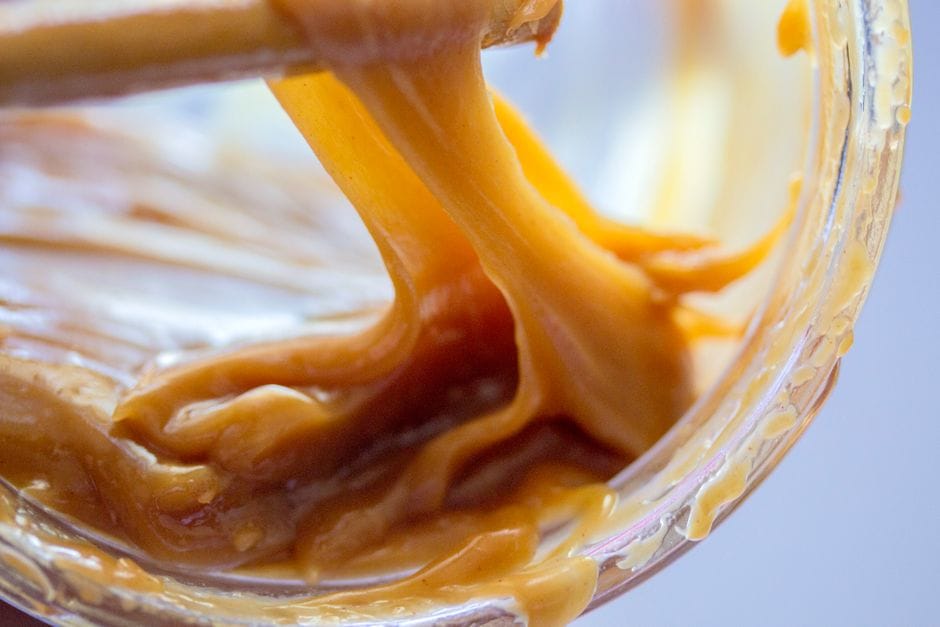
Once I stopped overcomplicating it, I had a thick, glossy, properly caramel-tasting sauce on apple slices within twenty minutes, and I have not bought a jar since.
What clicked for me is that caramel is not really about the technique people make it sound like. It is sugar plus fat plus a little salt, cooked until it goes deep and sticky.
Swap the dairy fat for coconut fat and you get the same result with none of the animal products. Below is my reliable 4-ingredient sauce, a no-cook date version for when I cannot be bothered to stand at the stove, how to turn either into salted caramel, what to actually pour it over, and which store-bought jars are genuinely vegan.
Why regular caramel is not vegan
Plain caramel sounds like it should be vegan, because it starts as sugar, and sugar is a plant. The problem is what comes next. A classic caramel sauce melts sugar until it browns, then gets loosened and enriched with two things: butter and heavy cream.
Both are dairy. That is what gives traditional caramel its silky body and that buttery, almost toffee richness, and it is exactly why the standard sauce is off the table.
So when a recipe or a jar says caramel, the issue is almost never the sugar. It is the butter and the cream stirred in at the end. That actually makes caramel one of the easier dairy products to recreate, because you only have to replace the fat.
Recreate the richness with coconut and you have rebuilt the whole thing. If you want the long version of how dairy fat behaves and what plant fats can stand in for it, my notes on vegan butter cover the same swap from the savory side.
There is one footnote worth knowing. In some regions, cane sugar is filtered through bone char, which is not vegan, so a strict vegan might prefer organic or beet sugar.
That is a real consideration for your own pantry, but it is separate from why dairy caramel is a problem. The dairy is the dealbreaker; the sugar is a fine-print preference.
The 4 ingredients you actually need
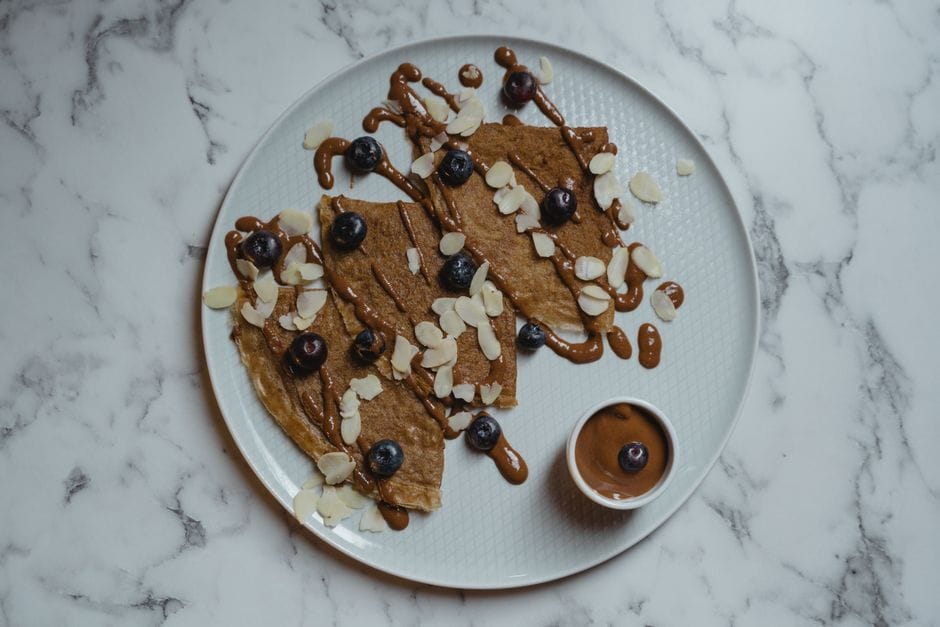 Photo: Tima Miroshnichenko / Pexels
The sauce in the card above really is four core ingredients, and I want to be honest about that count because plenty of "simple" caramel recipes quietly need eight. Mine needs coconut milk or coconut cream, brown sugar, salt, and a little alcohol-free vanilla. Everything else on that list is marked optional, and the sauce works completely without them.
Coconut milk or coconut cream is the fat and the body. Use a full-fat can, ideally one that is thick and almost solid when you open it. The richer the can, the faster it reduces and the deeper the flavor.
Coconut cream gives the most luxurious result; full-fat coconut milk is slightly looser but still excellent. What does not work is a lite can or a thin carton coconut drink, because there is not enough fat to build that sticky caramel body, and you will stir forever while it stays watery.
Brown sugar is doing the heavy lifting on flavor. White sugar makes caramel too, but brown sugar already carries molasses, which is the shortcut to that deep, almost burnt-sugar taste without having to actually scorch anything.
Dark brown sugar leans richer and more toffee-like; light brown stays sweeter and more golden. Salt is the third ingredient and it is not negotiable, because without it the sauce tastes one-note and cloying. The fourth is vanilla, stirred in off the heat.
I use alcohol-free vanilla extract or vanilla powder, both because of how this site cooks and because high heat blows off the delicate vanilla notes anyway.
How to make the cooked coconut caramel
The method is genuinely forgiving, but a few details separate glossy caramel from a grainy, scorched mess, so let me walk through what I learned the hard way.
Use a wide pan. This is the tip I wish someone had drilled into me at attempt one. A wide, heavy saucepan gives you surface area, so the water evaporates fast and you are done in under twenty minutes.
A narrow, deep pot traps the liquid and you will be stirring forever wondering why it will not thicken.
Keep the heat low once it bubbles. Sugar and coconut want to catch on the bottom of the pan, and the second they do, you get a bitter burnt note you cannot stir back out. A steady, lazy simmer with regular scraping is the entire technique.
There is no dramatic dry-caramel stage to fear here; you are reducing, not flirting with a sugar fire.
Stop early. This one cost me a batch.
Caramel thickens dramatically as it cools, so the texture you want in the pan is noticeably looser than your final goal. My first decent batch looked perfect and pourable hot, so I kept going for insurance, walked away, and came back to something closer to a chewy toffee block welded to the jar. Now I pull it off the heat the moment a spoon-line holds for a second before closing, and it sets into exactly the right pourable thickness once chilled.
If it does set too firm, a teaspoon of warm water stirred in loosens it right back.
The no-cook date caramel
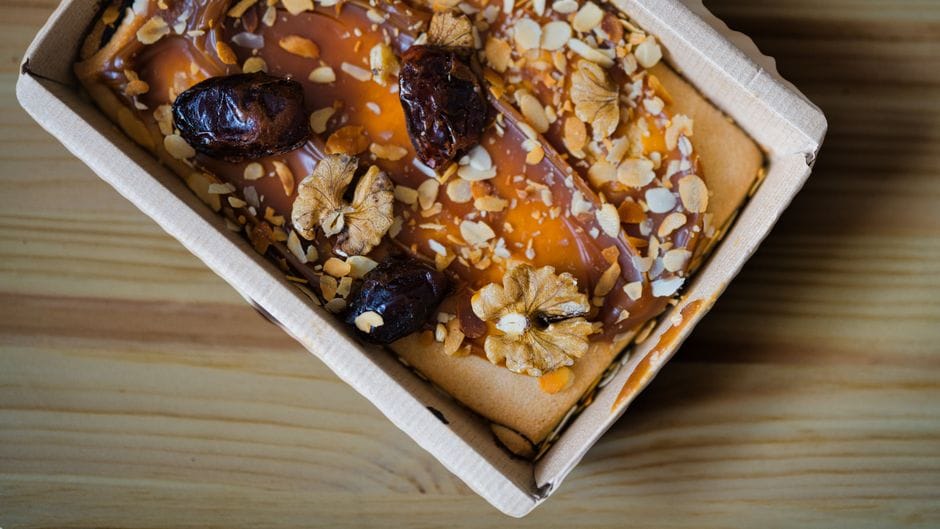 Photo: Grzegorz Lewandowski / Pexels
Some nights I do not want to stand at a stove at all, and that is where date caramel earns its place. It is the version I make for my niece because there is no hot sugar anywhere near her, and it happens to be coconut-free, which helps if coconut is not your thing.
It could not be simpler. Soak about a cup of pitted soft dates, Medjool if you can get them, in just-boiled water for ten minutes until they are squishy, then drain.
Blend them with three to four tablespoons of plant milk, a good pinch of salt, and a splash of alcohol-free vanilla until completely smooth, scraping down the sides and adding milk a little at a time until it goes thick and glossy. That is the whole recipe.
For the plant milk, any neutral one works; if you make your own, the guide to plant milks explains why fattier milks blend smoother here.
I will be straight about the trade-offs, because I have served both side by side. Date caramel tastes fudgy and rich and reads convincingly as caramel, but it has a faint date fruitiness and it does not pour thin like the cooked sauce; it is more of a thick, spoonable dip or spread.
It is incredible on apple slices and swirled into oatmeal, less ideal drizzled over ice cream where you want it to run. For pourability, cook the coconut version. For a five-minute, no-stove, whole-food option, dates win.
Turning it into salted caramel
Salted caramel is barely a separate recipe; it is the regular sauce with intent. Both versions above take to salt beautifully, and getting it right is mostly about when and how much you add.
For the cooked coconut sauce, I build salt in two stages. The quarter teaspoon of fine sea salt that goes in at the start seasons the whole thing from within so it never tastes flat.
Then, off the heat, I stir in or sprinkle on a pinch of flaky sea salt, something with crunch like Maldon, so you get little bursts of salt against the sweetness rather than an even saltiness throughout. Dark brown sugar makes the most grown-up salted caramel because the molasses depth stands up to the salt.
For the date version, just blend in an extra pinch of fine salt and taste as you go, since dates are sweet enough to carry a surprising amount. The mistake I made early on was adding all the salt while it was hot, tasting it warm, deciding it was fine, then finding it muted once cold.
Cold dulls both sweet and salty, so I now season it a touch bolder than seems right while it is warm, and it lands perfectly chilled.
What to pour vegan caramel over
This is where the sauce earns its jar space, because caramel makes ordinary things feel like a treat with almost no effort.
- Apple slices. The classic, and the one I make most. Cold crisp apple dragged through warm caramel is the whole reason I keep a jar in the fridge. The thicker date version clings best here.
- Ice cream. Warm the cooked coconut sauce slightly so it runs, then pour it over vegan vanilla ice cream. A pinch of flaky salt on top turns it into a proper salted caramel sundae.
- Drizzling, generally. Over pancakes, waffles, oatmeal, banana bread, baked pears, or a stack of crepes. The cooked sauce is the drizzler; loosen it with a splash of warm plant milk if it has set firm.
- Stirred into coffee or hot drinks. A spoonful melts into hot coffee for a homemade caramel latte feel, no syrup pumps required.
- Caramel bars and dips. Layer the thick date caramel into oat bars, or set it out as a dip alongside fruit and pretzels.
For the wider map of dairy-free swaps these recipes lean on, from cream to butter, the substitutes hub keeps the rest in one place.
Is store-bought caramel vegan, and the best brands
Mostly it is not, and this is a shelf where it pays to be suspicious. The vast majority of mainstream caramel sauces, ice cream toppings, and caramel candies are built on butter, cream, or milk solids, so a quick label scan usually rules them out fast.
Werther's and most boxed caramel candies, for instance, are dairy. The squeezy caramel toppings next to the ice cream are almost always dairy too.
There is a small but genuine dairy-free category though, and it is worth knowing by name. Nature's Charm Coconut Caramel Sauce is the one I reach for when I do not want to cook; it is coconut-based, pours like the real thing, and is made specifically without dairy.
For something to chew, Cocomels makes coconut-milk caramels that are dedicated dairy-free candies. Beyond those, availability varies by region, and health shops sometimes carry own-brand coconut or date caramels that are excellent.
Two label traps catch people out. First, "caramel color" and "caramel flavor" are not the same as a true caramel; caramel color is just a browning ingredient and tells you nothing about whether dairy is present elsewhere in the product.
Second, formulas get quietly reformulated, so last year's safe jar is not guaranteed this year. When a new brand shows up, I paste the full ingredient list into our vegan ingredient checker, which flags anything animal-derived in plain language, and cross-check the product in our Is It Vegan database.
It takes ten seconds and has saved me from a dairy-laced jar more than once.
My honest bottom line
Do not let a missing jar of dairy caramel stop you. Caramel is just sugar and fat cooked deep with a hit of salt, and coconut fat does the fat's job perfectly with none of the dairy and none of the scary dry-sugar technique.
For a pourable sauce, simmer full-fat coconut milk or coconut cream with brown sugar, salt, and a little alcohol-free vanilla in a wide pan over low heat, and stop while it still drips off the spoon. For a no-cook, coconut-free option, blend soaked dates with plant milk and salt.
Finish either with flaky salt for salted caramel. The caramel on your apples, your ice cream, and your morning pancakes is fully back on the menu, and nobody dragging an apple slice through it is going to miss the dairy.
The recipe
4-Ingredient Coconut Vegan Caramel Sauce
Prep
5 min
Cook
18 min
Makes
about 1 cup (240 ml), roughly 12 servings of 1 generous Tbsp
Ingredients
- 1 cup (240 ml) full-fat canned coconut milk or coconut cream (the richer and thicker the can, the faster it sets and the deeper the flavor; lite cans stay watery and will not work)
- 1 cup (200 g) packed light or dark brown sugar (dark gives a deeper, more molasses-forward caramel; use organic or beet sugar if you want to be sure it is bone-char free)
- 1/4 tsp fine sea salt (essential, not optional; it stops the sweetness from reading flat and dull)
- 1/2 tsp alcohol-free vanilla extract or 1/4 tsp vanilla powder (the fourth core ingredient, stirred in off the heat for a rounder finish)
- 1 Tbsp vegan butter or refined coconut oil (optional, for an extra glossy, richer sauce closer to a buttery dairy caramel)
- 1 extra pinch flaky sea salt (optional, sprinkled in at the end if you want a salted caramel)
- 1 to 2 tsp warm water or plant milk (optional, kept aside for loosening the sauce once it sets firm in the fridge)
Instructions
- 1 Add the coconut milk, brown sugar, and fine sea salt to a wide, heavy-bottomed saucepan. A wide pan matters because more surface area means faster reduction and far less risk of scorching.
- 2 Set the heat to medium and stir constantly until the sugar fully dissolves and the mixture comes to a gentle bubble around the edges.
- 3 Drop the heat to low so it holds a steady, lazy simmer. A hard rolling boil will catch on the bottom and turn bitter, so keep it slow and patient.
- 4 Let it reduce for about 15 to 18 minutes, stirring every couple of minutes and scraping the bottom and sides. It will deepen from pale tan to a rich amber and start to coat the spoon.
- 5 It is ready when it has thickened enough that a line drawn through it on the back of a spoon holds for a second before closing. It should look glossy and pourable, not stiff, since it thickens a lot more as it cools.
- 6 Take it off the heat, then stir in the vanilla and the optional vegan butter or coconut oil until smooth and shiny. For salted caramel, stir in or sprinkle on the flaky salt now.
- 7 Cool for 10 minutes, then pour into a clean jar. It firms to a thick, pourable caramel as it chills; loosen with a little warm water if it sets too stiff.
Notes
- ·Stop cooking while it is still slightly looser than you want. The biggest mistake is reducing it until it looks perfect hot, then ending up with something closer to soft toffee once it cools.
- ·For a no-cook, coconut-free version, blend 1 cup soaked pitted dates with 3 to 4 Tbsp plant milk, a pinch of salt, and a splash of alcohol-free vanilla until completely smooth.
- ·Dark brown sugar plus an extra pinch of flaky salt gives the most grown-up salted caramel; light brown sugar keeps it sweeter and more golden.
Calories
110 per 1 Tbsp
Protein
0 g
Fat
3 g
Carbs
20 g
Frequently asked questions
Why is regular caramel not vegan?+
Classic caramel sauce is sugar cooked until it turns amber, then loosened and enriched with butter and heavy cream. Both of those are dairy, so the standard sauce is not vegan even though sugar itself is plant-based. The fix is simply to swap the butter and cream for coconut fat, which browns and thickens the same way without any animal products.
Can you make vegan caramel without coconut?+
Yes. The no-cook date version in this guide blends soaked dates with a little plant milk and salt for a thick, fudgy caramel with zero coconut and zero cooking. For a cooked sauce without coconut flavor, you can reduce a rich oat or cashew milk with brown sugar, though it takes longer and needs a close eye so it does not scorch. Coconut is just the fastest, most forgiving route.
Is store-bought caramel sauce vegan?+
Most mainstream caramel sauces and caramel candies are not vegan, because they are built on butter, cream, or milk solids. There are dedicated dairy-free options though, like Nature's Charm Coconut Caramel Sauce and Cocomels coconut-milk caramels, which are made specifically without dairy. Always read the label, since 'caramel color' and 'caramel flavor' are not the same as a true dairy-free caramel.
How long does homemade vegan caramel last?+
Stored in a clean sealed jar in the fridge, the cooked coconut caramel keeps for about 2 weeks and the date caramel for about 5 to 7 days. Both firm up a lot when cold, so let them sit at room temperature for a few minutes or warm gently and stir before using. The cooked sauce also freezes well for up to 3 months in a small container.
Written by
VeganDigest Editorial is the small independent team that researches and fact-checks this site. We are not doctors or dietitians. For every is-it-vegan verdict we read the product's current ingredient list and manufacturer information, and for anything health-related we report guidance from recognized bodies such as the NHS, the Vegan Society, and the Academy of Nutrition and Dietetics rather than offering medical advice. Every page shows the date it was last verified, and our full process is on the How We Verify page.
Comments