Vegan Evaporated Milk (Easy Stovetop Swap)
 Jump to recipe ↓
 In this guide8
- 01What evaporated milk actually is
- 02Evaporated milk versus condensed milk
- 03Which plant milk to reduce
- 04The stovetop method, step by step
- 05Using it in pumpkin pie, soups, and mac and cheese
- 06The best store-bought vegan evaporated milk
- 07Is store-bought vegan evaporated milk actually vegan?
- 08My honest bottom line
The recipe that finally forced me to figure this out was my aunt's pumpkin pie. She makes it every autumn with a can of carnation evaporated milk, and the first year I went vegan I assumed I could just pour in some oat milk from the carton and call it even.
The filling came out of the oven looking like soup. It never set, the slices slid off the server in a sad puddle, and I spent the rest of the evening insisting it was "meant to be saucy." It was not meant to be saucy.
What I had missed is that evaporated milk is not just milk. It is milk with about half the water boiled out, which concentrates the protein and fat into something thick enough to hold a custard together. Once I understood that, the fix was almost embarrassingly simple.
You take an unsweetened plant milk with enough protein and body, you simmer it down by half in a wide pan, and you get a dairy-free evaporated milk that sets a pie, enriches a soup, and silkens a mac and cheese exactly like the can. Here is the whole method, including the times I got it wrong.
What evaporated milk actually is
Evaporated milk is one of the least mysterious products in the baking aisle. You take milk, heat it gently, and let roughly 60 percent of the water steam off.
What is left behind is everything that was not water: the protein, the fat, the milk sugars, all concentrated into a thicker, slightly caramel-tinged, richer liquid that pours like single cream. Then it gets canned so it keeps for years.
That concentration is the entire point. The extra protein and solids are what let evaporated milk do its job in cooking, whether that is setting a pie custard, thickening a soup without splitting, or carrying cheese sauce. It is not about flavor so much as body.
So when you replace it, you are not hunting for a special ingredient with a secret. You are recreating a process: take a liquid, drive off the water, concentrate what remains.
The good news is that this works with plants too, as long as you start with a milk that has something worth concentrating. A watery rice milk has almost no protein or fat to begin with, so reducing it just gives you slightly-less-watery rice milk.
A protein-rich soy milk, on the other hand, behaves a lot like dairy when you cook it down, because it has the body to thicken and set.
Evaporated milk versus condensed milk
 Photo: cottonbro studio / Pexels
This is the difference that trips up the most people, so it is worth being crystal clear. Evaporated milk and condensed milk both start the same way, by simmering milk to remove water. The split is sugar.
Evaporated milk has no added sugar. It is rich and concentrated but essentially neutral, which is exactly why it lives in savory cooking as much as sweet: soups, mac and cheese, mashed potatoes, pie custards, and creamy sauces.
Sweetened condensed milk, by contrast, is loaded with sugar until it turns thick, sticky, and intensely sweet, which is why it belongs in fudge, caramel, key lime pie, and sweet coffee. If you want the sweet one, I have a separate from-scratch vegan condensed milk recipe, and the methods look similar but the results are not interchangeable.
This matters in practice. If you grab a can of condensed milk for a recipe that wanted evaporated, you will throw a half cup of extra sugar into something savory and ruin it.
The first time I tested this swap I genuinely mixed them up in my own notes and nearly added condensed milk to a potato soup. So the rule I keep in my head is blunt: evaporated equals reduced milk, condensed equals reduced milk plus a lot of sugar.
Same trick, very different jobs.
Which plant milk to reduce
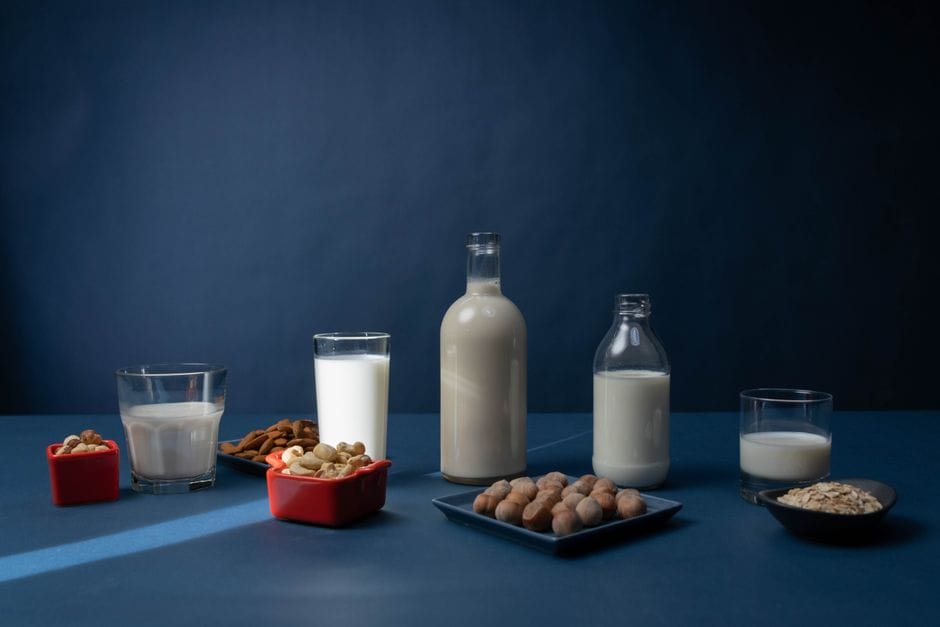
Not every carton works, and the difference comes down to protein and fat. You want a milk with enough of both to build body as the water leaves.
Unsweetened soy milk is my top choice and it is not close. Soy has the highest protein of the common plant milks, usually around 7 to 8 grams per cup, and that protein is what gives reduced soy milk a genuinely dairy-like body and, crucially, the ability to set a custard.
It also resists curdling better than most when it meets heat or acid. If you only try one, make it an unsweetened, plain soy milk with no vanilla.
My notes on soy milk go deeper into why the protein content swings so much between brands, and it directly affects how well it reduces.
Full-fat oat milk is the strong nut-free, soy-free runner-up. It is the most neutral tasting of the bunch and reduces into something pleasantly creamy, though it has less protein than soy, so it sets a touch softer and you have to keep the heat lower because it scorches more easily.
If you make your own, my oat milk guide covers why some homemade batches go slimy, which is the last thing you want here.
Cashew milk is the luxury option. A rich, unsweetened cashew milk, especially homemade and on the thick side, reduces into something silky and neutral that is gorgeous in cream sauces. It sets less firmly than soy, so I reach for it in soups and savory bakes rather than a sliceable pie.
What does not work, and I have wasted milk proving it, is anything thin and low-protein. A watery rice milk, an almond milk meant for cereal, or a lite carton will simmer for forty minutes and still pour like water. Start with body, or the reduction has nothing to concentrate.
The stovetop method, step by step
 Photo: Mikhail Nilov / Pexels
The recipe card up top is my standard, and it really is one ingredient plus patience. But a handful of details separate creamy evaporated milk from a curdled, grainy disappointment, so let me walk through them.
Use a wide pan. This is the tip I wish I had been given on day one. A wide, heavy saucepan gives you maximum surface area, so the water evaporates fast and you are done in twenty-odd minutes.
A narrow, deep pot traps the liquid and you will stir for an hour wondering why nothing is thickening.
Keep the simmer gentle. The single biggest mistake with plant milks, especially soy, is letting them hit a hard boil. The proteins seize and you get a curdled, grainy texture that no amount of stirring fixes.
You want a lazy, barely-bubbling simmer on low heat, with regular scraping along the bottom so nothing catches and turns bitter. Slow and steady is the whole technique.
Stop at half. Evaporated milk is reduced by about half, no more. Two cups of soy milk should come down to roughly one cup.
The first time I made this I got impatient and walked away, came back to barely a third of a cup, and ended up with something closer to a thick paste than a pourable milk. Reducing too far also concentrates any beany or oaty notes, so watch the volume, not just the texture, and pull it the moment it has halved and coats a spoon.
Do not sweeten it. This sounds obvious, but if you are used to making the condensed version, your hand will reach for the sugar out of habit. Evaporated milk stays unsweetened so it can go into savory dishes.
Leave the sugar in the cupboard.
Using it in pumpkin pie, soups, and mac and cheese
This is where the swap earns its place, because evaporated milk quietly props up a whole category of comforting recipes.
Pumpkin pie is the headline use, and the one that started this whole saga for me. The protein in reduced soy milk is what lets the filling set into a sliceable custard instead of the soup I produced that first year.
Use it cup for cup in place of the can, blend it with your pumpkin, spices, and sugar, and bake as normal. The pie brings its own sweetness, so the unsweetened evaporated milk just supplies the body. Mine sets clean now, every time.
Soups and chowders love it. A splash of vegan evaporated milk stirred into a potato, corn, or tomato soup at the end gives you that velvety, creamy finish without the soup splitting, which thinner plant milks tend to do when they hit acid or high heat. Soy and cashew versions are both excellent here.
Mac and cheese is the third big one. Evaporated milk makes a famously smooth, glossy cheese sauce because the concentrated proteins help everything emulsify instead of going oily and broken.
Build your sauce on reduced soy or cashew milk, melt in your cheese and a good spoon of nutritional yeast for savory depth, and it stays silky. For more dairy-free swaps that stack into these same dishes, from cream to cheese, the substitutes hub keeps the rest in one place.
The best store-bought vegan evaporated milk
You will not always want to stand over a pan, and you do not have to. The dedicated vegan evaporated milk category is small but genuinely good, and one product leads it.
Nature's Charm Coconut Evaporated Milk is the one I keep on the shelf. It is essentially coconut milk with a stabilizer, it pours and behaves almost exactly like the dairy can, and it is the closest thing to a true one-to-one swap I have found.
The mild coconut note all but disappears in spiced or cheesy dishes. Nature's Charm makes a whole line of these dairy-free cans, including the condensed milk I mentioned, so if your shop stocks one they often stock the others.
Beyond that, availability gets patchy. Some regions have own-brand or specialty coconut and soy evaporated milks in health shops and Asian grocers, and they are often excellent and cheaper.
The one thing the cans cannot quite match is the firm set of reduced soy milk in a custard pie, so for pumpkin pie specifically I still lean toward making my own, while the can is my pick for soups and sauces where convenience wins.
Is store-bought vegan evaporated milk actually vegan?
Mostly yes, but read the label carefully, because this is a shelf where genuine mistakes happen. The dedicated dairy-free products, Nature's Charm chief among them, are vegan: coconut, soy, or oat milk with a stabilizer and no animal ingredients. That part is reliable.
The trap is the labeling. Plenty of cans are simply called "evaporated milk" with no dairy disclaimer, and those are almost always still cow's milk.
They sit on the same shelf, sometimes in nearly identical tins, and it is genuinely easy to grab the wrong one on autopilot, especially since the classic brands have been around for a century. Always confirm it actually says coconut, soy, or oat, not just "evaporated milk."
If an ingredient ever looks unfamiliar, paste the full list into our vegan ingredient checker, which flags anything animal-derived in plain language, or cross-check the specific product in our Is It Vegan database. I do this whenever a new brand appears, because formulas get quietly reformulated and last year's safe product is not guaranteed to be this year's.
For the broader question of how a food earns the label at all, the Vegan Society's definition of veganism is the reference I point people to.
My honest bottom line
Do not let a missing can stop the pie. Evaporated milk is just milk with half the water cooked off, and you can recreate it perfectly with plants as long as you start with something worth concentrating.
Reach for unsweetened soy milk first, because its protein gives you the body and the clean set that pumpkin pie demands, and simmer two cups gently down to one in a wide pan, no sugar, stopping the moment it halves. For convenience, keep a can of Nature's Charm coconut evaporated milk on hand and use it cup for cup in soups and sauces.
Keep it unsweetened, keep the heat low, stop at half, and the pie sets, the soup turns silky, and nobody at the table will guess the dairy is gone.
The recipe
Easy Stovetop Vegan Evaporated Milk
Prep
2 min
Cook
25 min
Makes
about 1 cup (240 ml), equal to one standard can
Ingredients
- 2 cups (480 ml) unsweetened soy milk (the higher the protein on the label, the faster it thickens and the better it sets in pie; aim for 3 g or more per cup)
- 1 tsp neutral oil such as sunflower or refined coconut (optional, adds back a little richness for an even creamier, more pourable finish)
- 1 pinch fine sea salt (optional, rounds out the flavor so the reduced milk does not taste flat in savory dishes)
- 2 cups (480 ml) full-fat or barista oat milk (optional, swap in for a nut-free and soy-free version; reduce a touch lower and slower as it scorches more easily)
- 2 cups (480 ml) unsweetened cashew milk (optional, for the richest, most neutral result; homemade is best, see the cashew milk guide)
- 1/4 tsp xanthan gum (optional, whisk in at the end if you want it noticeably thicker without cooking it down as far)
- 1 to 2 tsp water or plant milk (optional, kept aside to loosen the milk if it sets too firm in the fridge)
Instructions
- 1 Pour the unsweetened soy milk into a wide, heavy-bottomed saucepan. A wide pan matters: more surface area means faster evaporation, so you stand over it for less time.
- 2 Set the heat to medium and bring it to a gentle simmer, stirring so the bottom does not catch. Do not let it reach a rolling boil or the proteins can curdle and turn grainy.
- 3 Drop the heat to low and hold a lazy, barely bubbling simmer. Stir every couple of minutes, scraping the bottom and sides so nothing sticks or scorches.
- 4 Let it reduce for 20 to 30 minutes until the volume has dropped by about half, from 2 cups down to roughly 1 cup. It will deepen slightly in color and start coating the back of a spoon.
- 5 It is ready when it is visibly thicker and creamier than the milk you started with, and a spoon dragged across the surface leaves a brief trail. It should still pour easily; do not cook it to a paste.
- 6 Stir in the oil and salt if using, then take it off the heat. If you want it thicker still, whisk in the xanthan gum now and let it sit a minute to hydrate.
- 7 Cool fully, then use straight away or pour into a clean jar and refrigerate. It firms up as it chills, so loosen with a teaspoon of water before using if needed.
Notes
- ·Soy milk gives the firmest set, which is why it is my pick for pumpkin pie and any custard that has to slice cleanly.
- ·It does not need to be sweet. Unlike condensed milk, evaporated milk carries no sugar, so this version stays neutral and works in savory recipes too.
- ·Store in a sealed jar in the fridge for up to 5 days, or freeze in a small container for up to 2 months.
Calories
90 per 1/2 cup
Protein
7 g
Fat
4 g
Carbs
5 g
Frequently asked questions
What is the difference between vegan evaporated milk and vegan condensed milk?+
Both start by simmering milk down to remove water, but evaporated milk has no added sugar, so it is rich and creamy but not sweet. Condensed milk is loaded with sugar until it turns thick and syrupy. That one difference decides everything: evaporated milk goes into savory soups, mac and cheese, and pie custards, while condensed milk belongs in fudge and sweet bakes. You cannot swap one for the other without rebalancing the whole recipe.
What plant milk makes the best vegan evaporated milk?+
Unsweetened soy milk is my top pick because it has the most protein and body, so it thickens fastest and curdles least when it hits acid or heat. Full-fat oat milk is a close, nut-free second and tastes the most neutral. Cashew milk works beautifully for a rich finish. Avoid thin rice milk and lite cartons; they reduce forever and stay watery because there is not enough fat or protein to build body.
Is store-bought vegan evaporated milk actually vegan?+
The dedicated dairy-free products are vegan. Nature's Charm Coconut Evaporated Milk is the most widely stocked and is essentially coconut milk and a stabilizer, with no dairy. The catch is the shelf: plain cans labeled simply 'evaporated milk' are still cow's milk and sit right beside the vegan ones. Always confirm it says coconut, soy, or oat, and run any unfamiliar ingredient through our checker if you are unsure.
Can I use vegan evaporated milk in pumpkin pie?+
Yes, and it is one of the best uses for it. A classic pumpkin pie leans on evaporated milk for a custard that sets firm without being watery, and reduced unsweetened soy milk does exactly that thanks to its protein. Use it cup for cup in place of the dairy version. The pie filling already has its own sugar and spices, so the unsweetened evaporated milk just supplies the body and richness.
Written by
VeganDigest Editorial is the small independent team that researches and fact-checks this site. We are not doctors or dietitians. For every is-it-vegan verdict we read the product's current ingredient list and manufacturer information, and for anything health-related we report guidance from recognized bodies such as the NHS, the Vegan Society, and the Academy of Nutrition and Dietetics rather than offering medical advice. Every page shows the date it was last verified, and our full process is on the How We Verify page.
Comments