Vegan Feta (Briny Marinated Tofu Feta)

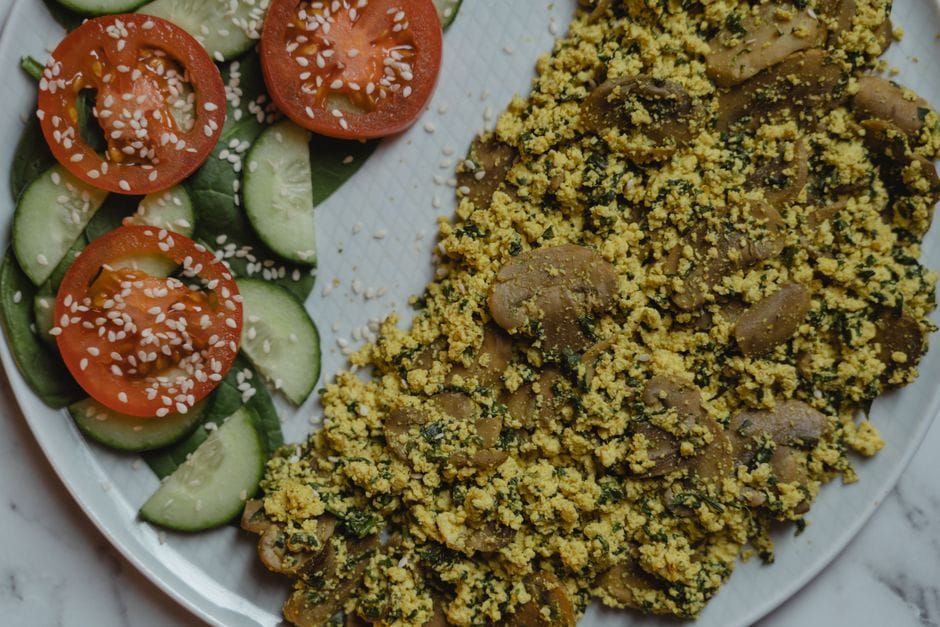
- Gluten-free
- Nut-free
In this guide9
- 01Why Real Feta Isn't Vegan
- 02The Briny Marinated Tofu Feta
- 03Don't Skip Pressing the Tofu
- 04The Brine Ratio That Actually Works
- 05Why It Needs Time, Not Just Salt
- 06Is Store-Bought Vegan Feta Any Good? (And the Best Brands)
- 07How to Actually Use It
- 08How It Compares to the Other Tofu Cheeses
- 09The Bottom Line
The first batch of tofu feta I ever made, I rushed. I cubed the tofu, dunked it in a barely-salted brine, gave it about forty-five minutes while I chopped a salad, and told myself that was plenty. It was not plenty.
What I ended up crumbling over my cucumbers and tomatoes was, essentially, cold tofu in vinegar water. Bland in the middle, faintly sour on the outside, and missing the one thing feta is actually about: that sharp, mouth-puckering, salty bite that makes you reach for water.
I have made it dozens of times since, and the lesson never changed. Feta is a brined cheese. The brine is not a garnish or an afterthought, it is the entire point.
Get the brine right and give it time, and pressed firm tofu turns into something genuinely feta-like: crumbly, tangy, salty, with that slightly creamy give when you bite a chunk. Below is the recipe I make on repeat, the exact ratio that makes the brine work, and an honest rundown of the store-bought brands so you know when to bother making it yourself.
Why Real Feta Isn't Vegan
Let me clear this up first, because the deli case can be confusing. Traditional feta is dairy, full stop. It is a brined curd cheese, protected by EU law, made primarily from sheep's milk with up to thirty percent goat's milk allowed.
The white cubes in their cloudy salty liquid are an animal product through and through.
You can read the plain-language version on the Wikipedia feta entry if you want the full protected-designation history. The short version for our purposes: anything labeled simply "feta" is dairy by definition.
To be sold as feta in the EU it legally must be made from sheep or goat milk. So when you see a plant-based block, it will be called something careful like "feta-style" or "vegan feta alternative," never just feta on its own.
That naming gap is actually a useful shopping signal, which I will come back to.
The Briny Marinated Tofu Feta
 Photo: Jonathan Borba / Pexels
This is my workhorse recipe, and the card above has the exact amounts. Here is what is actually happening so you can adjust it to your own taste.
You start with extra-firm tofu, pressed hard and cut into rough cubes or broken into chunks. Then you submerge it in a brine that does three jobs at once.
The salt seasons it deep and, over time, draws out moisture so the tofu firms up and crumbles instead of squishing. The acid, a mix of apple cider vinegar and fresh lemon juice, delivers the tang that defines feta.
And the white miso plus nutritional yeast add that savory, faintly funky, aged-cheese depth that plain tofu completely lacks on its own.
The texture you are after is firm-but-yielding. A good cube of this should hold its shape when you toss it into a salad, then break apart into rough curds the moment you press it with a fork. If yours is mushy, the tofu was either too soft to begin with or not pressed enough, and we will fix that next.
If tofu is still a newish ingredient for you, the one thing to internalize is that firm tofu behaves like a sponge. How much water you remove and how boldly you season it determines absolutely everything about the result.
Don't Skip Pressing the Tofu
I will keep saying this because it is the difference between feta and disappointment. Firm and even extra-firm tofu holds far more water than you would guess, and water is the enemy here twice over. It dilutes the brine, and it keeps the tofu soft and dense when you want it dry and crumbly.
Press the block hard for at least twenty minutes. I wrote a full walkthrough on how to press tofu with the towel-and-heavy-pan method plus a couple of faster shortcuts, because this single step fixes the most common complaint people have with homemade feta.
After pressing, the towel should be visibly damp, sometimes soaked, and the block should feel noticeably denser in your hand.
Here is my honest mistake to learn from: I once skipped pressing because I was using a brand of tofu that felt pretty dry out of the package. The feta came out fine the first day, but by day two, water had leached into the brine, thinned it out, and the cubes had gone soft and waterlogged.
Press it anyway. I have never once regretted pressing too much, and I have regretted skipping it more than once.
The Brine Ratio That Actually Works
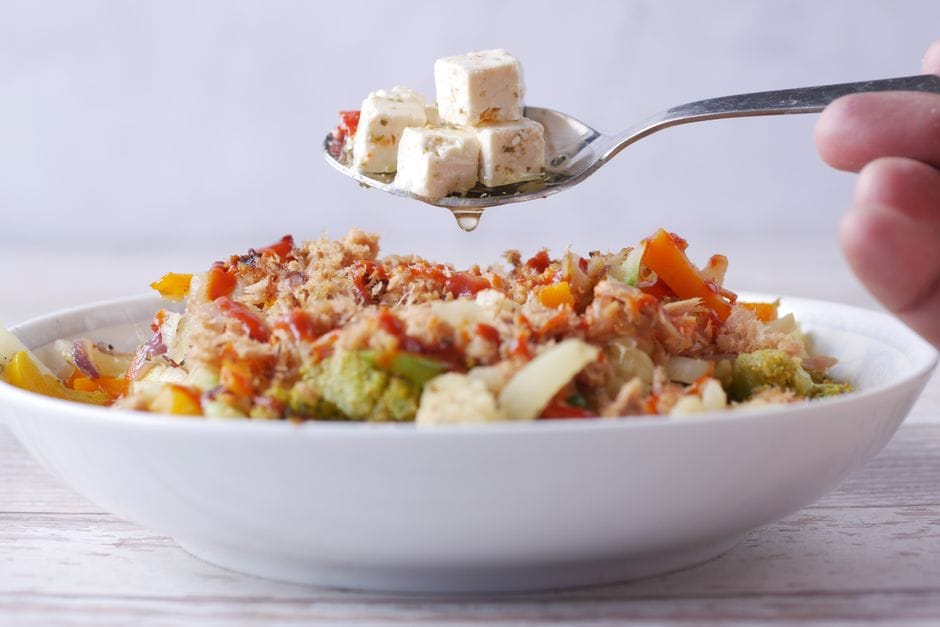 Photo: Towfiqu barbhuiya / Pexels
Here is the part worth memorizing, because once you have the ratio you never need the recipe again.
For every 1 cup of water, use 1 tablespoon of fine salt and roughly 5 tablespoons of acid total, split between vinegar and lemon juice. That is the backbone.
The miso, nutritional yeast, and oregano are flavor layers on top, but the water-salt-acid proportion is the structure, and it scales cleanly. Double everything for a big batch, halve it for a small one, the ratio holds.
A note on the acid: you do not need anything fancy here. Apple cider vinegar gives a rounder, fruitier tang, and distilled white vinegar gives a cleaner, sharper one. Either works beautifully.
I lean on apple cider vinegar with a squeeze of fresh lemon for brightness, because the lemon adds a lift that vinegar alone does not.
The most important thing I can tell you about the brine is that it should taste almost aggressively salty when you make it. Genuinely too salty to drink. That is correct.
The tofu only absorbs a fraction of the salt over the soak, so a brine seasoned to "pleasant" leaves you with feta seasoned to "bland." When I cut the salt to feel more reasonable, the feta consistently came out flat. Trust the tablespoon per cup.
Why It Needs Time, Not Just Salt
Salt does its work slowly, and this is where patience pays off. Four hours in the brine is the absolute minimum, and it will give you something feta-ish but mild. Overnight, twelve to twenty-four hours, is where it actually becomes feta.
The salt has time to penetrate the cubes, pull out moisture, firm up the texture, and develop that sharp tang all the way through instead of just on the surface.
You can taste the difference plainly. A four-hour cube tastes seasoned on the outside and a little plain in the center. A twenty-four-hour cube tastes uniformly briny and crumbles cleanly.
If you have the foresight, make it the night before you need it. If you taste it after the soak and it still seems mild, just put it back in the brine for a few more hours.
It is very hard to over-brine this, so when in doubt, wait.
Keep it submerged the whole time. Any cube poking above the liquid seasons unevenly and can dry out. I give the jar a gentle shake whenever I open the fridge.
Is Store-Bought Vegan Feta Any Good? (And the Best Brands)
Yes, and I keep a tub in the fridge for busy weeks. The category has come a long way, and a couple of brands are genuinely good.
Violife is my top store-bought pick by a clear margin. Its Just Like Feta block is coconut-oil based, properly salty, and crumbly enough to scatter over a salad without dissolving into paste.
It is the closest commercial match to what I am chasing at home, and it is now stocked in a lot of mainstream grocery stores. Follow Your Heart (which also makes the cult-favorite vegan mayo) sells a softer, milder feta crumble that I reach for when I want it to melt, like folded into a savory pie or scattered over a baked dish before it goes in the oven. It is creamier and less assertive than Violife, which is a feature in some recipes and a drawback in a sharp salad.
A few smaller brands like Tofutti and various coconut-based newcomers float in and out of stores regionally, so availability changes fast. My honest buying advice is to never assume.
Some products labeled "feta-style" still sneak in casein, the milk protein, which is not vegan even when the front of the package says dairy-free. Read the ingredient list every time.
If a name is unfamiliar, drop it into our vegan ingredient checker before you buy, and for specific products and verdicts our Is It Vegan database is faster than squinting at a tub in the aisle. Remember the naming tell from earlier: the word feta alone almost always means dairy, so look for an explicit plant-based or vegan claim on the label.
How to Actually Use It
This is where vegan feta earns its jar in your fridge. A few of my regulars.
Greek salad. This is the one feta was born for. Big chunks of cucumber and ripe tomato, thin red onion, a few kalamata olives, a generous crumble of the tofu feta, a slick of olive oil, a shower of dried oregano, and a squeeze of lemon.
Do not toss it to death. Greek salad wants to stay in bold, distinct pieces, with the feta in proud chunks rather than scattered dust. Because the tofu version holds its shape, it sits there looking exactly right instead of melting into the dressing.
Pasta. Feta and pasta is a quiet weeknight hero. Toss hot pasta with olive oil, garlic, a fistful of chopped tomatoes and spinach, then fold in crumbled feta off the heat so it softens and goes a little creamy without fully melting.
Lemon zest and black pepper finish it. The salty, tangy crumbles do the seasoning for you. I make a version with roasted cherry tomatoes and the tofu feta that has become a genuine regular in my house.
It also scatters beautifully over roasted vegetables, folds into a grain bowl, tops a slice of toast with tomato, and crumbles over a watermelon salad in summer. Anywhere a recipe wants salty, tangy, crumbly white cheese, this slots right in.
For a stretchier, melty cheese on the same plate, like a flatbread or a baked pasta, pair it with a homemade vegan mozzarella, which does the gooey job feta cannot.
How It Compares to the Other Tofu Cheeses
People often ask how this is different from a tofu ricotta, since both start with the same block. The answer is the brine and the texture goal. Feta is firm, salty, and tangy, built to hold its shape in chunks, while ricotta is soft, mild, and creamy, built to be spread or baked.
If you have made my vegan ricotta, you already know the fork-mash technique, but feta goes the opposite direction. You keep the cubes intact and let salt and time do the firming, rather than crumbling and creaming it right away.
Same humble ingredient, two completely different destinations depending on how you treat it.
The Bottom Line
Vegan feta is one of the most satisfying swaps to make at home, because the homemade version genuinely beats the store-bought ones on flavor and costs a fraction as much. The whole thing comes down to two rules: press the tofu hard so it can crumble, and brine it boldly with that one-tablespoon-of-salt-per-cup ratio, then give it time.
Make it the night before you want a Greek salad, keep it submerged in its jar, and you will have sharp, briny, crumble-perfect feta waiting whenever you need it. My rushed first batch is a distant memory.
These days I make the brine almost on autopilot, and the only real planning required is remembering to start it a day ahead.
The recipe
Briny Marinated Tofu Feta
Prep
20 min
Total
20 min
Makes
About 2 cups crumbled (roughly 350 g), enough for two big Greek salads
Ingredients
- 1 block (14 oz / 400 g) extra-firm tofu, pressed at least 20 minutes (firm works but extra-firm crumbles cleaner)
- 1 cup (240 ml) water, the base of the brine
- 3 Tbsp apple cider vinegar, for the sharp tang real feta has
- 2 Tbsp fresh lemon juice, for brightness on top of the vinegar
- 2 Tbsp white miso paste, for the savory, slightly funky depth that reads as aged cheese
- 1 Tbsp fine sea salt, and yes it really needs this much to taste briny
- 3 Tbsp nutritional yeast, for a faint cheesy roundness
- 1 tsp dried oregano, the flavor most people associate with feta
- 2 Tbsp olive oil, stirred in at the end for richness and to coat the curds
Instructions
- 1 Press the tofu first. Wrap the block in a clean towel, set a heavy pan on top, and leave it 20 minutes so as much water as possible drains out.
- 2 Cut the pressed tofu into rough 3/4-inch cubes, or hand-crumble it into chunks if you want a more rustic, broken texture.
- 3 Make the brine. In a bowl or jar, whisk the water, apple cider vinegar, lemon juice, miso, salt, and nutritional yeast until the miso and salt fully dissolve.
- 4 Add the tofu to the brine, making sure every piece is submerged. Stir in the dried oregano.
- 5 Cover and refrigerate at least 4 hours, but overnight (12 to 24 hours) is far better. The longer it sits, the saltier, sharper, and more crumbly it gets.
- 6 When you are ready to use it, lift the tofu out of the brine. It should taste assertively salty and tangy. If it tastes flat, return it to the brine for a few more hours.
- 7 Drizzle the olive oil over the drained feta and toss gently to coat. Crumble or cube it onto salads, pasta, or roasted vegetables.
- 8 Store leftovers submerged in the brine in a sealed jar. It keeps about a week and tastes better after day two.
Notes
- ·Brine ratio to memorize: 1 cup water to 1 Tbsp salt to about 5 Tbsp total acid (vinegar plus lemon). Scale it up freely, keeping that proportion, for bigger batches.
- ·An under-salted brine is the number one reason homemade feta tastes like wet tofu. It should taste almost too salty in the jar, because the tofu only absorbs a fraction of it.
- ·No miso? Swap in an extra teaspoon of salt and an extra tablespoon of nutritional yeast. You lose a little depth but it still works.
Calories
110 per 1/4 cup
Protein
9 g
Fat
7 g
Carbs
3 g
Frequently asked questions
Is store-bought feta vegan?+
No, traditional feta is dairy. It is a brined cheese made from sheep's milk, often with a little goat's milk, so the standard block in the deli case is never vegan. A handful of brands now make plant-based versions, but you have to read for an explicit vegan label. If an ingredient name is unfamiliar, run it through a vegan ingredient checker before you buy.
Which vegan feta brand is best?+
Violife is my top pick for crumbly, salty blocks that hold their shape in a salad. Follow Your Heart makes a softer, milder version that is lovely melted into spanakopita or a baked dish. Both are coconut-oil based and widely stocked. If you want high protein and a fraction of the cost, the homemade tofu version below beats either of them on flavor.
Why won't my tofu feta crumble properly?+
Almost always because the tofu was not pressed enough or did not marinate long enough. Firm tofu holds a surprising amount of water, and if it goes into the brine wet, it stays soft and dense instead of turning crumbly and sharp. Press it hard for at least 20 minutes, then give the brine a full overnight soak. The texture transforms once the salt has time to draw moisture out.
How long does homemade vegan feta keep?+
Stored submerged in its brine in a sealed jar, it keeps about a week in the fridge, and it actually improves for the first two or three days as the flavor deepens. Always keep it under the liquid so the surface does not dry out. If you drain it completely, eat it within a couple of days because it loses moisture and gets rubbery faster.
Written by
VeganDigest Editorial is the small independent team that researches and fact-checks this site. We are not doctors or dietitians. For every is-it-vegan verdict we read the product's current ingredient list and manufacturer information, and for anything health-related we report guidance from recognized bodies such as the NHS, the Vegan Society, and the Academy of Nutrition and Dietetics rather than offering medical advice. Every page shows the date it was last verified, and our full process is on the How We Verify page.
Comments