Cashew Cheese (Spreadable and Aged Versions)
- Gluten-free
- Soy-free
- Oil-free
In this guide9
- 01Why Cashews Make the Best Nut Cheese
- 02The Five-Minute Spreadable Version
- 03How the Culture Creates Real Tang
- 04Reading the Ferment (and Knowing When to Stop)
- 05Building Flavor and Shaping the Wheel
- 06Herbs, Coatings, and the Rind
- 07Plating It on a Cheese Board
- 08Is Store-Bought Cashew Cheese Vegan, and Which Brands Are Best?
- 09The Bottom Line
The first time I made a cultured cashew cheese, I left the bowl on top of the fridge and forgot about it for two full days. When I finally remembered, I lifted the cloth fully expecting to throw it out, and instead I got hit with that sharp, sour, unmistakably cheesy smell that made me actually stop and grin.
I had not added a single thing that tasted like cheese. The bacteria did it. That was the moment cashew cheese stopped being a sad blender dip in my house and became something I served to people on a board without explaining myself.
So this guide covers both ends of the spectrum. There is the five-minute spreadable bowl you make when you want something creamy on a bagel right now, and there is the cultured aged wheel from the recipe card above, the one that ferments into real tang and earns a spot on a cheese board.
I will walk you through the culture, the herb coatings, how to plate it, why cashews work so much better than other nuts, and which store-bought tubs are actually worth buying when you do not feel like waiting two days.
Why Cashews Make the Best Nut Cheese
I have tried this with almonds, with sunflower seeds, with a sad experimental batch of walnuts, and cashews win every time, by a wide margin. There is a real reason for it, not just preference.
Cashews are unusually mild and faintly sweet, with almost none of the bitter tannins that live in the skins of almonds and walnuts. Those tannins taste fine in a handful of nuts but turn weirdly astringent in a cheese, fighting the tang you are trying to build.
Cashews also carry a high fat content and a soft, starchy texture, which is why they blend into something genuinely smooth and creamy instead of grainy. That neutral, buttery base is a blank canvas.
It takes on salt, acid, and savory flavor without arguing, so when you bite into a finished cashew cheese your brain reads cheese, not nuts. If you already make cashew cream, you have felt how silky a well-soaked, well-blended cashew gets, and that exact silkiness is what makes the cheese work.
The Five-Minute Spreadable Version
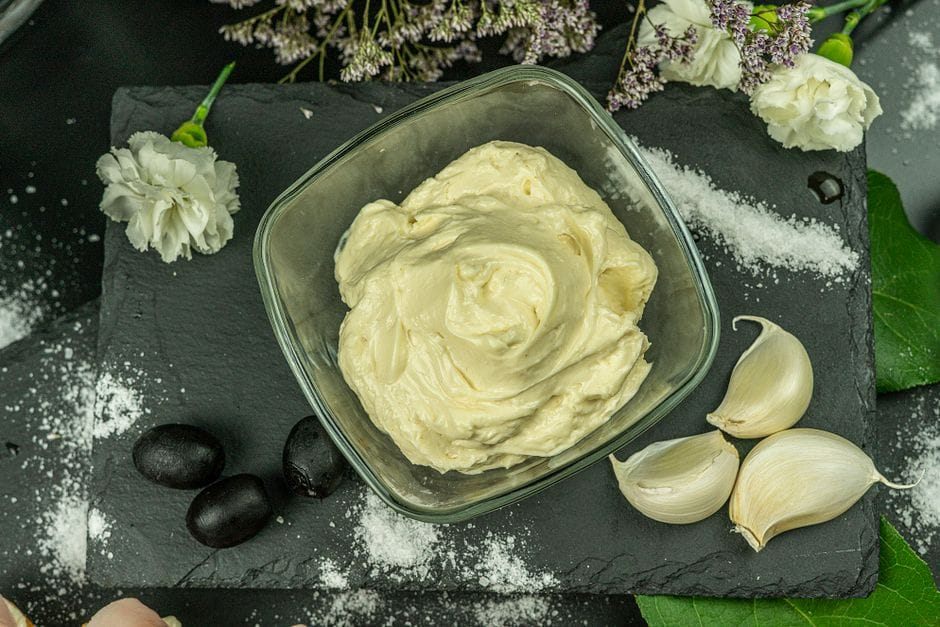
 Photo: Polina Tankilevitch / Pexels
Start here if you are new to this, because it is almost impossible to mess up and it delivers results in the time it takes to toast a bagel.
Soak a cup and a half of cashews in just-boiled water for an hour, drain them, and blend with a quarter cup of water, two tablespoons of lemon juice, two tablespoons of nutritional yeast, a teaspoon of salt, and a small clove of garlic. Blend a full two minutes until there is no grit left, scraping down the sides once or twice.
That is the entire recipe. It comes out somewhere between a thick cream cheese and a soft chevre, bright and tangy and clean-tasting rather than aged.
I use this constantly. It is the base for the closest thing I make to vegan cream cheese, it goes on toast under sliced tomato, and a looser version of it sauces pasta beautifully. The flavor here is fresh and lemony, not funky, because nothing has fermented.
That is exactly right for some jobs and not nearly enough drama for a cheese board, which is where the cultured version comes in.
How the Culture Creates Real Tang
This is the part that turns a nut dip into something that genuinely fools dairy eaters, and it is much simpler than it sounds.
Real aged cheese gets its sour, complex tang from bacterial cultures eating the sugars in milk and producing lactic acid. You can do the exact same thing to cashews.
The bacteria do not care that there is no dairy involved; they will happily ferment a blended cashew base and produce that same tangy acidity. The easiest culture to use is the powder inside a vegan probiotic capsule, the kind sold in the supplements aisle for gut health.
Crack open two or three, stir the powder into your blended cashews, and leave the bowl somewhere warm for a day or two.
The other option is rejuvelac, a slightly cloudy fermented grain water you make by sprouting grains like wheat berries or quinoa and steeping them. It is more of a project, but it is essentially free and it works wonderfully.
Either way, the rule that matters most is this: do not add salt before fermenting. Salt slows and stresses the bacteria, so I learned to blend the culture in plain, ferment first, and only season afterward.
My first attempt was bland and barely tangy because I had salted it up front and quietly throttled my own culture.
Reading the Ferment (and Knowing When to Stop)
The most common question I get is how do you know when it is done, and the honest answer is you smell it.
Leave the covered bowl somewhere around 21 to 24 C. In a warm kitchen it can be ready in 24 hours; in a cold one it might take a full 48 or even longer.
You are waiting for the smell and taste to turn distinctly tangy and pleasantly sour, the way a good plain yogurt smells. Give it a stir and a tiny taste each time you check. Mildly sour and fresh is perfect.
If you want a sharper, more aged cheese, let it go longer, because the tang keeps building.
What you are not waiting for is anything that smells genuinely rotten, sulfurous, or that has gone fizzy and active. That is spoilage, not fermentation, and it is rare if your bowl and blender were clean, but trust your nose over the clock every single time.
The reassuring thing is that a healthy ferment smells appetizing. The first time mine smelled sharp and cheesy rather than just nutty, I knew it had worked before I even tasted it.
Building Flavor and Shaping the Wheel
 Photo: Karolina Grabowska / Pexels
Once the base is tangy, you season it, and this is where it goes from fermented cashew paste to something you would actually call cheese.
Stir in salt, nutritional yeast, lemon juice, onion powder, and garlic powder, then taste and adjust. I cannot say this enough across every cheese I make: undersalted nut cheese tastes like wet cashews.
Salt is the switch that flips your brain from tasting nuts to tasting cheese, so be braver with it than feels natural, adding pinches and tasting between each. The nutritional yeast brings the deep savory note, and a final squeeze of lemon sharpens the tang the culture started.
If you have never cooked with nutritional yeast, my nutritional yeast guide explains why a couple of tablespoons does so much heavy lifting here.
To shape it, line a small bowl or ramekin with cheesecloth, pack the seasoned cheese in firmly, fold the cloth over the top, and chill it for at least six hours so it sets into a turn-outable wheel. Overnight is better.
The cloth wicks away a little moisture and gives the surface a faint texture, which is exactly what you want before you coat it.
Herbs, Coatings, and the Rind
The coating is not just decoration, although it does make the wheel look genuinely impressive on a board. It also adds flavor and helps the surface firm into a light rind.
My favorite is a thick crust of cracked black pepper, which gives a peppercorn-coated look and a little bite. Chopped fresh herbs are the classic move, a mix of chives, dill, parsley, and thyme pressed all over the surface, and the green against the pale cheese looks like something from a fancy deli case.
Smoked paprika gives a warm, faintly smoky edge and a beautiful rust color. To apply any of them, turn the chilled wheel out of its cloth and roll the surface in the coating, pressing it on firmly so it sticks.
Here is the small trick that took me a few wheels to learn. If you leave the coated wheel uncovered in the fridge for one more day, the surface dries slightly and forms a thin, firmer rind, exactly the way an aged dairy cheese develops one.
It makes the whole thing read as more legitimate, and it holds its shape better when you slice into it. I once skipped this step before a dinner and the wheel slumped into a soft mound the second it warmed up.
Edible, still tasty, but it looked like a dip. The extra day of drying fixed that for good.
Plating It on a Cheese Board
A cashew cheese wheel deserves a proper board, and the good news is it plays well with everything you already reach for.
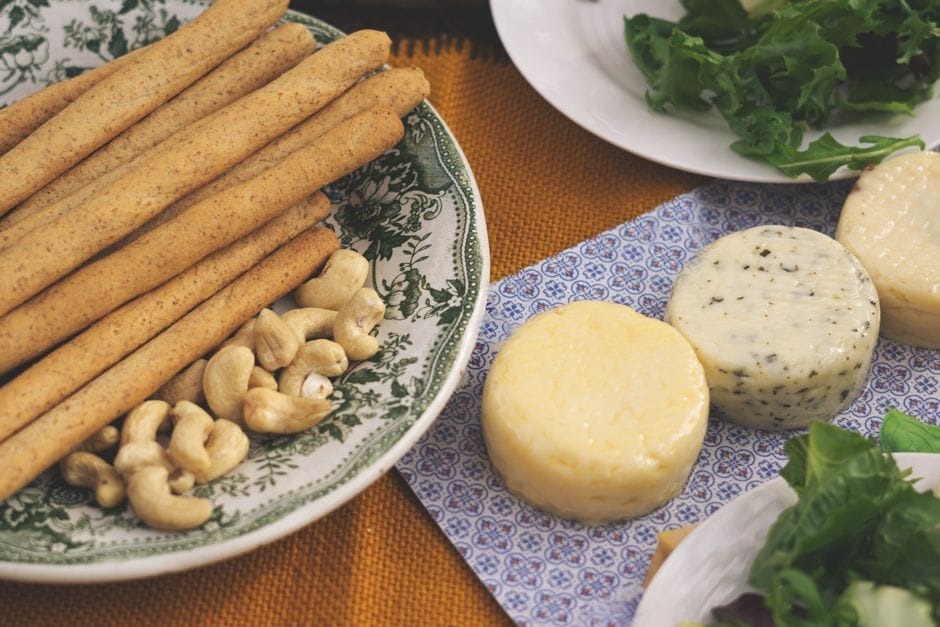
I build mine around the wheel as the centerpiece, cut one wedge so people know it is meant to be eaten and not just admired, and then surround it. Crackers and torn bread give you the carrier.
Fresh and dried fruit, grapes, sliced apple, figs, a few dates, bring the sweetness that cuts the tang. Olives, cornichons, and a little jam or fruit chutney add salty and sweet contrast. A handful of toasted nuts echoes the cashew base.
If I am making a bigger spread, I will set out a wedge of vegan parmesan for grating and a small bowl of the quick spreadable version alongside the firmer wheel, so there is a soft option and a sliceable one. Two textures on one board makes it feel intentional and generous, and nobody guesses both started as a bag of cashews.
Is Store-Bought Cashew Cheese Vegan, and Which Brands Are Best?
Almost all of it is vegan, because dairy-free is the entire reason cashew cheese exists, but there is one real trap worth knowing about. Some plant-based cheese products, especially the very meltable, stretchy ones, add casein, the milk protein, to mimic how dairy cheese behaves under heat.
Casein is not vegan no matter how green the packaging looks, so read the ingredient list every single time rather than trusting the front of the tub. When a name is unfamiliar, drop it into our vegan ingredient checker, and for a clear verdict on a specific product the Is It Vegan database is faster than squinting at fine print in the aisle.
For brands I actually buy, Miyoko's Creamery is the gold standard for cultured cashew wheels and their products are genuinely fermented, so they have the real tang you are chasing at home. Treeline makes excellent cultured cashew cheeses, both soft tubs and firmer aged styles, and their pepper-coated and herb-garlic options are exactly the cheese-board energy this whole guide is about. Kite Hill leans more toward almond but their soft spreadable cheeses are creamy and widely available. These are cultured, dairy-free, and reliably vegan, which is precisely the category worth paying for, because the fermentation is the part that takes you two days at home.
The certified ones are easy to confirm too; you can sanity-check what a credible plant-based label looks like against the Vegan Society trademark standard.
The Bottom Line
Make the five-minute spreadable bowl any time you want something creamy and bright on toast or in pasta, and save the cultured wheel for when you want real, sharp, fermented tang and a board that makes people ask what brand it is. The one thing that turns nut paste into actual cheese is the culture, so let the bacteria do their slow work, ferment before you salt, and trust your nose to tell you when it is ready.
Get those right, coat your wheel, and give the rind a day to firm up, and you will have a cashew cheese that earns its place next to anything in the dairy case. Two days of patience and a bag of cashews is a genuinely good trade.
The recipe
Cultured Aged Cashew Cheese Wheel
Prep
20 min
Total
20 min
Makes
One small wheel, about 1.5 cups (roughly 340 g), 8 to 10 board portions
Ingredients
- 2 cups (260 g) raw cashews, soaked in hot water 1 hour then drained, for a smooth fermentable base
- 1/4 cup (60 ml) water, added slowly, just enough to let the blender catch
- 2 to 3 vegan probiotic capsules, opened, OR 3 Tbsp rejuvelac, the live culture that makes it tangy
- 1 tsp fine sea salt, added after fermenting so it doesn't slow the culture
- 2 Tbsp nutritional yeast, for savory, cheesy depth
- 1 Tbsp fresh lemon juice, stirred in after fermenting to brighten the tang
- 1/2 tsp onion powder and 1/4 tsp garlic powder, for a rounded savory edge
- 1 to 2 Tbsp chopped fresh herbs, cracked black pepper, or smoked paprika, for the coating
Instructions
- 1 Soak the cashews in just-boiled water for at least 1 hour until they squash easily between two fingers. Drain and discard the soak water.
- 2 Blend the cashews with the probiotic powder or rejuvelac, adding the 1/4 cup water a splash at a time, until completely smooth and thick like frosting. Do not add the salt yet, because salt slows the culture.
- 3 Scrape the blend into a clean glass bowl, cover loosely with a cloth, and leave somewhere warm (around 21 to 24 C) for 24 to 48 hours. It is ready when it smells tangy and pleasantly sour, not when it smells off.
- 4 Stir in the salt, nutritional yeast, lemon juice, onion powder, and garlic powder. Taste and push the salt and lemon until it reads clearly as cheese.
- 5 Line a small bowl or ramekin with cheesecloth, pack the cheese in firmly to shape the wheel, fold the cloth over the top, and chill at least 6 hours, ideally overnight, to firm up.
- 6 Turn the wheel out onto a board and peel off the cloth. Roll the surface in chopped herbs, cracked pepper, or smoked paprika, pressing the coating on so it sticks.
- 7 For a firmer rind, leave the coated wheel uncovered in the fridge another day so the surface dries slightly. Serve at cool room temperature for the best flavor and texture.
Notes
- ·Quick spreadable version: skip the fermenting entirely. Blend 1.5 cups soaked cashews with 1/4 cup water, 2 Tbsp lemon juice, 2 Tbsp nutritional yeast, 1 tsp salt, and a small garlic clove until smooth. It is ready in five minutes and tastes bright and fresh rather than aged.
- ·No probiotics or rejuvelac on hand? A spoonful of sauerkraut brine plus an extra squeeze of lemon fakes some of the tang. It will not be a true ferment, but it gets you closer than plain cashews.
- ·If your kitchen runs cold, fermentation can take longer than 48 hours. Trust your nose, not the clock. Tangy and sour is good; sharp, fizzy, or genuinely rotten is not.
Calories
120 per 2 Tbsp portion
Protein
4 g
Fat
9 g
Carbs
6 g
Frequently asked questions
Is store-bought cashew cheese vegan?+
Almost always, yes, since the whole point of a cashew cheese is to be dairy-free. The thing to watch is that some plant-based cheese products still add casein, the milk protein, for stretch and meltability. Casein is not vegan even on a product marketed as dairy-free. Read the ingredient list every time and run anything unfamiliar through a vegan ingredient checker before you buy.
What culture do I use to make aged cashew cheese tangy?+
The easiest one is the contents of a vegan probiotic capsule, the kind sold for gut health. Two or three capsules stirred into blended cashews and left somewhere warm for a day or two ferments them into a genuinely tangy, cheese-like base. Rejuvelac, a fermented grain water, does the same job if you want to make your culture from scratch. Both feed friendly bacteria that produce the lactic-acid tang real aged cheese gets from dairy cultures.
How long does homemade cashew cheese last in the fridge?+
The quick spreadable version keeps about five days in a sealed container. The cultured aged wheel actually keeps longer, roughly two weeks, because the fermentation and the salt both act as preservatives, the same way they do in dairy cheese. If you coat the wheel in herbs or pepper, the surface stays drier and it holds even better. Toss either one if you see fuzzy or colored mold, which is different from the firm, dry rind a wheel develops.
Why are cashews the best nut for vegan cheese?+
Cashews are mild, sweet, and very low in the bitter tannins that make almonds or walnuts taste off in a cheese. They also have a high fat content and soft texture, so they blend into something genuinely creamy rather than gritty. That neutral, buttery base takes on tang, salt, and savory flavor without fighting them, which is exactly what you want when you are trying to taste cheese and not nuts.
Written by
VeganDigest Editorial is the small independent team that researches and fact-checks this site. We are not doctors or dietitians. For every is-it-vegan verdict we read the product's current ingredient list and manufacturer information, and for anything health-related we report guidance from recognized bodies such as the NHS, the Vegan Society, and the Academy of Nutrition and Dietetics rather than offering medical advice. Every page shows the date it was last verified, and our full process is on the How We Verify page.
Comments