How to Make Cashew Parmesan (3 Ingredients, 2 Minutes)
 Jump to recipe ↓
 In this guide10
- 01The three things you need (four if you count garlic)
- 02The ratio that actually matters
- 03How to actually make it
- 04The right tool makes this easier
- 05Here is what went wrong when I rushed it
- 06How I use it (it is not just for pasta)
- 07Nut swaps and other variations
- 08How to store it
- 09Why I make it instead of buying it
- 10The honest takeaway
I keep a jar of this on my kitchen counter the way other people keep a salt cellar. It lives there, lid slightly loose, and I reach for it without thinking. Pasta, popcorn, a sad bowl of leftover roasted vegetables that needs rescuing.
A spoonful of cashew parmesan and suddenly the thing tastes finished.
The first time I made it I genuinely laughed, because I had spent actual money on tubs of store-bought vegan parm that cost five times as much and tasted half as good. This is three ingredients and two minutes of work. The blender does the rest.
Let me show you exactly how I make it, including the small mistakes that taught me what not to do.
The three things you need (four if you count garlic)
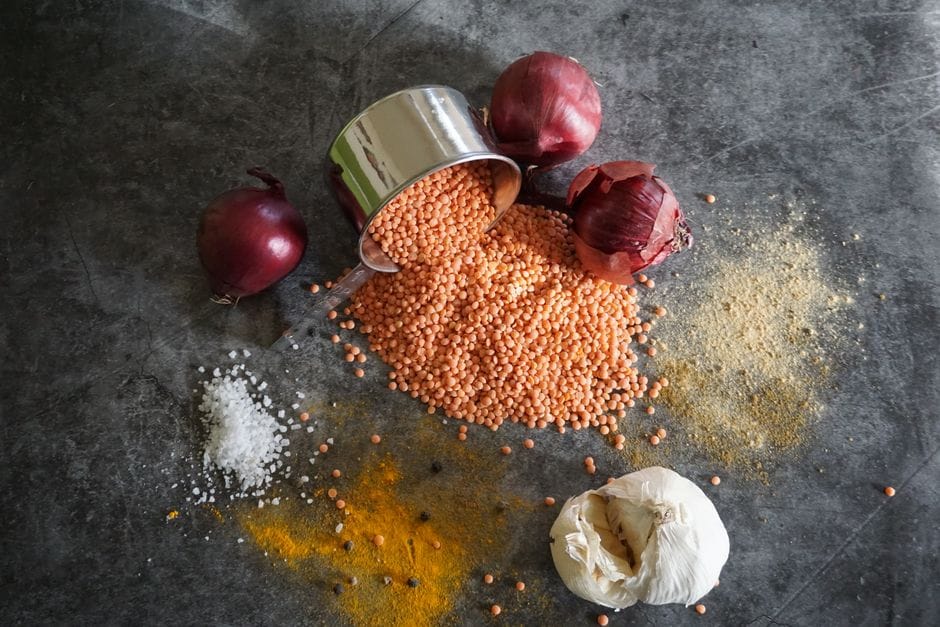
Cashews, nutritional yeast, salt. That is the whole list. I add garlic powder because I like it, which makes four, but the recipe is genuinely complete at three.
- Raw cashews are the body. They are fatty, pale, and mild, so when you grind them down they read as aged, crumbly cheese rather than nuts. Roasted cashews work in a pinch but bring a toasty flavor that pulls it away from parmesan, so I stick with raw.
- Nutritional yeast is the cheesy, savory hit. This is the ingredient doing the parmesan impression. If you have never cooked with it, it is worth understanding before you start, so read our nutritional yeast 101 guide first. The short version: it is a deactivated yeast, it tastes nutty and savory, and a little goes a long way.
- Salt is non-negotiable. Real parmesan is salty. Under-salt this and it tastes like ground cashews, because that is exactly what it is.
- Garlic powder is my one liberty. Not traditional, but a quarter teaspoon rounds everything out. Skip it if you are a purist.
That is it. I use Bragg or KAL nutritional yeast and plain Diamond Crystal or fine sea salt, but any brand works. If you are buying nooch for the first time and want to confirm it is genuinely vegan, you can drop it into the vegan ingredient checker before you commit.
The ratio that actually matters
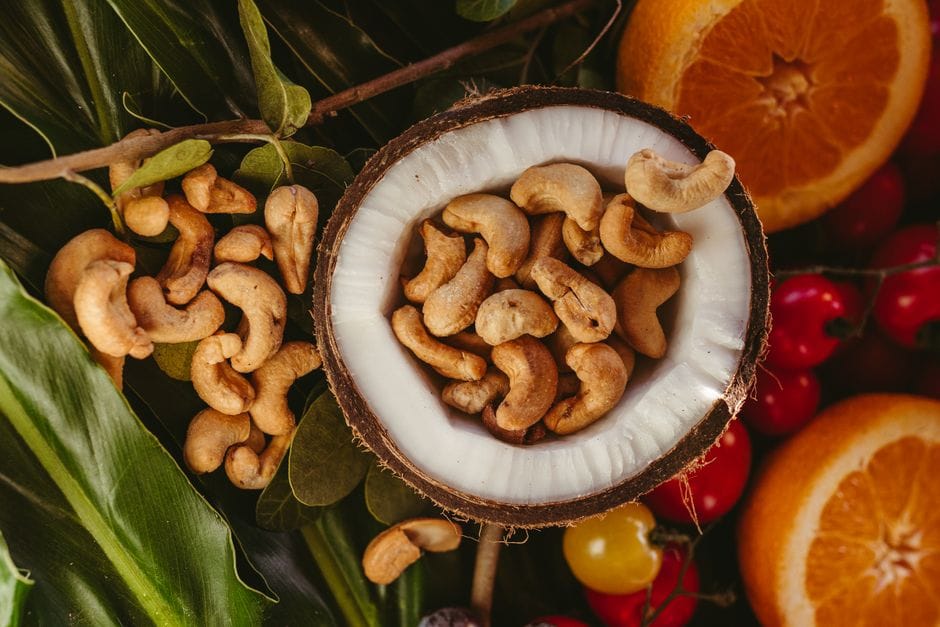 Photo: Jonathan Borba / Pexels
If you remember one thing from this whole article, make it this: roughly 4 parts cashews to 1 part nutritional yeast, then salt to taste.
In real measurements, that is 1 cup (about 130 g) of raw cashews to 3 or 4 tablespoons of nutritional yeast, plus around 3/4 teaspoon of fine salt and 1/4 teaspoon of garlic powder.
People wreck this by going heavy on the nooch, because they assume more yeast equals more cheese flavor. It does not. Pile in too much and it turns bitter, chalky, and weirdly mustard-yellow.
The cashews are the structure. The yeast is the seasoning. Keep that order in your head and you basically cannot mess it up.
Start a little under on the salt and the nooch, blitz, then taste and adjust. Adding more is trivial. You cannot pull it back out.
How to actually make it
Add everything to a food processor or a small high-speed blender. A NutriBullet-style cup works beautifully here and is honestly easier to clean than a big food processor for a batch this small.
Then pulse. Do not just hold the button down. Eight to ten short bursts, checking after each few, until it looks like coarse, sandy crumbs.
You want the texture of damp sand or fresh breadcrumbs, not flour and not paste.
The whole thing takes under two minutes. Tip it into a clean jar and you are done.
That is the entire technique. The only skill involved is knowing when to stop, which brings me to the part where I have failed so you do not have to.
The right tool makes this easier
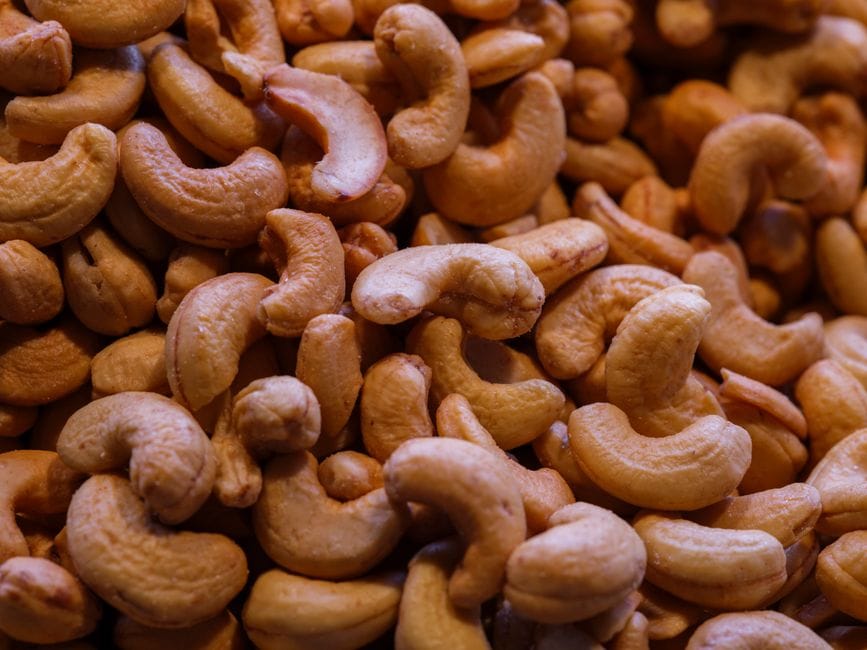 Photo: Engin Akyurt / Pexels
You do not need anything fancy, but the tool you pick changes the texture. A small high-speed blender cup, the NutriBullet or Magic Bullet kind, is my favorite for a single-cup batch.
The tall narrow cup keeps the cashews tumbling past the blade, so they break down evenly without you stopping to scrape. It also rinses clean in seconds.
A full-size food processor works and is the better choice if you are doubling or tripling the batch, because there is more room for the crumbs to move. The downside is the blade sits flat at the bottom, so a small amount tends to fly to the sides and stay whole.
Stop and scrape down halfway through and you will be fine.
What I would avoid is a big upright blender for a small batch. There is too much empty space, so the cashews just spin around the blade without making contact, and you end up over-blending the bit at the bottom into paste while the top stays in halves.
If a big blender is all you have, double the recipe so there is enough volume to catch the blade. A spice or coffee grinder, oddly, does a great job on tiny quantities if you pulse it.
Here is what went wrong when I rushed it
The first batch I ever made, I held the blender button down because I was impatient. Five seconds too long and the cashews released their oil, the crumbs went damp, and the whole thing seized into a tacky cashew butter clinging to the blades.
Edible, but it was cashew paste, not parmesan. You cannot un-blend it.
The fix is almost stupidly simple: pulse in short bursts and stop the second it looks sandy. The line between vegan parm and cashew butter is about three seconds of over-blending. When in doubt, stop early.
You can always pulse once more.
My second mistake was soaking the cashews out of habit, because so many cashew recipes start with a soak. Do not do that here.
If you want the soaking technique for creamy applications, that lives in our how to soak cashews guide, but for parmesan you want them bone dry. Wet cashews clump instantly into paste and never form crumbs. Dry cashews straight from the bag are exactly right.
If your cashews have been sitting in a humid pantry, spread them on a tray for ten minutes or warm them in a low oven before you blend. A little dryness is your friend.
How I use it (it is not just for pasta)
This is a finishing cheese, the dry grated kind you shower over things, so I use it everywhere I would have used the dairy version and a few places I would not have.
- On pasta, obviously. Spaghetti with marinara, a big bowl of garlicky aglio e olio, baked ziti. This is its home. It softens and goes nutty the moment it hits anything hot.
- On popcorn. This is the use that turned my popcorn-skeptic husband around. Pop your corn, mist it with a little melted vegan butter or oil so the sprinkle sticks, then toss with a generous handful of cashew parm. It clings to every kernel and tastes like the cheesy stuff from a movie theater, minus the dairy and the mystery powder.
- On salads. Crumbled over a Caesar-style romaine salad with a creamy dressing, it stands in for the grated parm you would normally get. It also brings a savory crunch to a plain green salad that needs a lift.
- On roasted vegetables in the last few minutes, so it toasts and clings. Roasted broccoli, cauliflower, and asparagus all love it.
- Stirred into a breadcrumb topping for a baked pasta or gratin. Genuinely better than the original here, in my opinion.
What it will not do is melt into a stretchy, gooey blanket. It is a finishing cheese, not a melting one. If you need real melt and stretch, that is a different swap entirely, and you will find the full range of them over in our vegan swaps section.
Nut swaps and other variations
The cashew is ideal because it is mild and fatty, but you have options.
- Almonds. Use blanched, skinless almonds for the closest color and flavor. Whole skin-on almonds work but leave little brown flecks and a slightly more bitter, marzipan-ish edge. Almonds are firmer than cashews, so pulse a touch longer and expect a slightly grittier crumb.
- Sunflower seeds. My favorite nut-free swap, 1:1 for the cashews. Raw shelled sunflower seeds give the closest crumbly texture. The flavor is a little earthier, so I add an extra pinch of salt and sometimes a squeeze more nooch. Heads up: sunflower seeds can turn faintly green when they meet baking soda, so do not be alarmed if a batch tints over a day or two. It is harmless.
- Hemp seeds. Softer and a little green-tasting. They make a more delicate sprinkle, so treat it as a light finish rather than a heavy snowfall.
For flavor tweaks, a pinch of onion powder deepens it, a little smoked paprika makes a smoky version that is incredible on popcorn, and a few grinds of black pepper push it toward a cacio e pepe vibe. I would skip dried herbs in the base and add them per dish instead, so the jar stays versatile.
If you are reading every label closely on your swap-everything journey, the Vegan Society is a solid reference for what counts as vegan and why, and you can always run a questionable ingredient through our Is It Vegan database to settle it.
How to store it
Because it is dry, it keeps beautifully. About three weeks in a sealed jar in the fridge, and a few months in the freezer. It never clumps, so you can scoop straight from the jar cold.
I keep mine in a small wide-mouth mason jar so a spoon fits easily.
Two storage notes worth knowing. First, the fridge is better than the counter long term, because cashews are high in oil and oil eventually goes rancid at room temperature. If it ever smells sharp, sour, or like old paint, the nuts have turned and the batch is done.
Second, freezing is genuinely set-and-forget. It thaws in minutes at room temperature and the texture is identical, so a double batch frozen in a small container means you are stocked for months.
If you want to lean further into a from-scratch vegan kitchen, cashew parmesan pairs naturally with the soft, spreadable cashew cream I make on repeat, and both are worth keeping in the rotation.
Why I make it instead of buying it
There are decent store-bought vegan parms now, and I am not going to pretend they are bad. But I stopped buying them for three plain reasons.
The first is cost. A jar of raw cashews makes several batches, and at my grocery store a cup of cashews plus a few tablespoons of nooch works out to roughly a third of what the branded tubs cost per ounce. When this is something you sprinkle on dinner most nights, that difference adds up fast.
The second is the ingredient list. Some commercial versions pad themselves out with starches, fillers, oils, and flavorings I do not particularly want, and a few sneak in ingredients that are not even clearly vegan, which means squinting at the label every time.
My homemade version is three things I can name with my eyes closed. No surprises, no fine print.
The third is just that it tastes better. Fresh cashews ground that morning have a roundness and a clean nuttiness that a tub sitting on a shelf for months simply does not.
It is the difference between pre-grated parmesan in a green can and a wedge you grate yourself. Once you taste the gap, the green-can version stops being tempting.
None of that means store-bought is wrong. If you are short on time, a good jarred vegan parm is a perfectly fine thing to keep around. But two minutes of blending gives you something cheaper, cleaner, and genuinely more delicious, so I almost never bother.
The honest takeaway
Cashew parmesan is the single highest-payoff thing you can make in a vegan kitchen for the least effort. Three ingredients, one jar, two minutes, and you never have to buy the expensive tub again.
Get the 4-to-1 ratio right, pulse instead of blending, and stop while it still looks sandy. That is the entire skill.
Make a double batch the first time. The hardest part, genuinely, is not eating it by the spoonful before it reaches the pasta. I have stopped trying to fix that one.
The recipe
Cashew Parmesan
Prep
2 min
Total
2 min
Makes
about 1 cup (8 to 10 servings as a topping)
Ingredients
- 1 cup (about 130 g) raw cashews
- 3 to 4 tablespoons nutritional yeast
- 3/4 teaspoon fine salt
- 1/4 teaspoon garlic powder (optional)
Instructions
- 1 Add the raw cashews, nutritional yeast, salt, and garlic powder (if using) to a food processor or small high-speed blender cup (a NutriBullet-style cup works well for this batch size).
- 2 Pulse in 8 to 10 short bursts, checking after every few pulses, until the mixture looks like coarse, sandy crumbs similar to damp sand or fresh breadcrumbs. Do not hold the button down continuously.
- 3 Taste and adjust salt or nutritional yeast if needed, then pulse once or twice more to incorporate.
- 4 Tip into a clean airtight jar. Use immediately or store in the fridge.
Notes
- ·Use raw cashews straight from the bag, not soaked. Wet cashews clump into paste instead of forming dry crumbs.
- ·The key ratio is roughly 4 parts cashews to 1 part nutritional yeast. Adding too much nutritional yeast makes the result bitter and chalky.
- ·Stop blending the moment it looks sandy. Over-blending by even a few seconds releases the cashew oil and turns the mixture into paste.
- ·Store in a sealed jar in the fridge for up to 3 weeks, or freeze for up to a few months.
Frequently asked questions
What is the ratio for cashew parmesan?+
Use roughly 4 parts cashews to 1 part nutritional yeast, then salt to taste. My go-to is 1 cup raw cashews, 3 to 4 tablespoons nooch, and 3/4 teaspoon fine salt. The cashews are the body and the yeast is the seasoning, so resist the urge to dump in extra nooch. Too much makes it bitter and powdery instead of nutty and cheesy.
Do you have to soak cashews for cashew parmesan?+
No, and you shouldn't. This is the one cashew recipe where you want them bone dry. Soaked cashews are wet, so they clump into a paste the second they hit the blade instead of breaking into the dry, sandy crumbs you're after. Use raw cashews straight from the bag. If yours have been in a humid pantry, spread them on a tray for ten minutes first.
How long does homemade cashew parmesan last?+
About three weeks in an airtight jar in the fridge, and a few months in the freezer. Because it's dry it never clumps, so you can scoop straight from the jar whenever you need it. I make a double batch and forget about parmesan for a month. If it ever smells sharp or sour, the cashews have gone rancid, so toss it.
Can I make cashew parmesan nut-free?+
Yes. Swap the cashews 1:1 for raw sunflower seeds or shelled hemp seeds. Sunflower seeds give the closest crumbly texture and a mild, slightly earthy flavor. Hemp seeds are softer and a touch green-tasting, so use a bit less salt and treat it as a finishing sprinkle rather than a heavy topping.
Written by
VeganDigest Editorial is the small independent team that researches and fact-checks this site. We are not doctors or dietitians. For every is-it-vegan verdict we read the product's current ingredient list and manufacturer information, and for anything health-related we report guidance from recognized bodies such as the NHS, the Vegan Society, and the Academy of Nutrition and Dietetics rather than offering medical advice. Every page shows the date it was last verified, and our full process is on the How We Verify page.
Comments