How to Thicken Sauces and Soups (All Vegan)

In this guide9
- 01Pick the Right Thickener for the Job
- 02Cornstarch Slurry, the Fast and Glossy One
- 03Flour Roux, the Rich and Cooked One
- 04Blended Cashews, Thick and Creamy at Once
- 05Pureed Vegetables, the Free Thickener
- 06Agar, When You Need It to Set Firm
- 07Reduction, the Method That Adds Flavor
- 08Fixing Lumps and Gluey Sauces
- 09Putting It All Together
I once served a mushroom soup that had the exact texture of wallpaper paste. I had panicked when it looked thin, dumped a heaped spoon of cornstarch straight into the simmering pot, and watched it knot up into gummy pearls that no amount of whisking could rescue.
We ate it anyway, politely, and I spent the next year learning how thickening actually works. It turns out there is no single best way to thicken a vegan sauce.
There are about six good ones, and the skill is knowing which to reach for and how to not wreck it.
Going dairy-free takes nothing away here, because almost none of these methods relied on cream or butter to begin with. Flour, starch, vegetables, nuts, agar, and plain evaporation do all the work.
So this is the guide I wish I had that night: every method I use, the ratios that work, which job each is best at, and how to dodge the two disasters that haunt thickening, lumps and gluey texture.
Pick the Right Thickener for the Job
Before any ratios, here is a quick map, because reaching for the wrong thickener causes most failures. Match the method to the dish and half the trouble disappears.
For a quick stir-fry sauce, a sweet and sour glaze, or a brothy soup you want glossy and clear, a cornstarch slurry is the fastest friend. For a rich, opaque sauce you want to taste cooked and deep, like a gravy or cheese sauce, a flour roux is the classic.
For creamy soups and pasta sauces, blended cashews or pureed vegetables add body and richness in one move. For anything that has to set firm and slice, like a custard or a sliceable cheese, agar is the only thing here that gels.
And reduction, simmering liquid away, is the quiet method that improves almost any sauce by concentrating what is already there.
On gluten-free: everything here is naturally gluten-free except a wheat-flour roux, and even that swaps cleanly to rice flour or a gluten-free blend. If you are ever unsure whether a starch, stock cube, or thickener brand is vegan or hides wheat, run the label through our vegan ingredient checker first.
Cornstarch Slurry, the Fast and Glossy One
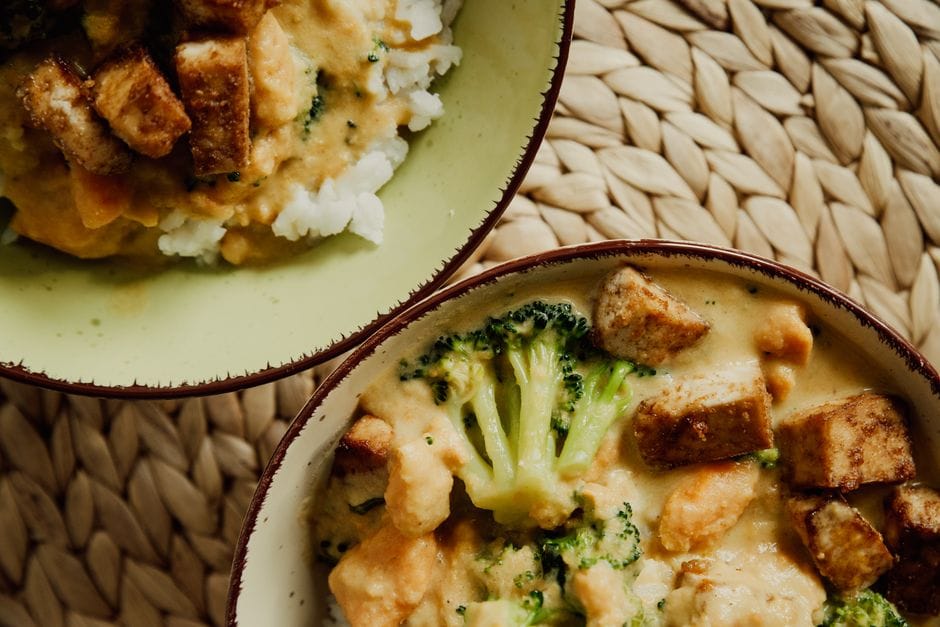
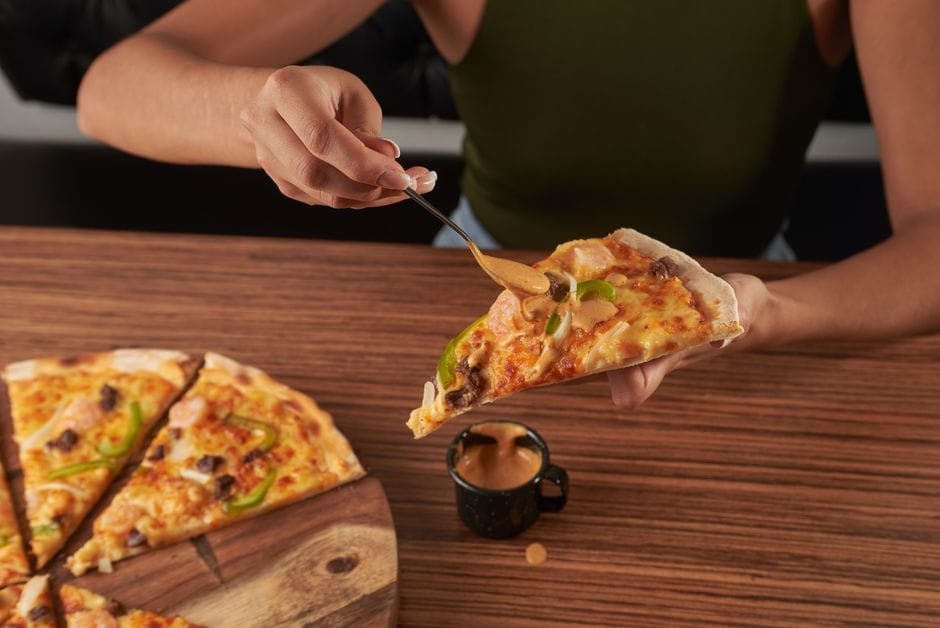 Photo: Alejandro Aznar / Pexels
This is the method I use most, and the one I most often see ruined. Cornstarch thickens almost any liquid fast, leaves a clean glossy finish, and is naturally gluten-free. The whole trick is in the slurry.
Never add dry cornstarch to a hot sauce. It seizes into gummy lumps the instant it hits heat, the exact mistake I opened with. Instead, whisk the cornstarch into a few spoonfuls of cold water or plant milk first, until completely smooth.
Then stream that slurry into your simmering sauce while whisking, and cook one to two minutes until it turns glossy and coats the back of a spoon.
For ratios, start with one tablespoon of cornstarch whisked into two tablespoons of cold liquid per cup of sauce for a medium, pourable thickness. Want it thicker, like a stir-fry glaze that clings, push toward one and a half tablespoons per cup.
Here is the part that prevents the gluey disaster: do not overdose it and do not overcook it. Cornstarch hits full thickness in a minute or two of gentle simmering.
Keep blasting it at a hard rolling boil and the starch network breaks down, leaving the sauce thin and snotty. Add the slurry to a gentle simmer, pull it off the heat as soon as it thickens, and resist a second dose before the first has set.
Cornstarch also reheats poorly, so a sauce can turn gummy the next day, which is why I lean on roux or pureed vegetables for leftovers. Arrowroot and tapioca behave similarly, but add arrowroot off the heat, since it thins if boiled.
Flour Roux, the Rich and Cooked One
A roux is flour cooked in fat, the backbone of the great opaque sauces: bechamel, cheese sauces, and proper brown vegan gravy. It takes a few minutes longer than a slurry but rewards you with real depth, because the flour toasts as it cooks.
The reason it thickens is plain old starch gelatinization, the starch granules swelling and trapping water as they heat.
The ratio is the easiest one on this page: equal parts flour and fat by volume. For a medium sauce, melt two tablespoons of vegan butter or warm two tablespoons of neutral oil, whisk in two tablespoons of all-purpose flour, and cook over medium heat, whisking constantly.
For a white sauce, cook one to two minutes until it smells faintly nutty and looks like wet sand; for a brown gravy, keep going until it turns the color of peanut butter.
Now the lump rule, which mirrors the slurry rule in reverse. Once the roux is cooked, pour in warm liquid in a slow stream while whisking hard. Cold liquid hitting a hot roux shocks it into lumps, and so does dumping it in all at once.
Warm liquid, slow stream, constant whisking. Two tablespoons each of flour and fat thickens about one cup of liquid to a pourable sauce, or three of each per cup for a thick coating sauce. If you do get lumps, a quick blitz with an immersion blender rescues it.
For a gluten-free roux, swap the wheat flour for a one-to-one gluten-free blend or rice flour. Rice flour makes a slightly grittier roux that smooths out as it simmers, and a blend behaves closest to wheat. Both work well, so a roux stays on the table even if you are avoiding gluten.
Blended Cashews, Thick and Creamy at Once
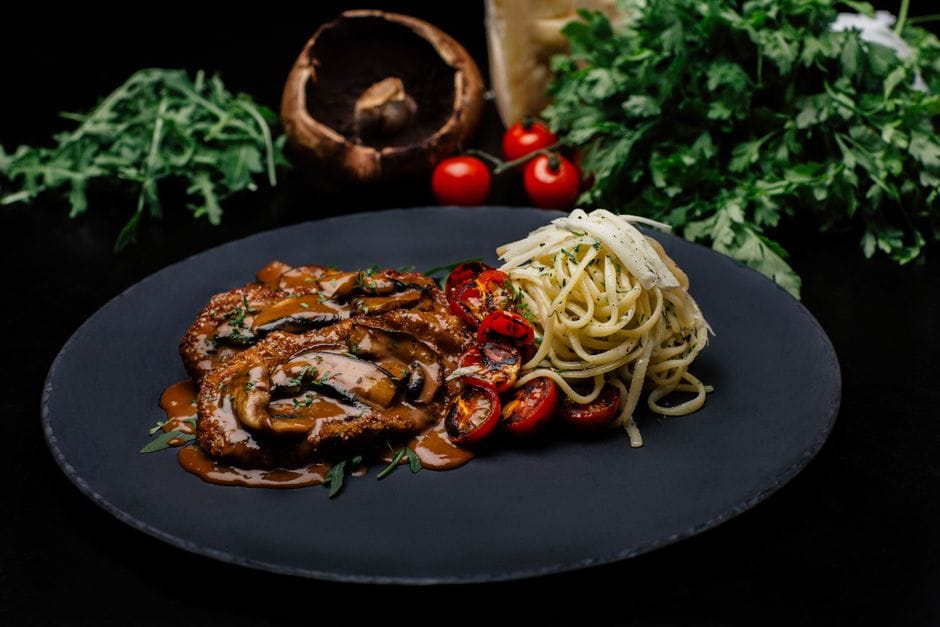 Photo: Mahmoud Salem / Pexels
This is my favorite method for soups and creamy pasta sauces, because cashews thicken and enrich in a single move. Instead of a neutral starch, you blend in something that brings body, silkiness, and flavor at once.
Soak a half cup of raw cashews in just-boiled water for fifteen minutes, or in cold water for a few hours, until soft. Drain, then blend with roughly a half cup to one cup of fresh water or broth until completely smooth, aiming for the consistency of single cream.
A high-speed blender like a Vitamix gets it silky in under a minute, but any blender works if you soak long enough first. Stir the puree into your soup or sauce, warm it through, and it thickens as it heats.
My full base method is in the cashew cream guide, and the soaking cashews page covers why soaking matters for smoothness.
The ratio is loose by design, part of why I love it. More cashews and less water gives a thick, rich sauce; more water gives a pourable creamy soup. Start with a half cup of cashews per two to three cups of liquid and adjust to taste.
One honest caution: cashew sauces can split or look grainy if you boil them hard, so warm them gently. For nut-free, soaked sunflower seeds or silken tofu blend in the same way.
Pureed Vegetables, the Free Thickener
This one costs nothing extra, because the thickener is already in your soup. Starchy, soft-cooked vegetables, blended smooth, give body with no flour, no starch, and a flavor that belongs there instead of a neutral filler.
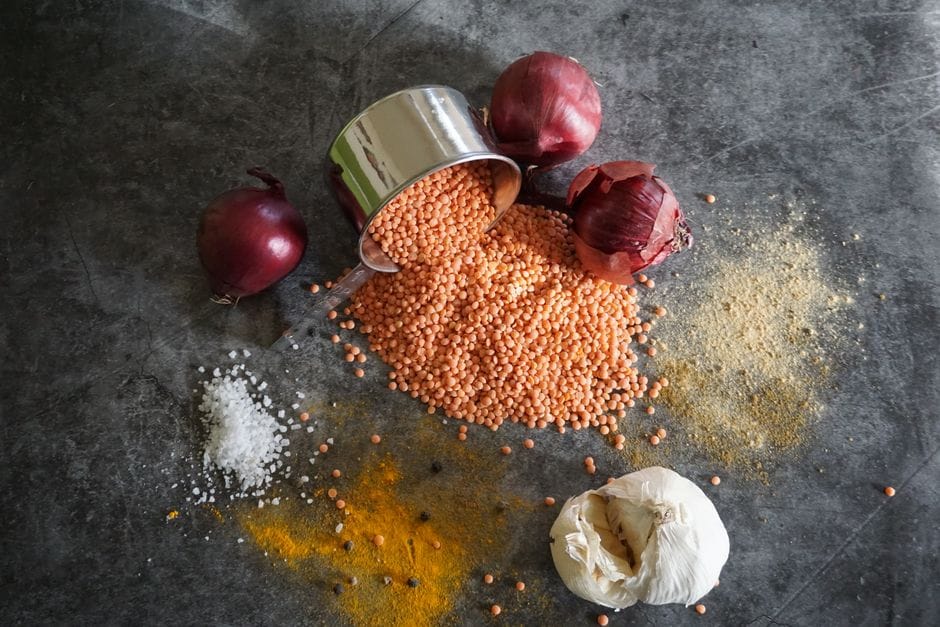
A few cooked potatoes blended into a leek soup make it velvety. White beans, drained and blitzed, thicken a stew and add protein. Roasted cauliflower purees into a shockingly creamy base for a cheese-style sauce, and cooked carrots, squash, and soft red lentils all do the same job.
The technique could not be simpler: blend a portion of the cooked vegetables with a ladle of the cooking liquid until smooth, then stir it back into the pot.
Think in handfuls rather than precise measures. To thicken a soup that serves four, blend roughly one cup of the cooked vegetables with enough liquid to move the blender, then stir it back. Want it thicker, blend more of the solids.
The beauty is there is nothing to go gluey, since there is no concentrated starch to overcook. The only real mistake is over-blending a waxy potato until it turns pasty, so pulse just until smooth and stop. For everyday soups, this is the method I reach for first.
Agar, When You Need It to Set Firm
Agar is the outlier here. Everything else thickens, making a sauce more viscous while it stays a sauce. Agar gels, setting a liquid into something firm enough to slice.
It is a seaweed-derived powder, completely vegan, and it is what you want for a sliceable vegan cheese, a custard, or a jelly, not an everyday pan sauce.
Agar must be boiled to activate, the rule people miss. Whisk it into your cold or room-temperature liquid, bring it to a full boil while whisking, and simmer two to three minutes to fully dissolve it. Then pour it into a mold and let it cool, where it sets quickly, often within an hour, and holds firm at room temperature.
Ratios matter here more than anywhere, because too much agar gives you a rubbery brick. A rough starting point for a firm but tender set is about one teaspoon of agar powder per one cup of liquid, and closer to a half teaspoon per cup for a soft, spoonable set.
One genuine gotcha: agar powder and agar flakes are not interchangeable by volume. Powder is far more concentrated, so roughly one teaspoon of powder equals about one tablespoon of flakes.
I reach for the powder for predictable results, and I do a tiny test set first when the texture has to be exact. Agar is reliably vegan, but to confirm a specific product or any other ingredient, our Is It Vegan database gives you a straight answer fast.
Reduction, the Method That Adds Flavor
The quietest thickener of all is heat and time. Reduction means simmering a sauce uncovered until enough water evaporates that it thickens and the flavors concentrate. It adds nothing, and unlike starch it deepens the taste while it tightens, which is why restaurant sauces lean on it.
It works best on sauces that already have body and flavor to concentrate: a tomato sauce, a coconut-milk curry, a savory broth-based pan sauce. Bring the sauce to a steady simmer in a wide pan, since more surface area means faster evaporation, and let it bubble gently, stirring now and then, until it coats a spoon.
A tomato sauce can lose a third of its volume and turn rich and jammy, and a coconut curry tightens to cling to rice. Keep it alcohol-free: plain broth, tomato, and coconut milk reduce beautifully and carry all the savory depth you need.
Two honest cautions. Reduction concentrates salt along with everything else, so season lightly at the start and adjust at the very end, or you can end up with something too salty to eat.
And it is slow, ten to thirty minutes depending on how much you are driving off, so it is not the method for a sauce you needed five minutes ago. But when you have time, reduction makes a better-tasting sauce than any thickener can, and I often pair it with a small slurry at the end for the best of both.
Fixing Lumps and Gluey Sauces
Two failures cover almost every thickening disaster, and both are fixable. Lumps come from adding a concentrated starch or flour to hot liquid too fast. The cure is prevention: slurry cornstarch into cold liquid first, cook a roux before streaming warm liquid in slowly, and whisk constantly.
If lumps still appear, an immersion blender or a quick pass through a fine sieve smooths most sauces out.
Gluey, snotty, or pasty texture is the other, and it is almost always a starch problem: too much cornstarch, boiling it too hard, or overworking a potato puree. The fixes are use less starch next time, simmer rather than hard-boil once the starch is in, and pull starch-thickened sauces off the heat the moment they thicken.
When in doubt, under-thicken. A touch-thin sauce is easy to fix with a small slurry, but a gluey one is hard to walk back.
Putting It All Together
Here is the whole thing in one breath. Reach for a cornstarch slurry when you want fast and glossy, always slurried into cold liquid and never overcooked. Build a flour roux for rich, cooked depth, streaming the warm liquid in slowly.
Blend cashews or puree vegetables for creamy body and flavor in one move, my default for soups. Use agar only when something has to set firm and slice. And reduce when you have time, because it makes the sauce taste better, not just thicker.
Everything except a wheat roux is naturally gluten-free, and even that swaps cleanly to rice flour.
Master those six and you will never again panic-dump cornstarch into a simmering pot the way I did with that wallpaper-paste soup. Pick the method that fits the dish, respect the ratio, and treat lumps and glueyness as preventable. Cook this way and thickening stops being the scary part of a sauce and becomes the easy finish it should be.
Frequently asked questions
How do I thicken a vegan sauce without cornstarch or flour?+
Blend something starchy or fatty right into the sauce. A handful of soaked cashews blitzed smooth makes a sauce thick and creamy at once, and a few spoons of cooked potato, white beans, or roasted cauliflower pureed into the pot does the same with no separate thickener. Reduction also works on its own: just simmer the sauce uncovered until enough water cooks off and it tightens up. These all add body and flavor instead of a neutral starch, so they are my first choice for soups and creamy sauces.
Why does my cornstarch sauce turn gluey or snotty?+
That stringy, slimy texture is almost always too much cornstarch, overcooking, or both. Cornstarch sets at a simmer in a minute or two, and if you keep it at a hard boil for too long the starch network breaks down and turns gummy and thin. Use about one tablespoon of cornstarch per cup of liquid for a medium sauce, stream the slurry into a gentle simmer rather than a rolling boil, and pull it off the heat as soon as it thickens and turns glossy. Cornstarch also reheats poorly, so it can go gluey the second day.
What is the best gluten-free way to thicken a vegan sauce?+
Cornstarch is the easy default, and arrowroot is excellent when you want a clear, glossy finish, though arrowroot should go in off the heat since it thins out if boiled. For creamy soups, blended cashews, pureed beans, or cooked potato thicken beautifully with no flour at all. The only method that is not gluten-free out of the box is a wheat-flour roux, and even that you can swap for a rice-flour or gluten-free-blend roux. Always check the label on any starch or stock cube, since a few sneak in wheat.
Can I add cornstarch straight to a hot sauce?+
No, and this is the number one cause of lumps. Dry cornstarch dropped into hot liquid seizes instantly into little gummy pearls that never fully whisk out. Always make a slurry first by whisking the cornstarch into a few spoons of cold water or plant milk until completely smooth, then stream that into the simmering sauce while whisking. The cold liquid keeps the starch granules separated so they swell evenly instead of clumping. Same rule goes for arrowroot and tapioca.
Written by
VeganDigest Editorial is the small independent team that researches and fact-checks this site. We are not doctors or dietitians. For every is-it-vegan verdict we read the product's current ingredient list and manufacturer information, and for anything health-related we report guidance from recognized bodies such as the NHS, the Vegan Society, and the Academy of Nutrition and Dietetics rather than offering medical advice. Every page shows the date it was last verified, and our full process is on the How We Verify page.
Comments