Vegan Nacho Cheese Sauce (Pourable and Gooey)
- Gluten-free
- Soy-free
- Oil-free
In this guide9
- 01What Makes Nacho Cheese Different From Queso
- 02The Secret Is Tapioca Starch
- 03The Blended Cashew Base
- 04The Oil-Free Potato-and-Carrot Version
- 05Getting It Pourable AND Stretchy at the Same Time
- 06The Spice Level, From Mild to Serious Heat
- 07Loading It Onto Fries, Nachos, and Burritos
- 08Is Store-Bought Nacho Cheese Vegan? (And the Best Brands)
- 09The One Thing to Remember
A few summers ago I volunteered to bring "the cheese" to a backyard movie night, which in my friend group means a giant tray of loaded fries everyone fights over. I showed up with a beautiful bowl of cashew sauce I'd been proud of all afternoon.
It poured fine. It tasted good. And it did absolutely nothing when you lifted a fry out of it.
No pull, no stretch. It just coated the fry like gravy and slid off. One friend, chewing, said the thing I think about every time I make this now: "It's nice, but it doesn't do the cheese thing."
She was right. A creamy sauce is lovely, but nacho cheese is supposed to be gooey, to stretch a little when you pull a chip away. That tiny bit of theater is half the reason we love it.
So this guide is about that missing piece. I'll give you a blended nacho cheese, cashew or potato based, that doesn't just pour but actually goes gooey and pulls into short strands, thanks to one ingredient most vegan sauce recipes leave out.
I'll cover how to get it pourable and stretchy at once, how to dial the spice level from kid-friendly to serious heat, how to load it onto fries, nachos, and burritos, and which store brands are worth buying when you don't feel like blending.
What Makes Nacho Cheese Different From Queso
People use the words queso and nacho cheese like they're the same, and flavor-wise they overlap a lot. But there's a texture difference worth naming, because it changes how you cook the sauce.
Queso is a pourable dip you want loose and flowing, and that's the whole goal. Nacho cheese sauce, the kind that drapes a tray of nachos or smothers chili fries, has a little more body and, ideally, a faint gooey stretch when you lift a chip.
Think of nacho cheese as queso's slightly thicker, stretchier cousin. The flavor toolkit is the same: nutritional yeast, acid from pickled jalapeno brine, salt, and warm Tex-Mex spices. What changes is that here we cook a starch into the sauce on the stove to build that gooey body.
A blended-only sauce, no matter how smooth, stays creamy but flat. The cooking step is where nacho cheese earns its name.
The Secret Is Tapioca Starch
 Photo: www.kaboompics.com / Pexels
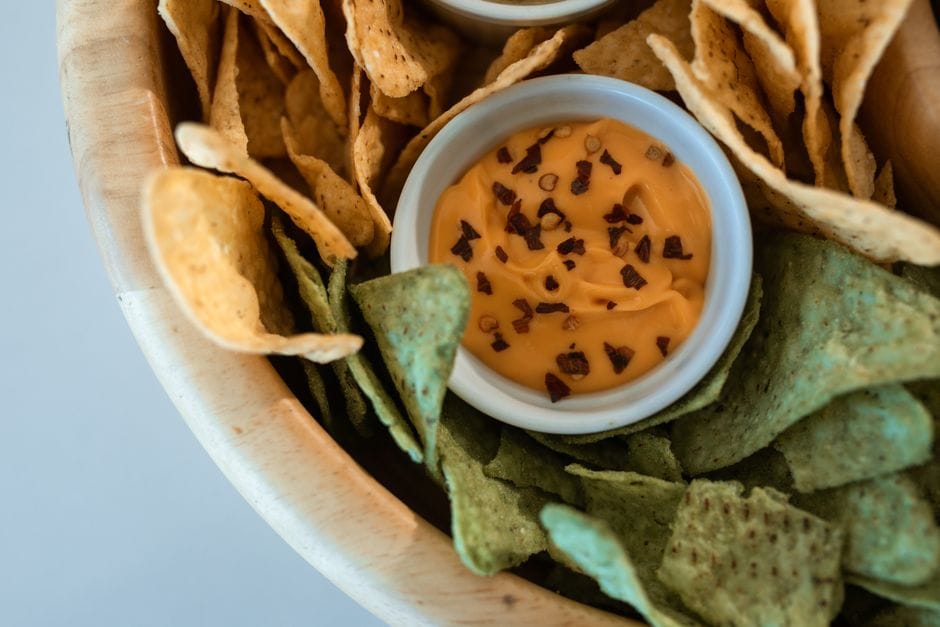
Here's the ingredient that fixes the problem from my movie-night disaster: tapioca starch. It's the single thing that turns a nice creamy blend into a gooey, stretchy nacho cheese, and most recipes that skip it produce exactly the sliding-off-the-fry sauce I made.
Tapioca starch comes from the cassava root, and when you heat it in liquid it does something cornstarch and flour don't quite manage. It turns into a glossy, elastic, slightly stringy gel, and that elasticity is what gives you the cheese-pull.
If you want the plain background, the Wikipedia tapioca entry covers where it comes from. In practice, you blend a couple tablespoons of it into your base along with everything else, then cook it.
The cooking is the part you can't skip and can't rush. You pour the blended sauce into a pan over medium heat and whisk constantly. For the first couple of minutes nothing seems to happen.
Then, fairly suddenly, the sauce thickens, goes glossy, and pulls into short ropes off the whisk. That moment is the tapioca setting. Cook it about thirty seconds past that point, then pull it off the heat.
Overcook it and it can turn gluey, so the second it looks stretchy and glossy, you're done. Cornstarch is a fine backup, but it gives a softer set with much less of that signature pull.
The Blended Cashew Base
This is the version I make when I want it rich, and the recipe card up top has the exact amounts. Here's what's happening so you can adjust it.
You start with soaked cashews blended completely smooth, which gives you that creamy, clingy body real nacho cheese has. Nutritional yeast is the savory cheesy backbone doing the heaviest lifting.
If you've never cooked with it, my nutritional yeast guide explains why it tastes the way it does and how much is too much. The pickled jalapeno brine, straight from the jar, brings a sharp tang and a low background heat that reads convincingly like the tang of melted cheese.
Smoked paprika, cumin, and a pinch of turmeric build the Tex-Mex warmth and that orange nacho glow without any food coloring.
If you've made cashew cream before, the blending stage will feel familiar. The two differences are the tapioca starch going into the blender and the deliberate stovetop cook afterward. Blend everything two full minutes until there's no grit, then cook it down as described above until it stretches.
That's the whole method, and it takes about twenty minutes start to finish.
The Oil-Free Potato-and-Carrot Version
 Photo: Engin Akyurt / Pexels
Here's the one people are skeptical about until they taste it. You can make a genuinely good, gooey nacho cheese with no cashews and no added oil, built on boiled potato and carrot. It sounds like internet nonsense.
It is not.
Boil diced potato and carrot until soft, then blend them hot with tapioca starch, nutritional yeast, the jalapeno brine and spices, and enough starchy cooking water to loosen it into a pourable sauce. The potato gives body, the carrot deepens the orange naturally, and the cooking water lets you set the pour where you want it.
Then, and this matters, you still cook it in a pan with the tapioca to develop the stretch, just like the cashew version. The boiled potato adds its own starch, so the cooked sauce gets quite clingy, which is perfect for nacho cheese.
Be clear-eyed about what this version is. It's a touch less rich than the cashew one, so I push the nutritional yeast and salt a little harder to compensate.
What it does brilliantly is hold a gooey body for cheap, nut-free, and oil-free, which makes it my go-to for a crowd. It's the closest thing to that nostalgic bright-orange ballpark cheese I've found, minus the dairy and the mystery ingredients.
Getting It Pourable AND Stretchy at the Same Time
This is the balancing act, and it tripped me up early. You want two things that pull in opposite directions: a sauce loose enough to pour and drape, but with enough cooked-starch body to go gooey and stretch.
Too much tapioca or too little liquid and you get a thick, gluey paste that won't pour. Too much liquid and you lose the stretch and you're back to gravy.
The fix is to cook first, then thin. Cook the sauce until it sets glossy and stretchy in the pan, where it will look almost too thick.
Then thin it back down with plant milk or hot water, a tablespoon at a time, whisking until it ribbons off the whisk but still pulls a little. You want a sauce that flows but leaves short threads, not one that sheets off like water.
Thinning a cooked tapioca sauce loosens the pour without fully killing the stretch, so you keep both.
And expect it to firm up. Both versions thicken as they sit and turn almost sliceable cold. Leave the sauce looser than feels right when it's hot, because it tightens the second it stops moving.
When it stiffens on the table, scrape it into a warm pan, whisk in a splash of liquid, and it comes right back to a gooey pour. The potato version is the more forgiving of the two.
The cashew version needs a gentler reheat so it doesn't split, so keep the heat low.
The Spice Level, From Mild to Serious Heat
This deserves its own section because nacho cheese lives and dies on its heat, and what's perfect for one table is bland or brutal for another. The good news is the base recipe is built to scale.
The base, as written, lands on gentle. The pickled jalapeno brine and a little chili powder give a warm, low background heat almost everyone can eat freely, kids included. That's on purpose, because it's easier to add heat than to rescue a sauce gone nuclear.
From there, you build up. For a medium kick, stir in two tablespoons of chopped pickled jalapenos at the end, which adds texture along with heat. For more, add a pinch of cayenne to the blender or a few dashes of hot sauce after cooking.
When I want real fire with depth, I reach for chipotle in adobo, a smashed pepper or a spoon of the sauce, which brings smoky heat that suits nacho cheese beautifully. Fresh serrano or chopped fresh jalapeno blended in pushes it hotter still with a brighter, greener burn.
The one rule: add heat in small amounts and taste between each addition. Capsaicin, the compound that makes chiles hot, builds and lingers, as the Wikipedia capsaicin entry explains, which is why your mouth keeps getting hotter after the bite. You can always add more.
You cannot take it out.
Loading It Onto Fries, Nachos, and Burritos
This is where nacho cheese earns its keep, and the gooey-but-pourable texture pays off most when you actually pour it over food rather than dipping into it.
Loaded fries are my favorite use, and the reason I started chasing the stretch. Pile up hot, crisp fries, then drizzle the warm cheese back and forth in ribbons so it threads into the pile instead of pooling on top.
Add chopped pickled jalapenos, a handful of black beans, and diced tomato, and you've got chili-cheese-style fries with no dairy. The stretch is the whole point here. Lifting a fry should pull a short strand of cheese with it.
Nachos want the same drizzle technique. Build your tray of chips, then pour the warm cheese in lines across the whole tray so every layer gets coated, not just the top.
A cold lump in the middle of a nacho tray is a tragedy, so warm and loosen the sauce right before it goes on. Run it under the broiler for a minute if you like it bubbling.
Burritos and bowls love this sauce too. Spoon it inside a burrito before you roll it, where it acts like the melted cheese in a smothered burrito, or pour it over a rice-and-bean burrito bowl.
I also drape it over roasted broccoli and baked potatoes, and a spoon of vegan butter whisked into the cashew version makes it extra glossy and rich. Wherever it goes, warm it first and loosen it second, and it behaves.
It also keeps four or five days in the fridge, so a batch on Sunday smothers lunches all week.
Is Store-Bought Nacho Cheese Vegan? (And the Best Brands)
The classic stuff is not. That bright orange canned and jarred nacho cheese sauce, the kind at ballparks, gas stations, and movie theaters, is dairy through and through, built on milk, whey, cheese cultures, and often real cheddar.
The two things that keep it off the vegan list are the cheese itself and casein, the milk protein that even some so-called dairy-free dips sneak back in for stretch and melt. Casein is not vegan no matter what the front of the package implies.
The plant-based category has come a long way, though. Siete Foods Cashew Queso is the jar I grab most often for a nacho topping. It needs a brief warm-up and a quick whisk, then it flows, and the spicy version has a pleasant low burn. Good Foods Dairy-Free Queso sits in the cold dip case at most big stores and runs a bit denser, so I loosen it with a splash of water before it goes on a tray.
Be honest about what these are: they pour and taste cheesy, but neither has the cooked tapioca stretch you get at home, so for that gooey pull you still want to make your own. For a wider tour of dairy-free cheeses, my guide to vegan cheese breaks down the whole shelf.
One warning that bites people: a front label reading "dairy-free" is not a guarantee. A few of these dips quietly carry milk solids or added casein to fake the melt, and casein keeps a product off the vegan list no matter how the package is styled.
Scan the full ingredient line every time, and when a word looks unfamiliar, paste it into our vegan ingredient checker before you commit. When you want a flat yes-or-no on a specific brand, our Is It Vegan database saves you the guesswork.
The One Thing to Remember
If you take nothing else from this, take the tapioca. That's the ingredient that fixed my sliding-off-the-fry sauce and turned it into something that actually does the cheese thing.
Blend your base, cashew or potato, cook it down with tapioca starch until it goes glossy and stretchy, then thin it back to a pour. Build flavor with nutritional yeast, jalapeno brine, salt, and warm spices, and dial the heat to whatever your table wants.
Serve it warm and loose, loosen it again whenever it stiffens, and pour it in ribbons over your fries and nachos so it threads into everything. Do that and you'll get the pull, the gooey stretch, and the little moment of theater that makes nacho cheese worth the trouble.
My movie-night fries get the cheese pull now, and that gravy-bowl summer feels like a long time ago.
The recipe
Stretchy Pourable Vegan Nacho Cheese
Prep
15 min
Cook
6 min
Makes
About 2 cups (roughly 480 ml), serves 6 as a nacho or fries topping
Ingredients
- 1 cup (130 g) raw cashews, soaked in just-boiled water 15 minutes then drained, for the creamy base
- 1 cup (240 ml) water or unsweetened plant milk, plus more to thin to a pour
- 2 Tbsp tapioca starch, the key to the gooey stretchy pull (cornstarch works but stretches less)
- 4 Tbsp nutritional yeast, for the savory cheesy backbone
- 2 Tbsp pickled jalapeno brine straight from the jar, plus 1 Tbsp lemon juice, for tang
- 1 tsp fine sea salt, then more to taste, because nacho cheese needs salt to read as cheese
- 1 tsp smoked paprika and 3/4 tsp ground cumin, for warm Tex-Mex depth and color
- 1/2 tsp chili powder and 1/4 tsp garlic powder, plus more chili for heat
- 1/4 tsp ground turmeric, just a pinch, for that orange nacho-cheese glow
- 2 Tbsp chopped pickled jalapenos, stirred in at the end for texture and heat (optional)
Instructions
- 1 Soak the cashews in just-boiled water for 15 minutes, then drain. This softens them enough to blend silky in a regular blender.
- 2 Blend the drained cashews with the water or plant milk, tapioca starch, nutritional yeast, jalapeno brine, lemon juice, salt, smoked paprika, cumin, chili powder, garlic powder, and turmeric. Blend a full 2 minutes until completely smooth with no grit.
- 3 Pour the blended mixture into a saucepan over medium heat. Whisk constantly and do not walk away.
- 4 After 2 to 4 minutes the sauce will thicken suddenly, turn glossy, and pull into short stretchy strands off the whisk. That sudden change is the tapioca activating. Cook 30 seconds more, still whisking, then pull it off the heat.
- 5 Thin to a pourable consistency with extra water or plant milk, a tablespoon at a time, whisking until it ribbons off the whisk but still pulls slightly. It firms as it cools, so leave it looser than you think.
- 6 Stir in the chopped pickled jalapenos if using. Taste and adjust, adding salt for savoriness and a little more brine or lemon for tang until it tastes like cheese, not cashew sauce.
- 7 Pour warm over nachos, fries, or burritos right away. Reheat gently with a splash of liquid whisked in to bring back the pour and the stretch.
Notes
- ·Oil-free potato-carrot version: boil 1.5 cups diced potato and 1/2 cup diced carrot until soft, then blend hot with 2 Tbsp tapioca starch, 3 Tbsp nutritional yeast, the brine and spices, and starchy cooking water to loosen. Cook on the stove as above to develop the stretch. No cashews, no oil, naturally orange.
- ·Tapioca starch is what makes it gooey and stretchy. Cornstarch thickens it but gives a softer, less elastic pull, so use tapioca if you want the cheese-pull effect.
- ·Undersalted nacho cheese tastes flat. Salt and acid are what flip your brain from bland sauce to cheese, so be bold with both.
Calories
150 per 1/4 cup
Protein
5 g
Fat
9 g
Carbs
12 g
Frequently asked questions
How do I make vegan nacho cheese stretchy and gooey?+
The stretch comes from tapioca starch, not from the cashews or potato. You blend your base smooth, then cook it on the stove with a couple tablespoons of tapioca starch, stirring constantly. After a minute or two it suddenly turns glossy, thick, and elastic, and it will pull into short strands off the spoon. A pure blended sauce with no cooked starch stays creamy but never goes gooey, so the cooking step is the whole trick.
Is store-bought nacho cheese vegan?+
The classic canned and jarred nacho cheese sauce, the bright orange stuff at ballparks and gas stations, is dairy, built on milk, whey, and often real cheese, so the standard product is never vegan. There are now solid plant-based nacho and queso sauces sold in jars and tubs, mostly cashew or oat based. If a label doesn't clearly say vegan or dairy-free, assume it has dairy, and run anything unfamiliar through a vegan ingredient checker before you buy it.
How spicy should vegan nacho cheese be?+
That's entirely yours to dial. The base recipe uses pickled jalapeno brine and a little chili powder for a gentle warmth most people can eat freely. For medium heat, stir in chopped pickled jalapenos or a pinch of cayenne. For real fire, add fresh serrano, a few dashes of hot sauce, or a smear of chipotle in adobo, which also brings smoke. Add heat in small amounts and taste between each, since you can always add more but you can't take it back.
Can I reheat vegan nacho cheese and keep it pourable?+
Yes, and you should expect to. Both the cashew and the potato versions firm up as they cool and turn almost sliceable in the fridge. To bring them back, scrape the sauce into a pan, add a splash of plant milk or water, and warm gently while whisking until it loosens and pours again. The tapioca-thickened version reheats especially well and regains its gooey pull. Avoid a hard boil on the reheat, which can make a cashew sauce split.
Written by
VeganDigest Editorial is the small independent team that researches and fact-checks this site. We are not doctors or dietitians. For every is-it-vegan verdict we read the product's current ingredient list and manufacturer information, and for anything health-related we report guidance from recognized bodies such as the NHS, the Vegan Society, and the Academy of Nutrition and Dietetics rather than offering medical advice. Every page shows the date it was last verified, and our full process is on the How We Verify page.
Comments